




A lit brick residential street at dusk showing a row of two-story homes with covered porches and mature trees.

Furnace Installation in Breese, IL

Tell us about the job

Takes about a minute. No obligation.

Step 1 of 3: Equipment

Most homes in Clinton County heat with utility gas, at just over half. Electricity comes next, then propane for homes that don't have a gas line nearby. If your old furnace ran on gas, putting in another gas furnace is usually the straightforward call. The venting, the gas line and the layout of the ductwork are already built around that choice. Swapping fuel types means more than a new furnace, so check what your house is already set up for before you compare options.

7 months
October through April, your furnace is on duty
25°F
the average winter night it heats against
52%
of homes here heat with gas, so most furnaces here burn gas
80% AFUE
the federal minimum any new unit must meet
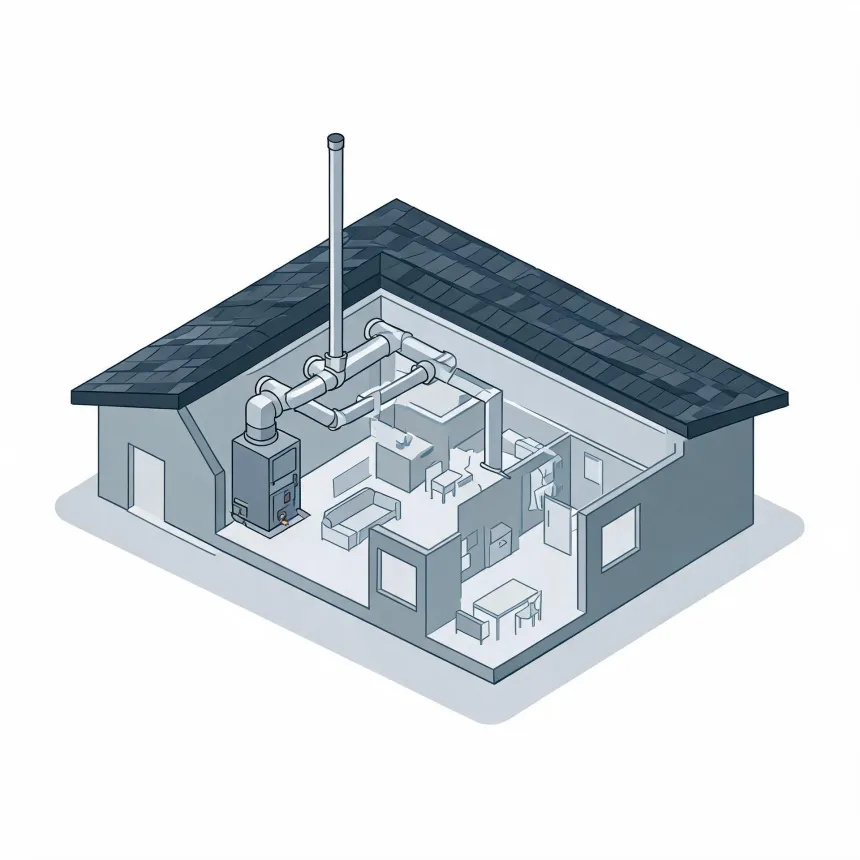
Isometric cutaway illustration of a single-story house showing interior rooms with furniture, a furnace unit with connected ductwork and a tall vertical flue pipe extending above the dark shingled roof.
Your furnace works hardest from November through March.

NOAA nClimDiv, 1991–2020 normals

Half the homes in Clinton County were built in 1977 or earlier, half after.

Either way, a standard size furnace matched to your square footage and ductwork is what fits.

Gas here runs $10.64 per million Btu, cheap enough that a standard-efficiency furnace is a reasonable call

Heat runs October through April
Winter nights average 25°F
Climate zone 4A
Replace it before OctoberSeptember is the month to get it done, before heat season starts in October.

Clinton County is zone 4A, a mixed climate that asks real work of both heating and cooling. Any furnace going into a home here has to meet 80.0 percent AFUE at minimum, the federal floor for non-weatherized gas furnaces today. That's already the baseline on just about anything you'd be quoted. The minimum jumps to 95.0 percent AFUE for furnaces built starting in late 2028, so the standard unit available now won't be the standard unit available in a few years. If you're weighing a standard-efficiency furnace against a high-efficiency one, the choice is yours to make, not the code's.

A standard furnace is the right call here

Seven months of heat a year, down to 25 degrees on a winter night, is well within what a standard furnace handles. Nothing about Clinton County calls for oversizing or for paying up for a higher tier than you need. Get the size matched to your house and move on.

Find a contractor
A man in a cap, gray long-sleeve shirt and brown work pants walks up porch steps toward a dark blue front door, carrying a canvas tool bag, with gray horizontal siding and a potted flowering plant nearby.
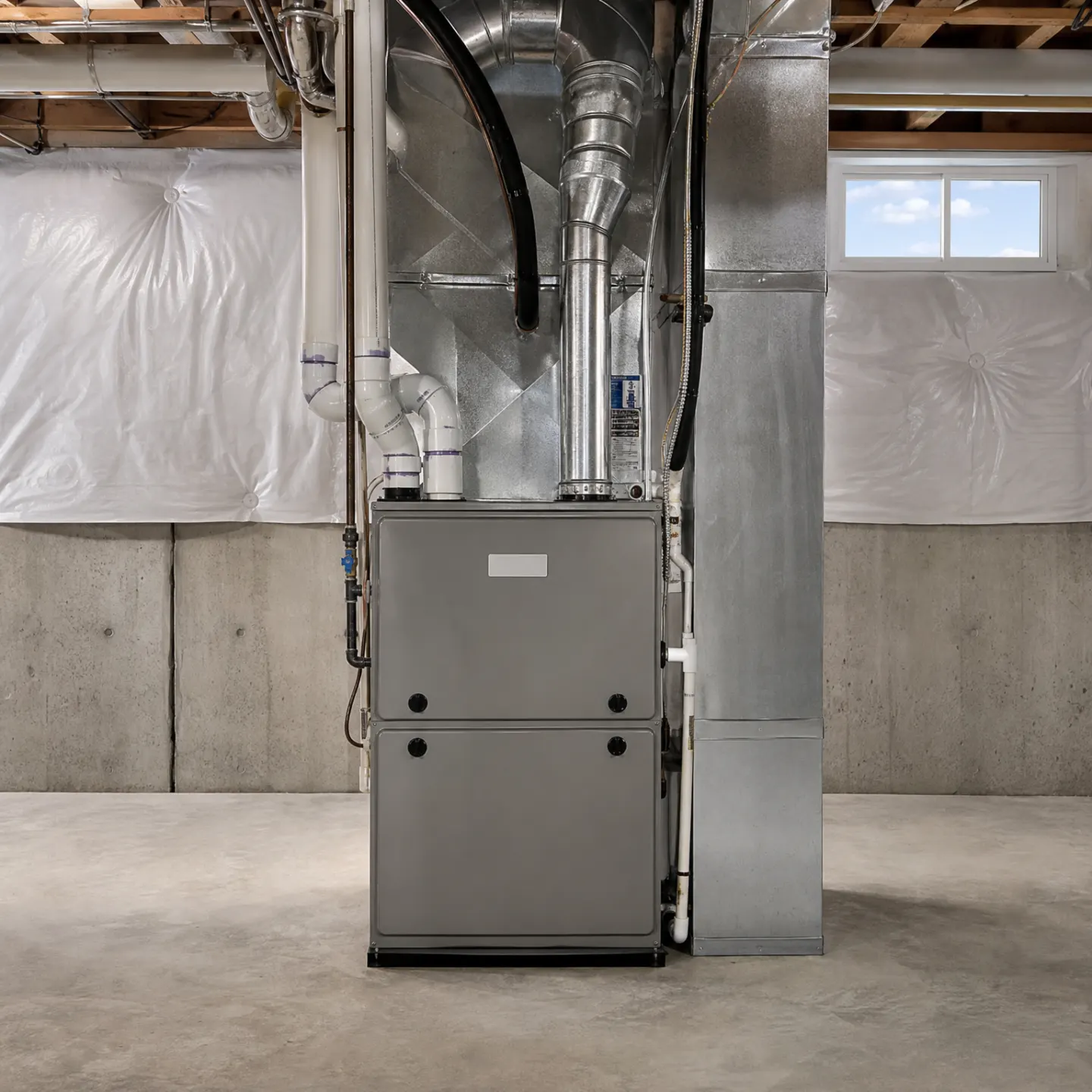
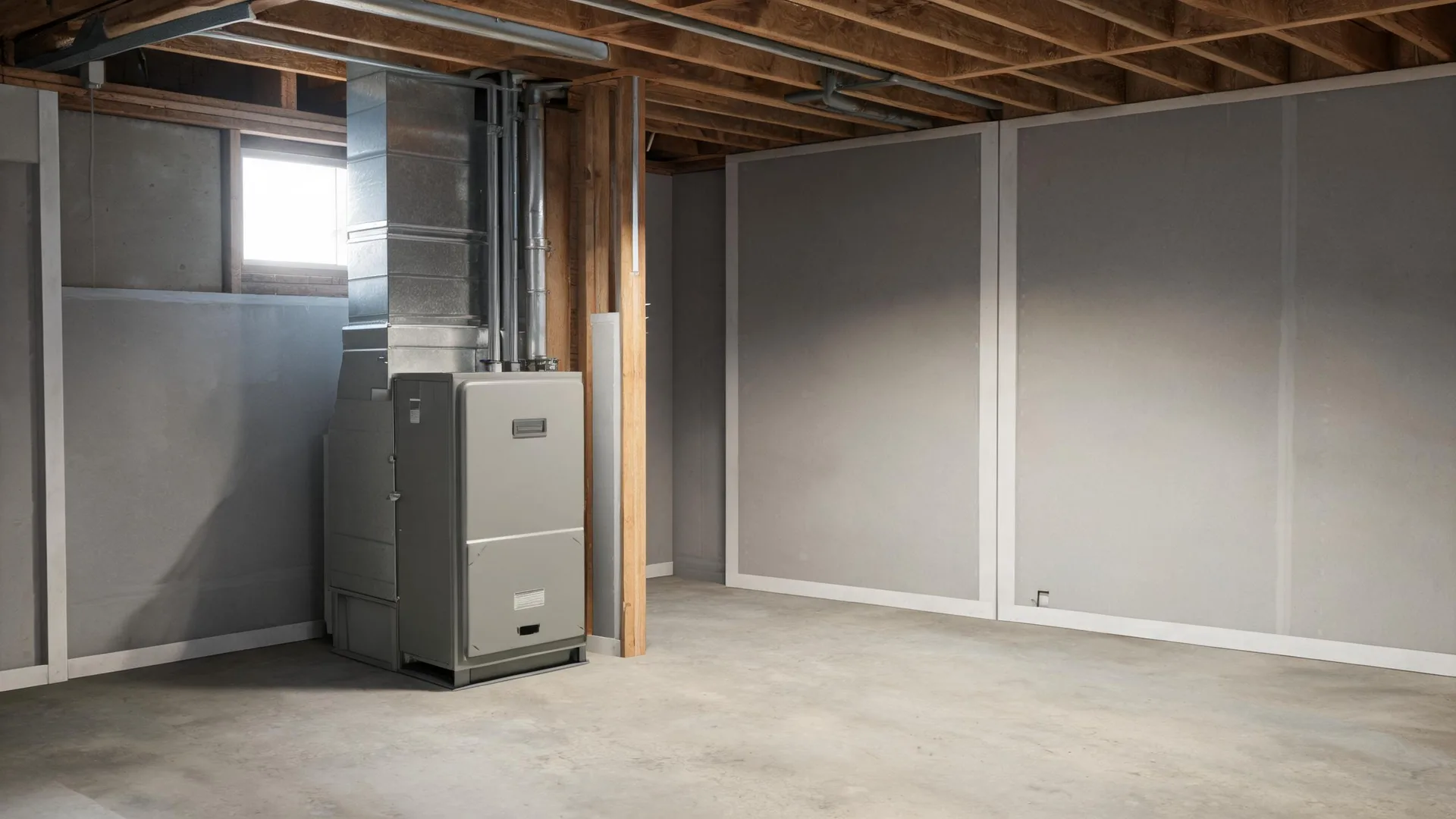
A gray residential gas furnace installed in an unfinished basement, connected to sheet-metal ductwork and PVC pipes.

The number on the label is what it does with the gas, every time it runs

The rating on the label tells you how much of the gas it burns turns into heat for your house, and how much goes straight out the flue as exhaust. A higher rating means less of that gas is wasted, but it also means a different kind of furnace. Getting more heat out of the exhaust before it leaves takes a second heat exchanger and a drain for the condensation that forms. That changes how the furnace vents too, usually PVC pipe out a sidewall instead of a metal flue up through the roof. Once it's installed, that rating doesn't drift downward. A furnace doesn't lose efficiency with age the way a car loses mileage. What hurts it is a dirty filter, a blower working harder than it should, or a fouled flame sensor. Keep it maintained and it burns gas at close to the same rate the day you retire it as the day it went in.

Bigger isn't better here

A furnace too big for the house turns on, blasts heat fast, and shuts off again before it's pulled moisture out of the air or warmed things evenly. That short cycling wears on the ignitor and the blower motor both, since they take the most stress at startup. A furnace sized right runs longer, steadier stretches and wears slower doing it.
The size comes from a load calculation, not the old unit

A contractor works out the right size with a room by room load calculation, called a Manual J, that accounts for the square footage, the windows, the insulation and how the ductwork is laid out. It's not a matter of matching whatever furnace is already in the basement. If that one was sized wrong to begin with, or the house has since had windows replaced or insulation added, the old tonnage isn't a safe guide.

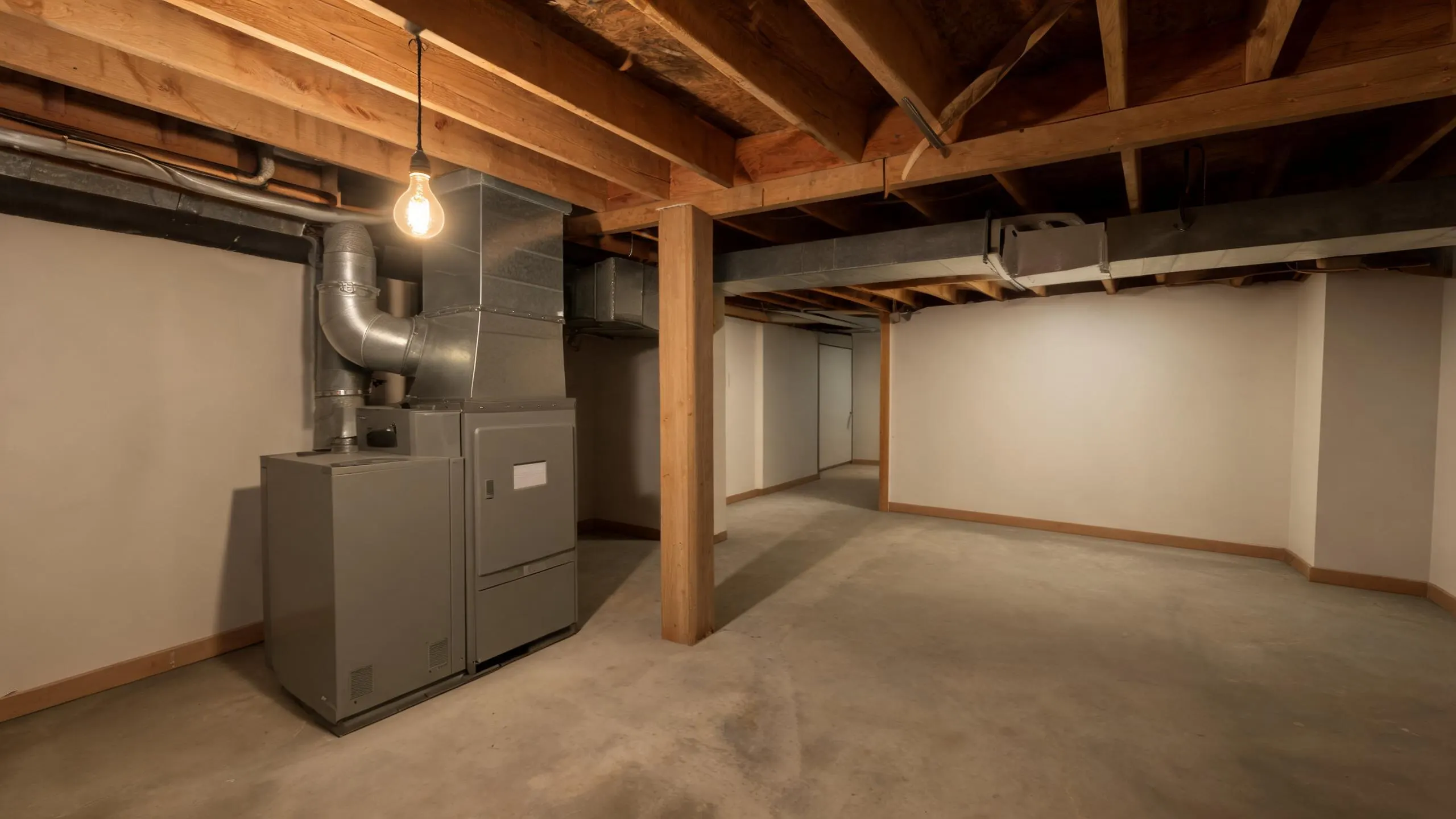
An unfinished basement containing a forced-air furnace with metal ductwork, exposed wooden ceiling joists, a hanging Edison bulb, and bare concrete floors.

A high-efficiency gas furnace would save about $90 a year to run in Clinton County compared with a gas furnace.

  • A high-efficiency gas furnace$450 a year
  • A gas furnace$540 a year

Estimates for a typical Clinton County home, from EIA household energy data, Illinois fuel prices and NOAA climate normals. Your home will differ.

Installation day starts with the old furnace coming out, along with the venting that served it if the new one vents differently. Expect the work area, usually a basement or closet, to be cleared and protected before anything gets cut or disconnected. The gas line gets shut off and tested once the new furnace is connected, and the electrical and thermostat wiring gets hooked in. If the venting changes from a metal flue to PVC, that means new piping run to a sidewall, which takes more time than reusing what's there. Ductwork gets connected to the new unit, and any transitions that don't match up get rebuilt rather than forced. Before anyone leaves, the furnace gets fired up, checked for correct gas pressure, and run through a cycle to confirm it heats and shuts off the way it should.