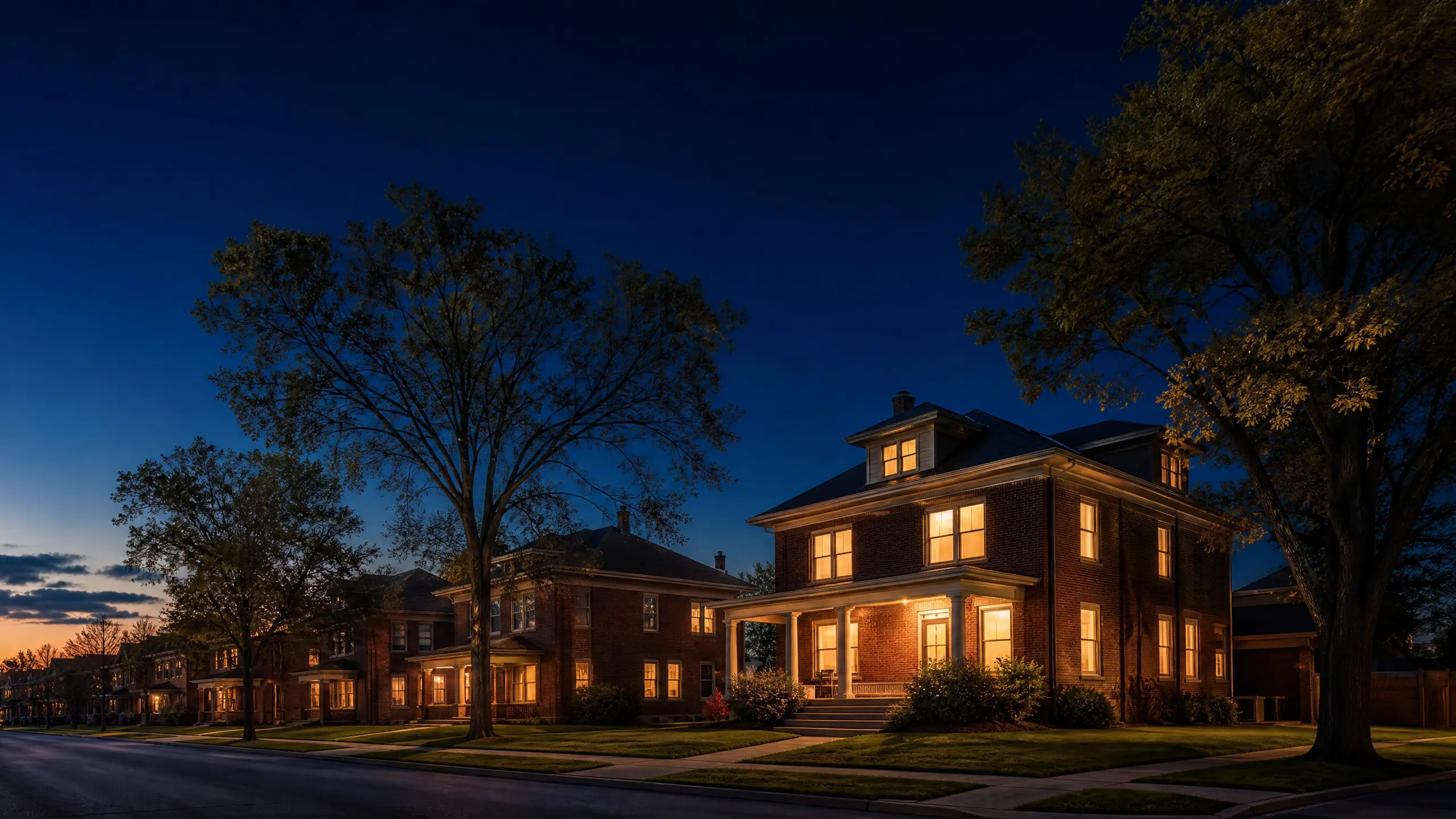
A illuminated two-story red brick house on a quiet residential street at dusk, flanked by mature trees under a deep blue evening sky.

Furnace Installation in Kewanee, IL

Tell us about the job

Takes about a minute. No obligation.

Step 1 of 3: Equipment

The AFUE number is fuel in versus heat out

A furnace's label shows an AFUE rating, and that tells you how much of the fuel it burns turns into heat for the house rather than going out the flue. A higher rated furnace wastes less gas doing the same job. Two furnaces can look alike and heat the same square footage, but the one with the higher rating uses less fuel to get there.

A higher rating changes what the installer has to run

Furnaces with higher AFUE ratings condense the exhaust and need a drain line for that condensate, plus PVC venting instead of a metal flue. That changes where the unit can go and what the installer has to run to get it there. It's worth asking which type is being quoted before comparing two bids on price alone.

8 months
October through May, your furnace is on duty
18°F
the average winter night it heats against
73%
of homes here heat with gas, so most furnaces here burn gas
80% AFUE
the federal minimum any new unit must meet
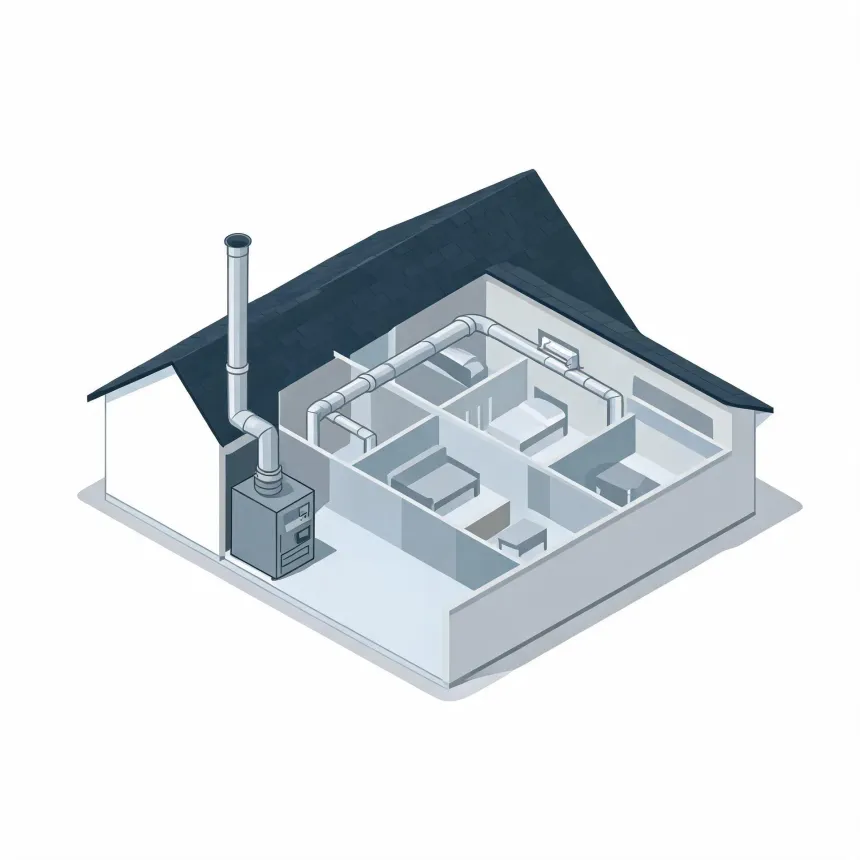
Isometric cutaway illustration of a single-story house with a dark shingled roof, showing interior rooms with beds and furniture, overhead ductwork, and a gray furnace with a tall flue pipe at the exterior wall.
Your furnace works hardest from November through March.

NOAA nClimDiv, 1991–2020 normals

Furnaces in Henry County run about eight months a year, October through May.

A furnace sized and installed for a short mild winter somewhere else won't hold up to this one.

Eight months of winter is a long time to run on a furnace you didn't plan to replace yet

Heat runs October through May
Winter nights average 18°F
23 winter storms from 2015 to 2024
Gas Runs This CountyUtility gas heats 72.9% of homes in Henry County, more than any other fuel.

Henry County falls in climate zone 5A, a cool zone where heating carries the bigger share of the work. Any furnace installed here has to meet the federal minimum for that: at least 80 percent efficiency, turning most of the gas it burns into heat for the house. That floor goes up in 2028, when new furnaces will need to hit 95 percent. A furnace bought today under the current rule will still be running when that change takes effect. Buying toward the higher number now means less gas spent doing the same job for as long as the unit lasts.

Replace it on your schedule, before the house decides for you

Half the homes in Henry County were built in 1961 or earlier. A furnace going into a house that age has to work with the ductwork and venting already there, not the other way around. That's a question for the install, not the unit sitting in the showroom.

Find a contractor
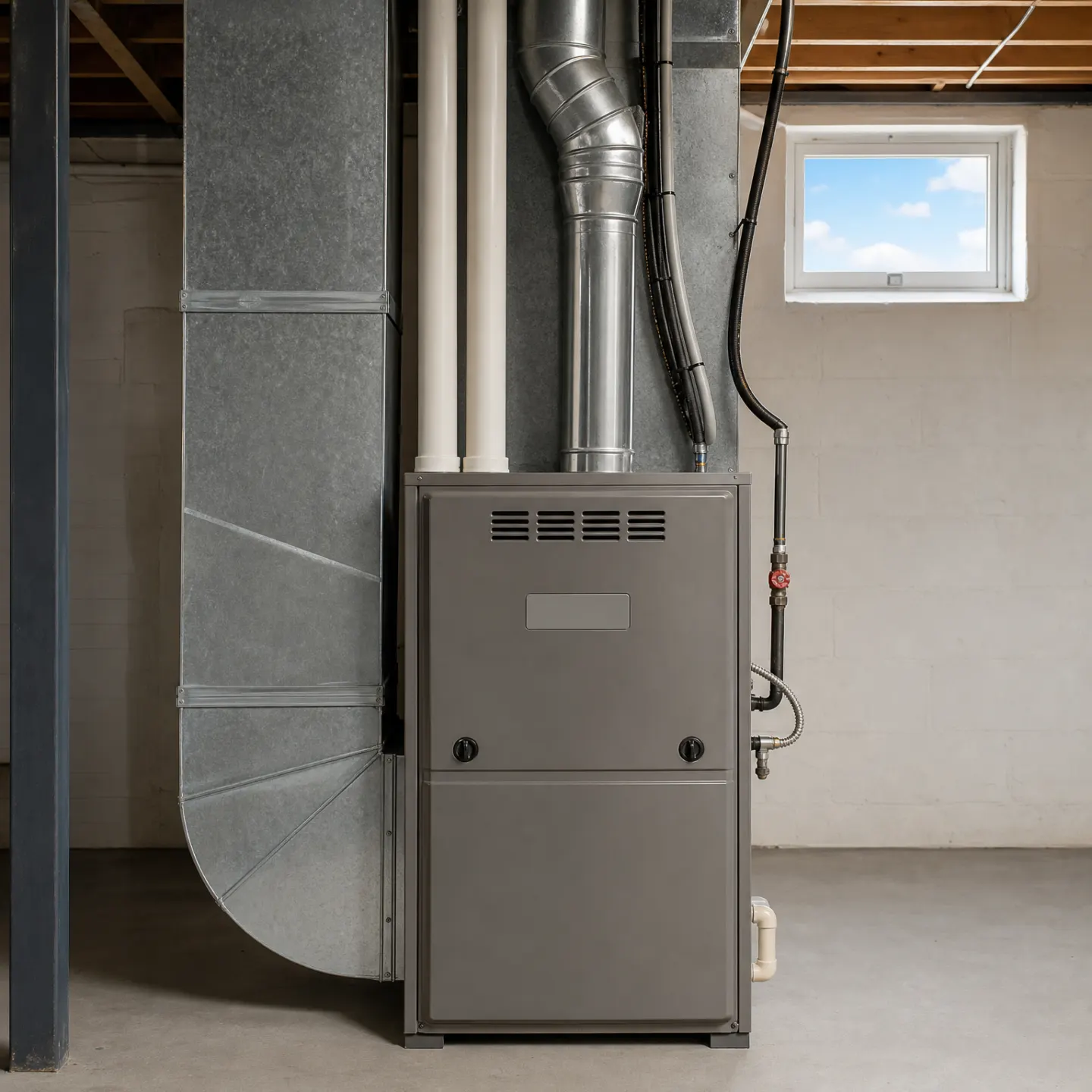
A gray residential gas furnace installed in an unfinished basement, surrounded by ductwork, a metal flue pipe, and a gas supply line.

The years add up faster in a house this age

Watch this furnace run long enough and you see what the job really asks of it. Winters here are hard, and this machine carries that load for months at a stretch, year after year. A system going into a home built in 1961 or earlier is working with ductwork and venting that were already there before the new furnace showed up. The unit has to match that layout, not the other way around. One sized and vented to fit the house tends to run the way it's supposed to for as long as it's in there.

The old furnace doesn't just get hauled off

Taking out a furnace means disconnecting the gas line, the venting, and the return and supply plenums it was tied into. If it's a condensing furnace, there's also a condensate line to cap. None of that connects straight to the new unit without some rework, even when the new furnace goes in the same spot.

The new one rarely drops into the old footprint exactly

A new furnace can be a different size and vent differently than the one it replaces, especially if the old one was a lower efficiency model. The installer has to work out whether the existing vent, flue, or drain location still works, or whether that part of the job changes along with the unit.

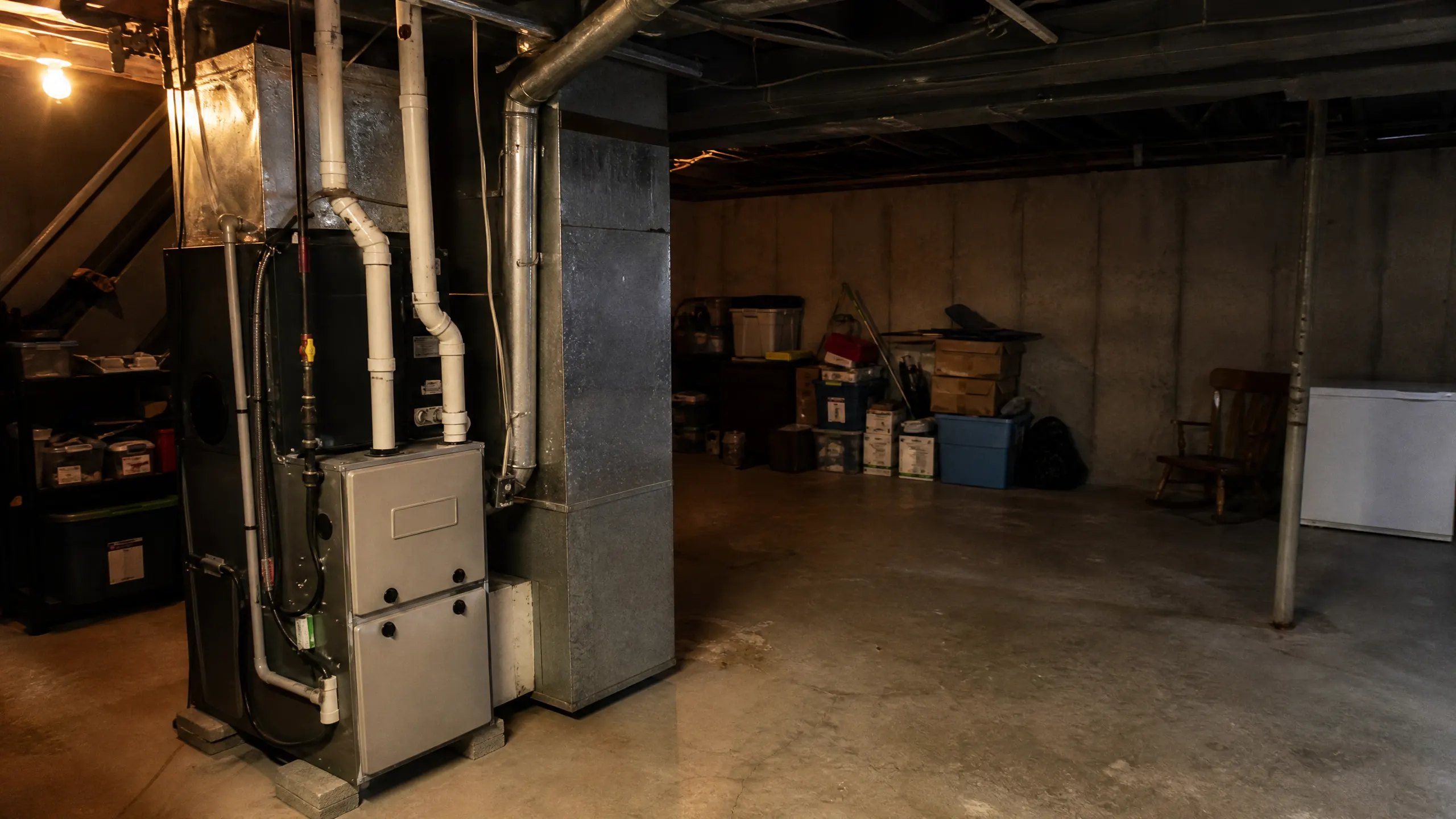
An unfinished basement containing a gas furnace with ductwork in the foreground and miscellaneous stored items along the far concrete wall.

A high-efficiency gas furnace would save about $120 a year to run in Henry County compared with a gas furnace.

  • A high-efficiency gas furnace$590 a year
  • A gas furnace$710 a year

Estimates for a typical Henry County home, from EIA household energy data, Illinois fuel prices and NOAA climate normals. Your home will differ.

Installation day starts with sizing, not the unit itself. The installer runs a load calculation on the house to find out how much heat it actually needs, because a furnace that's too big cycles on and off too fast and one that's too small runs constantly without catching up. Once the unit is in place, the work is the connections: gas line, supply and return plenums, venting, and a condensate line if the furnace condenses. Each joint gets tested before anything is buttoned up, gas line for leaks, venting for a proper draft, condensate line for a clean slope so it drains instead of pooling. The last step is startup and a check of the airflow and temperature rise against what the manufacturer specifies for that model. A furnace that passes all of that is one that's set up to run the way it's supposed to, not just one that's been bolted into place.