A quiet suburban street at twilight featuring two-story brick homes with illuminated windows and large trees lining the sidewalk.

Furnace Installation in Sterling, IL

Tell us about the job

Takes about a minute. No obligation.

Step 1 of 3: Equipment

Half the homes here were built in 1961 or earlier

Sterling and the rest of Whiteside County are older than most counties. A furnace going into a house that age is going into whatever ductwork, venting, and layout was already there, not a blank slate.

The install has to match the house, not just the old furnace

Swapping in a new furnace means checking that the vent, the gas line, and the duct sizing on hand actually suit the unit going in. A contractor sizing the job right will look at what your house has before settling on what to install.

8 months
October through May, your furnace is on duty
17°F
the average winter night it heats against
73%
of homes here heat with gas, so most furnaces here burn gas
80% AFUE
the federal minimum any new unit must meet
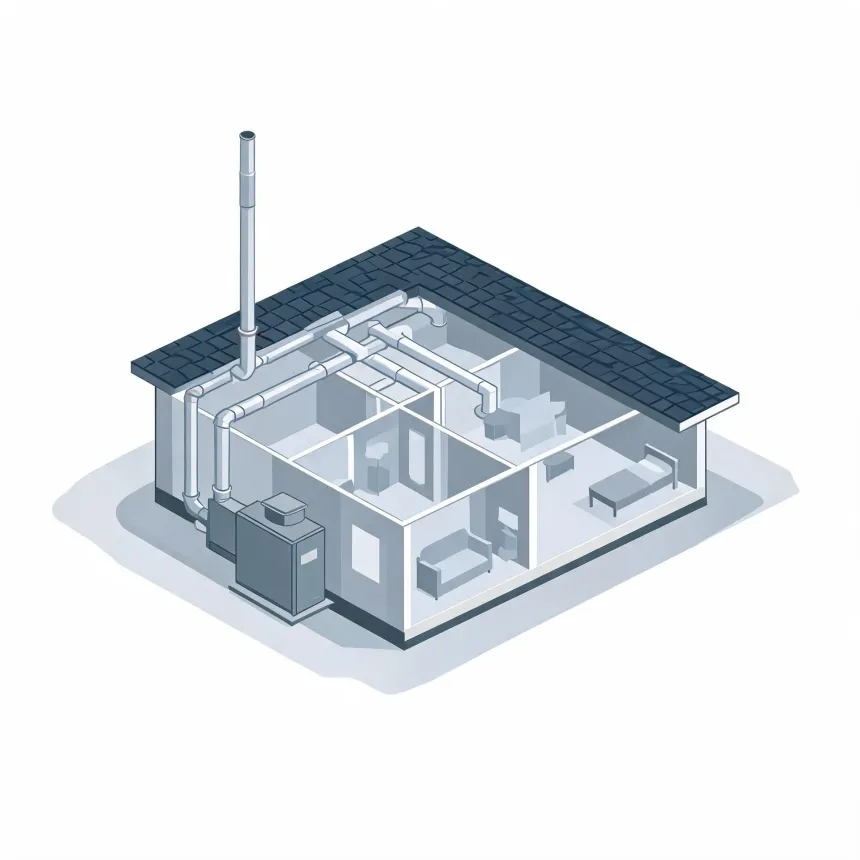
Isometric cutaway illustration of a single-story house with a dark shingled roof, showing interior rooms with furniture, a ducted air distribution system, a tall vertical flue pipe, and a gray furnace unit outside the wall.
Your furnace works hardest from November through March.

NOAA nClimDiv, 1991–2020 normals

A furnace in Whiteside County runs about eight months a year, October through May.

A new system here spends most of its life working. Size it for that before you size it for price.

Gas heats three out of four homes here, and that's what most furnaces are replacing

72.8% of homes heat with gas
Heat runs October through May
Winter nights average 17°F
Get it done in SeptemberFurnaces in Whiteside County start running in October.

Whiteside County falls in climate zone 5A, a cool zone where the furnace carries most of the heating work. Any furnace installed here now has to turn at least 80 percent of the gas it burns into heat over the winter. That's the federal minimum for units built since November 2015, and it applies whether the house is drafty or tight. The number moves again on December 18, 2028, when new furnaces have to hit 95 percent. A furnace going in today under the current rule will still be running years after that date arrives.

Size it for eight months of work a year, not for the lowest bid

Eight months of run time a year wears a furnace down faster here than in places that only need heat for half that long. Picking the right size now, for this house, matters more than picking the lowest price.

Find a contractor
A man in a dark cap, gray long-sleeve shirt and brown work pants climbs porch steps toward a navy front door, carrying a canvas tool tote with tools in its pockets, beside a potted evergreen shrub in a blue planter.
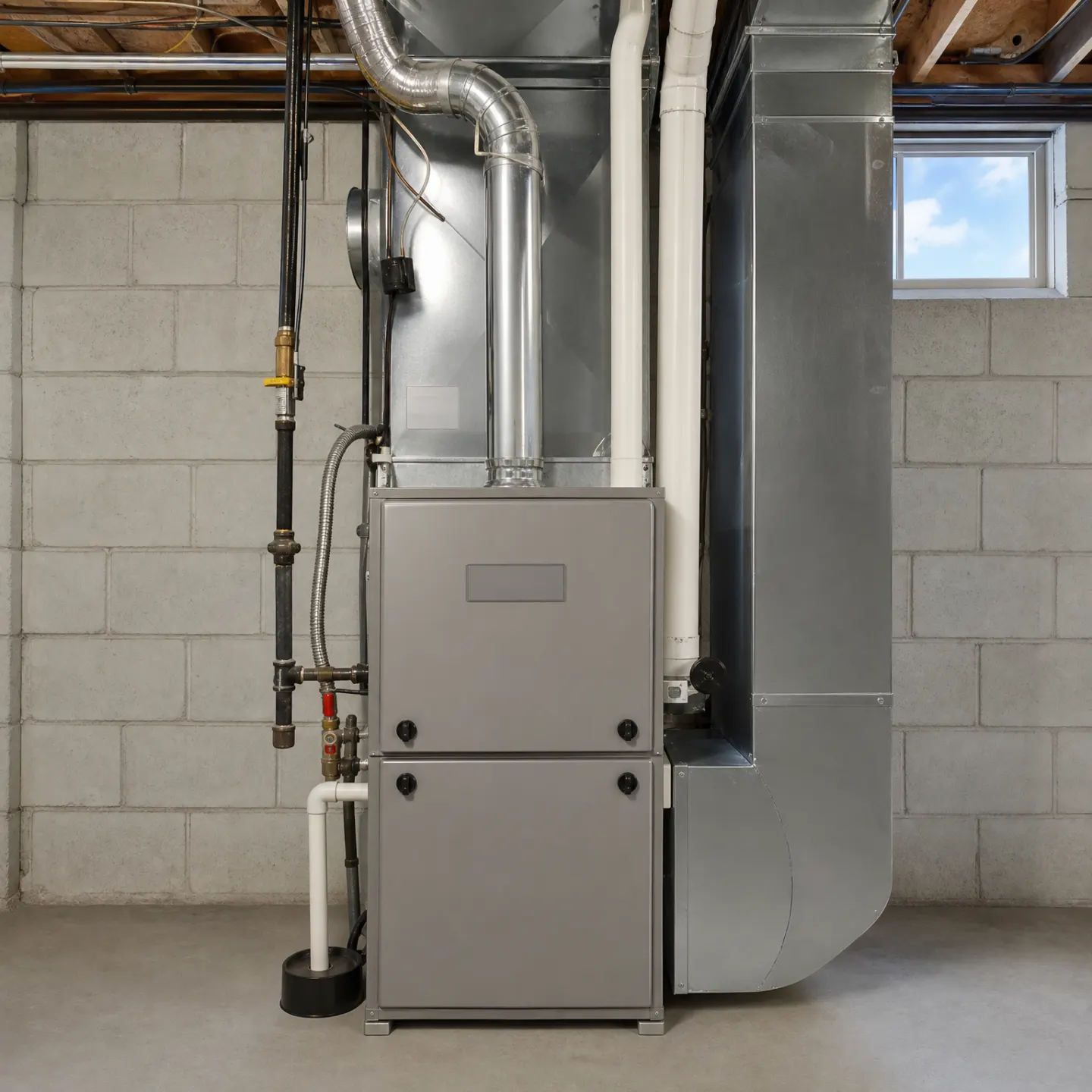
A gray high-efficiency gas furnace installed in an unfinished basement, surrounded by gas lines, a condensate drain, and sheet-metal ductwork.

An old house, running the furnace for years

The time-lapse shows one furnace running day into night, but the house around it matters too. Half the homes in Whiteside County were built in 1961 or earlier. A furnace going into a house that old is running for years inside ductwork and venting sized decades ago, not laid out fresh for the unit going in today. That gap between old layout and new equipment is worth checking before the install, not after it's running.

A furnace sized by square footage alone is a guess

Square footage gets you a starting point and nothing more. A contractor doing it right runs a load calculation that accounts for window area, insulation, ceiling height, and how much outside wall the house has. Two houses the same size can need different size furnaces. Skip this step and you're relying on luck.

Too big is its own problem

An oversized furnace heats the air fast, hits the thermostat setting, and shuts off before it's run long enough to warm the house evenly or pull moisture out of the air. That start-stop pattern is called short cycling, and it wears on the heat exchanger and the blower motor over time. Bigger isn't safer. It's a different way of getting this wrong.

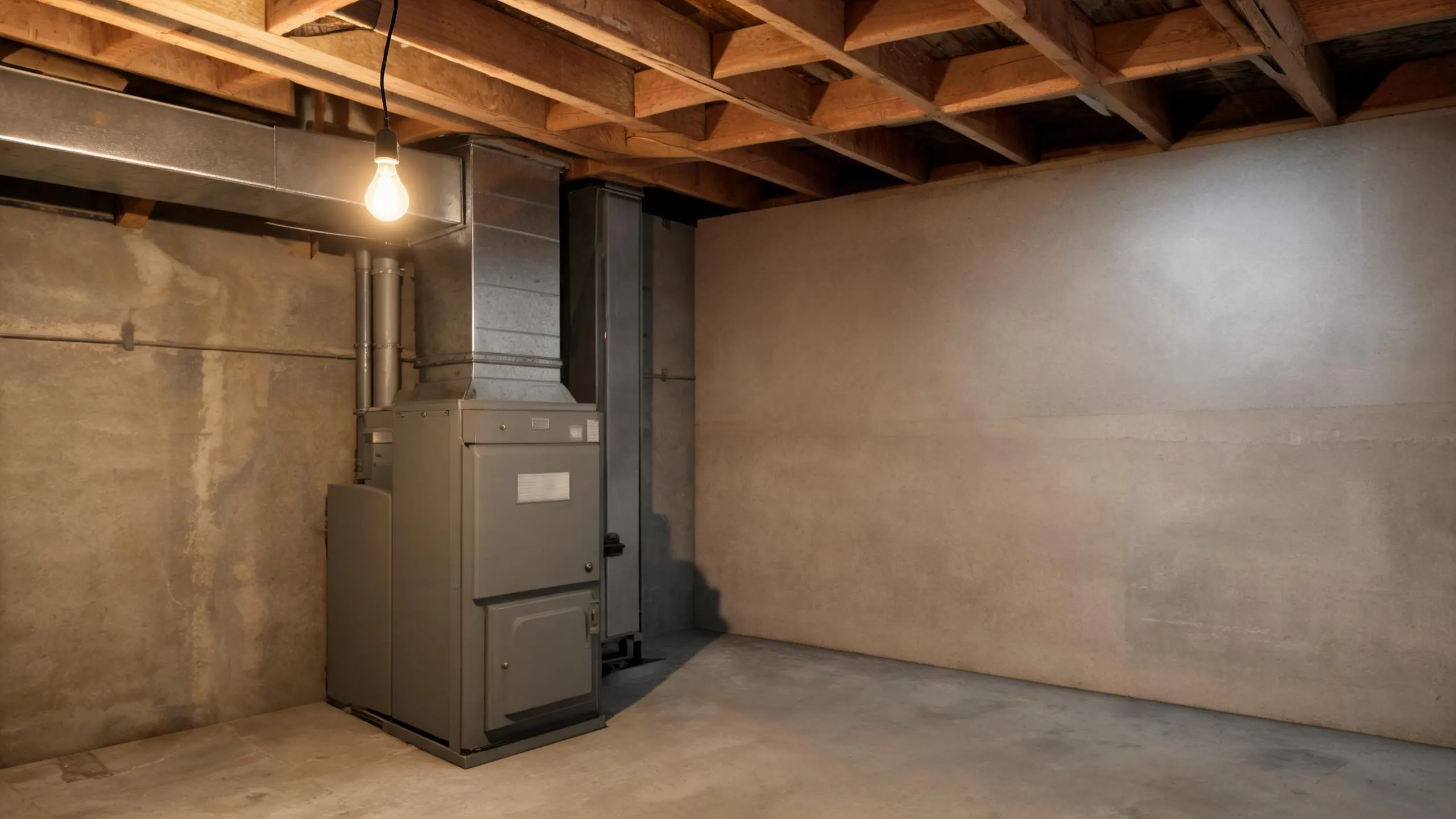
A gray forced-air furnace with sheet-metal ductwork stands in an unfinished basement with exposed wooden joists, concrete walls, and a hanging incandescent bulb.

A high-efficiency gas furnace would save about $130 a year to run in Whiteside County compared with a gas furnace.

  • A high-efficiency gas furnace$600 a year
  • A gas furnace$730 a year

Estimates for a typical Whiteside County home, from EIA household energy data, Illinois fuel prices and NOAA climate normals. Your home will differ.

Installation day starts with the old furnace coming out, along with the old vent pipe if it's not sized right for the new one. The crew sets the new cabinet, squares it up, and connects the supply and return plenums to the existing ductwork. Gas line gets hooked up and checked for leaks before anything is powered on. Electrical is next: a dedicated circuit for the blower motor and the control board, plus the thermostat wire run back to the furnace. Venting gets tied in according to what the furnace needs, not what the old one used, since a higher efficiency unit often vents differently than what was there before. Once it's buttoned up, the furnace gets fired and run through a full cycle while the tech checks gas pressure, temperature rise across the heat exchanger, and that every room is actually getting air.