Electricity here runs $46.51 per million Btu
Illinois electricity cost $46.51 per million Btu in 2024. Most furnaces around Carbondale run on electricity, so that rate is what drives the bill every time the furnace cycles on.
Takes about a minute. No obligation.
Illinois electricity cost $46.51 per million Btu in 2024. Most furnaces around Carbondale run on electricity, so that rate is what drives the bill every time the furnace cycles on.
A furnace working against a clogged filter or a dirty blower wheel runs longer to heat the same house. Longer runtime against that electric rate shows up on the bill before anything actually breaks.
A furnace that short cycles, turning on and off every few minutes, is losing the fight against a clogged filter or a failing flame sensor.
That strain shortens the life of the parts doing the extra work, long before the furnace quits for good.



Furnaces around Carbondale start running in October and keep going through April. That's seven months of straight work. September is the month to get a furnace looked at, right before it has to carry the house through an Illinois winter. A furnace that starts the season with a dirty filter or a worn igniter is already working harder on the coldest mornings, when the overnight low is averaging 27 degrees. Catching that in September costs nothing compared to catching it in January, when the furnace can't take a day off to be fixed.
A neglected system uses more power, and power costs more here. A tune-up pays for itself.
Find a contractorA furnace that never gets looked at doesn't fail all at once. The igniter wears down a little more each winter until it finally cracks. The blower wheel collects a layer of dust and moves less air, so the heat exchanger runs hotter than it should. A flame sensor coated in residue starts misreading the flame and shuts the burner off, sometimes right in the middle of a cold snap. None of this shows up on an inspection you can do from the couch. It shows up as a service call. Skip the yearly check long enough and small problems stack on each other, a clogged filter straining the blower motor, a weak capacitor struggling to start it, until the parts wear out together instead of one at a time. A furnace that gets opened up and cleaned every year tends to fail part by part, which is the cheaper way for it to happen.
A flame sensor coated with a thin film of residue still senses a flame, just not reliably. The furnace starts, runs a minute, then shuts down as the control board second-guesses a signal that looks weak. From the living room that looks like the furnace quitting at random. Taking the sensor out and cleaning the residue off the tip is something a homeowner would never think to check, because the furnace looks fine sitting there cold.
The pressure switch confirms the inducer motor is pulling exhaust out before the burners light. If it's stuck or wired loose, the furnace won't fire at all, and nothing about it looks wrong from outside the cabinet. This kind of fault tends to turn up on the first hard freeze of the year, exactly when the furnace is asked to run the longest. Checking the switch and its tubing while the weather is still mild means it gets caught before it has the chance to matter.
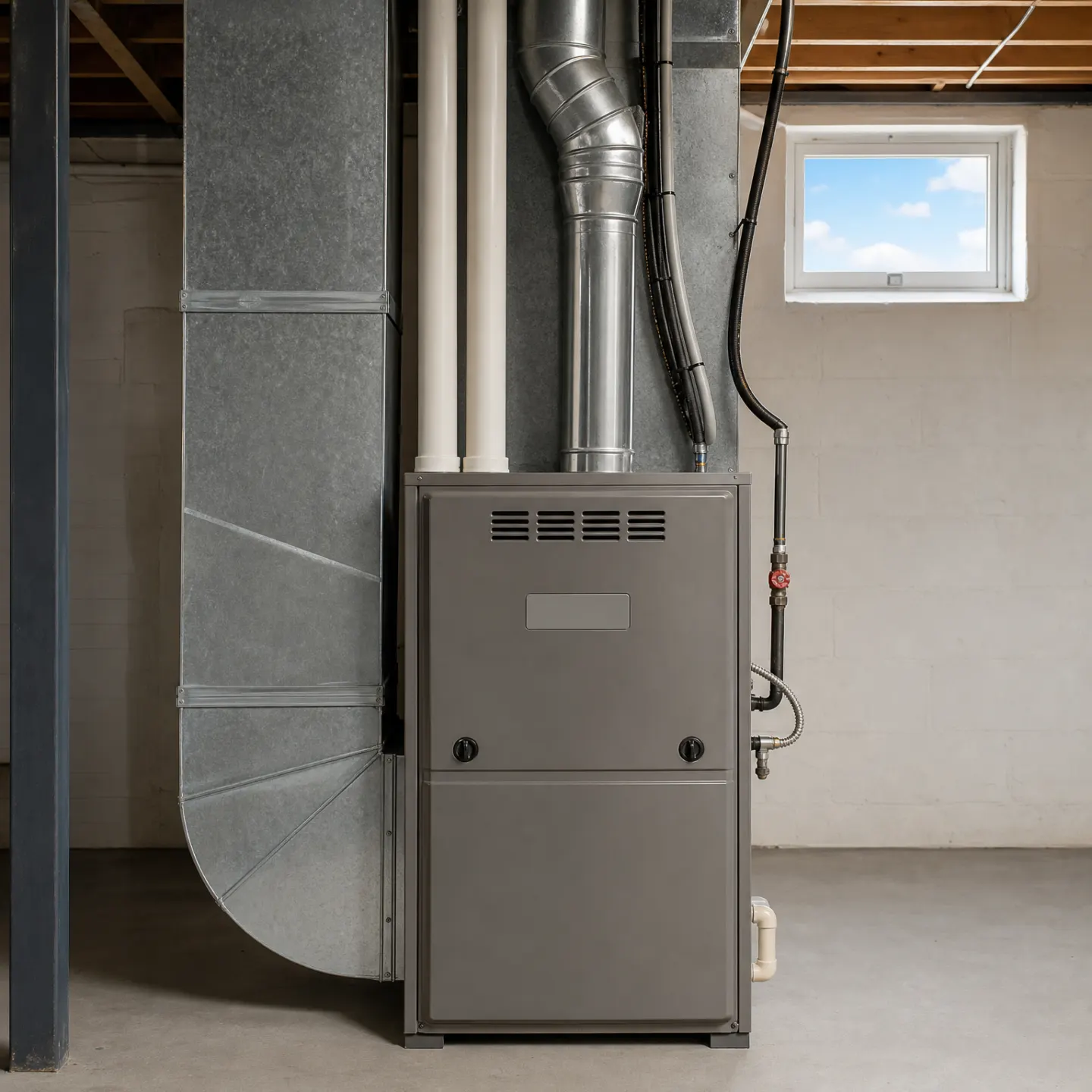
A furnace pulls its combustion air and its return air from inside the house, and the filter sits in the middle of that path. Dust gets past a dirty filter and lands on the blower wheel first, then the coil if there's one in the cabinet for the AC side. Once that coating builds up, the wheel moves less air per spin, even though the motor is working the same or harder to turn it. Less air across the heat exchanger means the exchanger itself runs hotter, since there's less volume carrying the heat away. That's the part that cracks over time if it keeps running hot. The condensate drain is the one most people forget entirely, since a furnace only makes condensate on the high-efficiency side, and a clogged drain line backs water up into the unit instead of out to the floor drain. A furnace that's never had the blower wheel wiped down or the drain checked is carrying problems that don't show up until the day it won't start.
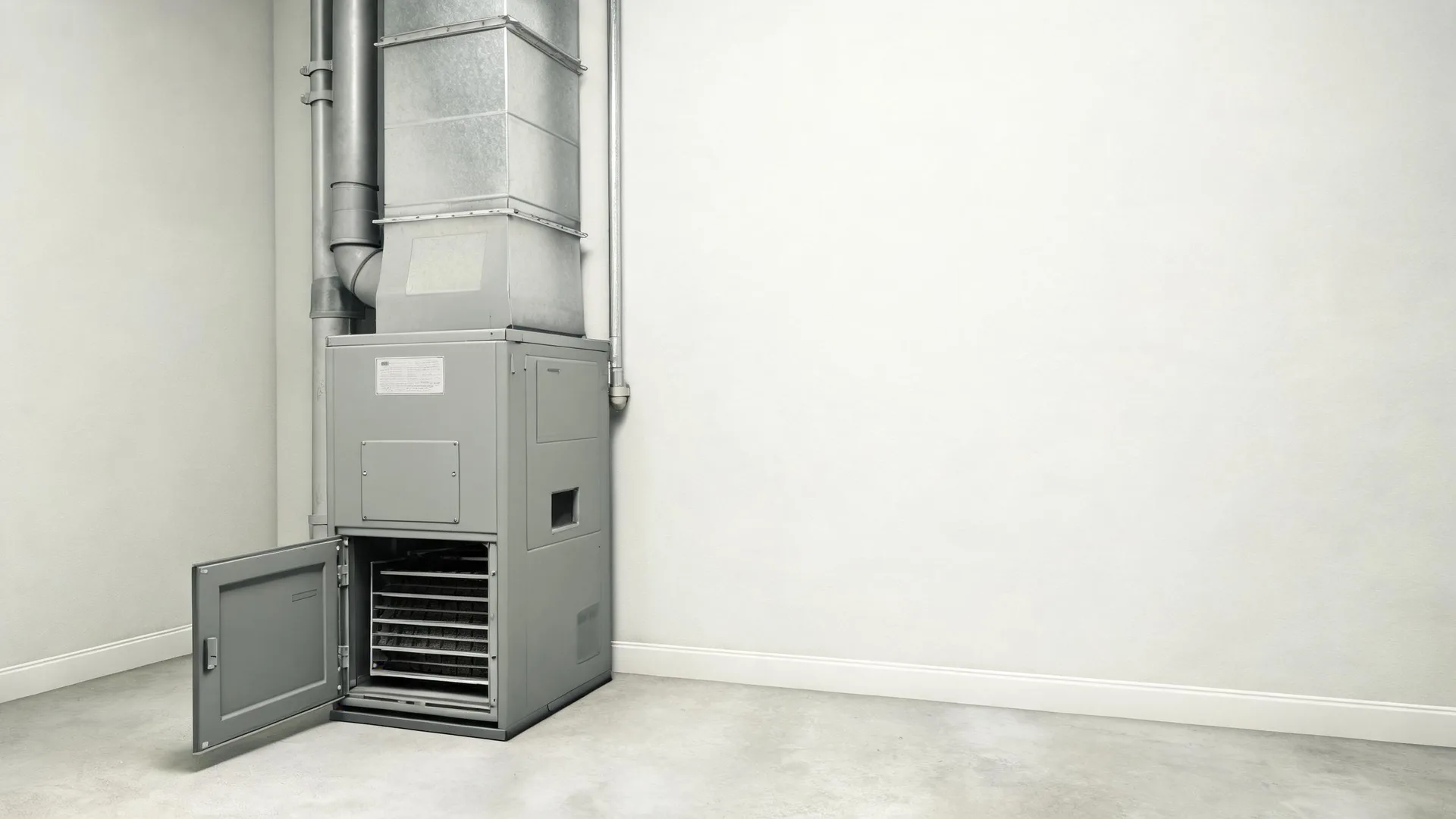
A real tune-up means the cabinet comes off, not just a glance at the thermostat. The burners get pulled and cleaned, because soot buildup changes how the flame looks and where it reaches, and a flame that's burning wrong can crack a heat exchanger long before the furnace ever fails to start. The igniter gets checked under power, since a hairline crack in it only shows up when it's glowing, not when it's cold and sitting still. Amp draw on the blower motor gets tested against what that motor is rated for, because a motor pulling too many amps is already on its way to burning out. The gas pressure gets checked at the manifold too, since too much or too little changes how clean the burners fire. None of this is guesswork. Every reading gets compared against a number the manufacturer already set for that furnace, so a tech knows the difference between normal wear and a part about to quit.