





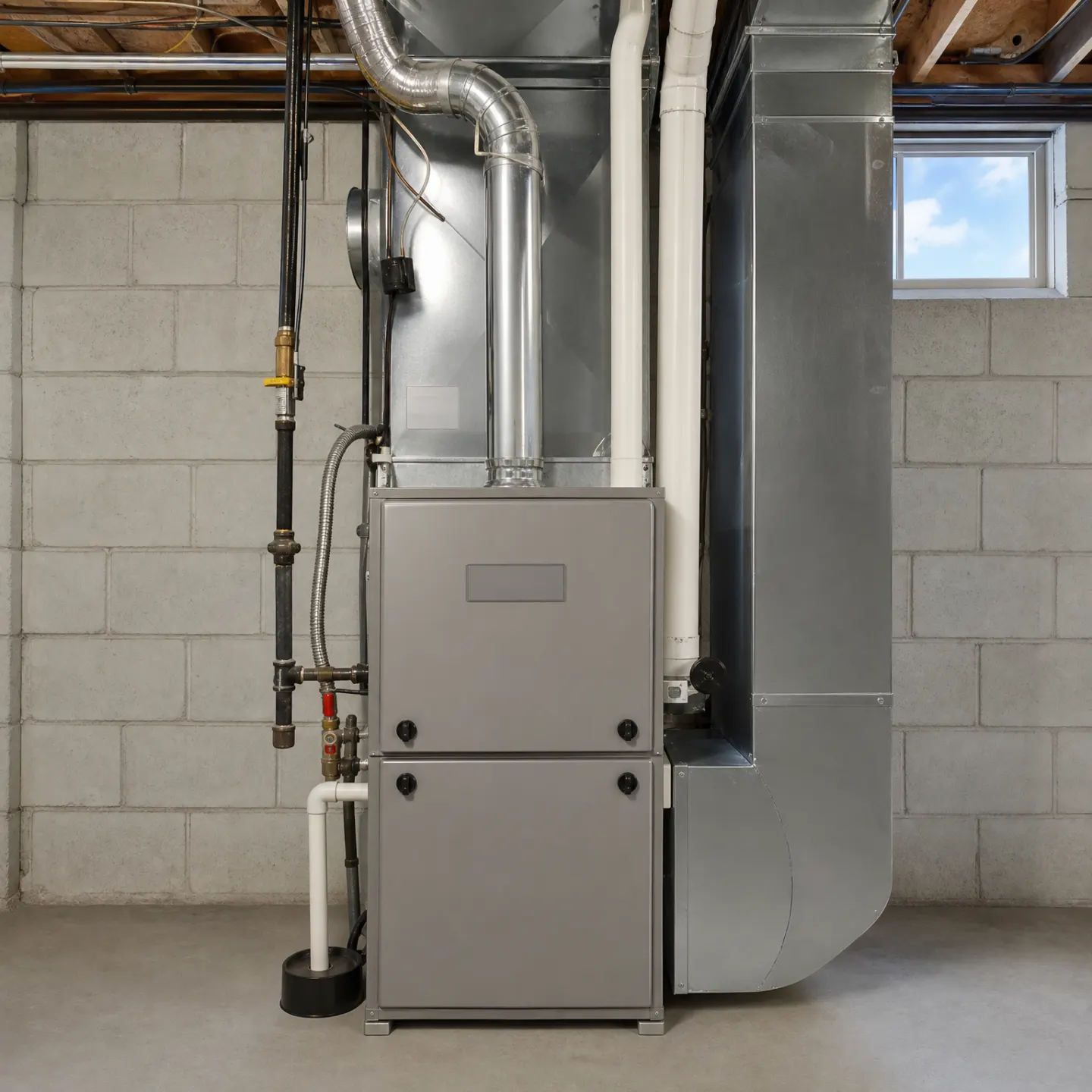
An unfinished basement featuring a grey forced-air furnace with metal ductwork, concrete block walls, exposed wooden joists, and a single hanging bare bulb.

Furnace Maintenance in West Frankfort, IL

Tell us about the job

Takes about a minute. No obligation.

Step 1 of 3: Equipment

Electricity ran $46.51 per million Btu in Illinois homes in 2024, and most houses around West Frankfort heat with it. That number sits higher than what a lot of other states pay. A furnace that has to fight a dirty filter or a worn igniter pulls more power to put out the same heat. Here, that difference shows up on the bill faster than it would somewhere with cheaper power. A furnace running clean and right is what keeps that cost where it belongs.

Electric furnaces heat about half the homes around West Frankfort.

A tune-up on one of these means checking the heating elements and airflow, not a burner.

Half the homes here were built in 1963 or earlier, and a furnace that old needs eyes on it every year

Half the homes here were built by 1963
Heat runs October through April
Winter nights average 27°F
Get it looked at before OctoberFurnaces here run from October through April, about seven months straight.

A furnace that old is worth a yearly look before winter sets in, not after it stops working. A tech can open the unit, check the heating elements, test the airflow, and tell you what's holding up and what's wearing thin. Catching a weak element or a dragging blower early means a scheduled visit instead of a breakdown on a cold morning. Nobody can say from here what's behind your walls or how the ductwork was run when the house was built. That's exactly what the yearly check is for, since a guess isn't worth much on a system this old.

A furnace running clean is what keeps the cost where it belongs

A tune-up gets the heating elements and the airflow checked before the cold sets in. That's what keeps the furnace from pulling more power than it should once winter settles in.

Find a contractor
A man in a dark long-sleeve shirt and brown work pants, seen from behind, carries a worn canvas tool bag as he steps up porch stairs toward a navy blue front door of a light gray clapboard house, with a potted shrub beside the entry.
A gray high-efficiency gas furnace installed in an unfinished basement, surrounded by gas lines, a condensate drain, and sheet-metal ductwork.

What you can check yourself between visits

Change the filter yourself. A dirty one makes the blower work harder to push the same air through the house, and with an electric furnace that means the heating elements stay on longer to make up for weak airflow. Look at it once a month and hold it up to a light. If you can't see light through it, swap it. Keep the area around the unit clear too. Boxes or stored items too close to the furnace can block the air it needs to pull in. Listen for anything new: a hum that wasn't there before, a rattle, a burning smell in the first minutes after it kicks on. Any of those is worth a call, not a wait. What you can't do yourself is pull the panel and test the heating elements or check the blower motor's amp draw. That takes a meter and training. Between visits, the filter and your own ears are the whole job.

The coil still matters without a drain line to watch

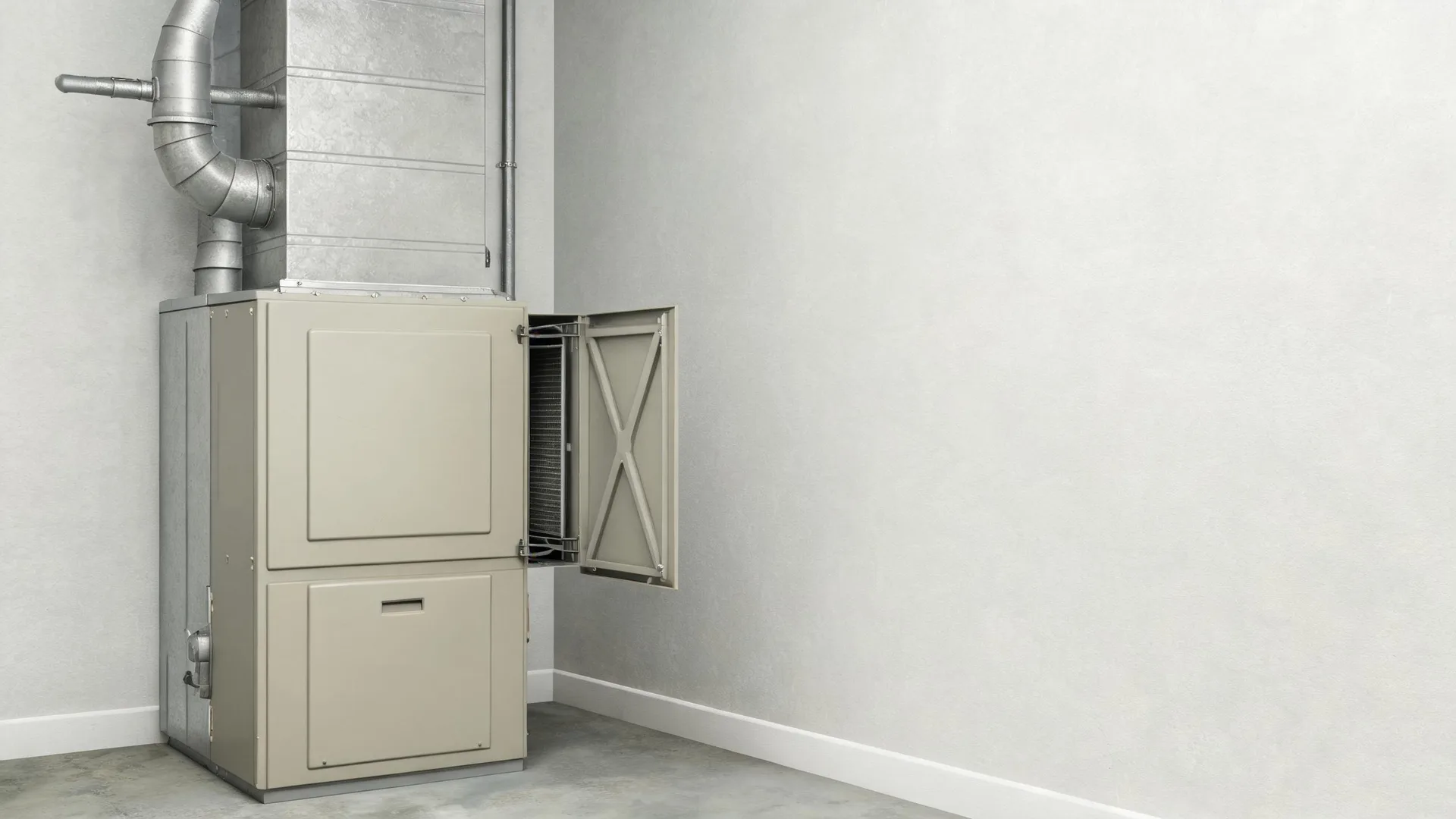
An electric furnace doesn't have the condensate drain a gas furnace or an AC coil relies on, so there's no trap to clog and no pan to overflow. But the heating elements sit in the airstream behind that coil-like housing, and dust settles on them the same way it settles anywhere air moves slowly across metal. A thin layer acts like a blanket. The element has to push harder to radiate the same heat through it, and it runs hotter doing it.
What a blocked filter does to the rest of the system

A clogged filter chokes the air moving across the heating elements. Less air across a hot element means the element runs hotter than it was built to, and that shortens its life. It also means the blower motor works against more resistance to move the same volume of air, which wears the motor bearings faster than normal use would. The filter is the cheapest part in the whole system and the one most likely to cause damage to the expensive parts if it's ignored.

A lot of what wears out in a furnace doesn't make noise doing it. A heating element can be cracked and still glow when the thermostat calls for heat, just not as hot, and not for as long before it cycles off. A blower motor can be drawing more amps than it should months before it seizes, the bearings wearing a little more each run. None of that shows up as a smell or a sound you'd notice. What a tune-up does is put a meter on the things you can't eyeball. Amp draw on the blower motor, resistance across each element, airflow at the vents compared to what the system was built to move. A tech can catch an element on its way out or a motor pulling hard well before either one quits, and that's the difference between a scheduled fix and a cold house on the coldest morning of the year.

A tune-up on an electric furnace follows the same path every time. The tech pulls the panel and looks at each heating element for cracks or hot spots where the coil has started to thin. Then the amp draw gets tested on the blower motor, since a motor pulling more current than it should is working against resistance somewhere, often a bearing on its way out. Airflow gets checked at the vents and compared to what the system was built to move, because weak airflow is what makes elements run hotter than they should. The sequencer or relay board that controls which elements fire and when gets tested too, since a stuck relay can leave one element running when it shouldn't or keep one from firing at all. Every wire connection at the element terminals gets checked for looseness, because a loose connection heats up on its own and that heat has nowhere to go but into the wire insulation around it.