One season, one check
A furnace in Belleville runs October through April, then sits idle the rest of the year. One visit before that stretch starts is enough to cover it.
Takes about a minute. No obligation.
A furnace in Belleville runs October through April, then sits idle the rest of the year. One visit before that stretch starts is enough to cover it.
Overnight lows average 26°F through December, January and February. A furnace gets no break once that cold settles in, so the check needs to happen before those months, not during them.
Furnace season starts in October here and runs straight through to April.
Have it checked in September, before it has to work.


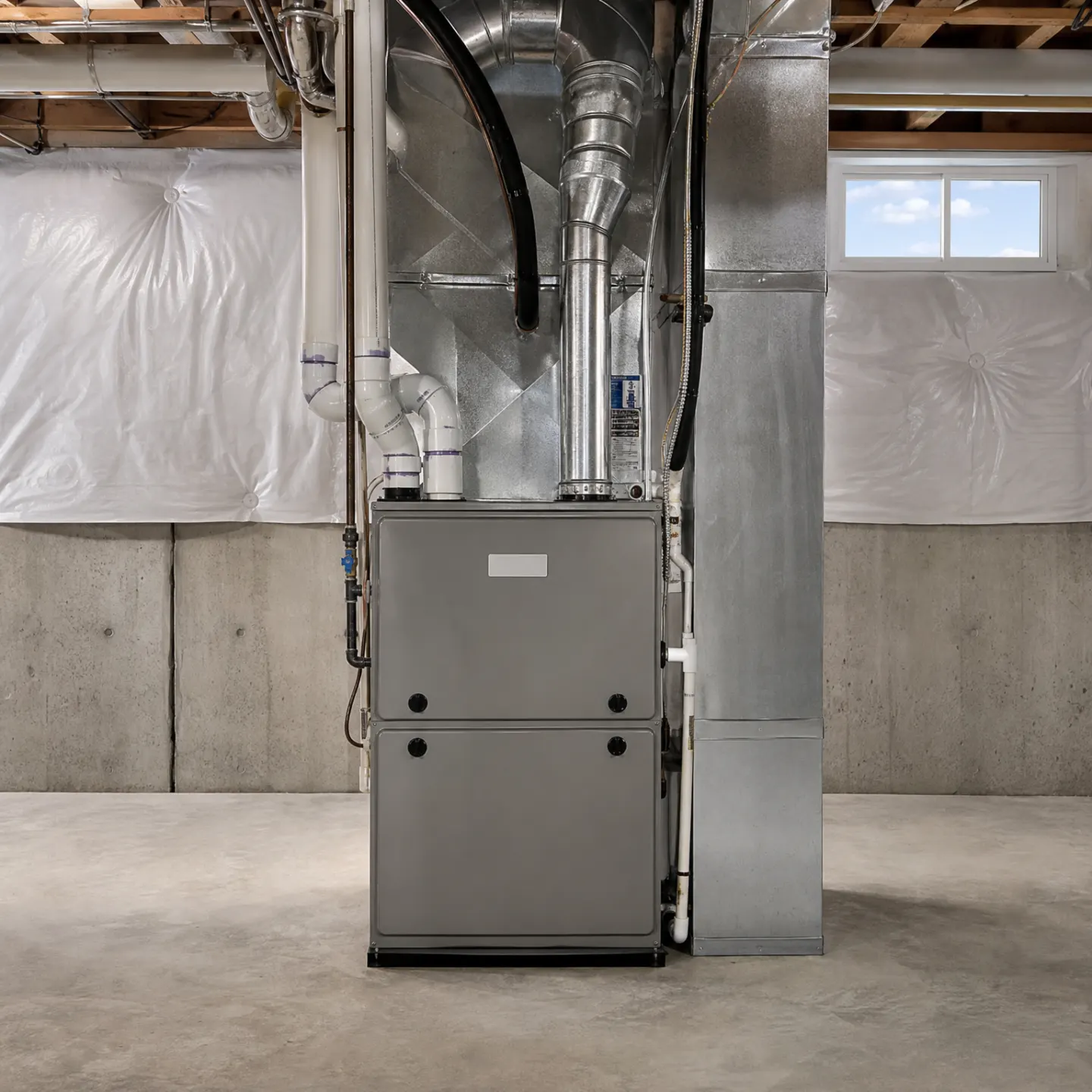
Most homes in St. Clair County heat with gas, 60.6 percent of them. That means a burner, a flame sensor and a flue, not just a filter and a blower wheel. A gas furnace draws air into the burner and sends the exhaust out through venting, and both of those need to be checked, not just the parts you can see when you pull the front panel. A cracked heat exchanger or a vent pulling wrong is a safety problem before it's a comfort problem. Electric furnaces, in the 33.4 percent of homes that use them, skip the gas side of that list but still need the heating elements and the blower looked at. Either way, the check matters more than the filter change.
St. Clair County homes split evenly between built before 1975 and after. Age of the house doesn't change what a furnace needs. One visit a year, before the cold sets in, is enough either way.
Find a contractor
Between visits, the filter is the one thing worth your attention. A dirty filter chokes airflow, and a furnace starved for air runs hotter and longer than it should. Check it monthly, more often if you have pets, and swap it when it looks gray instead of white. Keep the area around the furnace clear too. Boxes, paint cans and stored furniture too close to the cabinet block the air it needs to draw in and can be a fire risk near a gas unit. If you have a standing pilot, you can check that the flame burns blue and steady, not yellow or flickering. A yellow flame means incomplete combustion, and that is not something to wait on. Past that, leave it alone. Do not open the cabinet, adjust the gas valve or clean the flame sensor yourself. Those are jobs for someone who can test the system after, not just put it back together.
A furnace moves heat through a blower wheel and a heat exchanger, not through coils that collect moisture. There's no condensate line on a standard gas or electric furnace, no drain to clog. That's a cooling-season problem, not a heating one.
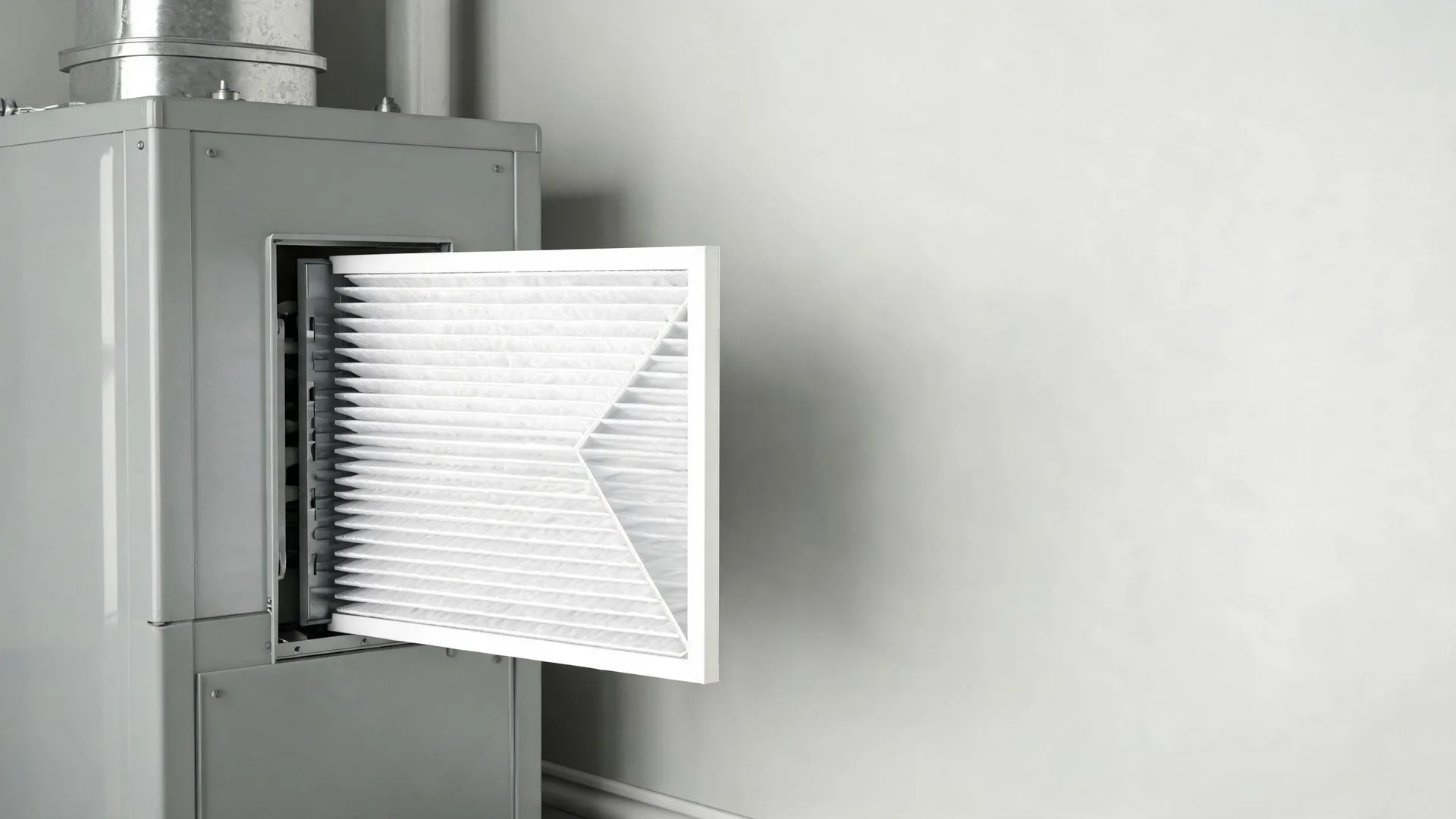
Both pull air through the same slot, so a filter packed with dust chokes a furnace the same way it chokes an air conditioner. The blower has to work harder to pull air past it, and the furnace can run hotter than it should. A clean filter at the start of the season is most of what that one visit protects.
Skip the yearly check and a furnace doesn't fail right away. It fails quietly, a little worse each winter. Dust builds on the flame sensor until it stops reading the flame right, and the furnace starts shutting off on its own, sometimes mid-cycle, sometimes before it fully lights. A burner that's never cleaned burns dirtier. Dirty combustion puts more carbon monoxide into the exhaust stream, and that only matters if the venting is also doing its job. The real risk with skipping it isn't one big failure. It's a few small ones stacking up where you can't see them, in the burner and the exchanger rather than in the filter you already check yourself.
A tune-up starts with the burner, not the filter you already check. The tech pulls it and cleans off the soot and dust so it lights evenly across the whole burner instead of in patches. Next comes the flame sensor, a thin metal rod that tells the furnace a flame is actually burning. A film builds on it over time, and once it can't read the flame right, the furnace shuts itself off as a safety step. That gets cleaned too. The heat exchanger gets checked for cracks, since a cracked one can let exhaust mix into the air moving through your house. On a gas furnace, the venting gets checked for a solid connection and a clear path out, and the gas pressure gets tested against what the furnace is built to run on. The igniter gets looked at, since a weak one struggles to light the burner on a cold start. Last comes the blower motor and wheel, checked for wear and cleaned if dust has built up on the blades. None of this is guesswork. Each part gets tested against a number the furnace was built to hit, and anything off gets adjusted before the tech moves on.