A row of dark-sided single-story houses with brown shingled roofs behind a tall trimmed hedge, surrounded by large leafy trees and mown grass under an overcast sky.

Furnace Maintenance in Breese, IL

Tell us about the job

Takes about a minute. No obligation.

Step 1 of 3: Equipment

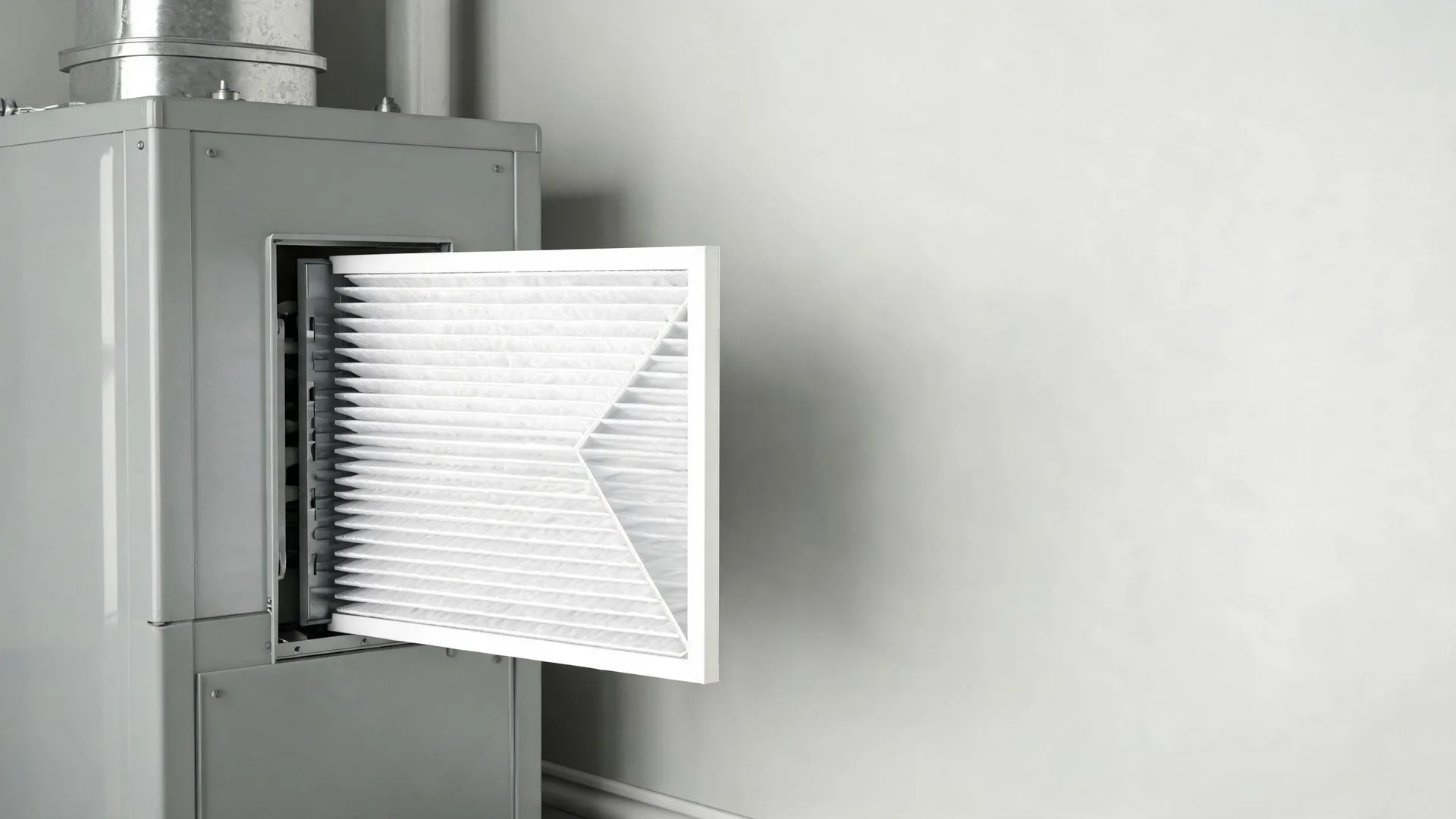
Between visits, the main thing you control is the filter. A dirty filter chokes airflow, and the furnace has to work harder to push heat through, which stresses the blower motor and can cause the heat exchanger to overheat and shut the system down on a safety switch. Check it by pulling it out and holding it up to a light. If you can't see light through it, swap it in. Keep the area around the furnace clear too, nothing stacked against the cabinet or blocking the return vent, since the unit needs open air to breathe. Walk past your vents and registers once in a while to make sure furniture or rugs haven't ended up on top of them. Past that, leave the inside of the cabinet alone and let a tech handle the burners and the flame sensor when they come through.

A furnace doesn't have a drain or outdoor coil to worry about, that's the air conditioner's job.

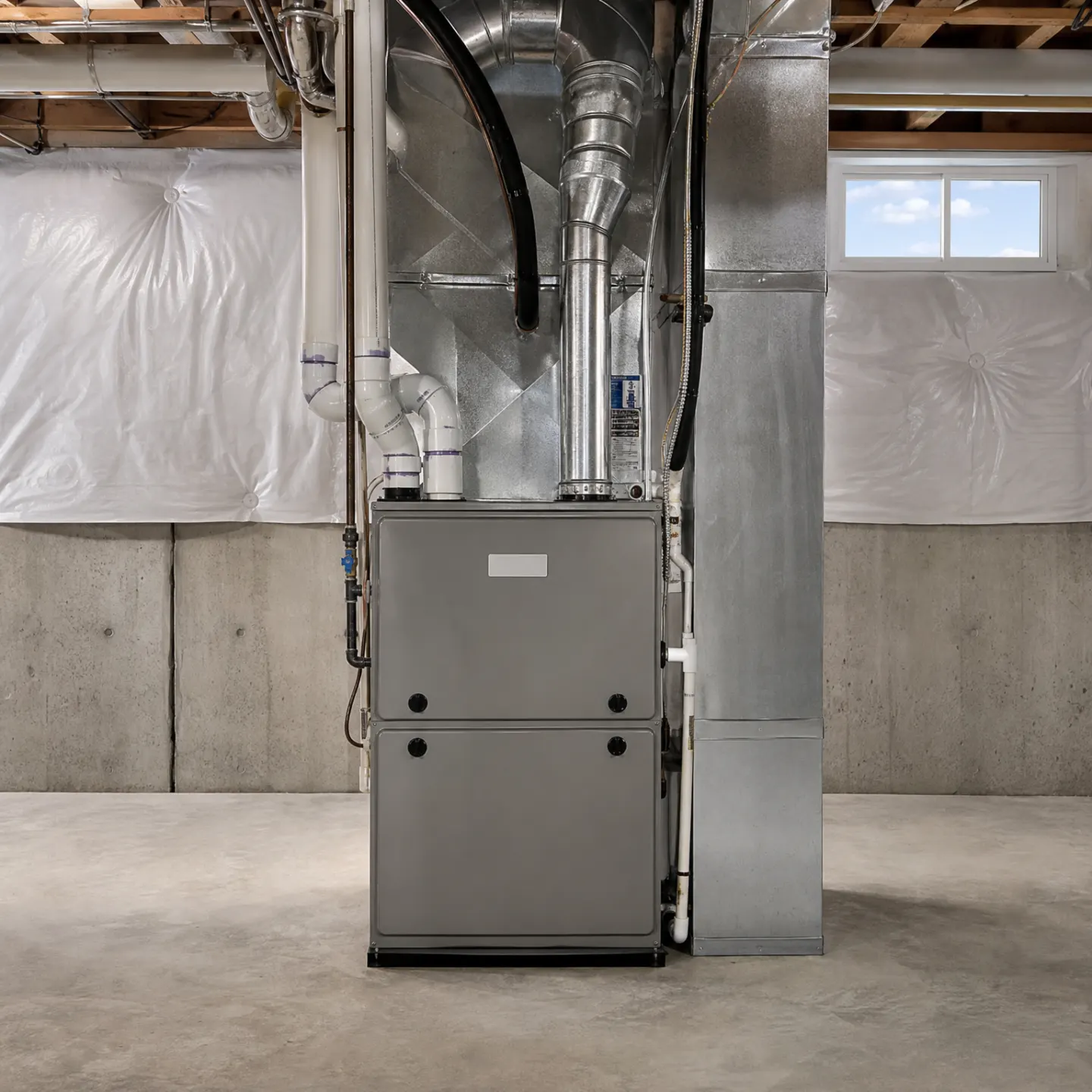
What's inside the cabinet here is the burners, the flame sensor and the heat exchanger, and that's the part a tech checks, not you.

Heat starts in October here, so get the furnace checked in September

Heat runs October through April
Winter nights average 25°F
Climate zone 4A
One check a year covers itBreese has old furnaces and new ones alike, and both need the same yearly visit, not more

Most homes in Clinton County heat with gas, 52.4% of them, and another 17.4% run on bottled or LP gas. That means the furnace most readers have is burning fuel, not just moving electric heat, so there's a flame involved and somewhere for the exhaust to go. A tech checks the burner for a clean, even flame, tests the flame sensor, and looks at the venting to make sure exhaust is actually leaving the house instead of backing up. These aren't parts you can judge by eye or fix with a new filter. On an electric furnace, maintenance is mostly the blower and the heating elements. On a gas furnace, the burner and venting are what keep the thing safe to run.

Book it before the season

It starts running hard in the first month of the season here. Book the check the month before.

Find a contractor
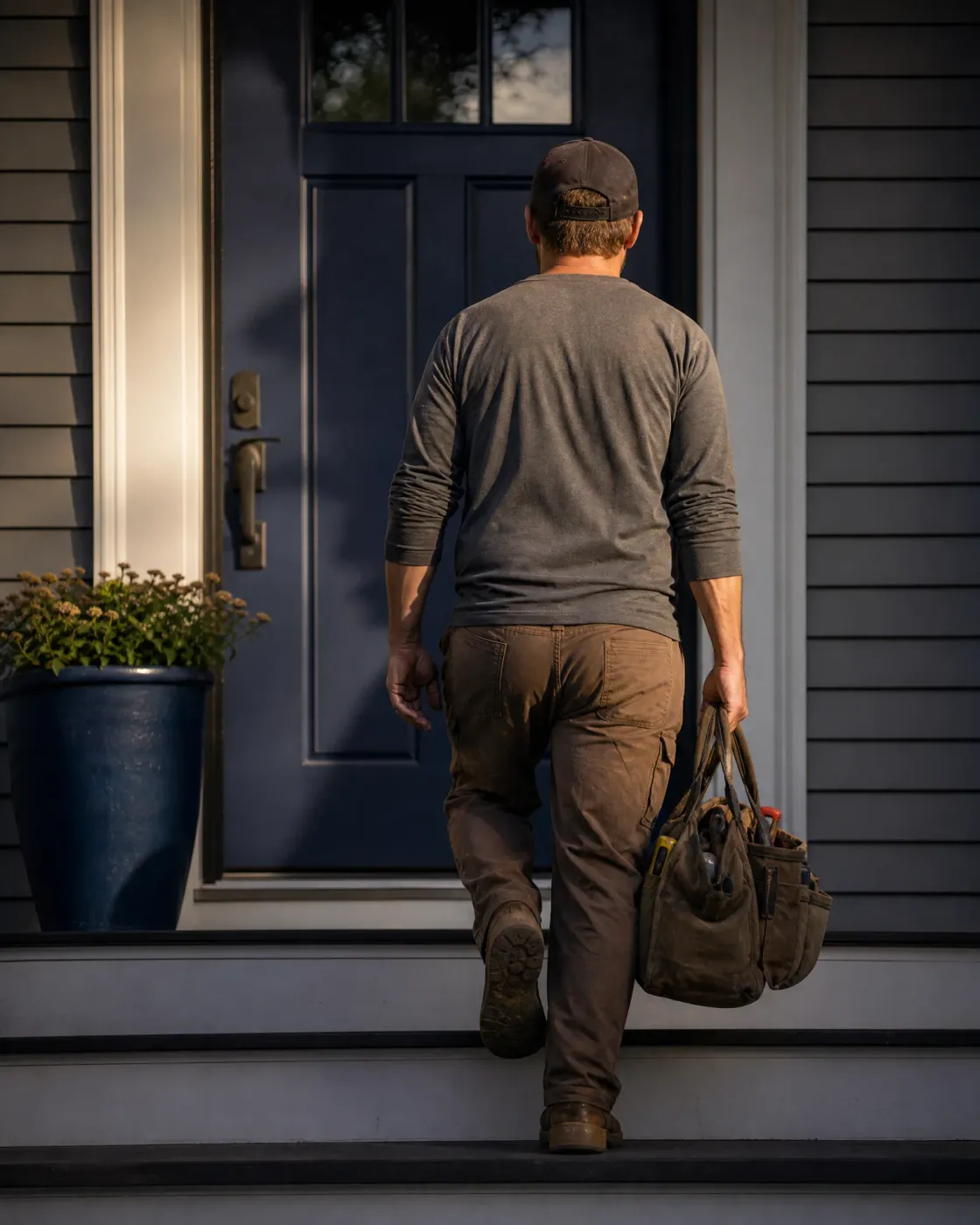
A man in a cap, gray long-sleeve shirt and brown work pants walks up porch steps toward a dark blue front door, carrying a canvas tool bag, with gray horizontal siding and a potted flowering plant nearby.
A gray residential gas furnace installed in an unfinished basement, connected to sheet-metal ductwork and PVC pipes.

What a filter can't tell you

A flame sensor looks fine and still fail. It builds up a film from normal burning that your eye won't catch, and once that film is thick enough the sensor can't tell the burner there's a flame, so the furnace shuts itself off a few seconds after starting. A tech cleans it with emery paper and tests it, not just looks at it. The same goes for the burner itself. A flame that looks steady to you can be burning uneven underneath, and an uneven flame means the heat exchanger is heating unevenly too, which is what cracks it over time. Static pressure is another one nobody checks on their own. Too much resistance in the duct system makes the blower motor work past what it's rated for, and that wears the motor down long before anything looks wrong from outside the cabinet.

The flame sensor still fails

Skip the yearly cleaning and the film on the flame sensor keeps building until it can't do its job. The furnace starts, runs a few seconds, and shuts off, over and over. That's the sensor telling the system it doesn't see a flame, even though it does.
The heat exchanger pays for it

An uneven burner flame heats the exchanger unevenly too. Run that year after year without a tech checking the burner and the metal stresses in the same spots every cycle, which is how a crack starts. A cracked heat exchanger is a safety problem, not a comfort one.

A quick visit means someone pulls the furnace cover, glances inside, and listens to it run for a minute. A thorough one means the burner actually gets looked at while it's lit, not just eyeballed cold. The flame sensor comes out and gets cleaned with emery paper, not wiped with a rag. Someone checks the static pressure in the ducts, because that number tells you if the blower is straining against resistance it wasn't built for. The flue and venting get checked too, to make sure exhaust is actually leaving the house. If the visit is over before you'd finish a cup of coffee, that's the short version. The long version takes time because the parts that actually fail aren't the ones you can see without opening something up and testing it.

A tune-up also means the furnace gets taken apart enough to see what a season of running does to it. The burner assembly comes out so the ports can be checked for rust or blockage, since a clogged port is what starts an uneven flame in the first place. The igniter gets tested under load, not just looked at, because it can glow fine sitting still and still fail to light the burner reliably. Belts aren't part of this, a furnace blower runs direct drive, but the motor bearings and the blower wheel get checked for wear and for dust buildup that throws the wheel off balance. The ignition system gets tested through a full cycle too, not just once, because a part that starts the furnace fine on the first try can still fail on the second or third. None of this shows up from outside the cabinet, which is the whole reason the visit happens every year instead of only when something sounds wrong.