A dark two-story house with a wraparound covered porch sits behind a trimmed hedge and a mown lawn, framed by two large leafy trees.

Furnace Repair in Belleville, IL

Tell us about the job

Takes about a minute. No obligation.

Step 1 of 3: Equipment

September is the month to get it looked at

Furnaces in St. Clair County sit idle most of the year and start up again in October. A weak igniter or a failing inducer motor can make it through summer without ever being asked to work. The first cold snap is what finds it.

A breakdown in October isn't bad luck

When heat runs seven months straight here, whatever was already marginal in a furnace tends to give out early in the season rather than late. That's worth knowing when you're deciding whether a repair now is a one-time fix or the first of several.

7 months
October through April, your furnace is on duty
26°F
the average winter night it heats against
61%
of homes here heat with gas, so most furnaces here burn gas
9 winter storms
in ten years, the nights a failure hurts most
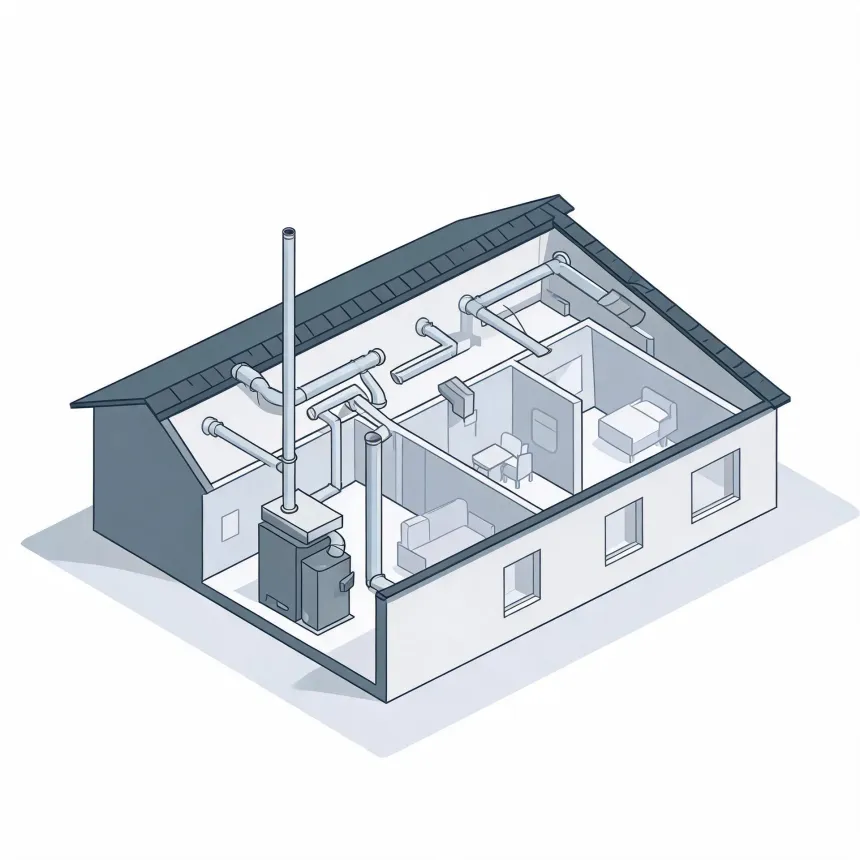
Isometric line illustration of a single-story house cutaway showing interior rooms with furniture, ductwork or piping running along the ceiling, and a boxy furnace unit with a tall vertical flue pipe.
Your furnace works hardest from November through March.

NOAA nClimDiv, 1991–2020 normals

Belleville furnaces run from October through April, seven months straight.

A furnace that's marginal in October is still marginal in February, so the same problem tends to come back if it's only patched.

St. Clair County weather isn't why your furnace quit

146 severe weather events from 2015 to 2024
16% of homes statewide lost power a day or more in 2024
84 damaging wind events from 2015 to 2024

A cracked heat exchanger is the clearest case. Run the furnace with a small crack and the metal keeps flexing with every heat cycle, and the crack grows until it's large enough to leak exhaust into the air your blower is pushing through the house. A flame sensor that's starting to fail works the same way in miniature. It still senses the flame, just barely, so the furnace keeps firing, but the sensor is coated and getting worse each cycle, and eventually it won't sense at all. An inducer motor with a failing bearing is louder every week it keeps spinning, because the wear it's showing you is the bearing surface itself grinding down. None of these fix themselves by continuing to operate. The part that's marginal now is doing the same job under the same strain it was failing under last week, and that's why waiting rarely buys you anything.

Get it looked at early

Problems tend to show up in the first weeks of the season, when the load hits a part that was already weak.

Find a contractor
A man in a dark cap, gray long-sleeve shirt and brown work pants climbs porch steps toward a navy front door, carrying a canvas tool tote with tools in its pockets, beside a potted evergreen shrub in a blue planter.
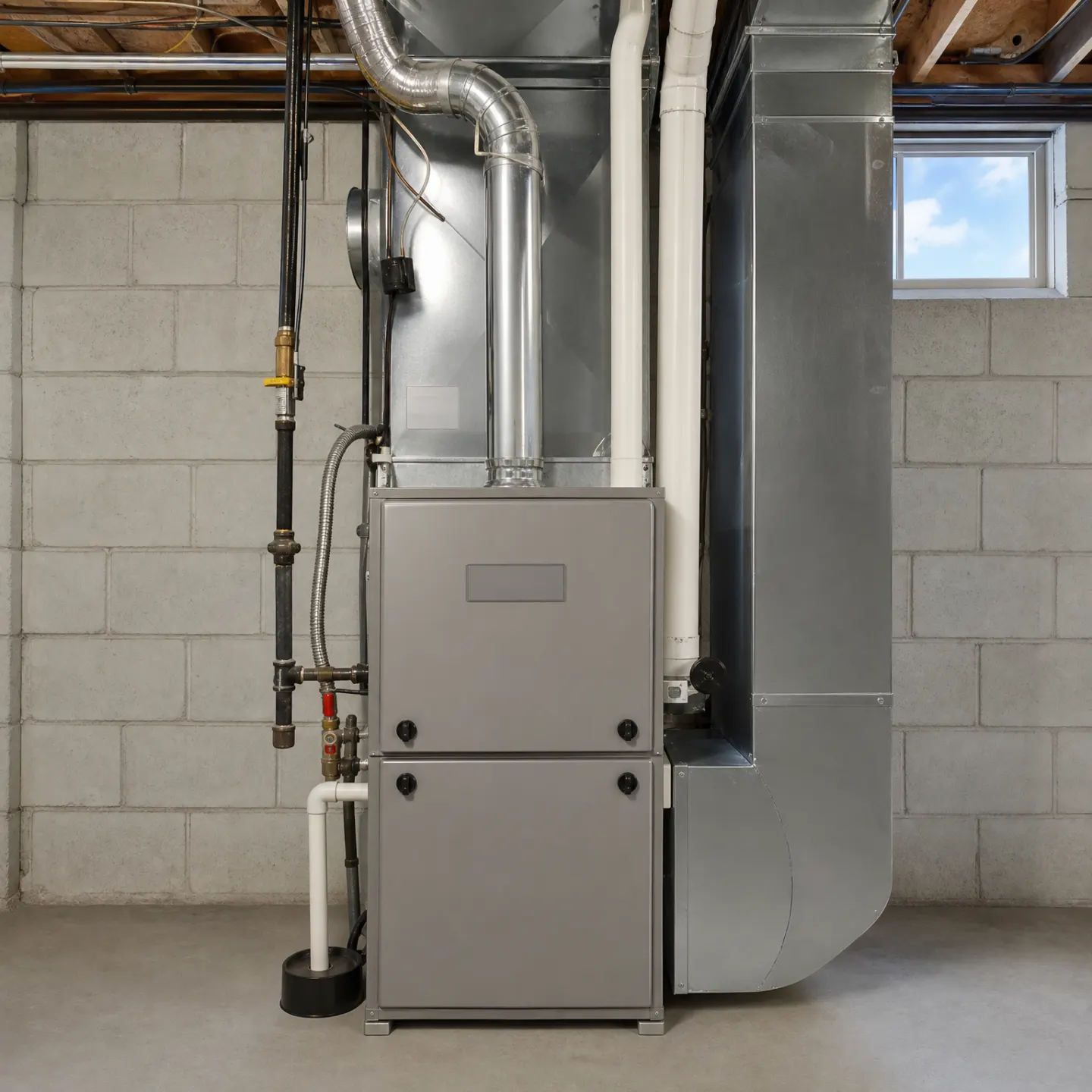
A gray high-efficiency gas furnace installed in an unfinished basement, surrounded by gas lines, a condensate drain, and sheet-metal ductwork.

Every one of these wears out from being used, not from being old

Furnaces usually fail in one of a few places. The igniter cracks or weakens with age and stops glowing hot enough to light the gas. The flame sensor gets a coating of oxidation and can no longer tell the control board a flame is lit, so the system shuts itself down as a safety check. The inducer motor wears out at the bearings and either seizes or gets too loud to ignore. Pressure switches fail stuck, open or closed, and either one stops the furnace from starting. Capacitors weaken until the blower motor struggles to start turning. None of these happen because a furnace is old on paper. They happen because a part wore through the specific motion or heat cycle it was built to survive a set number of times, and nobody can see that wear from outside the cabinet.

What you can check yourself

Start at the thermostat. Make sure it's set to heat and the set point is above room temperature, and swap the batteries if it takes them. Pull the air filter and look at it, because a filter clogged with dust can choke airflow enough to trip a safety switch and shut the furnace down. Check the breaker panel for a tripped breaker on the furnace circuit. If the furnace has a standing pilot, see if it's lit. If the cabinet has a service panel or door, make sure it's seated and latched, since most furnaces have a switch there that won't let the furnace run with the panel off.

What tells you to stop and call

A furnace that clicks over and over but never lights is trying to ignite and failing, and it will eventually lock itself out. Any smell of gas means shutting the furnace off at the switch or breaker and getting out of the house before calling anyone. A burning or electrical smell, soot around the vents, or a yellow flame instead of blue are not things to wait out. A furnace that runs briefly and shuts off, then starts again on its own, has a part failing partway through its job. That's not something a thermostat setting can fix.

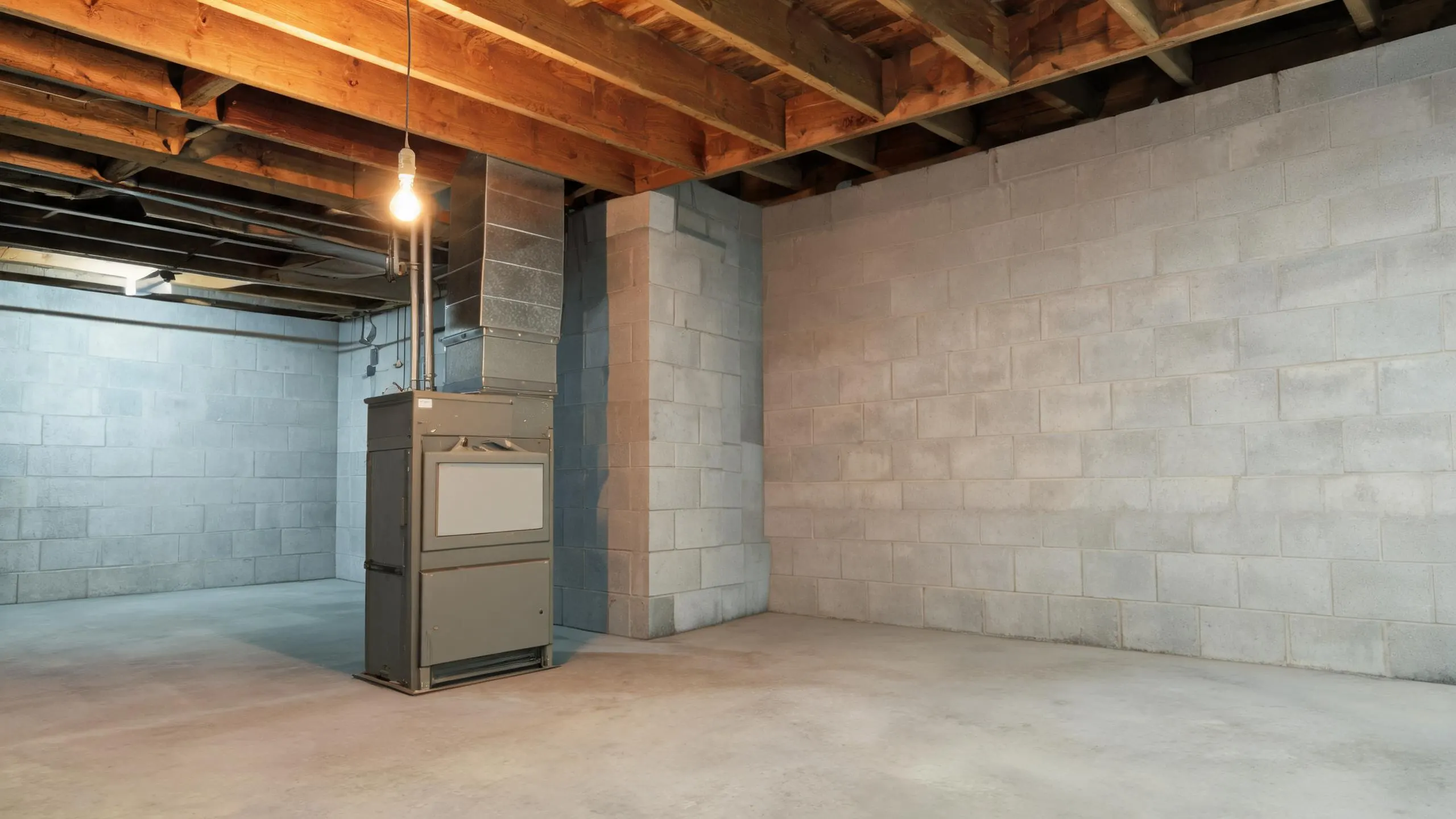
An unfinished basement featuring concrete block walls, exposed floor joists, and a metal forced-air furnace with ductwork near a central pillar.

A new furnace would cut about $100 a year off heating for a typical St. Clair County home.

  • A new high-efficiency furnace$430 a year
  • An older furnace$530 a year

Estimates for a typical St. Clair County home, compared with an older unit built to the previous federal minimum, from EIA household energy data, Illinois fuel prices and NOAA climate normals. Your home will differ.

Repair makes sense when one part has failed and the heat exchanger is sound.

Replacement makes sense when the heat exchanger is cracked or the furnace keeps needing parts.

A failing igniter on a furnace that runs fine otherwise is an easy repair, and worth making. A cracked heat exchanger is a different kind of question, because that part isn't meant to be replaced on its own, and quoting that job is close to quoting a new furnace. The parts in between are where it gets harder to call. A blower motor or control board failing on a furnace that's given no other trouble is still usually worth fixing. The same failure on a furnace that's needed a repair every season lately is a different conversation, because it stops being about this one part and starts being about how many more are close behind it. A contractor who looks at the whole furnace, not just the part that quit, can tell you which situation you're in. That answer matters more than how old the furnace is on paper.