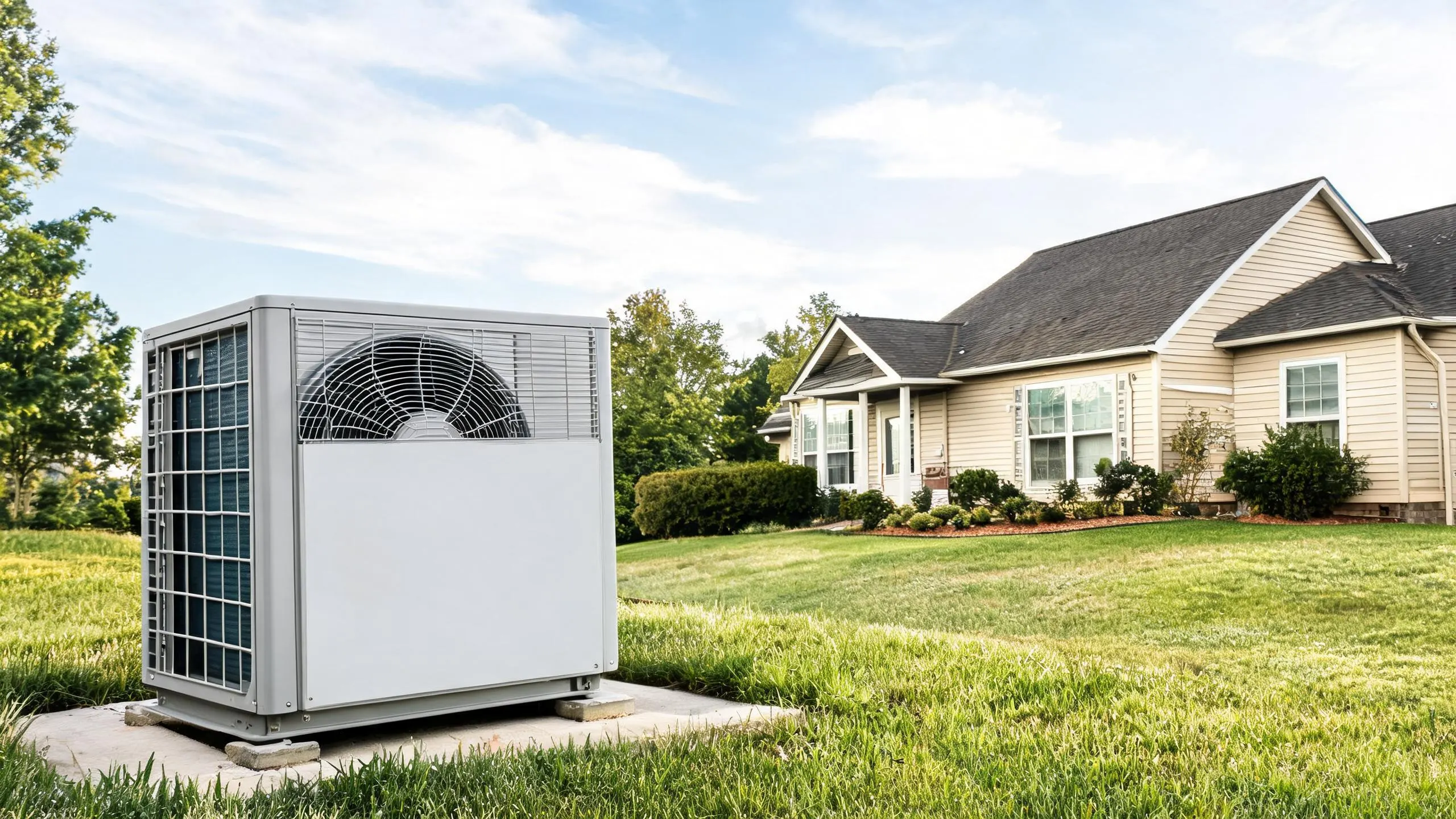





An outdoor heat pump unit mounted on a concrete pad in front of a single-story suburban house with beige siding.

Heat Pump Installation in Belleville, IL

Tell us about the job

Takes about a minute. No obligation.

Step 1 of 3: Equipment

Electricity in St. Clair County ran 17.65 cents per kilowatt-hour in 2025, more than most counties in the country pay. A heat pump runs on electricity for both heating and cooling, so that rate applies year round, not just in summer. Every degree of efficiency it has or doesn't have shows up on the meter month after month. Two systems can heat and cool the same house and land on very different bills here, simply because of how much electricity each one needs to do the job.

7 months
October through April, your system heats
5 months
May through September, it cools
26°F
the average winter night it heats against
87°F
the average summer afternoon it cools against
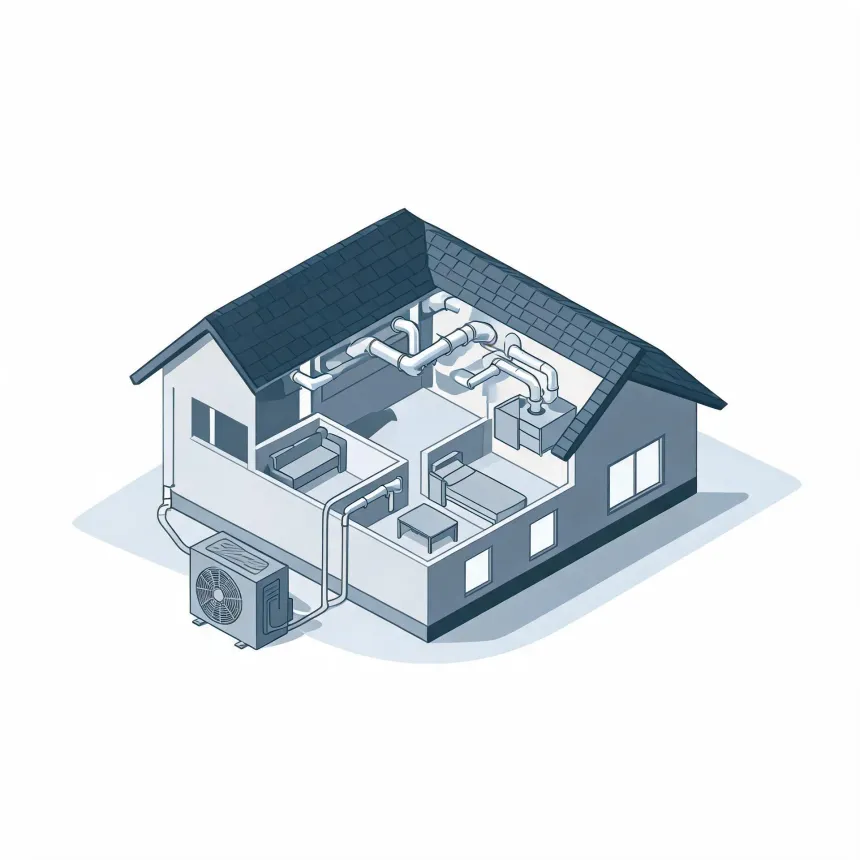
Isometric cutaway illustration of a house showing attic ductwork, an indoor air handler, furnished rooms, and an outdoor condenser unit connected by lines along the exterior wall.
Your system heats October through April and cools May through September.

NOAA nClimDiv, 1991–2020 normals

Gas heats 60.6% of homes in St. Clair County.

A heat pump installed here can work alongside that furnace or take over the job entirely.

Cooling starts in May, heat starts in October. Get it in before one of them makes the call for you.

Cooling runs May through September
Heat runs October through April
84 damaging wind events from 2015 to 2024
This Climate Doesn't Go Easy on EquipmentSt. Clair County saw 84 damaging wind events and 43 hail events between 2015 and 2024.

St. Clair County falls in climate zone 4A, which asks real work of a system both in summer and winter. Any split-system heat pump installed here has to clear a federal efficiency floor to match that: at least 14.3 Btu of cooling removed for every watt-hour of electricity it uses, and at least 7.5 Btu of heat delivered for every watt-hour in winter. That floor rules out the weakest equipment before a contractor ever walks through the door. It also means the heat pump going into a home here has to actually perform at both ends, not just one.

Ask what it costs to run, not just what it costs to install

The rate on your electric bill is not something a contractor can change. What they can change is how much power the heat pump needs to hit the same temperature. That gap is worth asking about before you sign, since you will be living with whichever system goes in for years of bills after.

Find a contractor
A man in a dark long-sleeve shirt and tan work pants, seen from behind, carries a worn canvas tool bag up steps toward a navy blue front door of a gray clapboard house, with a large blue planter and shrub to the right.
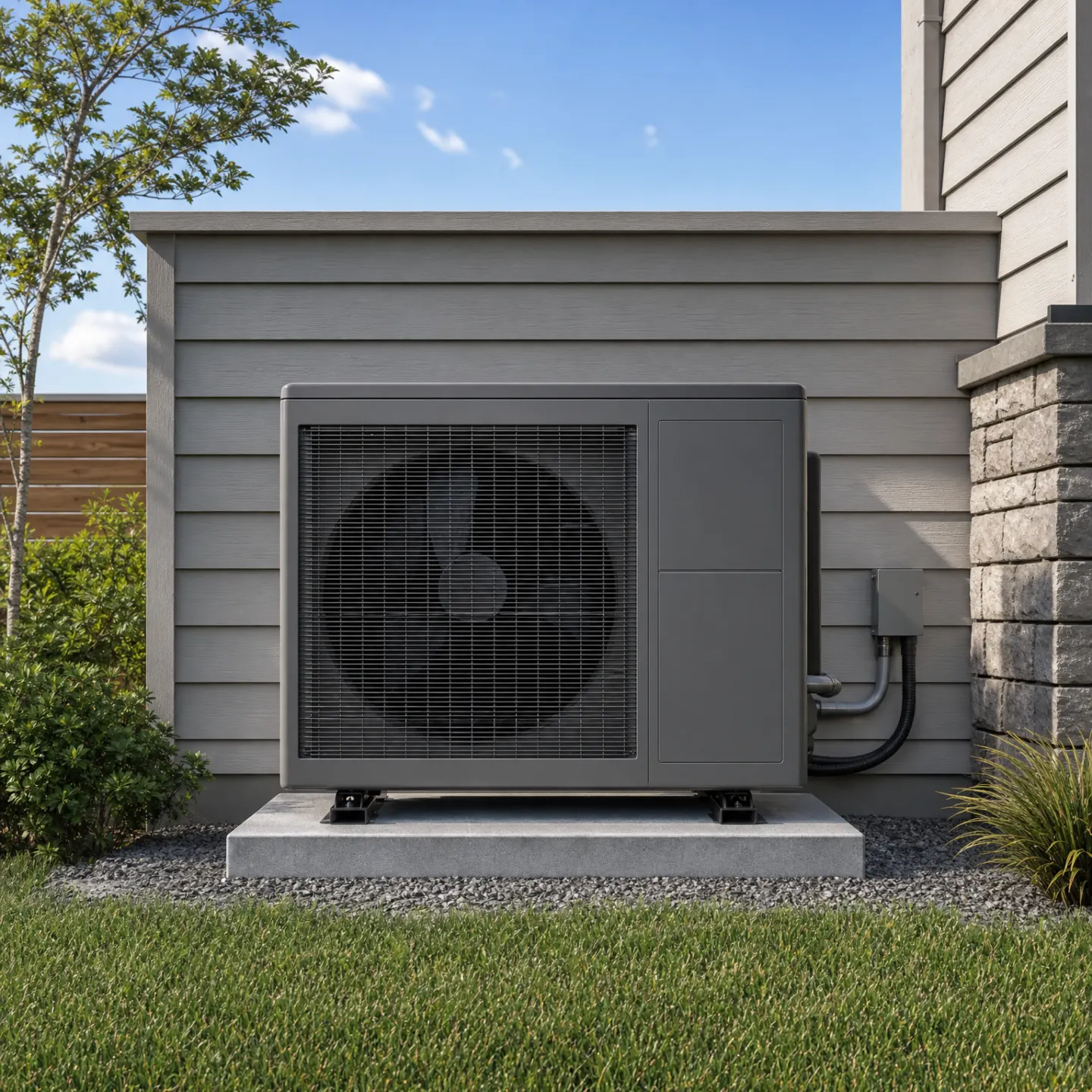
A gray heat pump outdoor unit mounted on a concrete pad next to a residential house with lap siding and stone accents.

A Long Working Year, Outside the Whole Time

This unit sits outside all year, running on whichever months are hot or cold enough to need it, and in this climate that's most of them. Wind and hail don't care whether the compressor is working hard or sitting idle. Pick a system sized to the house rather than the lowest bid, since an undersized unit runs harder to keep up and has less margin left when a storm adds stress of its own.

The Size Has to Match the House

A heat pump that's too big cools the air fast and shuts off before it pulls the moisture out, so the house ends up cold and damp. One that's too small runs flat out and still can't keep up on the hardest days. Getting the size right takes a load calculation on the house itself, room by room, not a guess based on the old system or the square footage alone. That calculation drives what size equipment goes in, and size drives a good share of what the job costs.
The Ductwork Decides More Than the Unit Does

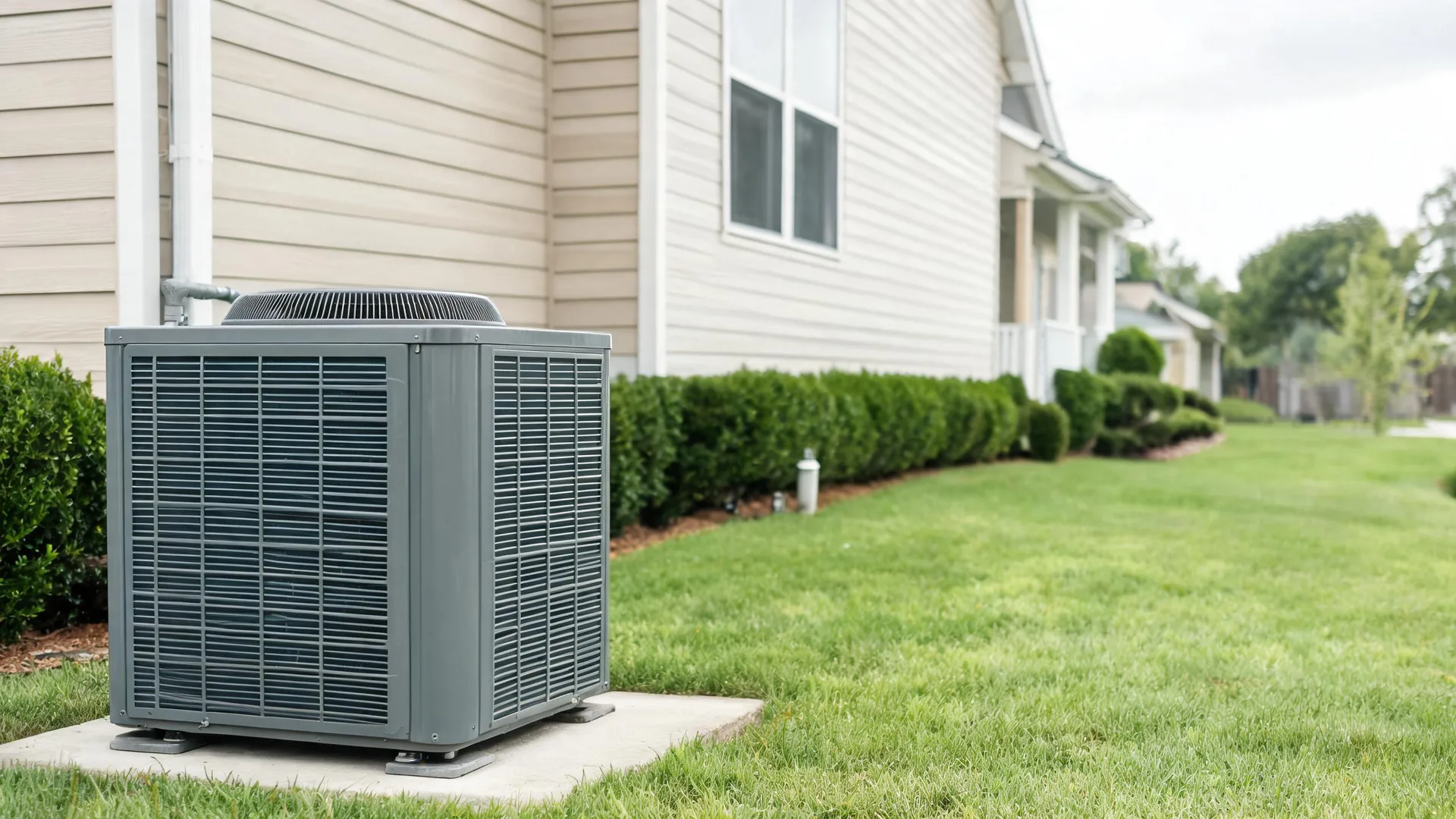
A heat pump moves a lot more air than a gas furnace does, especially on the coldest days when it leans hardest. Ducts that were sized for a furnace can end up too small or too leaky to carry that air without extra strain on the blower. Sealing joints, swapping out an undersized return, or adding a run where there isn't one changes what the installation involves before the outdoor unit ever gets set. Skipping that work doesn't make the job cheaper, it just moves the cost onto the equipment having to work around it.

What happens to the old equipment depends on whether the heat pump is replacing it or working alongside it. If the old condenser is being fully retired, it gets disconnected and hauled off, and the refrigerant inside it has to be recovered first rather than vented, since that's how the law treats it. A furnace staying on as backup gets wired into the new system through a control board, so the two share the load between them on the coldest stretches of the year. A furnace being fully retired gets disconnected from the gas line, and that line gets capped off by whoever is qualified to do it. None of that old equipment can just get left sitting there. A dead condenser still takes up space on the pad, and a disconnected furnace still has gas running to it until someone closes that off properly.

Installation starts with the outdoor unit and the indoor coil, and the two have to be matched, since a mismatched pair never hits its rated efficiency no matter how well it's installed. The line set connecting them gets cut to length, brazed, and pressure tested before anything is charged, because a joint that leaks slowly can take months to show up as a comfort problem. Once the lines hold pressure, the system gets evacuated to pull out moisture and air, then charged to the exact weight the manufacturer specifies, not just until the pressure looks right on a gauge. The electrical side needs its own disconnect and breaker sized for the unit, and the control wiring has to match the thermostat to however many stages the heat pump runs. Before anyone calls it done, the system should run through a full cycle in both heating and cooling, with the technician checking airflow at the vents and the temperature split across the coil, not just listening for the compressor to kick on.