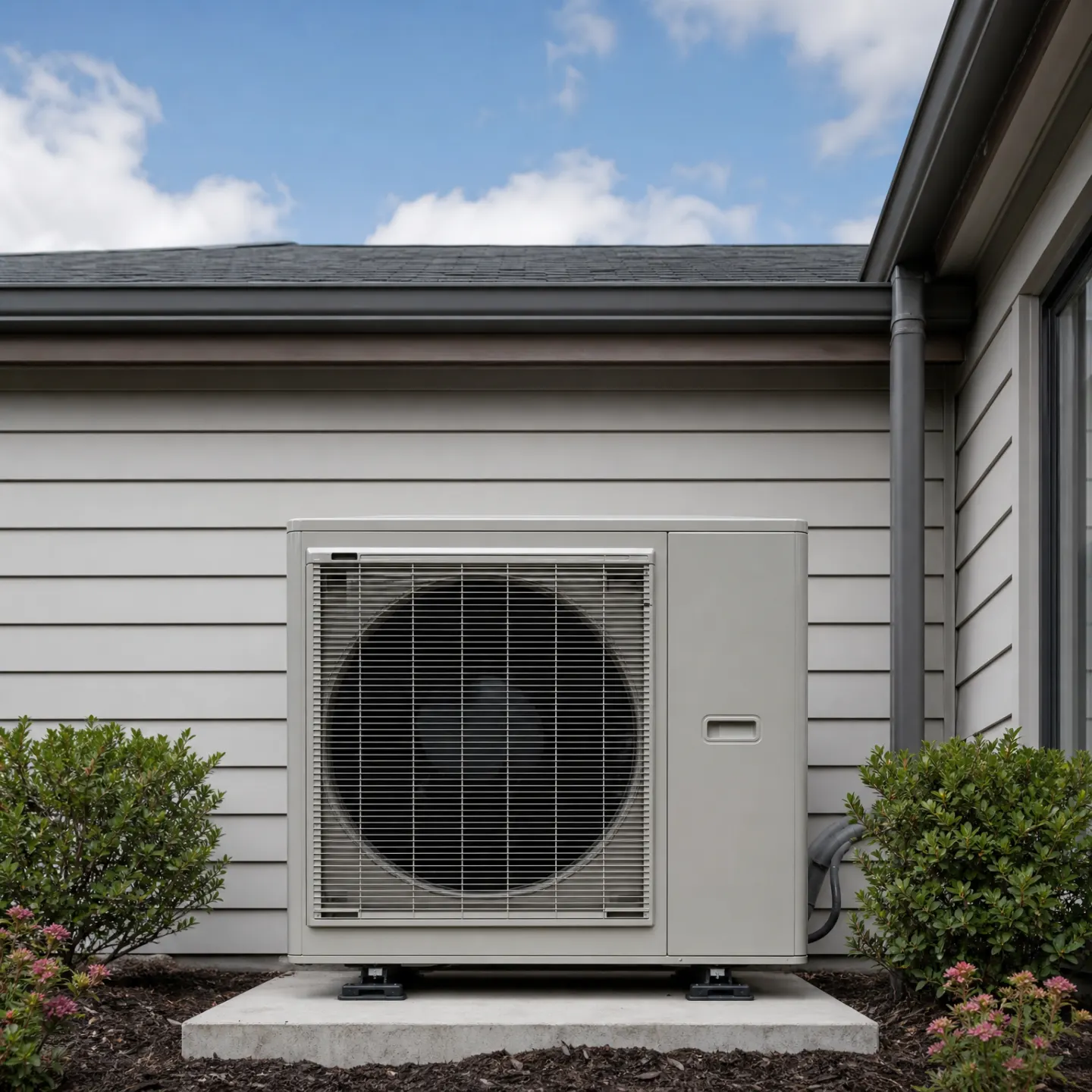
A grey heat pump outdoor unit mounted on a concrete pad in a suburban backyard, with a single-storey house visible behind it.

Heat Pump Repair in Belleville, IL

Tell us about the job

Takes about a minute. No obligation.

Step 1 of 3: Equipment

September is when a weak heat pump quits

Heat comes on in October here, and September is when a struggling unit gets caught out. A heat pump that limped through last winter on a tired capacitor or a low charge will usually show it the first cold morning it has to work hard.

Don't wait for the first freeze to check it

A heat pump makes sense to look at before October, not after it stops keeping up. Once it's running every day through the winter, a small problem gets more chances to turn into a bigger repair.

7 months
October through April, your system heats
5 months
May through September, it cools
26°F
the average winter night it heats against
87°F
the average summer afternoon it cools against
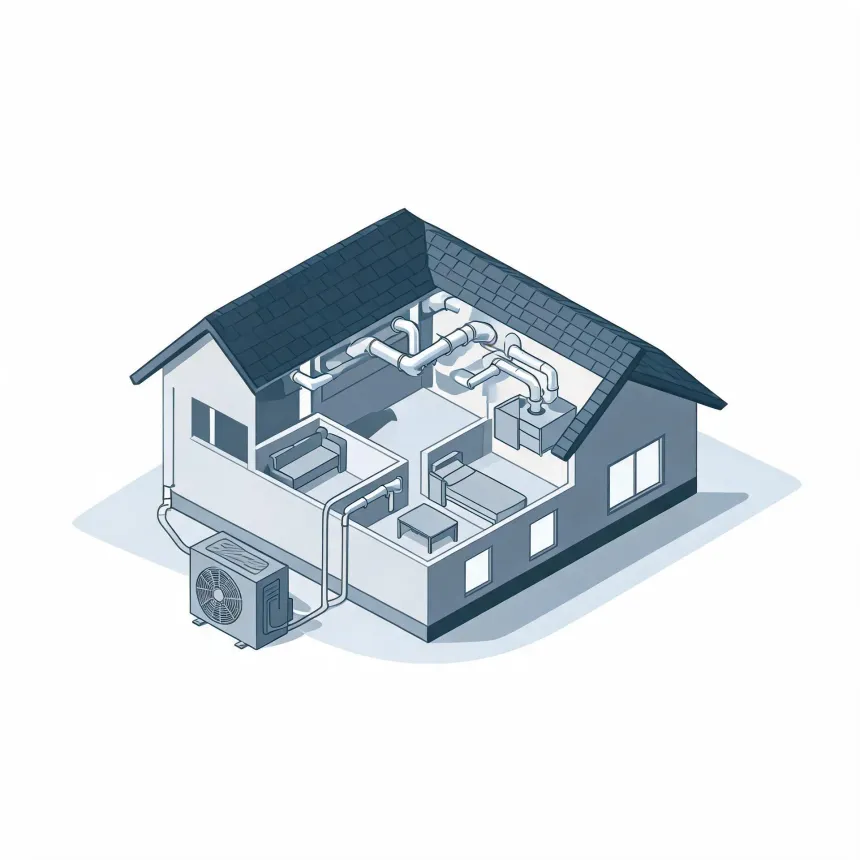
Isometric cutaway illustration of a house showing attic ductwork, an indoor air handler, furnished rooms, and an outdoor condenser unit connected by lines along the exterior wall.
Your system heats October through April and cools May through September.

NOAA nClimDiv, 1991–2020 normals

A heat pump that blows air but doesn't change the temperature much is losing the fight, not finished working.

Catch it while it's struggling and it's a repair. Let it run like that all winter and it's a replacement.

Belleville homes are ordinary, and so is what goes wrong with a heat pump here

Half the homes here were built by 1975
84 damaging wind events from 2015 to 2024
43 hail events from 2015 to 2024
Nothing about Belleville is hard on a heat pumpSt. Clair County sees ordinary Illinois weather, and the heat pumps here have ordinary problems with ordinary fixes.

Illinois electricity ran 15.87 cents per kilowatthour in 2024. A heat pump that's low on charge or struggling to pull heat from the air has to run longer to do the same job, and it bills you for every extra minute. You feel it most on a unit that's already working harder than it should, which is the one that's starting to fail. The cost of ignoring it shows up on the meter long before the unit quits for good.

A heat pump running inefficiently is still running up your bill

A heat pump that's struggling doesn't stop pulling power, it just stops giving you heat for it. At 15.87 cents per kilowatthour, every day it runs low on charge is a day you're paying for warmth you're not getting. Have it looked at now, before it's running that way all winter.

Find a contractor
A man in a cap, gray shirt and brown work pants, seen from behind, carries a canvas tool bag up steps toward a dark navy front door beside a potted shrub.
A gray heat pump condenser unit mounted on a concrete pad against the gray lap-siding exterior wall of a house.

Keep running it and a small problem finds a way to become a big one

A heat pump that's struggling doesn't fail all at once. It fails one part at a time, and running it hard speeds that up. A capacitor that's weak but still kicking has to work through every start, and every start wears it down a little more. A system low on refrigerant makes the compressor work harder to move the same amount of heat, and a compressor that runs hot and strained for a whole season takes damage a healthy one never would. Ice that isn't melting between defrost cycles sits on the coil and blocks airflow, so the unit runs longer to do less, which only makes the ice worse. None of these fix themselves by running more. They get caught early as a part swap, or they get caught late as a compressor that's gone.

A tech checks the charge and the pressures first

A gauge set on the service ports shows whether the refrigerant charge is right and how the system is actually moving heat, not just whether it's running. Low charge or a pressure reading out of range points straight at a leak or a failing compressor, and it rules out guessing.

The visit ends with a name for the problem

A reversing valve that won't shift, a defrost sensor giving bad readings, a weak capacitor, each needs a different part and a different amount of work. A real diagnosis says which one it is, so the decision to repair or replace is based on what's actually wrong.

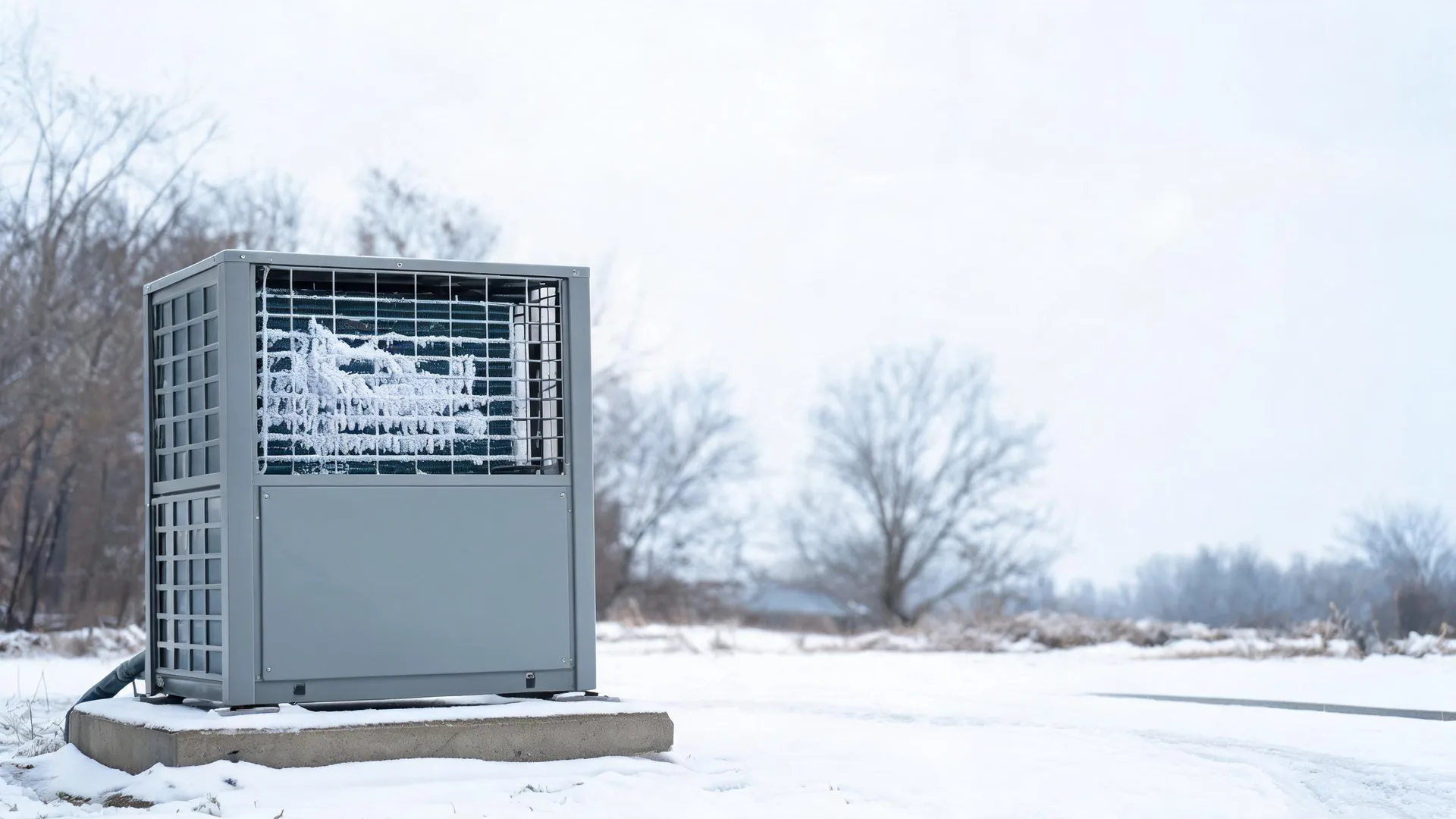
Before calling anyone, look at the outdoor unit. If it's caked in leaves, grass clippings or ice that isn't melting between cycles, clear it off and see if that alone helps. Check the thermostat is actually set to heat and not stuck on a schedule from last season. Inside, pull the filter and hold it up to a light. If you can't see through it, swap it, a clogged filter starves the system of airflow and makes a healthy heat pump act like a failing one. Walk around the house and feel the vents. Air moving but barely warm is different from no air at all, and that difference matters when you describe it on the phone. If the outdoor unit is frosted over thick and doesn't defrost on its own within an hour or so, that's worth mentioning too, not something to wait out.

A heat pump that's old and losing refrigerant on top of it is a different conversation than one with a single bad part. If the compressor itself is failing, that's usually the end of the road, a compressor swap costs enough that putting it into an aging unit rarely makes sense. If it's the capacitor, the reversing valve or a defrost sensor, that's a part a tech replaces and the unit goes back to normal. Age matters here in a way it doesn't with a lot of equipment, because a heat pump that's been cycling year round has more hours on it than a furnace of the same age ever sees. A unit still under warranty is worth repairing almost regardless of what's wrong, since the part cost isn't yours to weigh. One that's out of warranty and already had a couple of repairs is telling you something about what's coming next.