A row of illuminated two-story brick houses with front porches and mature trees photographed at twilight.

Heat Pump Installation in Springfield, IL

Tell us about the job

Takes about a minute. No obligation.

Step 1 of 3: Equipment

This county sees real storms

Sangamon County logged 335 severe weather events between 2015 and 2024, including 198 damaging wind events, 110 hail events and 15 tornadoes. Winter storms hit less often, 7 times in that same stretch, but they're the ones that bring ice.

Power doesn't always hold

16% of Illinois households lost power for a day or more in 2024. A heat pump needs electricity to run, for heat and for cooling, and an outdoor unit sitting through hail or straight-line wind is taking a hit most other home equipment never sees.

7 months
October through April, your system heats
5 months
May through September, it cools
22°F
the average winter night it heats against
85°F
the average summer afternoon it cools against
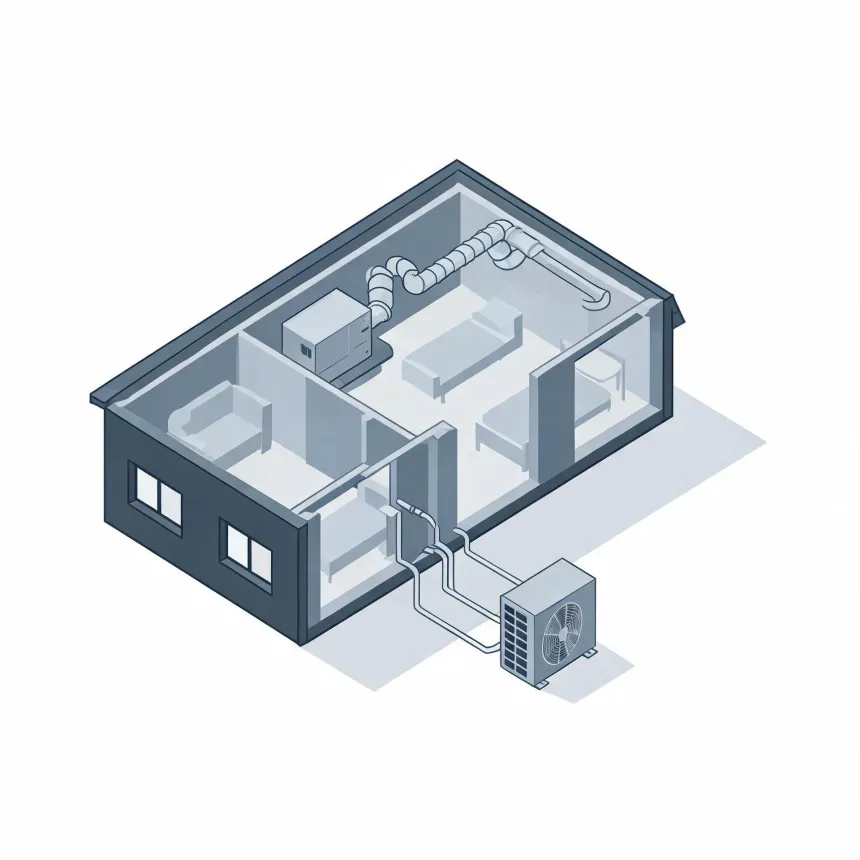
Isometric cutaway illustration of a small house showing interior rooms with furniture, an indoor air handler with flexible ducting, and refrigerant lines running to an outdoor condenser unit beside the building.
Your system heats October through April and cools May through September.

NOAA nClimDiv, 1991–2020 normals

Gas heats 73.2% of homes in Sangamon County.

A heat pump replacing a furnace usually means adding a new fuel to the house, not swapping one for the same kind.

This weather doesn't go easy on an outdoor unit

198 damaging wind events from 2015 to 2024
110 hail events from 2015 to 2024
Winter nights average 22°F
Get it in before the weather doesHeat runs October through April here, so September is the last easy month to get a new system in before it has to work.

Electricity here runs 14.58 cents per kilowatt-hour on average. A heat pump leans on that rate harder than a furnace does, since it's doing the heating as well as the cooling. The efficiency rating on the unit you install is what decides how much of that rate turns into comfort and how much just turns into a higher bill. Two systems can carry the same price tag and cost very differently to run once summer and winter both lean on them. Ask what SEER2 and HSPF2 numbers you're getting before you decide, not just what the installed cost looks like.

Plan the installation around the weather it has to survive

Get the installer to walk the yard with you before anything goes in. Where the outdoor unit sits matters here: clear of falling branches, away from the gutter line, set so hail and wind don't have a straight shot at it. Ask about a transfer switch or backup power too, since this system is what carries your heat and hot water when the lines go down, not just when the sun is out.

Find a contractor
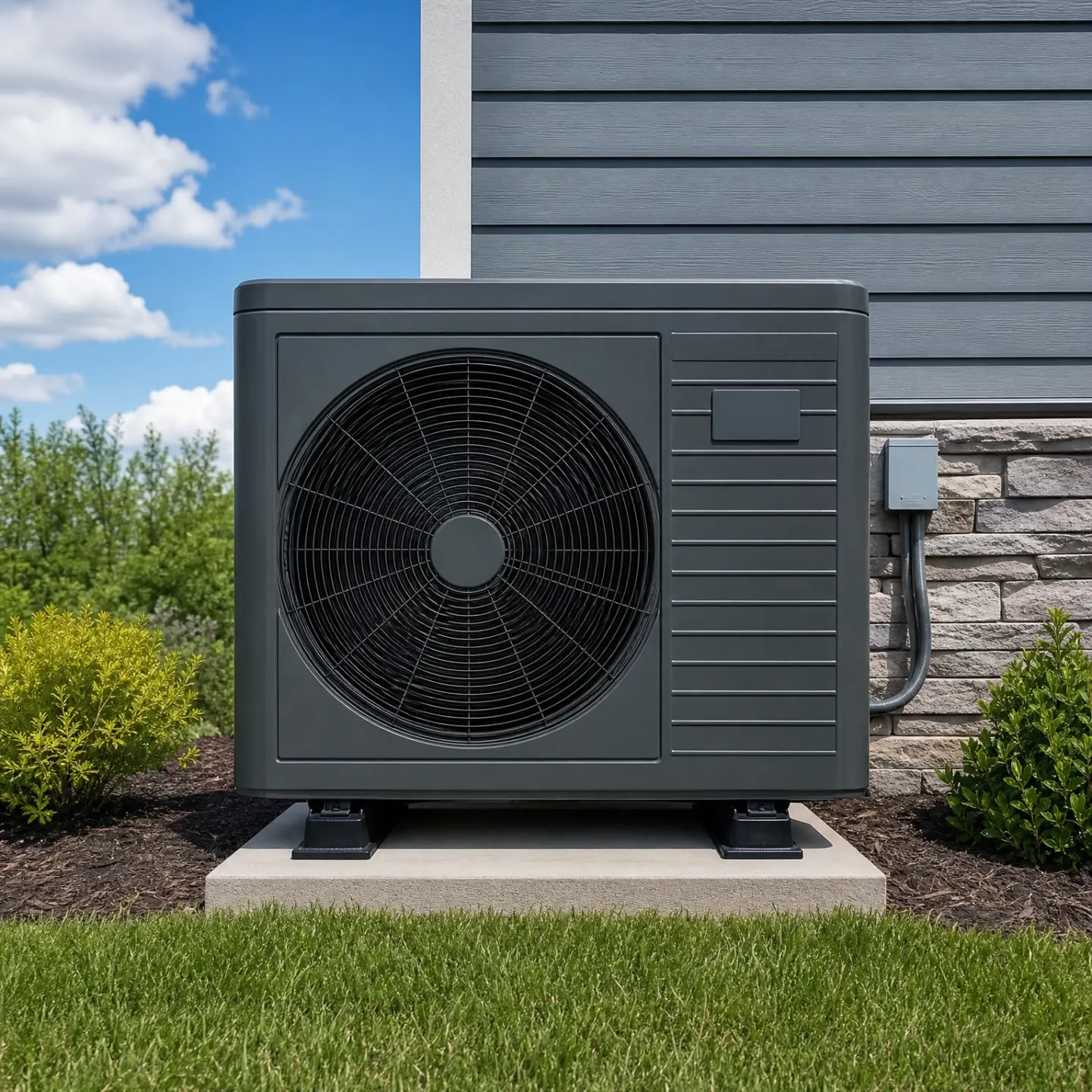
A dark gray heat pump unit mounted on a concrete pad next to a house with gray siding and a stone veneer wall.

This system doesn't get an off season

Zone 5A means heating carries most of the load here, and a heat pump runs through all of it, not just the months a furnace used to cover. The outdoor unit sits outside through whatever the year brings, including the 198 damaging wind events and 110 hail events this county logged between 2015 and 2024. A furnace never had outdoor equipment taking that kind of hit. More running hours across more months means the compressor, the fan motor and the coil all log more time than they would in a milder state, and parts that log more hours tend to show wear sooner. Get the unit sized for this climate, not a warmer one, and ask the installer what's rated to hold up out there.

A heat pump sized by square footage alone is a guess

The right size comes from a load calculation, a room by room look at windows, insulation and air leaks, not a quick rule of thumb based on floor space. Two houses the same size can need different tonnage depending on how much heat they lose through the walls and glass.

Oversized and undersized both cause problems

A unit that's too big cools the air fast and shuts off before it pulls moisture out, so the house feels damp even though the thermostat reads satisfied. One that's too small runs constantly and never quite catches up on the coldest or hottest days, and that extra runtime wears the compressor down faster.

SEER2 tells you how much cooling you get out of a given amount of electricity, and HSPF2 does the same job for heating. Higher numbers mean the compressor is doing more work per unit of power it draws, not that the unit is bigger or stronger. That rating is tested under set conditions, so your actual bill moves with how long the system runs and how hard it has to work, not just the number on the label. A unit with a strong rating still needs the right charge, clean coils and good airflow to hit that number in your house. Two installers can quote the same size system with very different ratings inside it, and that gap is what shows up on the power bill every month after the installation truck leaves.

Sangamon County falls under zone 5A in the 2021 energy code, a cool, humid zone where heating carries more of the load than cooling does. Any split-system heat pump installed here now has to meet the federal minimum for units built from 2023 on: at least 14.3 Btu of cooling for every watt-hour it draws over the summer, and at least 7.5 Btu of heat for every watt-hour over the winter. That floor narrows what an installer can legally put in your yard. A federal tax credit is available on top of that for units that qualify, which is worth asking about before you settle on a model.