
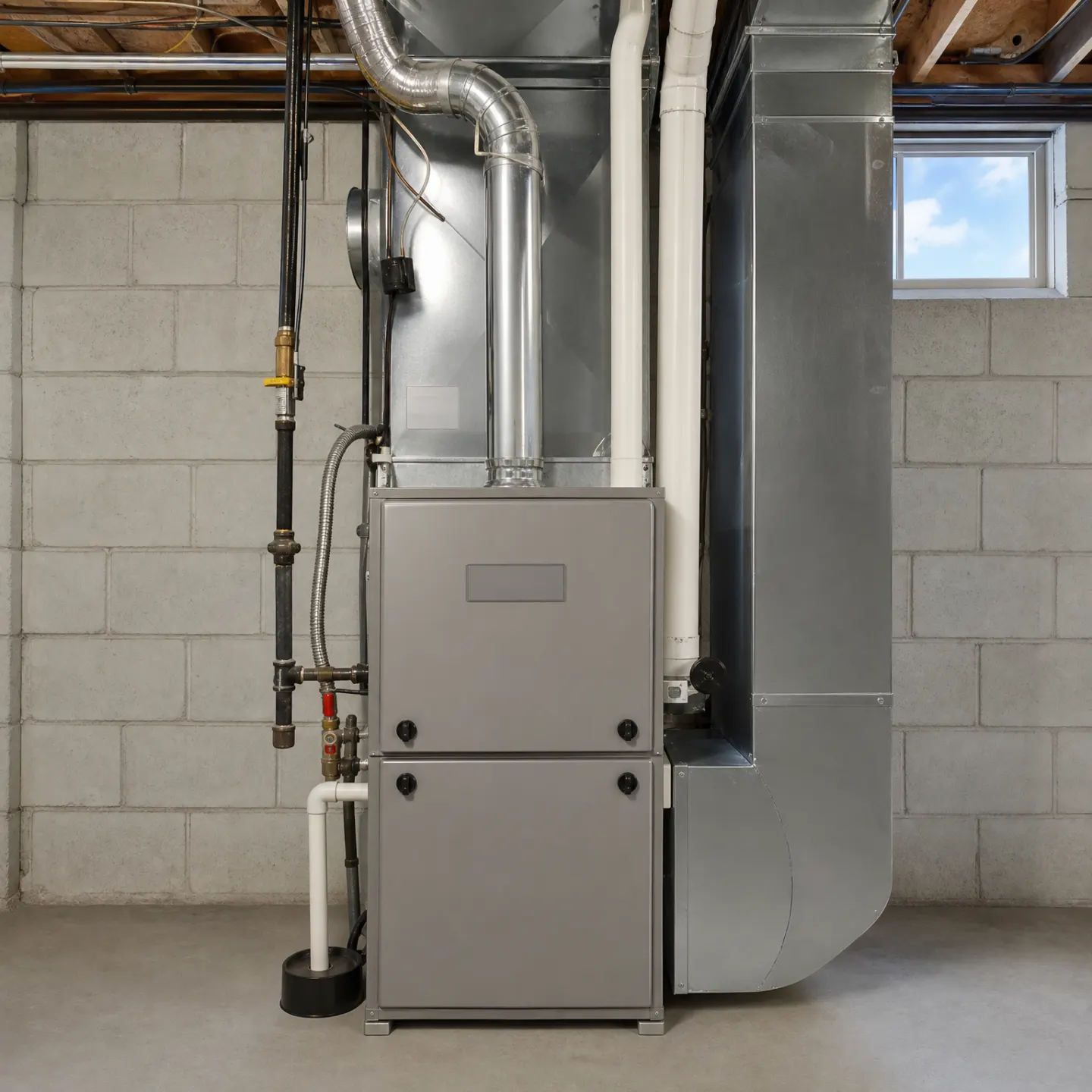
An unfinished concrete basement containing a gas furnace with sheet-metal ductwork, utility shelving, and exposed overhead joists.

Furnace Repair in Carlinville, IL

Tell us about the job

Takes about a minute. No obligation.

Step 1 of 3: Equipment

Your furnace in Carlinville runs about seven months of the year, October through April, and overnight lows average 24°F in December and January. That's steady work for a furnace, but it's not unusual, and it's nothing the equipment wasn't built to handle. When one starts short cycling, blows cold air, or won't fire up at all, the cause is almost always something specific. A cracked heat exchanger. A dirty flame sensor. A failed igniter. A clogged filter choking airflow. None of that comes from how cold it gets outside. It's wear, or age, or a part doing its job until it stops. Finding which one it is matters more than guessing, because the right fix depends on it.

7 months
October through April, your furnace is on duty
24°F
the average winter night it heats against
51%
of homes here heat with gas, so most furnaces here burn gas
10 winter storms
in ten years, the nights a failure hurts most
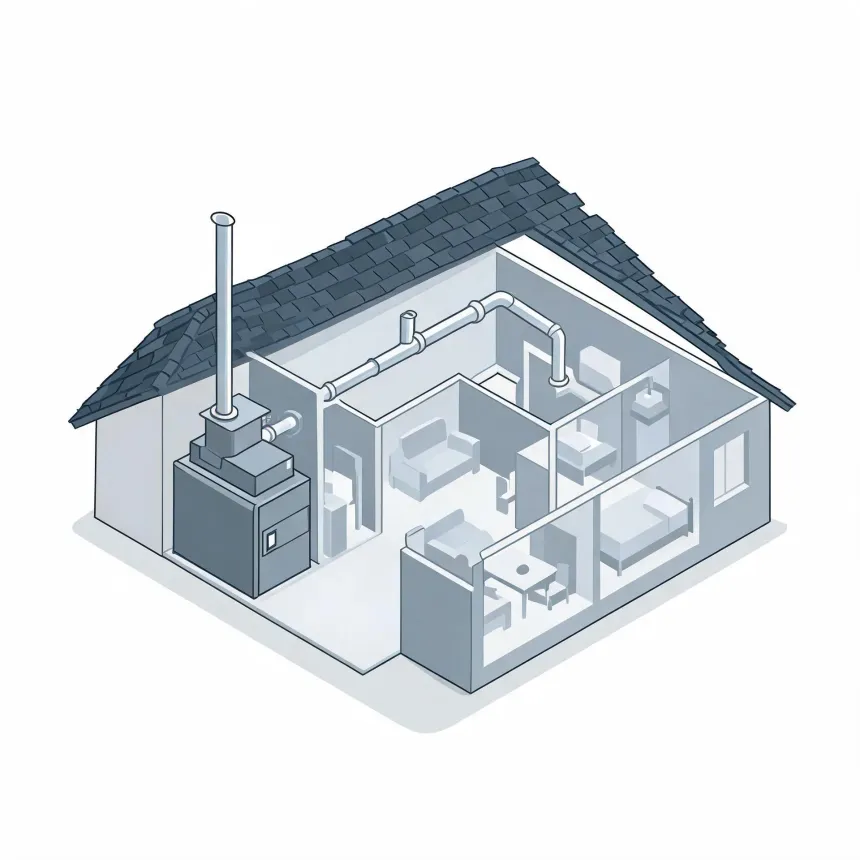
Isometric cutaway illustration of a single-story house showing interior rooms with furniture, ceiling ductwork, and a large furnace unit with a tall flue pipe in a corner room.
Your furnace works hardest from November through March.

NOAA nClimDiv, 1991–2020 normals

Furnaces in Carlinville start running in October.

A weak part that made it through last spring often gives out in the first cold weeks.

A diagnostic call starts with the complaint, not the furnace. The tech asks what it's doing. Won't start, blows cold, shuts off partway through a cycle, whatever the reader noticed first. Then the cover comes off and they watch it try to run. Igniter glowing or not. Flame steady or weak. They'll pull the flame sensor and check it for buildup, test the capacitor, check the pressure switch, and look at the heat exchanger for cracking or scorch marks. Most of this gets done with the furnace firing, because a part can look fine sitting still and fail the moment it's under load. By the time the cover goes back on, the tech usually knows which part is bad and whether it's worth fixing or a sign the furnace is done.

Get the usual fix

Nothing about this area is especially hard on it. It's most likely the usual problem with the usual fix.

Find a contractor
A gray high-efficiency gas furnace installed in an unfinished basement, surrounded by gas lines, a condensate drain, and sheet-metal ductwork.

Why furnaces stop working

Most furnace failures trace back to a handful of parts that wear out in the ordinary course of running. The igniter glows hot every time the furnace starts and that cycle of heating and cooling eventually makes it brittle until it cracks. The flame sensor sits in the burner flame and collects a film of residue over time, and once that film builds up it can't tell the control board a flame is lit, so the furnace shuts itself down as a safety measure. Blower motor bearings wear from spinning hour after hour. Capacitors lose their charge with age and stop giving the motor the jolt it needs to start. A dirty filter is the one failure that isn't really a part failing at all. It just chokes off airflow until the furnace overheats and trips a limit switch, and replacing the filter is the fix. The one failure that matters most is a cracked heat exchanger, because that's a safety issue and not a wear-and-tear fix like the rest. Age plays a part in most of this. A furnace in its first several years rarely has these problems. One running on its tenth or fifteenth season is a different story, and that's where a tech's read on the equipment matters as much as the repair itself.

A cracked heat exchanger gets worse with every cycle

Heat makes metal expand and cold makes it contract, and a crack grows a little more each time the furnace fires. A furnace running on a cracked exchanger can push exhaust into the air it's blowing through the house, so this isn't one to let ride until it's convenient.

A dirty flame sensor doesn't fix itself by waiting

The film on the sensor builds up a little more each time the burner runs. At some point it won't sense a flame at all, and the furnace will shut down mid-cycle instead of just struggling. Calling it in in the first weak-firing calls is less trouble than getting a furnace that quit overnight.

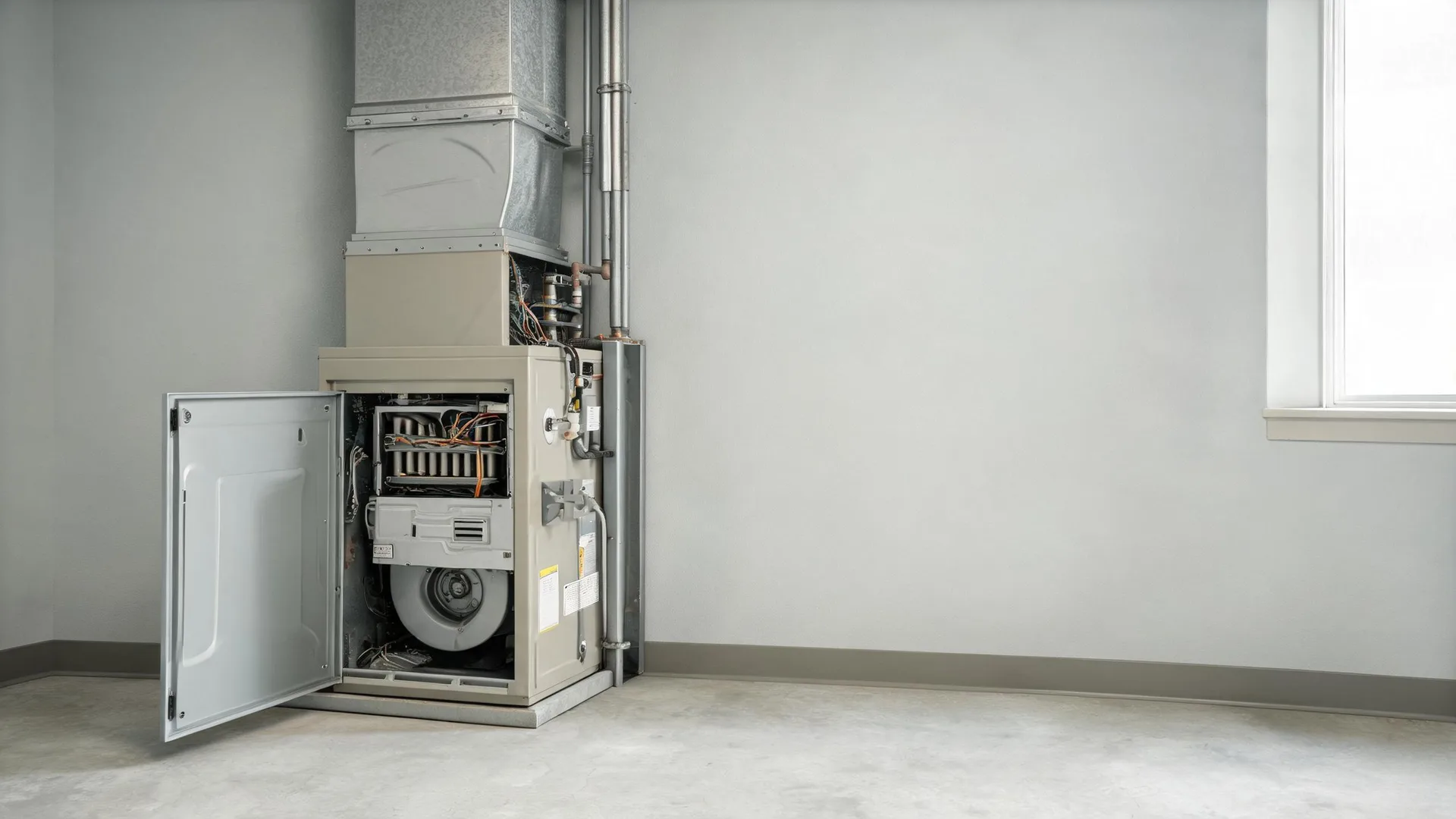
An unfinished basement containing a gray HVAC furnace with ductwork, exposed wooden joists, a concrete floor, and miscellaneous clutter in one corner.

A new furnace would cut about $120 a year off heating for a typical Macoupin County home.

  • A new high-efficiency furnace$480 a year
  • An older furnace$600 a year

Estimates for a typical Macoupin County home, compared with an older unit built to the previous federal minimum, from EIA household energy data, Illinois fuel prices and NOAA climate normals. Your home will differ.

Repair makes sense when one part has failed and the heat exchanger is sound.

Replacement makes sense when the heat exchanger is cracked or the furnace keeps needing parts.

A repair is worth doing when the part failing is one part and the rest of the furnace is sound. A new igniter or flame sensor brings a furnace right back to normal, and there's no reason to replace a whole unit over one failed part. Replacement starts to make more sense when the repairs stack up, one thing fixed this year and another next, or when the part that's gone is the heat exchanger itself. A cracked exchanger isn't a patch job, since the fix is a new furnace, not a new part. Age factors in too. A furnace near the end of its working life can keep failing in new ways even after a repair, so a tech who's seen inside it is in a better position to say whether to fix this one or put the money toward a new unit.