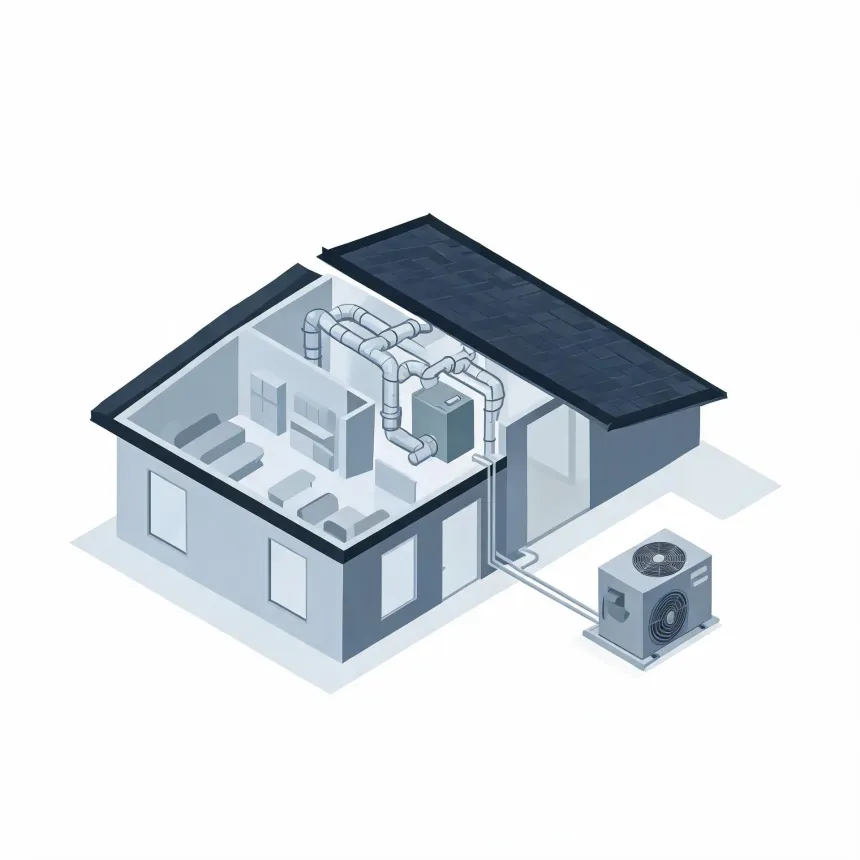
Electricity here runs 16.06 cents a kilowatt-hour
That is higher than what most US counties pay. A heat pump runs on electricity, so every kilowatt it uses costs more here than it would almost anywhere else.
Takes about a minute. No obligation.
That is higher than what most US counties pay. A heat pump runs on electricity, so every kilowatt it uses costs more here than it would almost anywhere else.
With power priced the way it is in Clinton County, a system that uses less electricity to move the same heat is worth more here than in a cheaper-power state. The efficiency rating on the unit you install matters more than it would somewhere else.
NOAA nClimDiv, 1991–2020 normals
Two systems can carry the same tonnage and still use different amounts of electricity to do the same job.
Ask for the efficiency rating on each quote, not just the price, since that number is what decides the bill every month after install.




Clinton County falls under zone 4A in the 2021 energy code, a mixed climate that asks real work of both your furnace and your air conditioner. Any split-system heat pump installed here has to meet the federal minimums for units built since January 2023: at least 14.3 Btu of cooling delivered for every watt-hour it draws, and at least 7.5 Btu of heat for every watt-hour in winter. That rating isn't a target manufacturers aim for. It's the floor. A contractor quoting a system below it isn't quoting something you can legally install. Ask to see the rating on the unit itself, not just a brochure number, and check it against what the quote promises.
You already pay more per kilowatt-hour than most of the country, and a heat pump runs on electricity for both heat and air. The efficiency rating on the unit you choose decides what that meter does every month for as long as you own it. Get that rating in writing before you pick a system.
Find a contractorA heat pump has to be sized to the house it's heating and cooling, not picked off a chart by square footage alone. A contractor works this out with a load calculation, room by room, weighing window area, insulation, ceiling height, air leakage, even which way the house faces. Too big and the unit short cycles, blasting the space to temperature and shutting off before it finishes pulling out the humidity, so the air feels clammy even though the thermostat says it's satisfied. Too small and it runs flat out on the coldest and hottest days and still can't keep up, wearing itself out trying. Either mistake shortens the life of the compressor, since it's cycling on and off harder than it was built for, or running longer than it should without rest. The right size is the one that runs long steady cycles most of the time and only pushes hard on the extreme days. That's worth asking your contractor to walk you through, not just take on faith.
A heat pump carries two ratings on its label, one for cooling and one for heat. Some units score well on one and only average on the other. If a quote only shows you one number, ask for both, since the system has to carry the job in every season, not just the one that's easiest to advertise.
The efficiency number on the label is measured under test conditions, with the refrigerant charge correct and airflow where it should be. Low refrigerant, a kinked line, or a duct that's too small for the unit will pull real performance below what the label promises. The rating tells you what the equipment is capable of. Whether it delivers that depends on the install.
Price on a heat pump install isn't just the equipment sitting in the yard. A big share of it is labor you can't see once the job is done: running new line sets, modifying ductwork so airflow matches what the new unit needs, setting a condensate line with the right pitch, wiring in a disconnect and a dedicated circuit. A system that's a size up or down from what you had costs more to fit properly, not less, because the ducts and electrical often have to change with it. Refrigerant line length and how hard it is to route matter too, especially if the indoor and outdoor units aren't close together. None of this shows up on the sticker price of the equipment itself, but skipping it is how a system ends up undersized for its ducts or short on charge from day one.
Install day starts with the old equipment coming out, not the new one going in. A tech recovers the refrigerant from the existing lines, disconnects the power, and pulls the old unit before anything new gets set. If the line set isn't being reused, that gets run fresh between where the outdoor unit sits and the indoor coil, then pressure tested before any refrigerant goes near it. The electrical work happens alongside this: a dedicated circuit, a disconnect box within sight of the outdoor unit, wiring sized for what the new system actually draws. Once everything's connected, the system gets charged to the weight the manufacturer specifies, not just run until it feels cold. The last hour is usually the quietest part: checking airflow at the registers, confirming the thermostat talks to the unit, watching it cycle through a full run before the crew packs up.