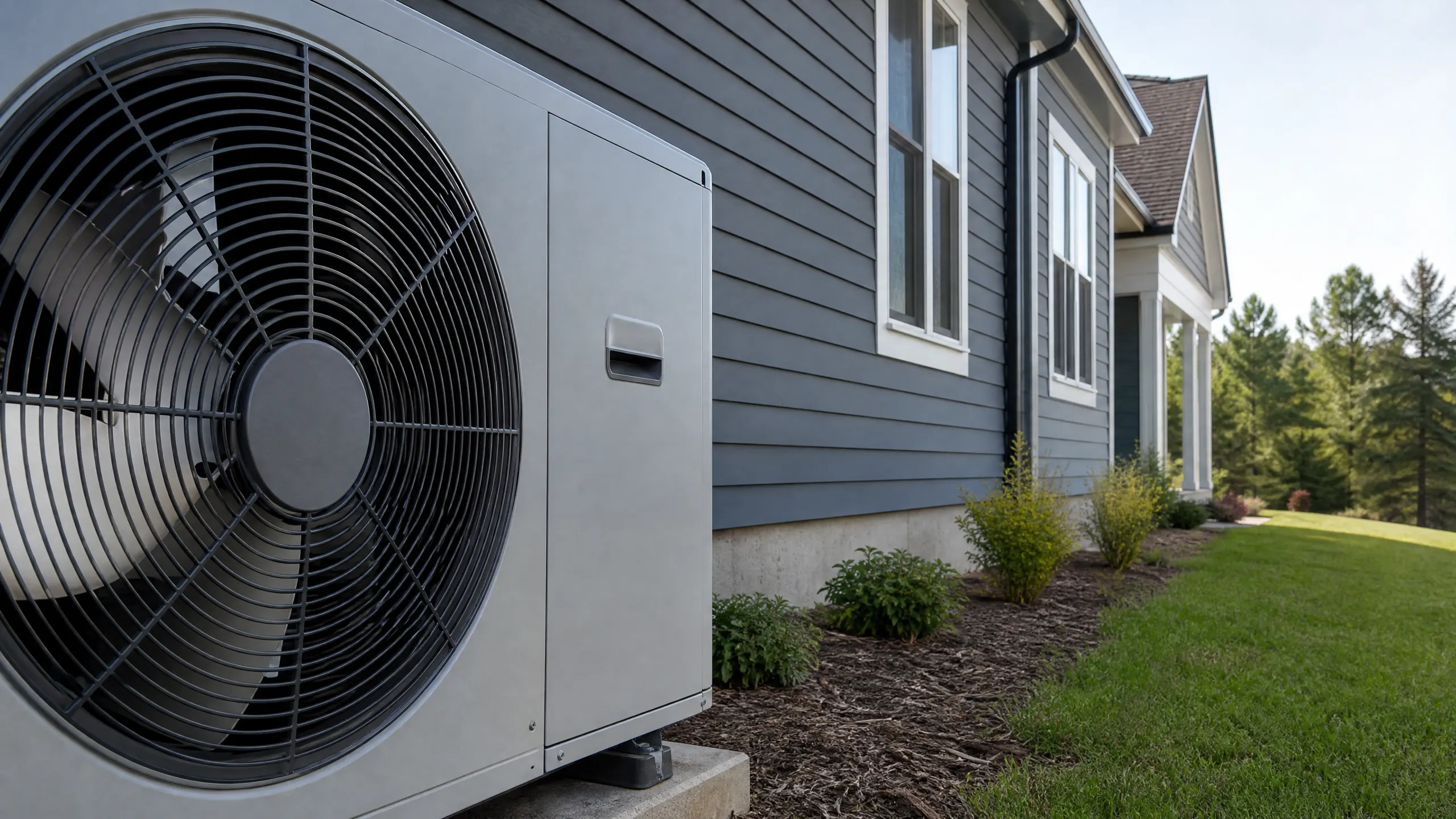




A heat pump outdoor unit mounted on a concrete pad next to the gray-sided exterior wall of a residential house.

Heat Pump Installation in Carlinville, IL

Tell us about the job

Takes about a minute. No obligation.

Step 1 of 3: Equipment

Illinois homes paid 15.87 cents per kilowatthour in 2024, on the high side for the country. A heat pump moves heat instead of burning fuel or resisting current to make it, so it gets more out of every kilowatthour than a straight electric furnace or baseboard heat does. At that rate, how efficiently the unit runs matters more here than somewhere power is cheap. The ratings to ask about are HSPF2 for heating and SEER2 for cooling. A higher number on both means less electricity for the same comfort, month after month.

7 months
October through April, your system heats
5 months
May through September, it cools
24°F
the average winter night it heats against
85°F
the average summer afternoon it cools against
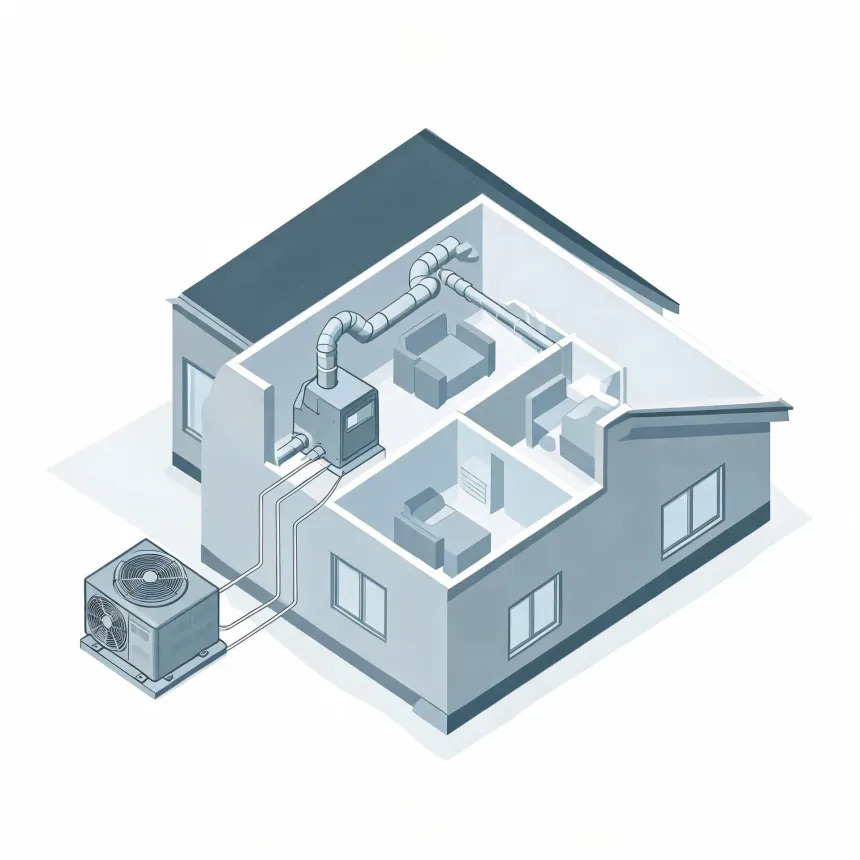
Isometric cutaway illustration of a two-room house showing an indoor air handler with ductwork connected by lines to an outdoor condenser unit on a pad.
Your system heats October through April and cools May through September.

NOAA nClimDiv, 1991–2020 normals

Half the homes in Macoupin County were built in 1966 or earlier.

A heat pump going into a house that old has to be sized to that house, not just the one before it.

Over half of Macoupin County heats with gas

51.4% of homes heat with gas
28 hail events from 2015 to 2024
Winter nights average 24°F

Carlinville is in climate zone 4A, which asks real work of a system in both directions. Summers are humid and winters get cold enough to keep a heat pump working most of the year. Any split-system heat pump installed here has to meet the federal minimums that took effect in 2023. That's 14.3 SEER2 for cooling and 7.5 HSPF2 for heating. Those numbers are floors, not targets, so anything on the market now already clears them. Installing a heat pump also opens up a federal tax credit, worth looking into before you settle on a unit.

Get a heat pump in before October, not after

Heat pumps here run heat from October through April, about seven months a year. September is the month before that starts, and it's the better time to put one in. Installed before October, the system is sized and set up under normal conditions, not while it's already needed.

Find a contractor
A man in a gray shirt and tan work pants, seen from behind, climbs porch steps toward a dark blue front door while carrying a canvas tool bag, with a potted shrub to the right.
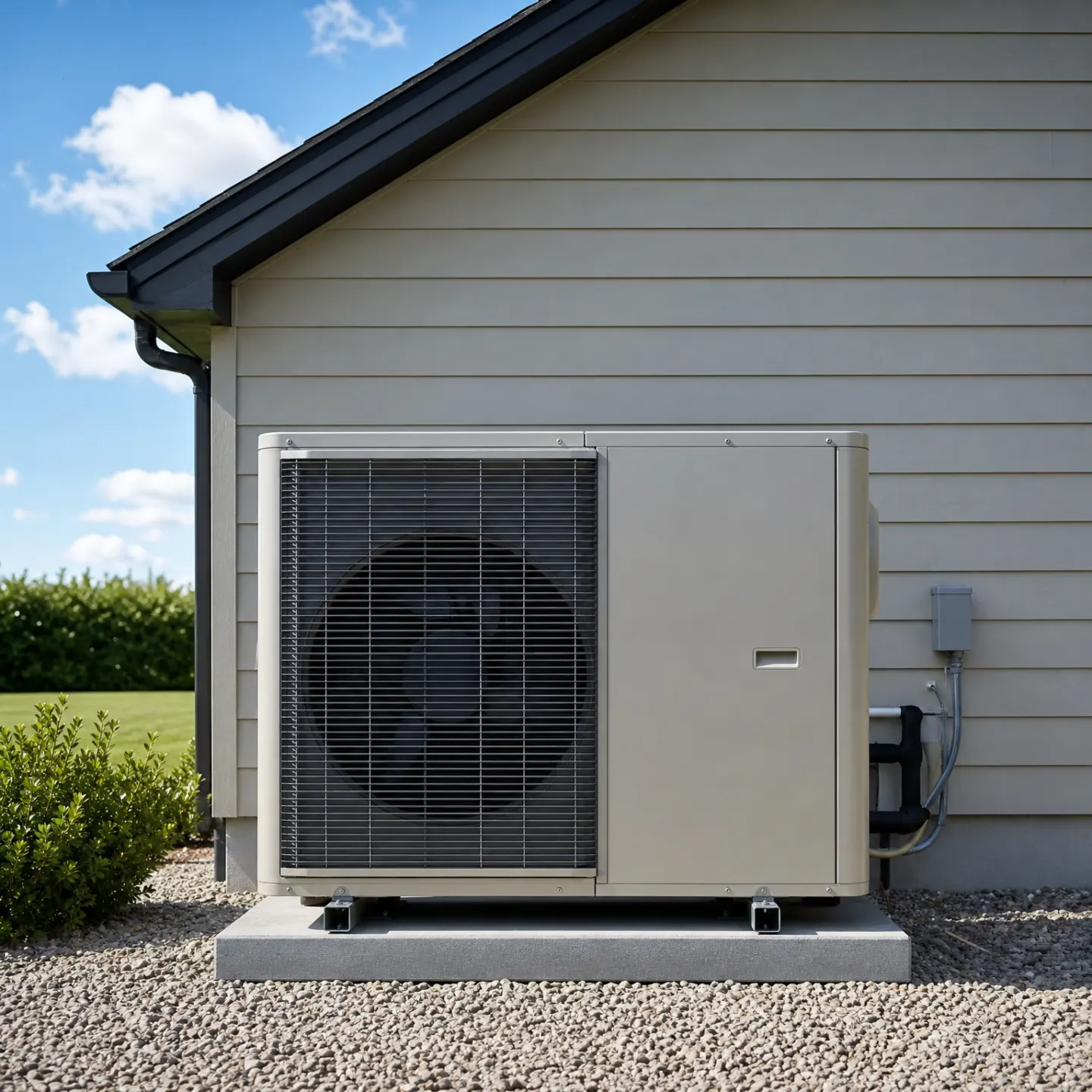
A residential heat pump outdoor unit mounted on a concrete pad next to a house with gray vinyl siding.

Size it to this house, not the last one

A contractor sizing a heat pump for one of these older houses has to go by that house. Its square footage, its windows, how many rooms need to hold a temperature. A load calculation does this math room by room instead of guessing from the last system that was in there. Too big and the unit short-cycles, turning on and off without running long enough to settle the house. Too small and it runs constantly through the cold months and still falls behind.

The old furnace or AC comes out

A contractor disconnects the old equipment, caps the refrigerant lines, and pulls the electrical connections before hauling it away. If gas ran to the old furnace, that line gets capped off too. None of this gets left behind for the homeowner to deal with.
The ductwork gets a second look

A heat pump moves air differently than a gas furnace does. Before the new unit goes in, a contractor checks whether the existing ducts can handle that airflow, and seals or adjusts them if not. Skipping this step is how a well-sized heat pump still ends up falling short.

Sizing a heat pump is not like picking a furnace. A furnace that's oversized just cycles more than it should. An oversized heat pump has a harder time in both directions, short-cycling in summer and running more defrost cycles in winter without ever settling into the long, steady runs it's built for. Undersized works against you too, since a heat pump already works harder as the temperature drops, and one that's too small falls behind right when you need it most. The load calculation weighs the walls, the windows, the insulation and the size of each room against each other, which is why similar-looking houses can need different sized units. Get it right and the heat pump runs long and steady, which is also how it runs most efficiently.

When you're comparing systems, ask what happens at the coldest end of the range. Every heat pump has a point where it can't pull enough heat from the outside air to keep up on its own, and a second heat source kicks in to cover the gap. Ask where that point is for each unit, and what the backup heat actually is. Ask about the defrost cycle too, since a heat pump has to pause and melt frost off its outdoor coil through the cold months, and how often it does that affects how steady your heat feels. Ask whether the compressor is single-stage or variable-speed, since a variable-speed unit adjusts its output to match what the house needs instead of just switching on full and off. And ask who is sizing the unit and how, because a quote without a load calculation behind it is a guess dressed up as a number.