


An outdoor air conditioning condenser unit mounted on a concrete pad next to a residential house at sunset.

Heat Pump Repair in Carlinville, IL

Tell us about the job

Takes about a minute. No obligation.

Step 1 of 3: Equipment

Winters here get cold enough that your heat pump is doing real work. Overnight lows average 24°F through December, January and February. That's normal for this part of Illinois, and it's not hard on the system by itself. When a heat pump stops keeping up in weather like that, the cause is usually something simple. A low refrigerant charge. A failing defrost control. A reversing valve stuck in one position. None of that is specific to Carlinville. It's the same short list a tech checks anywhere this climate shows up, and it's usually fixable without replacing anything.

7 months
October through April, your system heats
5 months
May through September, it cools
24°F
the average winter night it heats against
85°F
the average summer afternoon it cools against
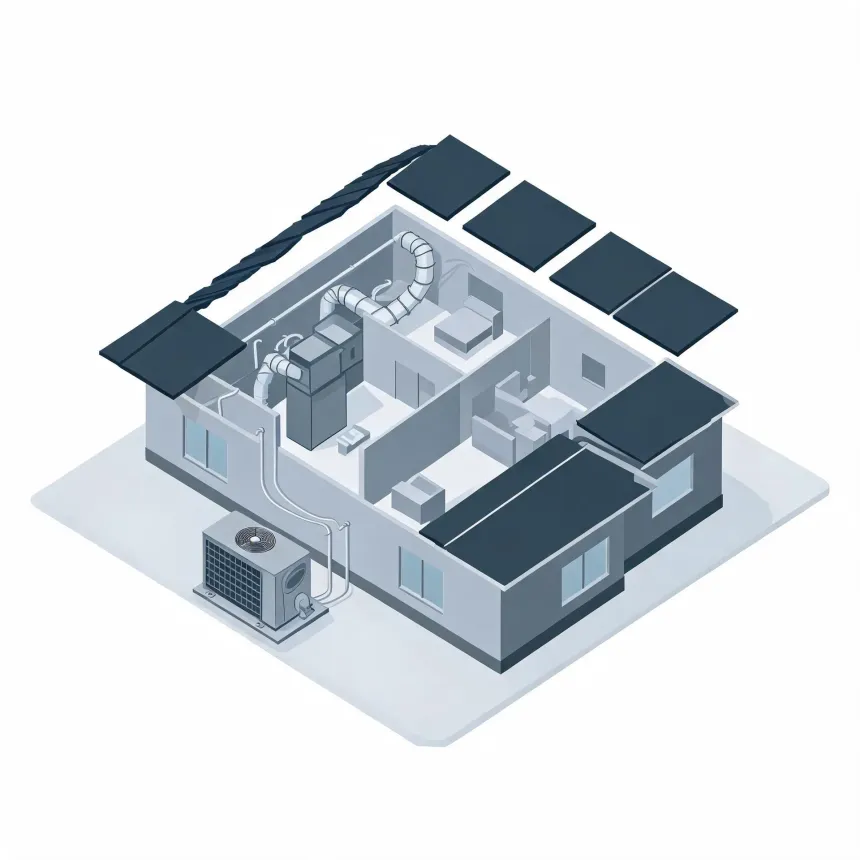
Isometric grayscale illustration of a cutaway single-story house showing interior rooms, ductwork and an air handler, an exterior condenser unit connected by lines, and dark solar panels on the roof.
Your system heats October through April and cools May through September.

NOAA nClimDiv, 1991–2020 normals

October is when your heat pump switches over and starts carrying the load.

If something was already weak, that first cold stretch is when it gives out.

Half the homes here were built by 1966, and a heat pump doesn't last that long

Half the homes here were built by 1966
28 hail events from 2015 to 2024
Winter nights average 24°F

Illinois electricity runs 15.87 cents per kilowatthour, and a heat pump leans on that power all winter to move heat instead of burning gas for it. That's fine when the system is running right. It's expensive when it's not. A low charge or a stuck reversing valve makes the compressor work harder for the same heat, and you pay for that extra work every month it goes unfixed. The fix itself is usually small. Waiting on it isn't.

Get the usual fix

Nothing about this area is especially hard on it. It's most likely the usual problem with the usual fix.

Find a contractor
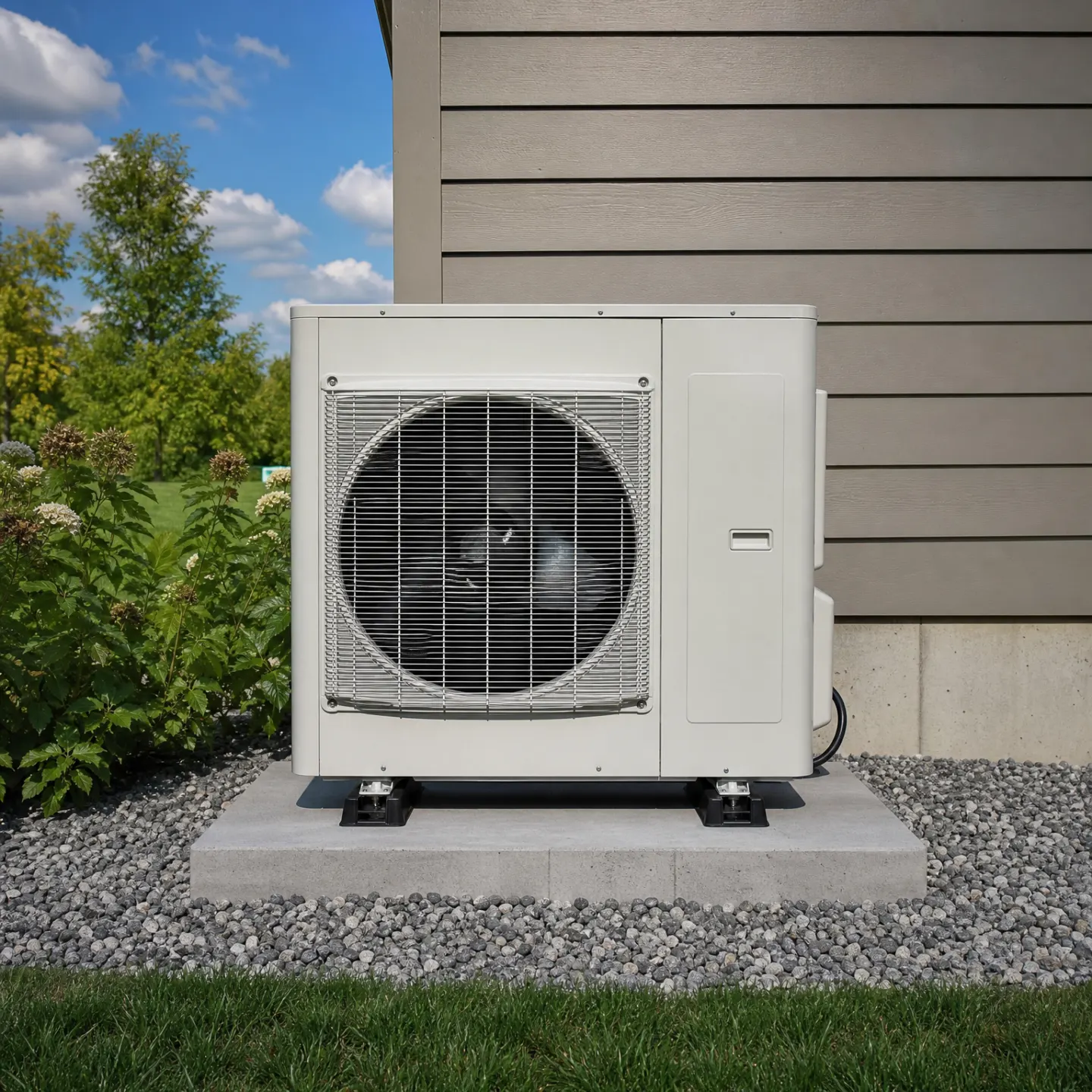
A white mini-split heat pump outdoor unit mounted on a concrete pad beside a gray-sided house, surrounded by gravel and green shrubs.

It runs every month, so it wears in both directions

A heat pump runs the whole year, not just winter, so it wears in both directions a furnace never does. The reversing valve usually goes first, since it's the part that switches the system between heating and cooling and it takes that stress every time the mode changes. Contactors and capacitors wear from the compressor cycling on and off, and a weak capacitor often lets the system hum without actually starting. Refrigerant charge drops slowly through small leaks at fittings and coils, so a system loses capacity little by little instead of all at once. That's usually why a heat pump that used to keep up fine suddenly can't. The defrost control and its sensor are the other common failure point, since the outdoor coil ices up in cold weather and the system relies on that control to clear it on schedule. None of this comes down to one bad part so much as how many times each part gets asked to work.

The outdoor unit is running but the air isn't warm

Warm air from a heat pump never feels as hot as a furnace's, so that alone isn't a problem. The sign worth noticing is air that's barely above room temperature, or air that's cool coming out of the vents. That points to low refrigerant charge or a compressor that isn't pulling its weight, and it's worth having looked at before the next cold stretch tests the system harder.
The outdoor coil is caked in ice and staying that way

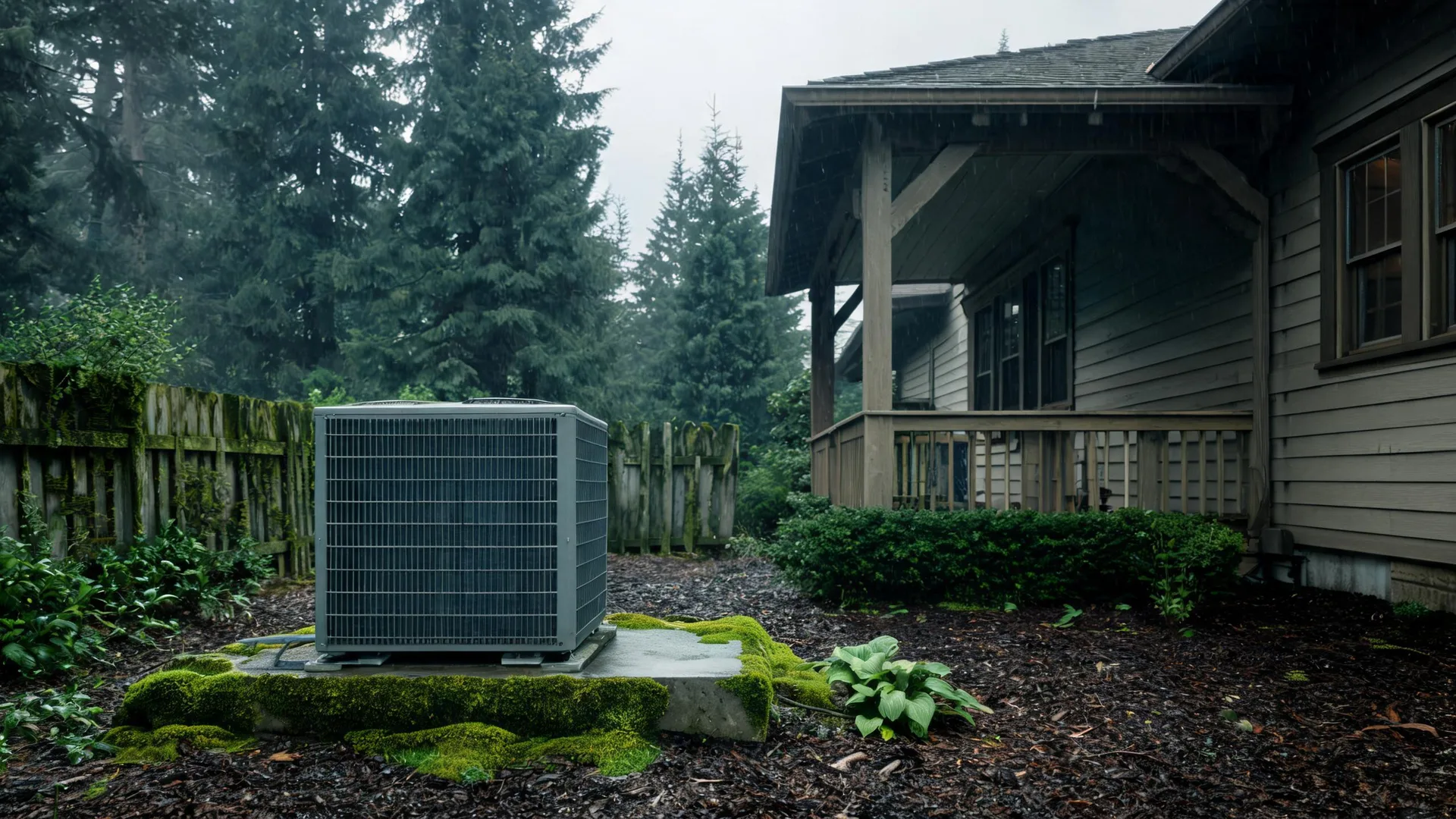
A heat pump is supposed to frost up some in cold weather, then clear itself on a timer. If the coil stays covered in a thick layer of ice instead of shedding it, the defrost control or its sensor likely isn't triggering that cycle. Ice left to build up blocks airflow across the coil, and the system loses capacity until someone fixes the control, not just the ice.

A heat pump that's struggling still tries to keep up, and that's what causes the damage. A low charge makes the compressor pull harder to move the same heat, and it stays in that state for as long as the thermostat keeps calling. A coil stuck under ice blocks airflow, so the system runs longer to deliver less, and the extra runtime is what pushes a compressor toward failing outright instead of just underperforming. A reversing valve that's starting to stick usually gets worse with use, not better, since every cycle asks it to move again. None of these start as emergencies. Left alone, they tend to end as one.

A diagnostic visit starts with the thermostat and the readings at the outdoor unit, not with guesswork. A tech checks refrigerant pressures first, since a low charge shows up right away and points straight at a leak somewhere in the lines or coils. From there it's the reversing valve, checked by watching whether the system actually switches between heating and cooling when it's told to, and the defrost control, checked by seeing whether it triggers a defrost cycle on schedule instead of leaving the coil to ice over. Electrical parts get tested too. A capacitor that's weak will let the compressor hum without starting, and that's easy to catch with a meter. None of this takes guessing once the readings are in front of someone. The numbers point to the part, and the part tells you what's actually wrong.