
A nighttime view of a tree-lined residential street with illuminated two-story brick houses and street lamps.

Heat Pump Installation in Sterling, IL

Tell us about the job

Takes about a minute. No obligation.

Step 1 of 3: Equipment

Electricity in Whiteside County ran 18.23 cents per kilowatt-hour in 2025, more than most counties in the country pay. A heat pump runs on electricity for both heating and cooling, so that rate applies every time it kicks on, all year. The summer side of the job is real too. Dew points here average 63°F across June, July and August, which is the kind of air that makes a system work to pull moisture out, not just cool it down. A heat pump sized and installed right handles that load without wasting power on it. Where the equipment is less efficient, that gap shows up on the bill every month, not just once.

8 months
October through May, your system heats
3 months
June through August, it cools
17°F
the average winter night it heats against
83°F
the average summer afternoon it cools against
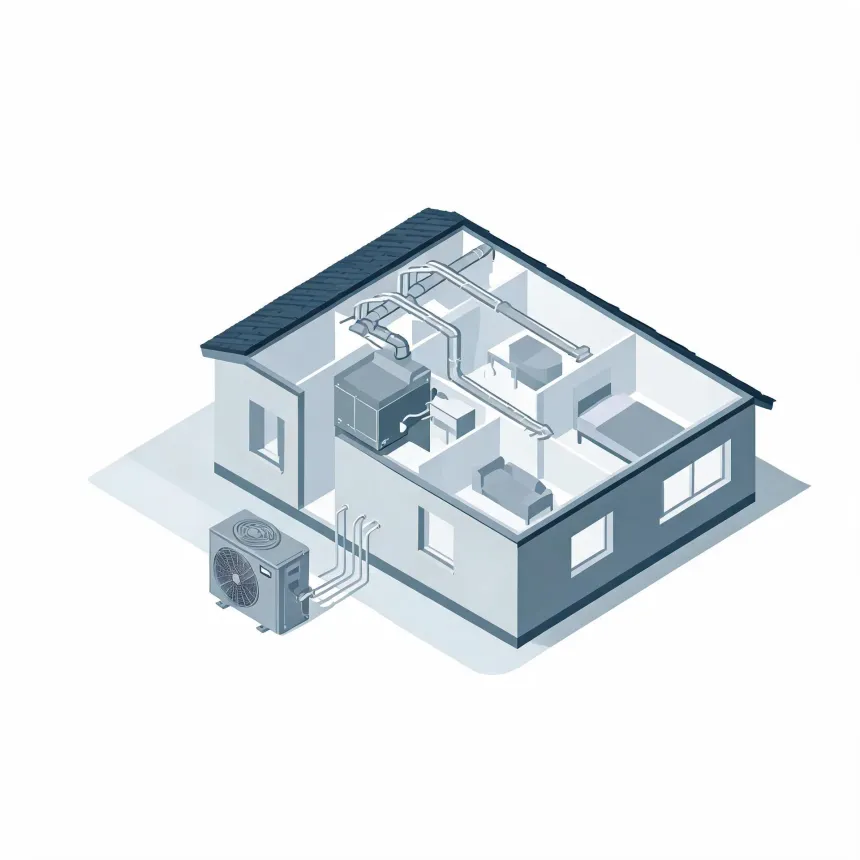
Isometric cutaway illustration of a single-story house showing interior rooms with ductwork, an indoor air handler unit, and an outdoor condenser unit connected by lines along the exterior wall.
Your system heats October through May and cools June through August.

NOAA nClimDiv, 1991–2020 normals

Gas heats 72.8% of homes in Whiteside County.

Most heat pump installs here pair the new system with the existing gas furnace instead of replacing it outright.

Whiteside County falls under zone 5A in the 2021 energy code, a cool zone where the heating load outweighs cooling. Any split-system heat pump installed here, if manufactured from 2023 on, has to hit federal minimums either way: at least 14.3 Btu of heat moved per watt-hour over the summer, at least 7.5 Btu per watt-hour over the winter. Those numbers set the floor, not the ceiling, so equipment can and often does run above them. A system sized to the zone and installed to meet these minimums also lines up with the federal tax credit available for qualifying heat pumps. The zone doesn't change what brand or model gets picked. It changes what's allowed in the door.

Here, the efficiency rating matters more than the sticker price

Power here costs more than it does in most places, and a heat pump runs on it every time it kicks on, all year. That makes the efficiency rating on the unit worth asking about before equipment gets picked, not after.

Find a contractor
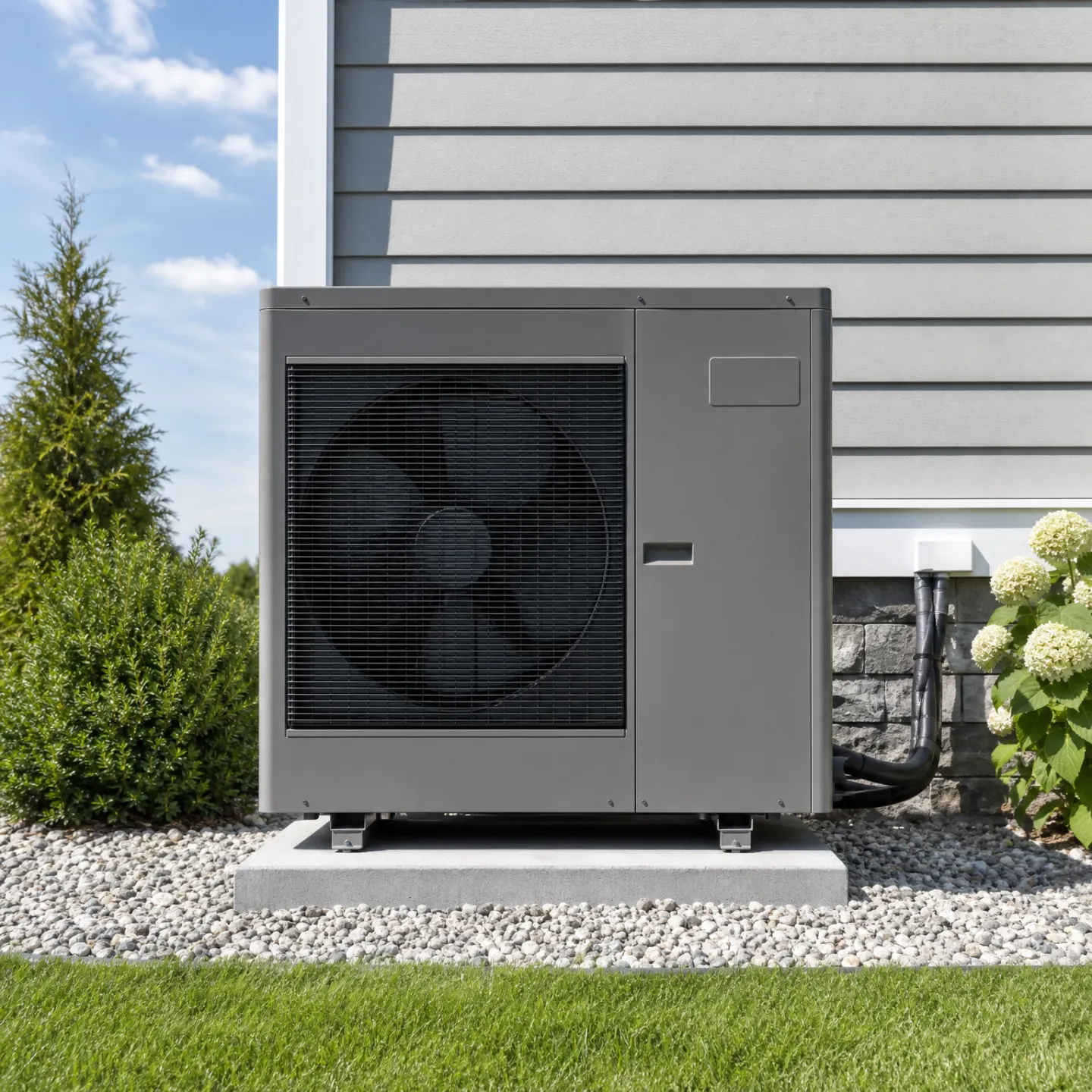
A gray air-source heat pump mounted on a concrete pad next to a house with gray vinyl siding, surrounded by gravel and flanked by green shrubs and white hydrangea flowers.

Built before the machine that's going in

Half the homes in Whiteside County were built in 1961 or earlier. A house that age was almost never built with ductwork sized for a heat pump, or in some cases with any ducts at all. That doesn't rule anything out. It means the install starts with what the house already has, not with the equipment catalog. A heat pump moves a different volume of air than a gas furnace does, over longer stretches at a time. Ducts that were fine for the old setup can end up the reason a new one underperforms.

Sizing comes from a load calculation, not the old system

A contractor works out heat pump size from the house itself: the square footage, the insulation, the windows, how many walls face outside. The old furnace or AC size is not a safe starting point, especially if it was never sized right to begin with. A manual load calculation looks at the house as it stands now and gives a number in Btu the new equipment has to match.
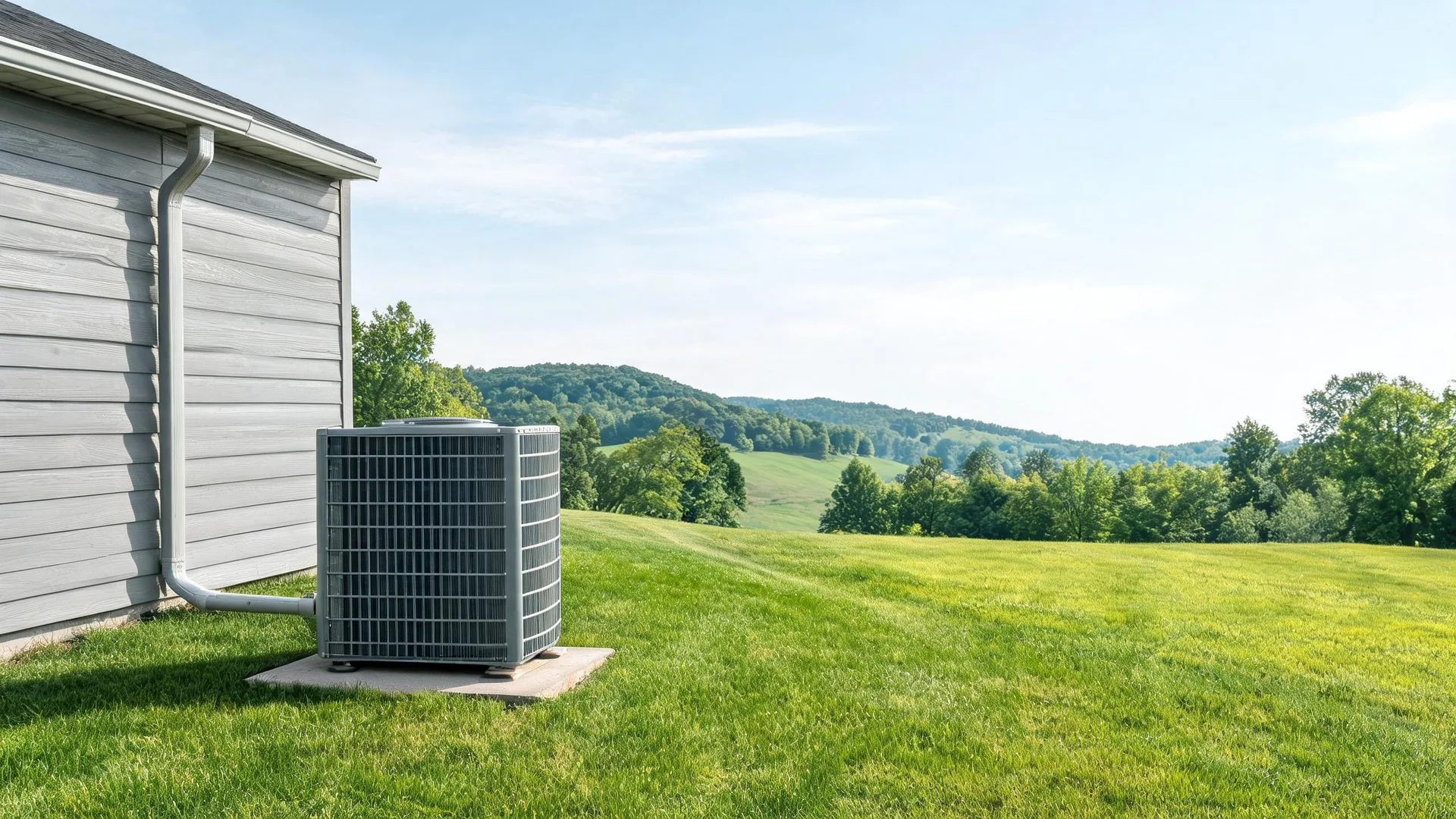
Oversized or undersized both cause problems

A heat pump that's too big cools or heats the air fast and shuts off before it finishes pulling moisture out or spreading heat evenly, so the house feels clammy in summer and uneven in winter. One that's too small runs constantly and still can't keep up when it's coldest or most humid outside, which wears the compressor down faster. The right size runs long steady cycles instead of short hard ones or endless ones.

Two systems can carry the same efficiency rating and still perform differently once they're running. Ask what happens at low temperatures, since every heat pump loses some capacity as the air outside gets colder, and the rate of that drop out varies by model. Ask whether it has a backup heat source built in and when that backup kicks on. Ask about the compressor type, since a variable speed compressor adjusts its output to match the load instead of just switching on and off at full blast, which keeps the house steadier and puts less strain on the equipment over time. Ask what the warranty covers on the compressor specifically, not just the system overall, because that part costs the most to replace. The rating on the sticker is a starting point. These answers tell you how the machine actually behaves in the months that are hardest on it.

If ductwork is the question, get it answered before the equipment is picked, not after. A contractor can check whether the ducts in place are sized to move the air a heat pump puts out, or whether there even are ducts to work with. That inspection belongs in the same visit as the load calculation, since both are about the house, not the catalog. Skipping it doesn't save the step, it just moves the discovery to after installation, when fixing it costs more than checking it would have. A house built in 1961 or earlier can still end up with a heat pump that runs right. It just needs someone to look at what's already there before anything gets installed.