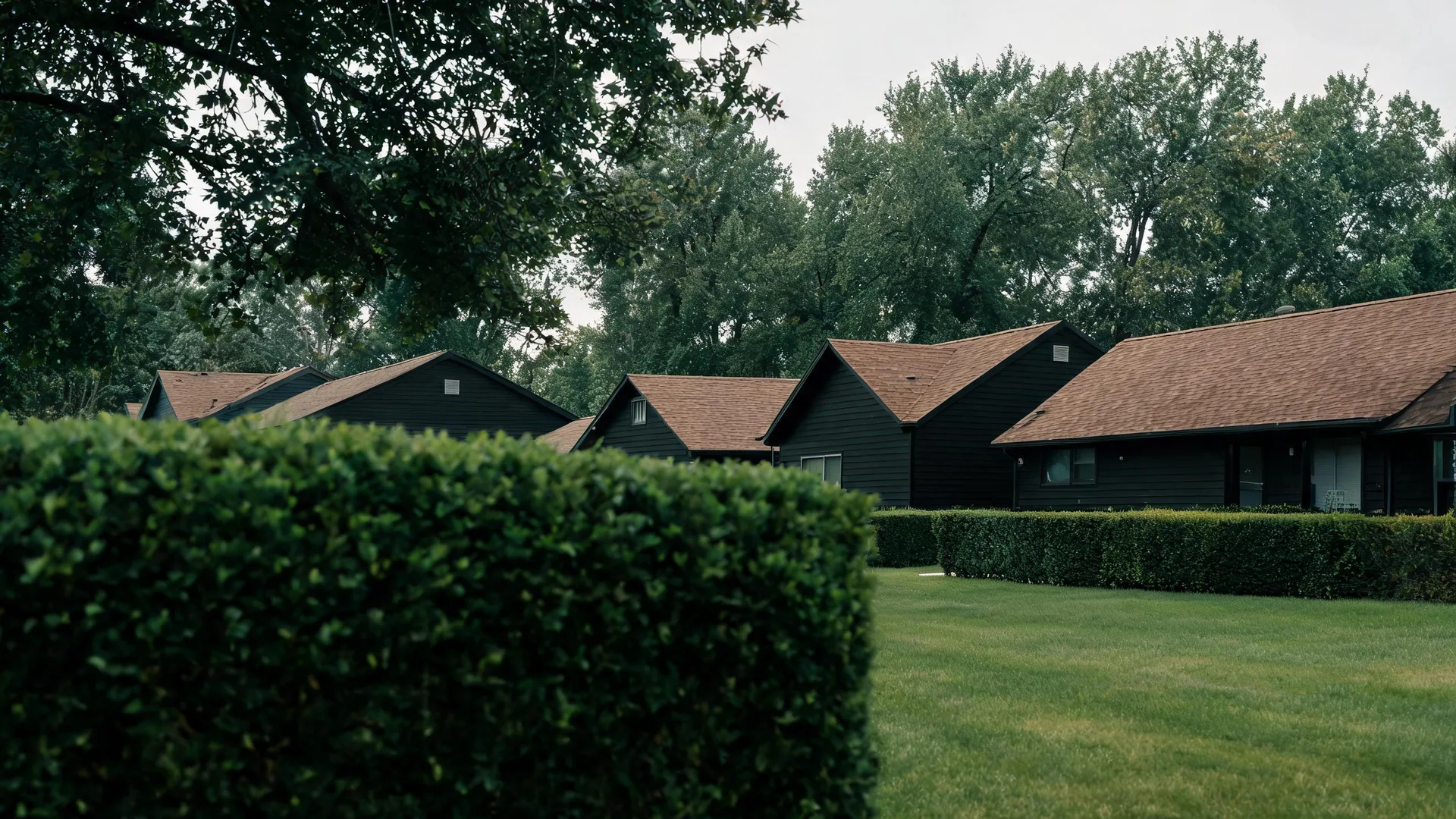
A row of dark-sided buildings with brown shingled gable roofs behind trimmed hedges, with a mown lawn in the foreground and leafy trees under an overcast sky.

Heat Pump Installation in Kewanee, IL

Tell us about the job

Takes about a minute. No obligation.

Step 1 of 3: Equipment

Storms add to the load

Henry County saw damaging wind 103 times between 2015 and 2024, plus 80 hail events in the same stretch. An outdoor unit sitting through that many storms takes hits a system in a calmer county never deals with, on top of the heating and cooling it's already doing.

Humid summers push it harder

The dew point here averages 63°F across June, July and August, and that's the number that makes the air feel heavy. A heat pump has to pull that moisture out as well as cool the house, which means more run time for the same comfort.

8 months
October through May, your system heats
3 months
June through August, it cools
18°F
the average winter night it heats against
83°F
the average summer afternoon it cools against
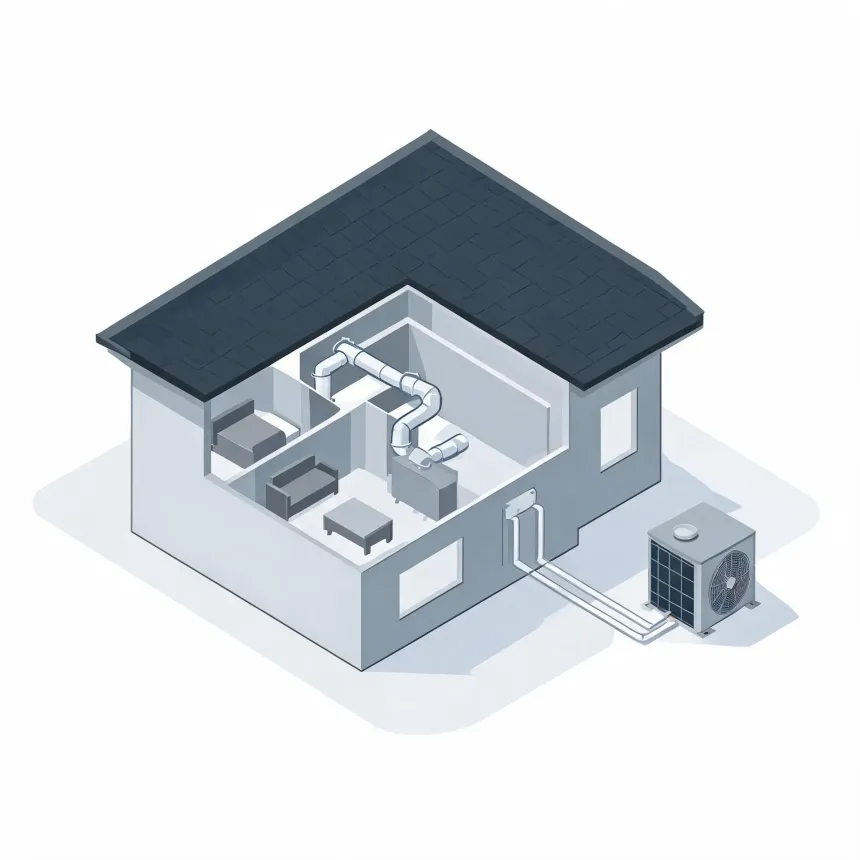
Isometric illustration of a cutaway single-story house showing interior ductwork, an indoor air handler and simple furniture, connected by lines to an outdoor condenser unit beside the building.
Your system heats October through May and cools June through August.

NOAA nClimDiv, 1991–2020 normals

Half the homes in Henry County were built in 1961 or earlier.

A heat pump going into a house that old has to match a place that's never had one, not just replace what was there.

October through May, this heat pump will carry most of the year. Get it in before September.

Cooling runs June through August
Heat runs October through May
103 damaging wind events from 2015 to 2024
Most Homes Here Heat With GasGas heats 72.9 percent of homes in Henry County, so a heat pump here is usually added alongside a furnace, not a full replacement of it.

Electricity in Henry County runs 15.07 cents per kilowatt-hour. That rate applies to every hour this heat pump runs, and it's already set to run most of the year. A unit that's lost efficiency, or one sized wrong for an older house, turns that rate into a bigger bill every month it's working. The fix is a system matched to the house, installed right the first time, so the rate you're paying works for you instead of against you.

Match the heat pump to the house before it goes in

Half the homes in this county were built in 1961 or earlier, and a heat pump has to be sized and set up for the house it's going into, not the one it's replacing. That matching work happens at installation. Getting it planned now means the system going in is built for your house from the start.

Find a contractor
A man in a gray shirt and tan work pants, seen from behind, climbs porch steps toward a dark blue front door while carrying a canvas tool bag, with a potted shrub to the right.
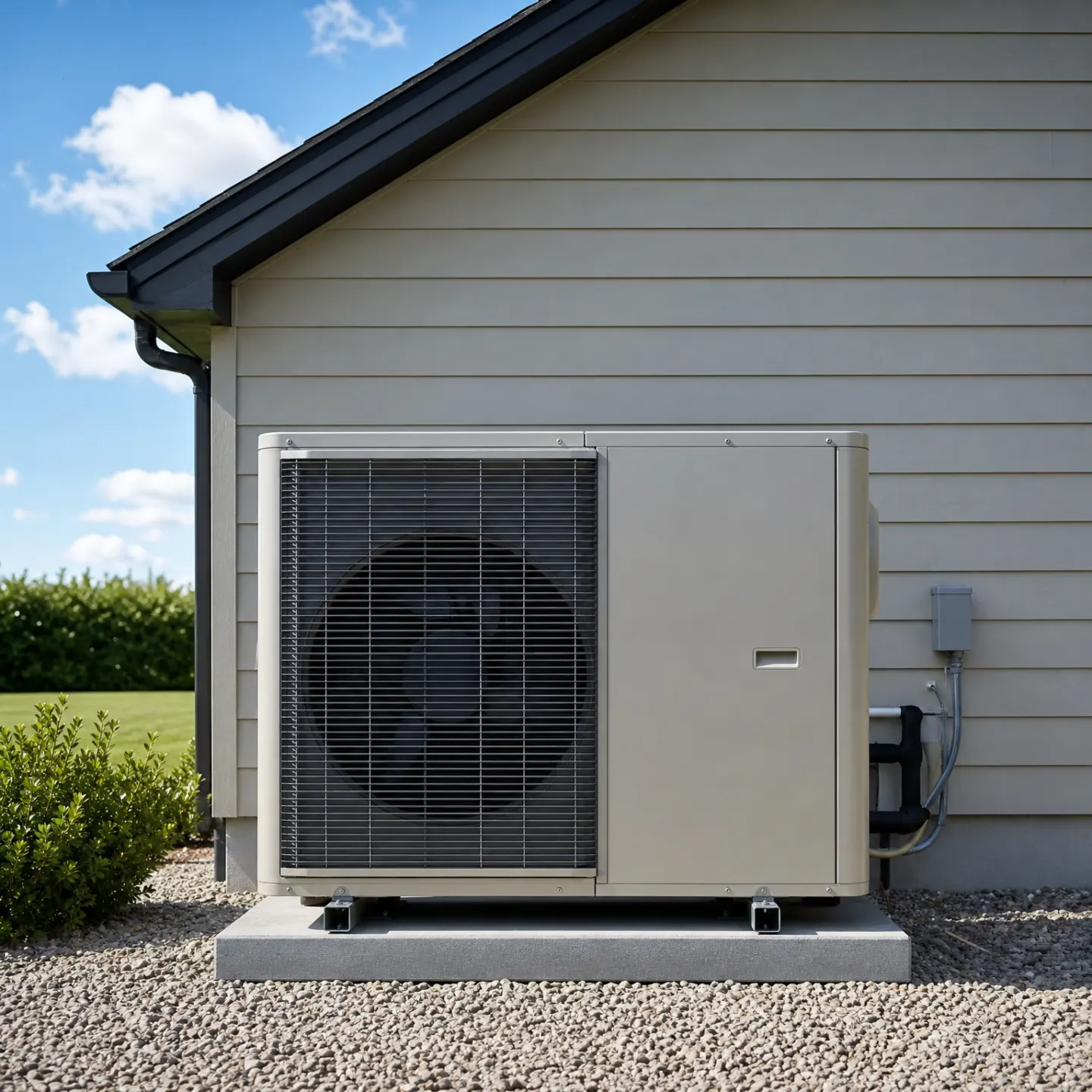
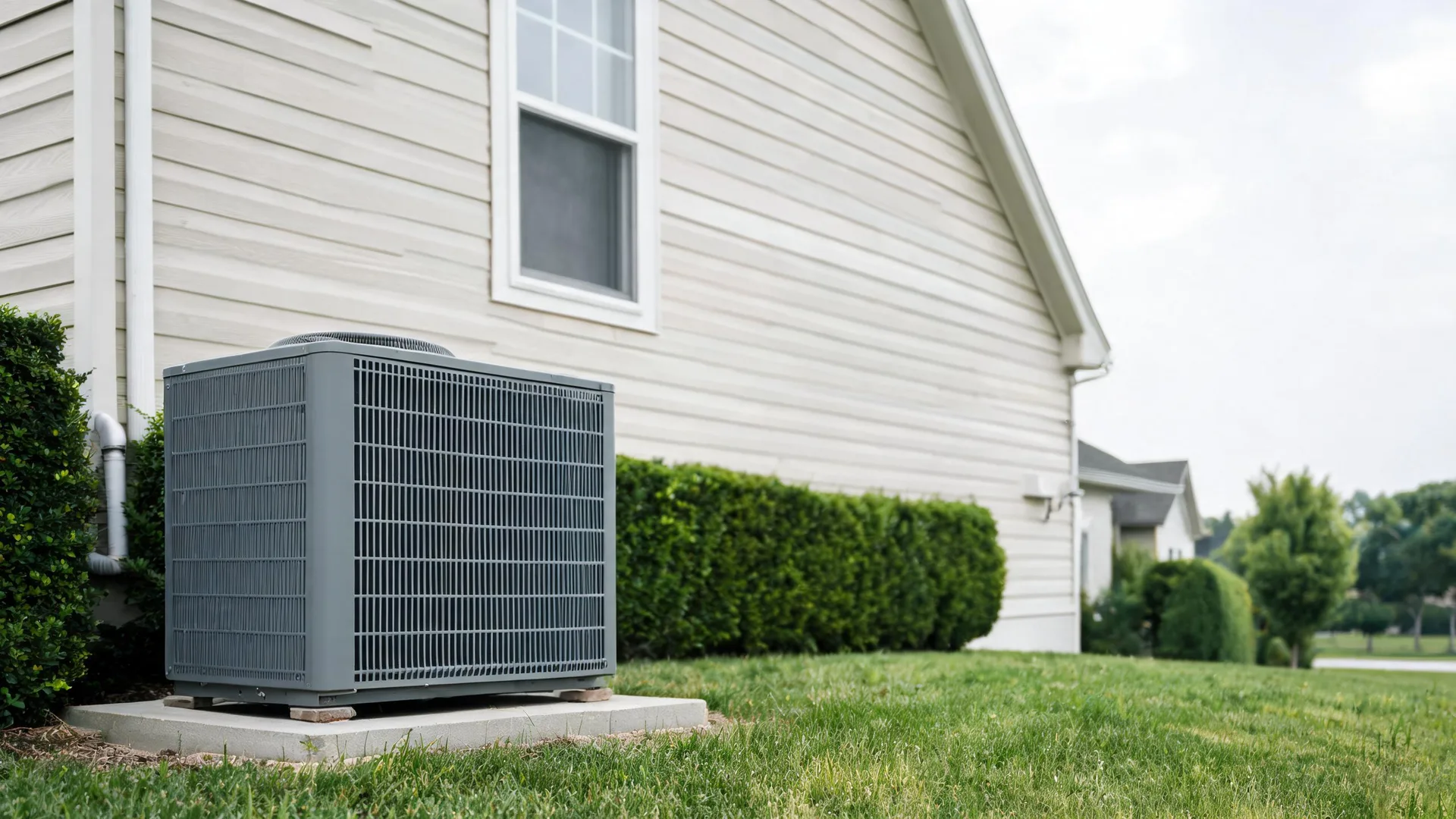
A residential heat pump outdoor unit mounted on a concrete pad next to a house with gray vinyl siding.

This Unit Doesn't Get an Easy Season

This outdoor unit runs through wind and hail on top of carrying the house most of the year. Henry County saw damaging wind 103 times between 2015 and 2024, and 80 hail events in that same stretch. None of that waits for a slow month. A unit already working long hours has less room to shrug off a hit to the cabinet or the coil. When it's time to pick a model, a cabinet and coil rated to take weather matters more here than in a county where the system gets a quiet season to recover in.

The Rating Is Measured, Not Guaranteed

The efficiency rating on a heat pump's label comes from a lab test, run at set temperatures with the system working under ideal conditions. Your ductwork, your home's insulation, and how the unit gets installed all affect what efficiency actually shows up on your bill. Two homes with the same rated unit can see different results depending on whether the system was sized and set up correctly for that house.

A Higher Rating Changes the Running Cost, Not the Job

A heat pump with a better efficiency rating uses less electricity to move the same amount of heat in or out of the house. It doesn't mean the unit heats or cools faster, and it doesn't mean it needs less maintenance. The rating is worth paying attention to because this system runs often, and that number follows it every hour it's on.

Installed cost comes down to what the job actually requires, not just the equipment sitting in the driveway. Sizing the unit takes a load calculation, room by room, not a guess based on the old system's size. If ductwork is being reused, it has to be checked for leaks and for whether it can even handle the airflow a heat pump needs, since that airflow often runs higher than what a furnace alone pushed through. Line sets, electrical capacity at the panel, and where the outdoor unit sits all factor into the labor before the first bolt goes in. A straightforward swap where the ducts, electrical and placement all check out costs less than a job where any one of those has to be reworked. The equipment itself is only part of what you're paying for. The other part is the work that makes sure it runs the way it's rated to.

Henry County falls in climate zone 5A, a cool zone where heating carries more of the load than cooling. Any split-system heat pump installed here has to meet the federal minimum for that climate: at least 14.3 Btu of heat moved per watt-hour of electricity over the summer, and at least 7.5 Btu per watt-hour over the winter. That standard applies to units built from 2023 on, so it's already the floor for most of what's available now. It narrows the field some, but it also means the unit going into your house won't fall below what the region requires to run efficiently in a hard winter.