




A dark two-story house with a covered front porch and shrubs, framed by large leafy trees, photographed from ground level across a mown green lawn with blurred grass in the foreground.

Heat Pump Installation in Waukegan, IL

Tell us about the job

Takes about a minute. No obligation.

Step 1 of 3: Equipment

Electricity in Lake County averaged 18.09 cents per kilowatt-hour in 2025, higher than in most US counties. A heat pump runs on electricity for both heating and cooling, so that rate applies to the system year round. The dew point here averages 61°F across June, July and August, which is the sticky, heavy air that makes a cooling system work harder to pull moisture out. A unit that moves heat efficiently does less work to hit the same comfort, and at this rate that difference shows up on the bill every month, not just in summer.

8 months
October through May, your system heats
3 months
June through August, it cools
19°F
the average winter night it heats against
81°F
the average summer afternoon it cools against
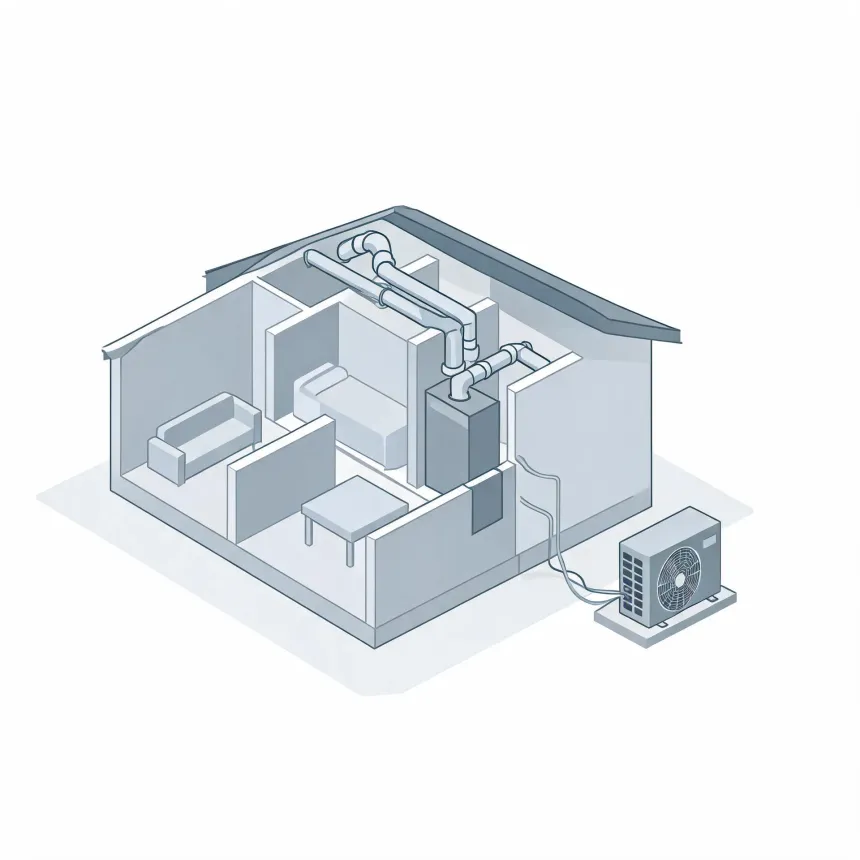
Isometric line illustration of a cutaway house showing interior rooms with furniture, ceiling ductwork connected to an indoor air handler, and a line running outside to an outdoor condenser unit.
Your system heats October through May and cools June through August.

NOAA nClimDiv, 1991–2020 normals

The size of the heat pump has to match the house, not round up for safety.

An oversized unit cycles on and off instead of running steady, and that short cycling wears parts faster and costs more to run.

Most of Lake County already heats with gas, which is what a heat pump replaces or backs up

83.2% of homes heat with gas
Climate zone 5A
Power here costs 18.09 cents per kilowatt-hour
Get it done before OctoberHeat runs here from October through May, so September is the month to have a heat pump ready.

Lake County sits in climate zone 5A under the 2021 energy code, a cool zone where heating is the bigger load even though summers here run sticky. Any split-system heat pump made on or after January 1, 2023 has to clear a federal minimum: at least 14.3 Btu of cooling for every watt-hour it draws, and at least 7.5 Btu of heat for every watt-hour it draws in winter. That standard sets the floor on what a contractor can install here. A unit that just clears it will run differently over a full year than one built well past it, and in a zone where winter carries the bigger load, that gap shows up on both sides of the year.

The unit you pick decides what that rate costs you

Power here costs more than in most places, and a heat pump runs on it year round, for heating and cooling both. The efficiency of the unit installed is what decides how that rate turns into a bill. That is worth settling now, while the system is being picked, not after.

Find a contractor
A man in a gray t-shirt and tan work pants, seen from behind, carries a canvas tool bag up wooden porch steps toward a dark blue front door beside a potted shrub.
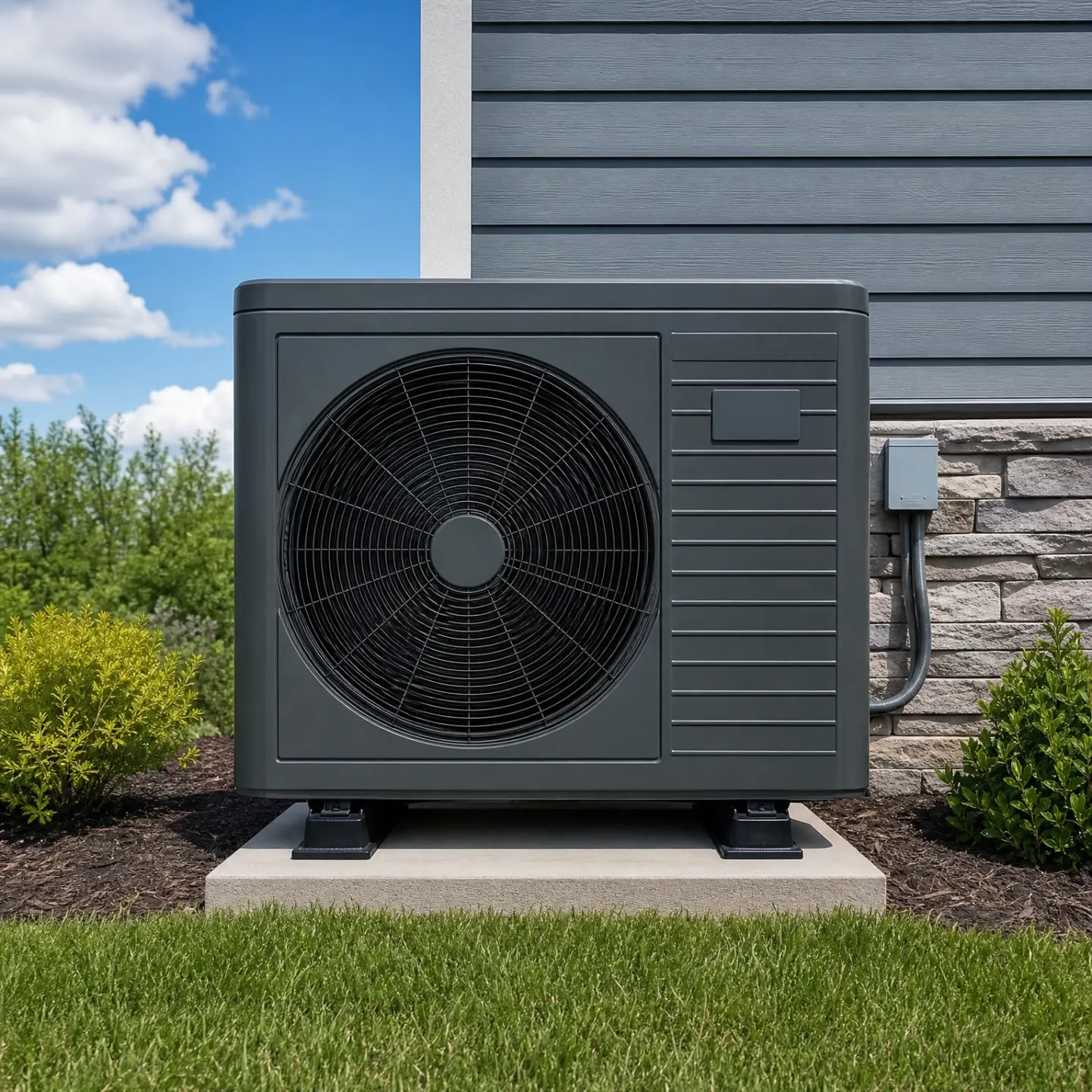
A dark gray heat pump unit mounted on a concrete pad next to a house with gray siding and a stone veneer wall.

The number on the label is a starting point, not a guarantee

That rating on the label is measured new, in a lab, under set conditions. It is a ceiling, not a promise. How close the installed system runs to that number depends on the refrigerant charge being right, the airflow across the coil being right, and the ductwork moving the air the system was designed to move. A unit with a high rating choked by a dirty filter or a bent return duct will not perform like its label. The rating also only describes the equipment at the moment it is installed. A heat pump that runs for years keeps that efficiency as long as the coils stay clean, the refrigerant charge stays correct, and the moving parts get serviced on schedule. Skip that upkeep and the unit drifts further from its rated performance every year it runs, even though the label never changes.

Ask for the load calculation, not a guess

A contractor should measure the house room by room before naming a size, checking windows, insulation and layout rather than pricing off the old system's size or a square footage chart. Two houses the same size can need different tonnage depending on how they're built. If a quote shows up before anyone measures the house, that number isn't grounded in anything.
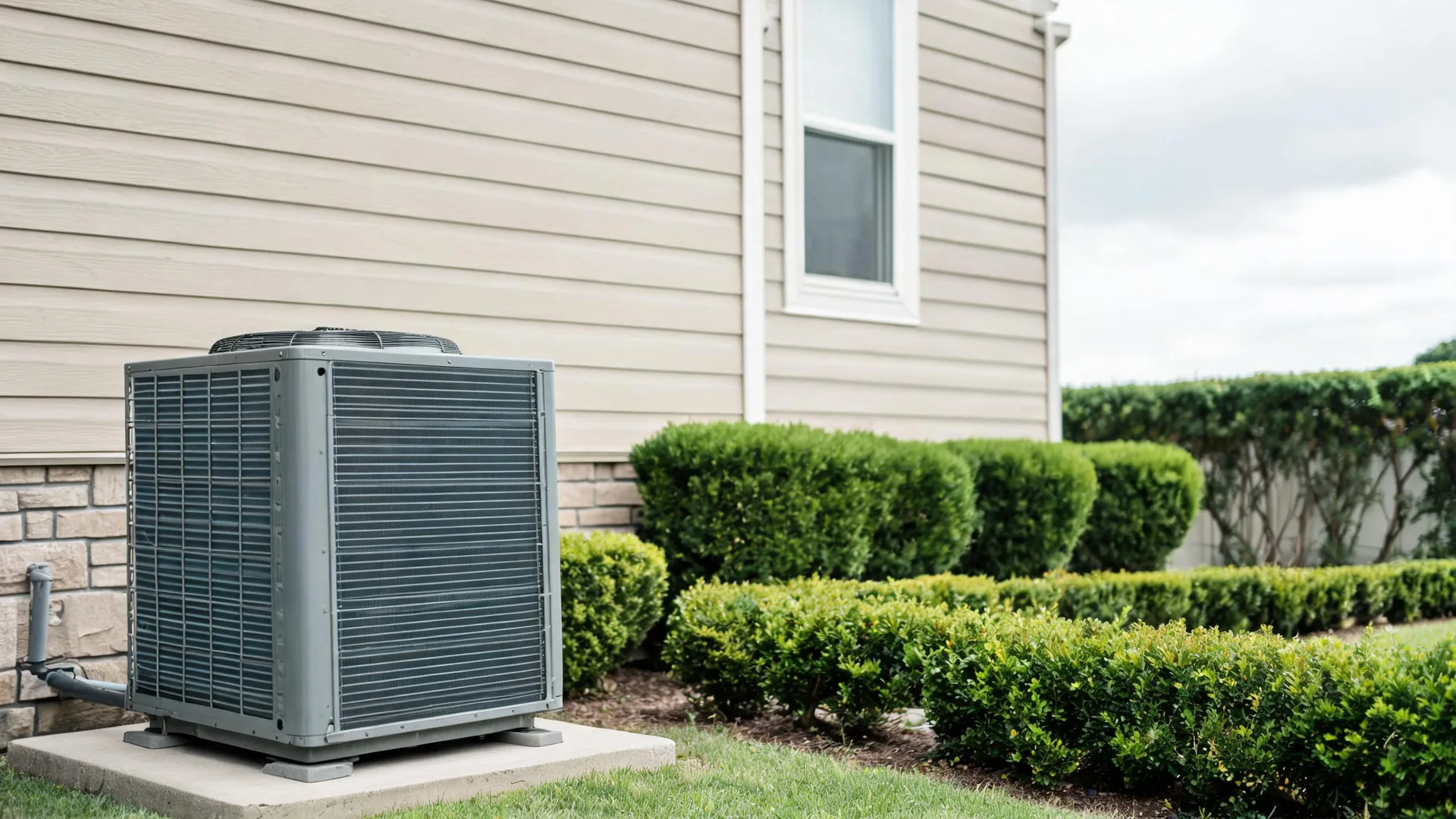
Ask what happens on the coldest day

Every heat pump loses capacity as the temperature drops, and each model has a point where it needs backup heat to keep up. Ask what that point is for the unit being quoted, and what kicks in when it's reached. A system sized and staged for that low end runs steady; one that isn't will lean hard on backup heat more often than it should.

The old system has to come out before the new one goes in, and that's more than unbolting a box. A technician recovers the refrigerant from the old unit into a tank rather than releasing it, because venting refrigerant is against the law and wastes a chemical the new system doesn't even use if it runs on a different one. The old line set usually comes out too. Mismatched refrigerants and old residue in the lines cause problems in the new system down the road, so most installers run new lines rather than trust what's already in the walls or attic. If the old system used a different kind of thermostat wiring or a different voltage disconnect, that gets swapped as well. None of this is optional work tacked on to pad a bill. It's what keeps the new unit from inheriting the old one's problems.

Install day starts outside, with the condenser and the line set, then moves in to the air handler or the furnace coil, whichever the house has. Setting the outdoor unit means a level pad, clearances from the wall and anything that blocks airflow, and a location the disconnect and the refrigerant lines can reach without strain. Running new line set means brazing joints, pressure testing the whole run, then pulling a vacuum to clear out air and moisture before any refrigerant goes in. That vacuum stage matters more than it looks. Moisture left in the lines turns to acid once the system runs, and that works on the compressor from the inside. Once the charge is in, the technician checks it against the manufacturer's numbers for the conditions that day, then sets airflow across the coil and confirms the thermostat is talking to the right equipment, heat pump logic is different from a furnace alone. Only after all of that does the system get run through a full cycle, heating and cooling both, to see that it answers the way it's supposed to.