



Three illuminated two-story brick houses on a tree-lined residential street photographed at twilight, with warm window light and landscape uplighting visible against a deep blue evening sky.

Heat Pump Installation in Chicago, IL

Tell us about the job

Takes about a minute. No obligation.

Step 1 of 3: Equipment

Electricity in Cook County averaged 18.08 cents per kilowatt-hour in 2025, higher than in most US counties. A heat pump runs on electricity, not gas, so that rate applies to every hour it works. Two systems can heat and cool the same house and land on different bills just from how efficiently each one turns that electricity into heat or cold air. In a place paying this much per kilowatt-hour, the difference shows up fast. Where power costs less, a less efficient unit is easier to overlook. Here, it is not.

8 months
October through May, your system heats
3 months
June through August, it cools
20°F
the average winter night it heats against
82°F
the average summer afternoon it cools against
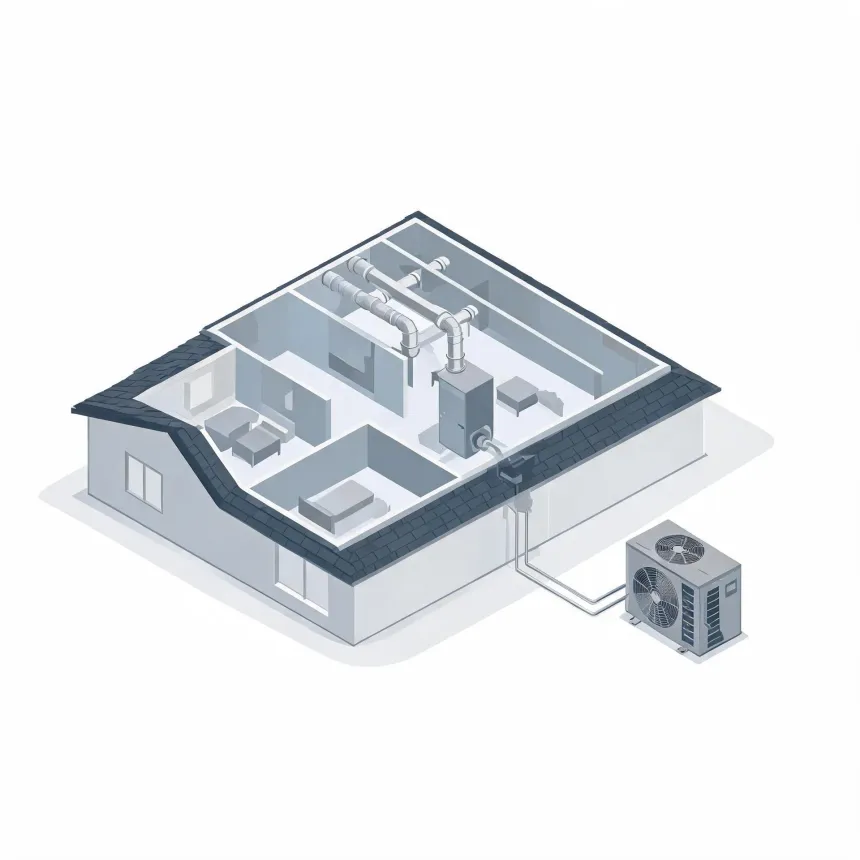
Isometric cutaway illustration of a single-story house showing interior rooms with ductwork, a furnace or air handler, and refrigerant lines running outside to a condenser unit on a pad.
Your system heats October through May and cools June through August.

NOAA nClimDiv, 1991–2020 normals

Half the homes in Cook County were built in 1961 or earlier.

A heat pump installed here has to match the house, not just the climate.

Cook County sees its share of storms, and outages test any system that depends on power

780 severe weather events from 2015 to 2024
16% of homes statewide lost power a day or more in 2024
548 damaging wind events from 2015 to 2024

Cook County sits in zone 5A, a cool climate where the heat pump will spend more hours heating than cooling. Humidity adds to the load too. The dew point averages 62°F across June, July and August, which is heavy air for the system to pull moisture out of on top of cooling it. A heat pump here is running against the weather on both ends of the year, not just the cold months. That kind of steady demand is where a unit sized wrong or built cheap starts to show it, usually in the bill before it shows up as a repair. Sizing it to the house, not just the square footage, matters more here than in a milder climate.

Pick the efficiency rating before you pick the price

At this rate per kilowatt-hour, the difference between two heat pumps shows up on your bill every month you run it, not just at installation. That makes the efficiency rating part of what you're buying, not a spec to skip past. Worth asking about before you decide.

Find a contractor
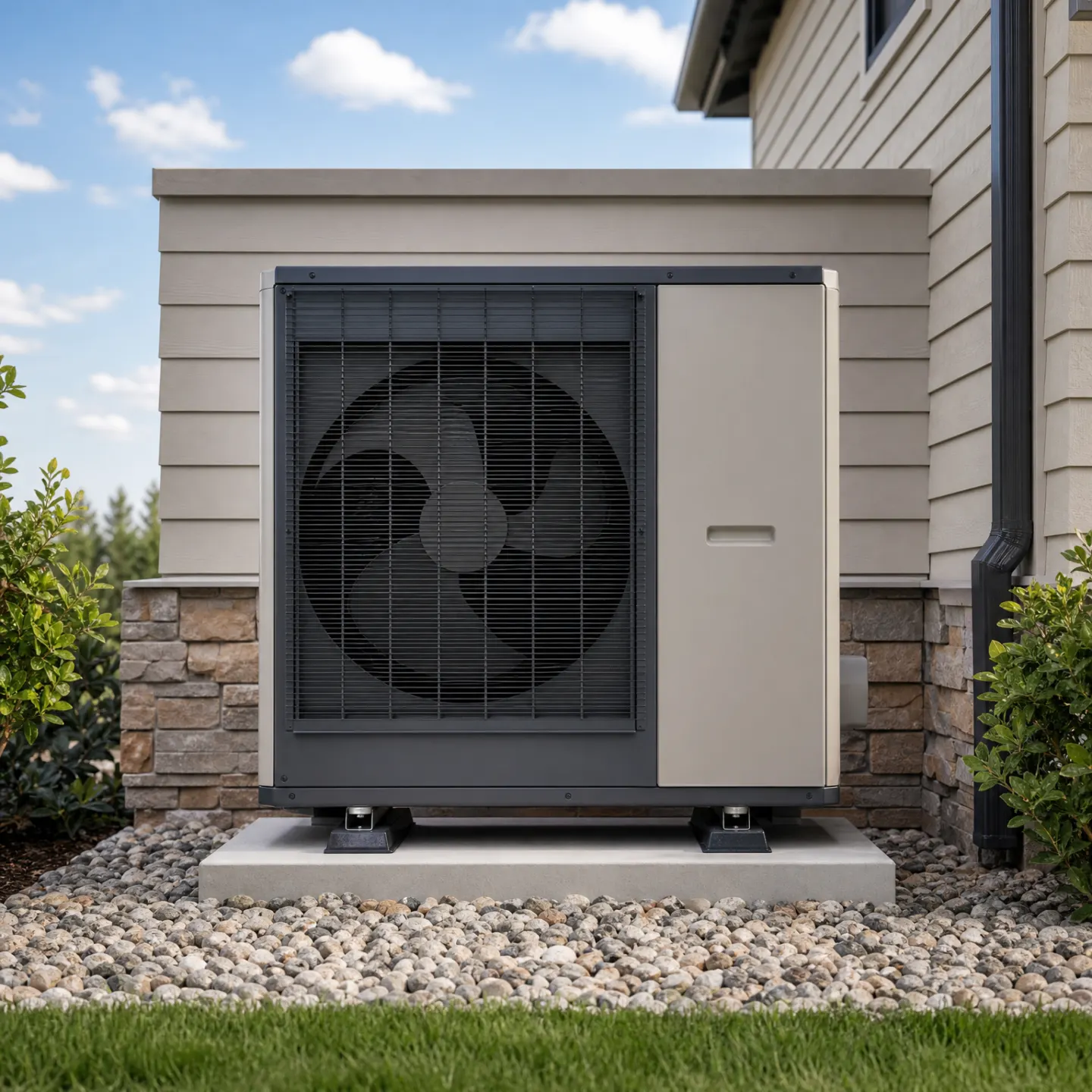
A gray heat pump outdoor unit mounted on a concrete pad next to the stone-accented exterior wall of a house.

Nearly year-round work, so timing the install matters

Heat pumps here run heat from October through May, about eight months a year, then switch over and run cooling June through August. That is most of the year on one system. September is the only real stretch before heating starts, and May is the only gap before cooling does. Installing in one of those windows means the old system gets pulled on your timeline, not after it quits on the coldest night of the year or the first hot week of June. Overnight lows average 20°F across December, January and February, so a heat pump going in right before heating season has to be sized and set up right from the first cold night it works.

What the rating actually measures

The efficiency rating on a heat pump's label is a ratio, not a fixed amount of heat or cold. It compares the energy the unit puts out against the electricity it takes in, measured over a season rather than a single moment. A unit with a higher rating moves more heat per unit of electricity than one with a lower rating, but neither number tells you how the system will handle a given house. That depends on sizing, ductwork, and installation as much as the rating itself.
Why the rating matters more once it's running

Two heat pumps can sit side by side on a showroom floor with different ratings and look like the same purchase decision. Once installed, the lower-rated one draws more electricity to produce the same heat or cold, every hour it runs. That gap doesn't show up on install day. It shows up on every bill afterward, for as long as the system is in the house. A buyer comparing units on price alone is comparing half the cost.

A heat pump's price comes from more than the box itself. Sizing takes real work: a contractor has to calculate the heat loss and heat gain for the specific house, not just match tonnage to square footage, and that calculation shapes which unit even fits the job. Ductwork is often the bigger cost. Existing ducts may need sealing, resizing, or added returns to move the air volume a heat pump needs, since it moves more air at lower temperatures than a furnace does. If there's no ductwork at all, that's a different job and a different price. The outdoor unit's placement and the line set run between indoor and outdoor components add labor regardless of the equipment chosen. Electrical work factors in too, since some systems need a dedicated circuit or a panel upgrade to handle the load. None of this shows up on the price tag of the unit itself, but all of it determines what the job actually costs to do right.

Gas heats 80.2% of the homes in Cook County, more than every other fuel combined. Electricity comes in second at 16.1%. That matters for a heat pump install, because most of these houses were built around a gas furnace as the main heat source, with the ductwork and venting set up for it. Some homeowners pull the furnace out and run on the heat pump alone. Others keep the furnace as backup for the coldest nights and let the heat pump handle the rest of the year. A contractor sizing the job needs to know which setup this house has, and whether the existing furnace stays or goes, before anything else gets decided.