




A lit residential street at dusk featuring large two-story brick houses with glowing windows, mature trees, and a street lamp.

Heat Pump Repair in Sterling, IL

Tell us about the job

Takes about a minute. No obligation.

Step 1 of 3: Equipment

A heat pump in Sterling earns its keep from October through May, close to eight months of the year. September is when a weak part tends to show up, right as the system switches over to heat and starts working harder than it has in months. A capacitor or contactor that was barely getting by in cooling mode often won't make it through the first cold mornings. If yours is short cycling, blowing cool air, or not keeping up once the switchover happens, that's usually the sign of something that was already failing, not a new problem caused by the season.

8 months
October through May, your system heats
3 months
June through August, it cools
17°F
the average winter night it heats against
83°F
the average summer afternoon it cools against
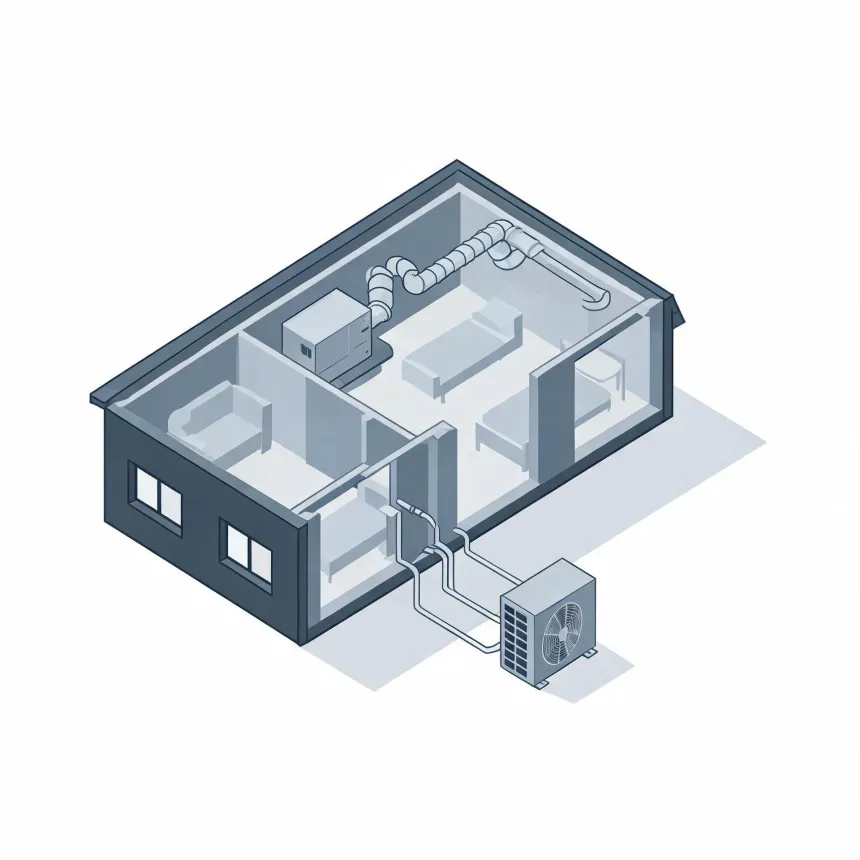
Isometric cutaway illustration of a small house showing interior rooms with furniture, an indoor air handler with flexible ducting, and refrigerant lines running to an outdoor condenser unit beside the building.
Your system heats October through May and cools June through August.

NOAA nClimDiv, 1991–2020 normals

An outdoor unit that's low on refrigerant costs more to run and still can't keep up.

A leak doesn't heal on its own, so recharging it without finding the leak just means doing it again next season.

At 15.87 cents a kilowatt-hour, a heat pump that's struggling costs you more every day it runs that way

Power costs 15.87 cents a kWh statewide
58 damaging wind events from 2015 to 2024
37 hail events from 2015 to 2024
Nothing unusual in Whiteside County's weatherOvernight lows average 17°F here, well within what a heat pump is built to handle

Half the homes in Whiteside County were built in 1961 or earlier. If yours is one of them, the heat pump itself is almost certainly newer than the house, but it's worth knowing which one you've got. An older heat pump is working toward the end of what it can reasonably be asked to do, and that changes the math on a repair. A new capacitor or contactor is worth fixing on any unit. A compressor problem or a refrigerant leak on a system that's been through many winters already is worth asking a contractor directly how much life is left before you spend real money keeping it going.

Find out which kind of repair this is before you pay for it

A contractor can look at your heat pump and tell you straight off whether it's young enough to fix and move on, or old enough that the next repair should come with that question attached.

Find a contractor
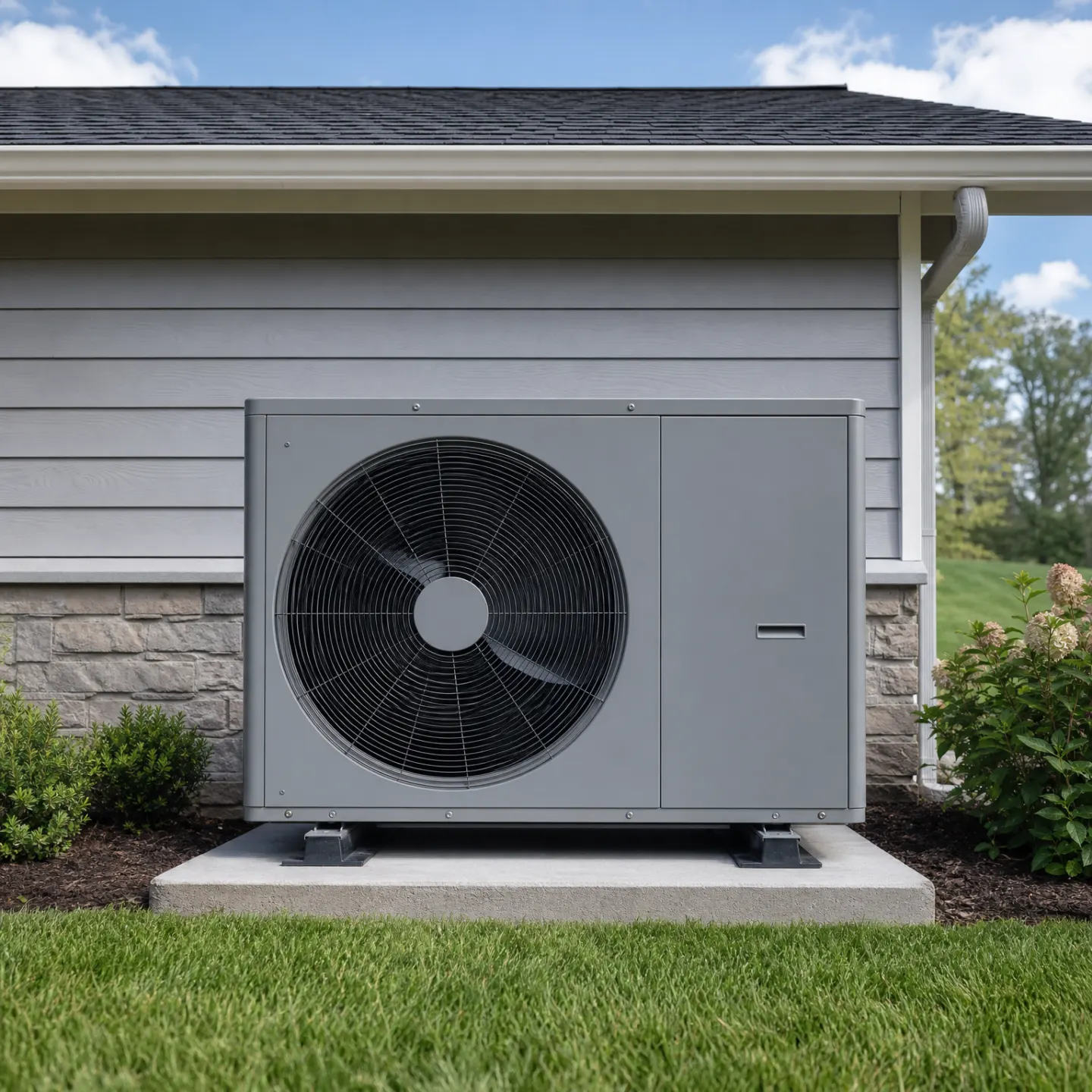
A gray outdoor HVAC unit mounted on a concrete pad beside a house with gray lap siding and a stone foundation.

What actually breaks, and why

Most heat pump failures trace back to a handful of parts, and they tend to go in the same way every time. The capacitor gives the compressor and fan motor the jolt they need to start, and it weakens slowly, so the unit is straining to start long before it fails to start. The contactor switches power to the outdoor unit every time it cycles on, and all that arcing wears the contacts down until they stick or stop making contact at all. A reversing valve lets the system switch between heating and cooling, and when it sticks, the unit stays stuck on one mode no matter what the thermostat is asking for. Refrigerant leaks don't fix themselves and don't get better with time. The line develops a weak spot, loses charge slowly, and the system runs longer and longer to make up for it until it can't anymore. None of this is about one bad day of weather. It's wear that was already underway, showing up the first time the system gets asked to work hard.

What you can check yourself

Look at the outdoor unit and make sure nothing is packed against it, no leaves, no ice buildup, nothing blocking airflow into the coil. Check your thermostat batteries and settings, since a thermostat stuck in the wrong mode looks exactly like a broken heat pump. Go to your breaker panel and see if anything has tripped. Check the air filter, because a filter clogged enough can choke airflow until the system can't keep up.
What to leave alone

Don't open the outdoor unit or touch anything inside the cabinet. Don't add refrigerant yourself even if you have some on hand, since the wrong charge causes its own damage and a leak needs finding, not topping off. If the unit is icing over heavily or making a grinding or screeching noise, turn it off at the thermostat and wait for a contractor rather than letting it keep running.

Short cycling is usually the first thing people notice, the unit kicking on and off every few minutes instead of running a steady stretch. Warm air coming out of the vents when it's cold outside is another, since a heat pump that's struggling sometimes moves air without doing much to it. Listen for it too. A low hum when the compressor tries and fails to start, or a click that repeats every few seconds, usually means a capacitor that's about done. Ice on the outdoor unit that doesn't clear during the defrost cycle points at a reversing valve or a refrigerant problem, not just cold weather. And if the system runs constantly, never satisfying the thermostat, it's working harder for less heat, which is what a slow refrigerant leak looks like from inside the house.

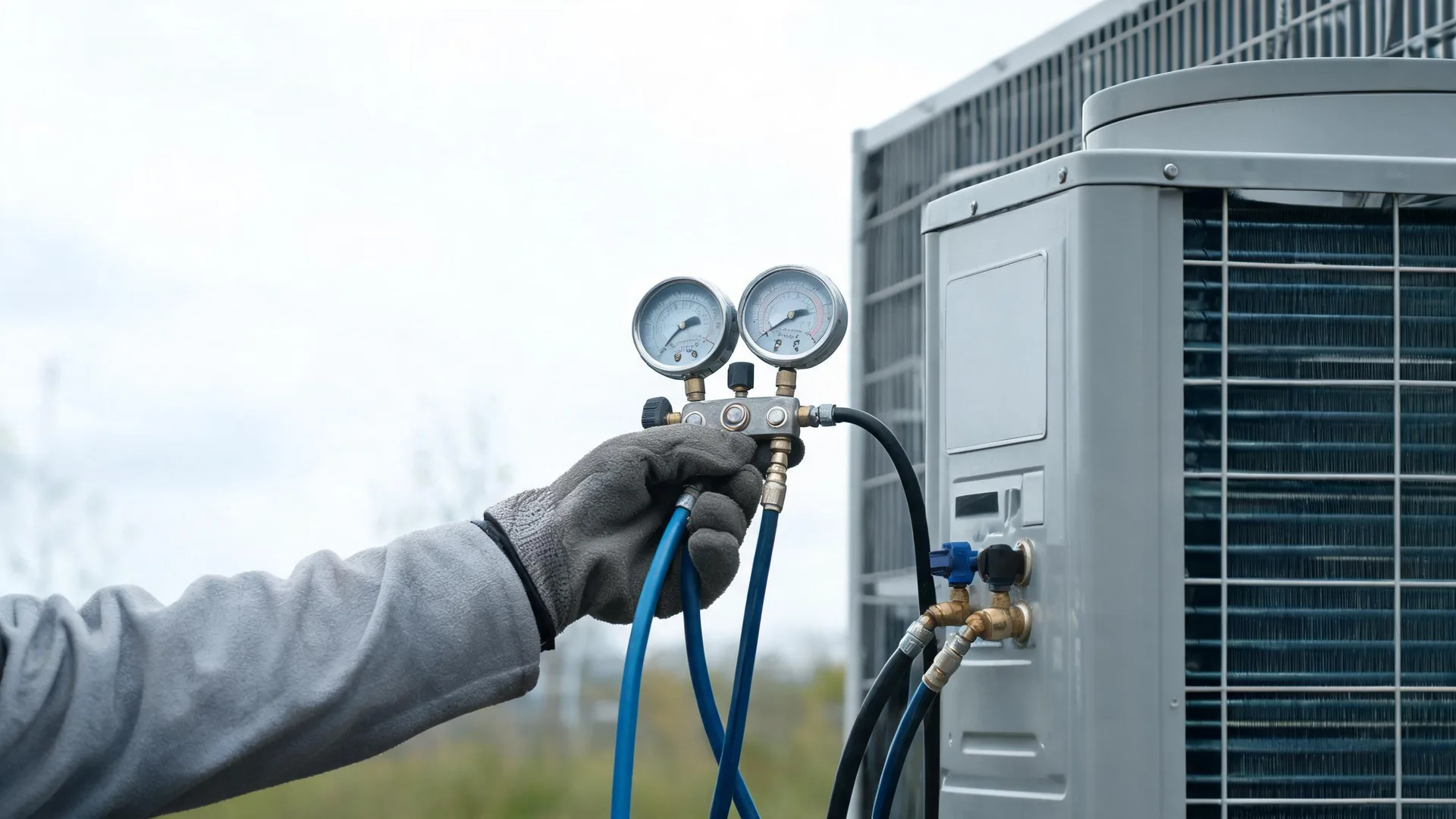
A contractor starts outside at the unit itself. They check what the thermostat is calling for against what the system is actually doing, then pull the panel to look at the capacitor, the contactor and the wiring for scorching or wear. If those look fine, the next step is checking refrigerant pressure at the service valves. That reading tells a contractor whether the charge is right, low, or acting in a way that points to a leak somewhere in the line set. Finding the leak itself usually takes an electronic detector or a dye run through the system, since the line is sealed and a leak point is rarely something you can just see. The goal of all of it is the same. Find which part is failing, and find out whether that's a straightforward repair or a sign the compressor is on its way out.