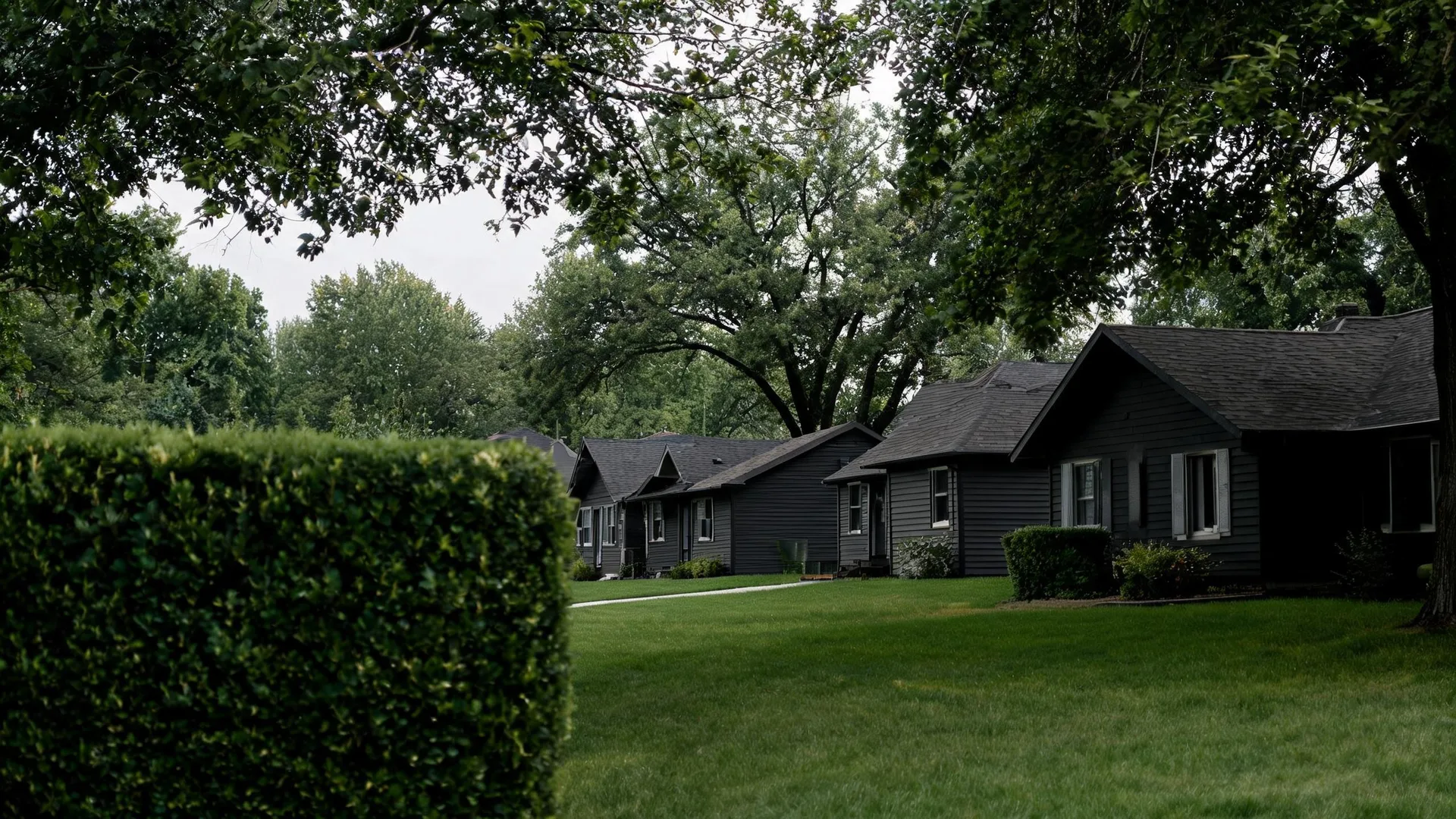
A row of dark-painted single-story cottages with gabled shingle roofs behind a mowed lawn, a trimmed hedge in the left foreground and large leafy trees overhead under an overcast sky.

Furnace Installation in Freeport, IL

Tell us about the job

Takes about a minute. No obligation.

Step 1 of 3: Equipment

Half these homes were built in 1960 or earlier

Stephenson County's housing stock splits right down the middle, half from 1960 or earlier, half newer. A furnace going into one of the older homes is going into a house that has likely seen changes to its ductwork, venting or insulation since it was built.

The new furnace has to match the house as it is now

Installing a furnace in an older home means sizing it to the house in front of you, not to whatever ran there before. Venting and duct sizing that worked for the original system do not always suit the one going in.

8 months
October through May, your furnace is on duty
15°F
the average winter night it heats against
67%
of homes here heat with gas, so most furnaces here burn gas
80% AFUE
the federal minimum any new unit must meet
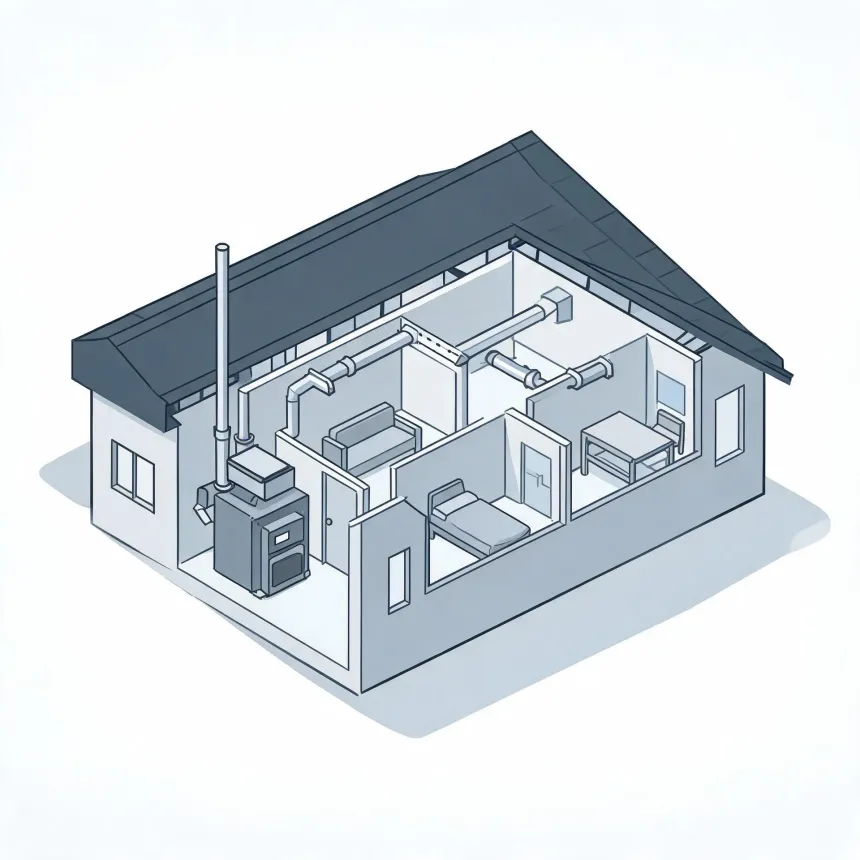
Isometric cutaway illustration of a single-story house showing interior rooms with furniture, overhead ducting, a flue pipe, and a furnace unit against an interior wall.
Your furnace works hardest from November through March.

NOAA nClimDiv, 1991–2020 normals

A furnace in Stephenson County runs about eight months a year, October through May.

A furnace sized to that stretch earns its keep here, and the wrong one shows its weak points fast.

Most furnaces here run on gas, and that's the simplest system to replace

67.3% of homes heat with gas
Climate zone 5A
Heat runs October through May
Replace It Before OctoberFurnace season starts in October here, which makes September the month to get a new one in.

Stephenson County falls under zone 5A in the 2021 energy code, a cool, humid zone where the furnace carries most of the load. Any gas furnace built on or after November 19, 2015 has to turn at least 80 percent of the gas it burns into heat over the winter. That floor rises to 95 percent for furnaces built on or after December 18, 2028, so the baseline itself is about to move. A furnace bought now still only has to clear 80 percent. One bought after that date won't have the option.

Size It for Eight Months of Work

Eight months of heat a year puts real hours on a furnace here. Get the sizing right and keep a reasonable budget for the unit, and it will carry that load without trouble.

Find a contractor
A man in a cap, gray work shirt and dark pants, seen from behind, carries a worn canvas tool bag up porch steps toward a dark navy front door beside a potted shrub.
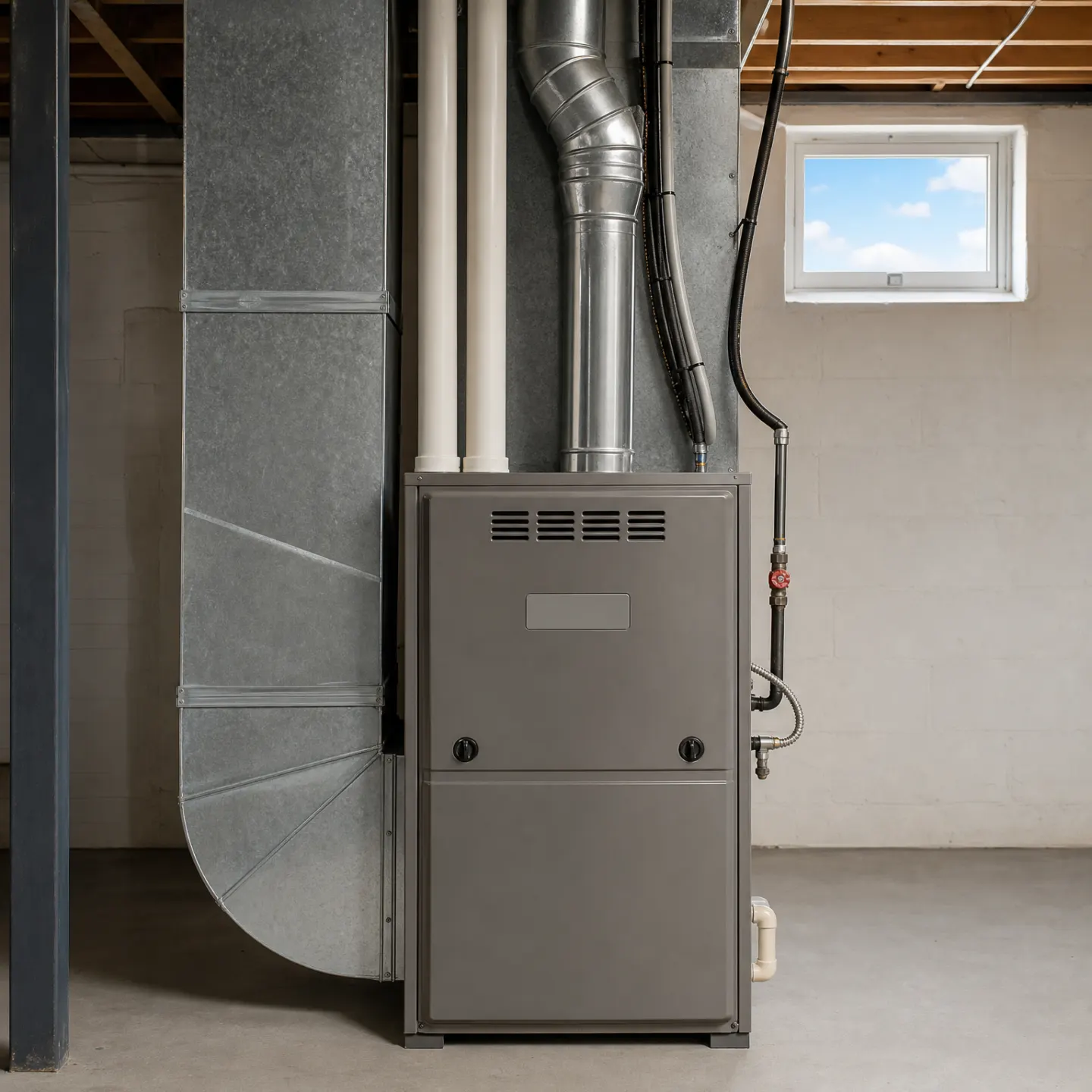
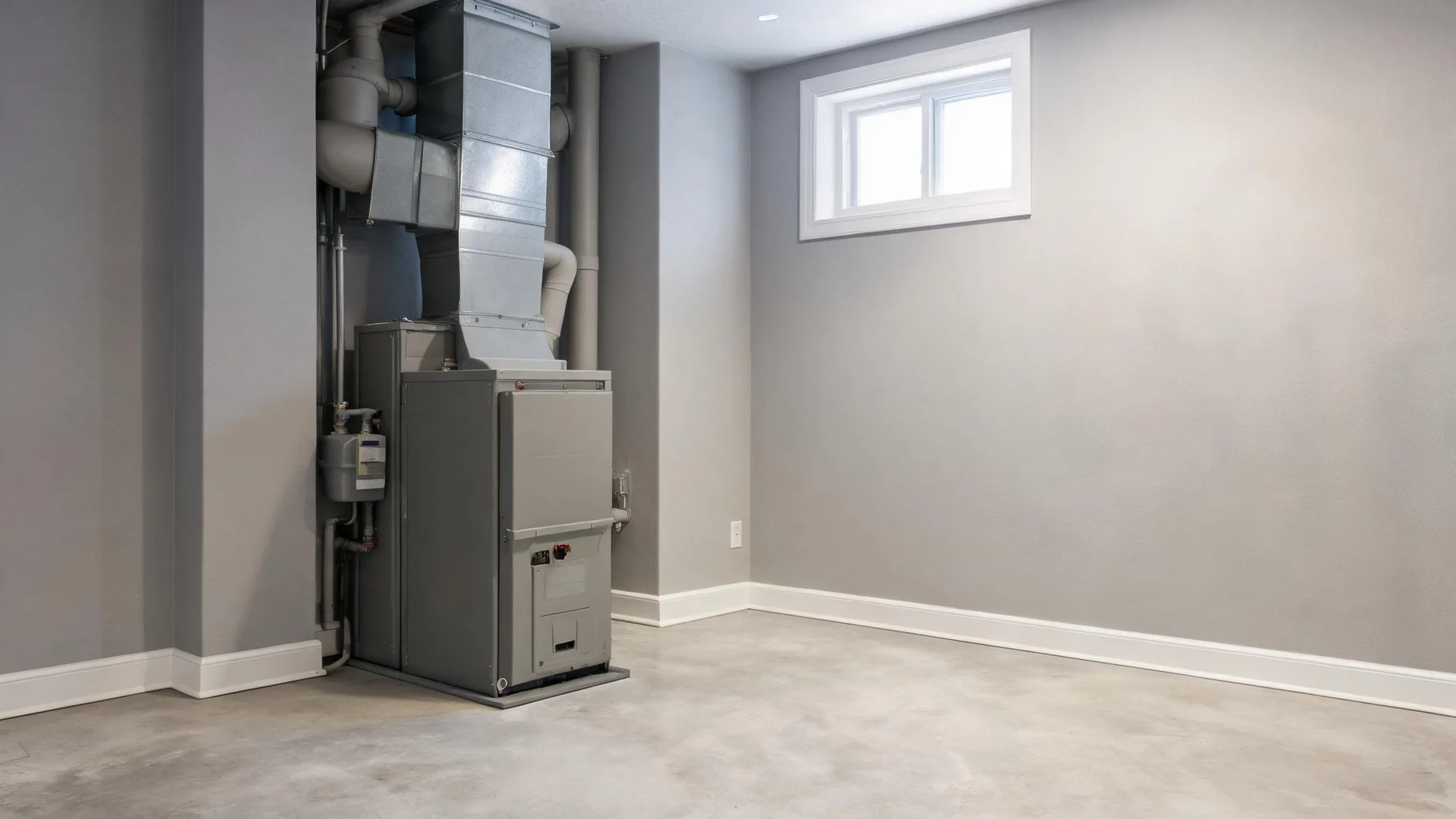
A gray residential gas furnace installed in an unfinished basement, surrounded by ductwork, a metal flue pipe, and a gas supply line.

Size It To The House, Not The Year It Was Built

A contractor sizing a furnace for one of these older homes needs to see the house as it stands, not guess from its age. That means a load calculation on the house in front of them, checking the ducts and vents that are there now rather than assuming anything about what the home had when it was built in 1960 or earlier. Skip that step and the new furnace inherits problems that had nothing to do with the old one.

Bigger Isn't Better

A furnace too big for the house short cycles. It fires, blasts the place with heat, shuts off before it's pulled moisture out of the air or warmed the far rooms evenly, then fires again. That stop-start wears on the ignitor and the blower motor, and the house ends up with hot and cold spots instead of even heat.

The Load Calculation Does The Work

Getting the size right means a contractor works out how much heat the house actually loses, room by room, based on wall and window area, insulation, ceiling height and duct layout. That number tells them what the furnace has to replace on the coldest day. Guessing from square footage or matching the old unit skips the part that actually matters.

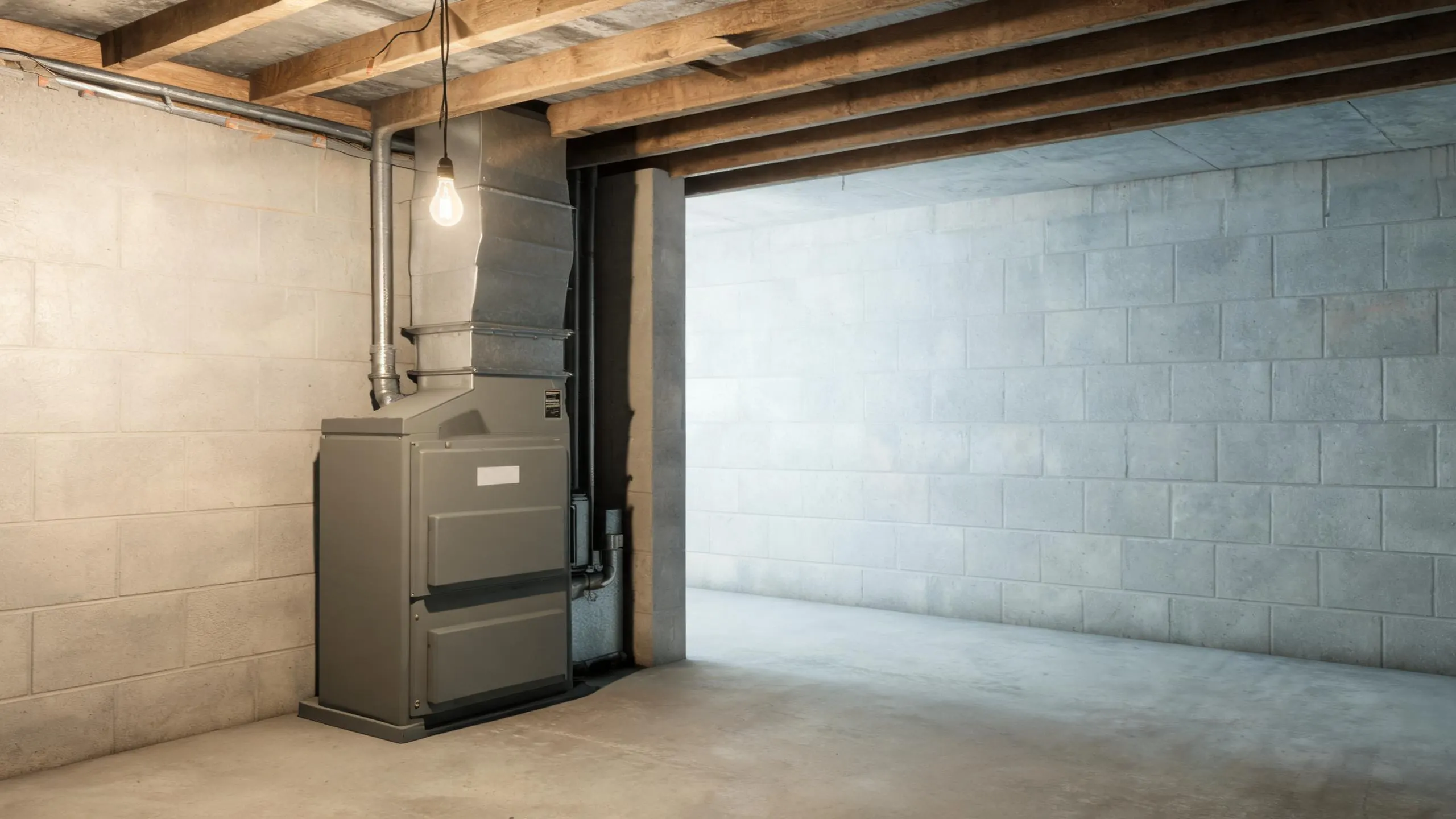
An unfinished basement featuring a grey forced-air furnace with metal ductwork, concrete block walls, exposed wooden joists, and a single hanging bare bulb.

A high-efficiency gas furnace would save about $140 a year to run in Stephenson County compared with a gas furnace.

  • A high-efficiency gas furnace$640 a year
  • A gas furnace$780 a year

Estimates for a typical Stephenson County home, from EIA household energy data, Illinois fuel prices and NOAA climate normals. Your home will differ.

Installation day starts with the old furnace coming out, and that alone can take a few hours once the ductwork, gas line and venting are disconnected. The contractor sets the new unit, then connects the gas line, the venting and the ductwork to it, checking each connection holds before moving to the next. Electrical comes next, tying the furnace into the thermostat wiring and the power supply it needs to run the blower and ignition. Once it's wired and connected, the system gets fired up and checked: gas pressure, temperature rise across the heat exchanger, and whether the blower is moving the right amount of air. A contractor worth hiring walks the ductwork at this point too, looking for a run that's choked down or a vent that was never quite right, because those show up now or they show up on the first cold night. Before anyone leaves, the thermostat gets set and tested, and the homeowner should get a plain answer on what the controls do and what the first year of filter changes looks like.