Eight months of heat a year
Furnaces in Stephenson County run from October through May. That's most of the year the burner and blower are cycling, not just a few cold snaps. A furnace built for a milder climate would never see this much use.
Takes about a minute. No obligation.
Furnaces in Stephenson County run from October through May. That's most of the year the burner and blower are cycling, not just a few cold snaps. A furnace built for a milder climate would never see this much use.
A furnace that runs this many months wears parts down sooner than one running three or four. When yours is acting up, the cause is usually tied to that workload. Getting it diagnosed properly, rather than patched, is what makes the fix hold.
NOAA nClimDiv, 1991–2020 normals
A cracked heat exchanger lets exhaust mix with the air your blower pushes through the house.
Shutting the furnace off at the first sign of trouble keeps that exhaust from ever reaching the vents.



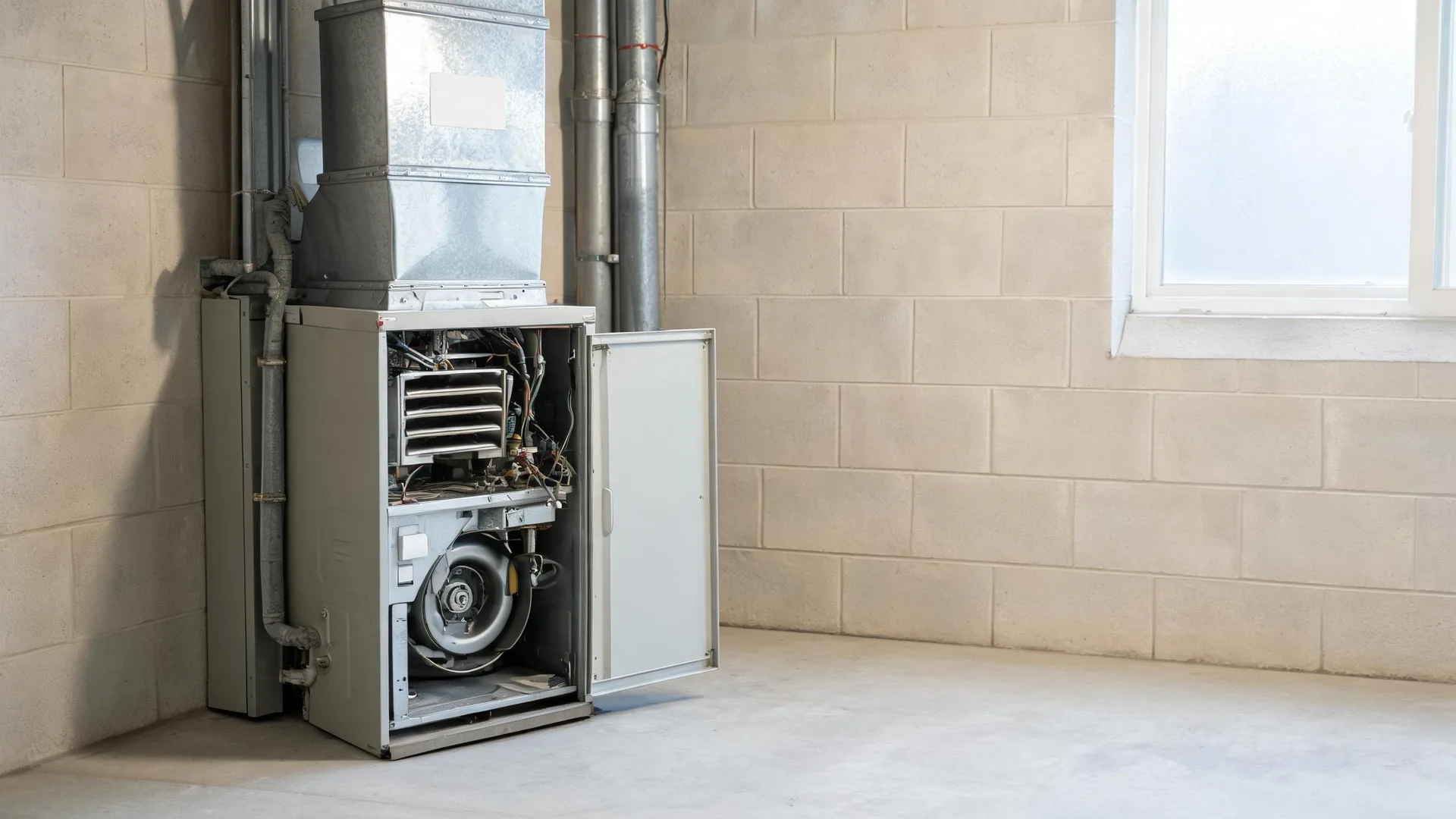
Most furnace breakdowns trace back to a handful of parts. The igniter wears out from switching on and off thousands of times over its life, and when it fails the furnace won't light at all. A flame sensor coated in residue stops reading the flame and shuts the gas off as a safety measure, even though everything else works fine. The blower motor can seize or start running slow, and when it does you'll notice weak airflow at the vents before you notice anything else. A clogged filter puts strain on all of it, forcing the blower to work harder and the heat exchanger to run hotter than it should. None of these fail because a furnace is old on paper. They fail because of how many hours they've logged and whether anyone kept the filter changed and the burner clean along the way.
If your furnace came with the house, ask the contractor how much life is left in it before paying for a big repair. A furnace nearing the end of its run can still take a part or two, but it's worth knowing which kind of call this is before the work starts.
Find a contractor
The overnight low here averages 15°F across December, January and February, colder than most of the country sees. On a night like that the burner is running close to nonstop just to hold the house steady. Eight months of that kind of demand is what wears an igniter out early or leaves a blower motor struggling before its time. If a repair keeps happening, or the bill to fix it keeps climbing, that's the workload talking. A contractor can tell you whether the furnace has enough life left to be worth the next repair, or whether replacing it is the sounder move.
A furnace in trouble usually tells you before it quits outright. The burner takes several tries to light, or it lights and then shuts back off within a minute or two. Air comes out of the vents barely warm, or warm air alternates with cold. Short cycling, where the furnace turns on and off again and again without finishing a heating cycle, points to a sensor or airflow problem rather than something you can ignore. A burning or metallic smell, or a sound you haven't heard before like grinding, rattling, or a loud bang on startup, means something inside has shifted or worn through.
None of these signs mean wait and see. A furnace that won't stay lit or smells off should be shut down until someone looks at it, since running it in that state can damage the heat exchanger or blower motor further. A furnace that's just noisy or slightly underperforming can usually run until a contractor gets there, but it shouldn't sit for weeks. The sooner the cause gets diagnosed, whether it's a dirty flame sensor or a motor on its way out, the fewer parts it takes down with it.
Estimates for a typical Stephenson County home, compared with an older unit built to the previous federal minimum, from EIA household energy data, Illinois fuel prices and NOAA climate normals. Your home will differ.
Repair makes sense when one part has failed and the heat exchanger is sound.
Replacement makes sense when the heat exchanger is cracked or the furnace keeps needing parts.
A repair decision really comes down to what's failing and what it's connected to. A new thermostat or a blower capacitor is a clean fix, cheap in the scheme of things, and it doesn't tell you anything about the rest of the furnace. But a cracked heat exchanger or a failing control board is a different conversation, because those parts sit at the center of how the furnace runs and what replacing them costs starts to rival starting over with new equipment. Age matters less than how the furnace has been run. A furnace that's had its filter changed and its burner cleaned along the way can often take a repair and keep going. One that's been neglected tends to fail in more than one place at once, and fixing the part in front of you just exposes the next one. The honest question to ask isn't whether it can be repaired. Almost anything can be repaired. It's whether the furnace has enough good years left to be worth putting money into.