Eight months of heat a year
A furnace in Ogle County runs from October through May. That's most of the year asking the burner and blower to cycle on, not a handful of cold weeks.
Takes about a minute. No obligation.
A furnace in Ogle County runs from October through May. That's most of the year asking the burner and blower to cycle on, not a handful of cold weeks.
A furnace sized for an easier climate will run longer and harder here to keep up. Get the new system sized to this house and this county, not picked off a price sheet.
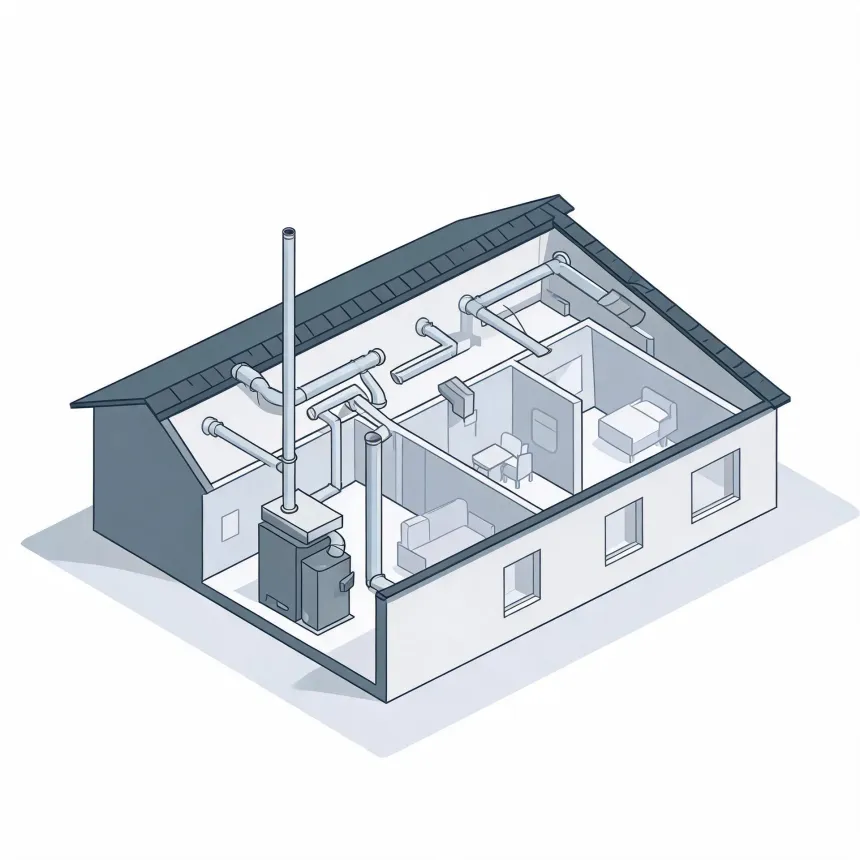
NOAA nClimDiv, 1991–2020 normals
Half the homes in Ogle County were built in 1972 or earlier.
A furnace going into a house that age has to match the ductwork and gas line already there, not a generic spec sheet.


Ogle County falls under zone 5A, a cool, fairly humid climate where the heating load carries the year. Any furnace installed here has to burn at least 80 percent of its gas into heat, under the federal minimum that's been in place for units built since late 2015. That floor jumps to 95 percent for furnaces made on or after December 18, 2028, which will narrow the field to condensing models built to handle that standard. A homeowner installing now still gets a choice between the two. There's also a federal tax credit available on qualifying high-efficiency equipment, worth checking before deciding which unit to put in.
A furnace built for a newer house assumes newer ductwork and a newer gas line behind the wall. Half the homes in this county don't have that. Getting the new system matched to the house it's actually going into, before it's installed, is what saves a callback later.
Find a contractor
Eight months of burner cycles a year adds up fast once the unit's running. That's why sizing matters more here than a price sheet can tell you. A furnace too big for the house will short cycle, turning on and off more than it should, and that wears the igniter and the blower motor sooner. One sized to the house runs longer, steadier stretches instead. Get the load calculated for this house before the new unit goes in.
A contractor should run a load calculation on the house, room by room, before quoting a furnace size. If a quote shows up with no mention of that calculation, the number was guessed or copied from the unit being replaced. The old furnace may have been wrong for the house too.
A single-stage furnace runs at full fire every time it kicks on. Two-stage and modulating furnaces can run at a lower fire for most of the heating they do, stepping up only when it's needed. That difference changes how even the heat feels room to room and how often the burner is cycling on and off.
Estimates for a typical Ogle County home, from EIA household energy data, Illinois fuel prices and NOAA climate normals. Your home will differ.
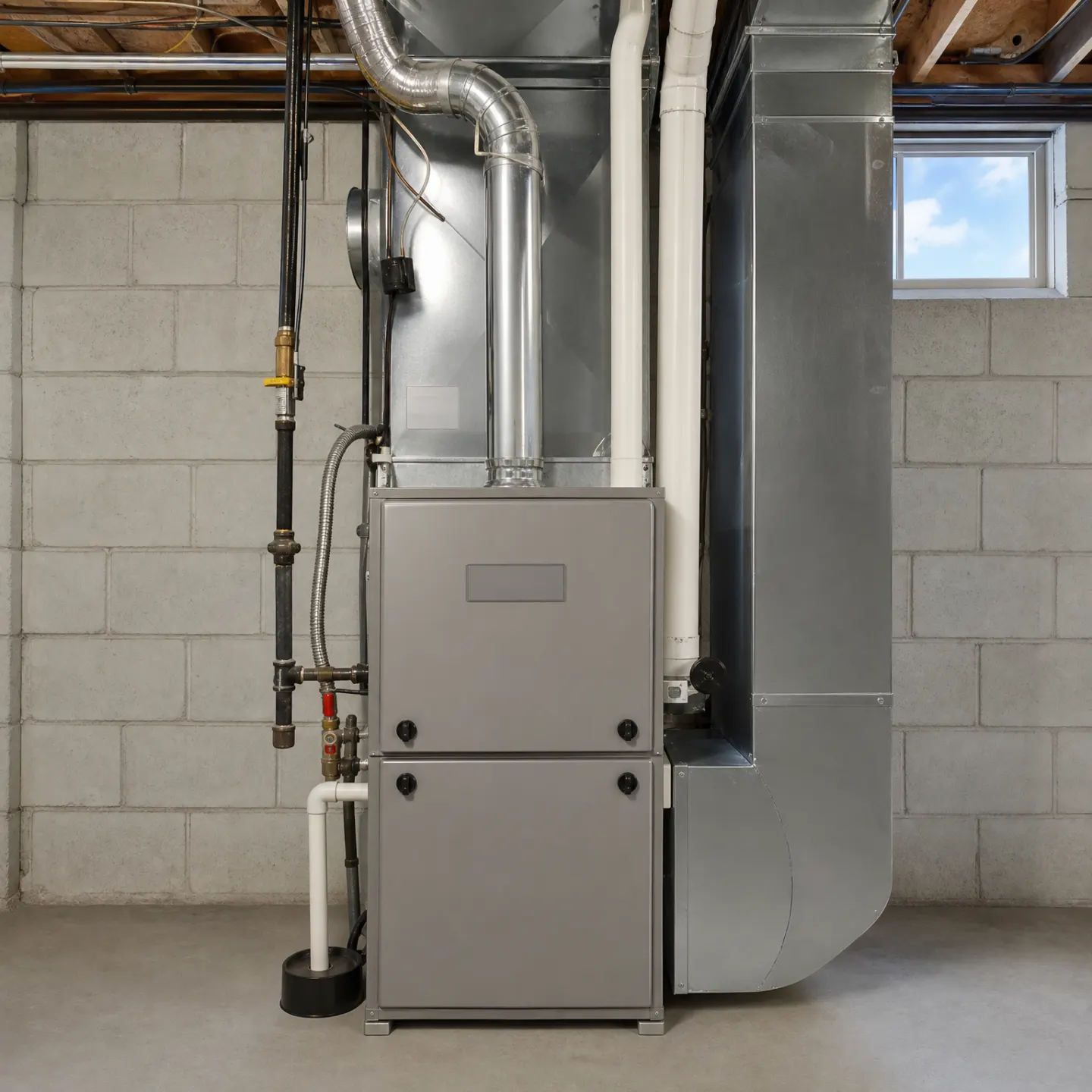
Installation starts with pulling the old furnace out, and that's not a quick swap. The contractor disconnects the gas line, the electrical, the venting, and the ductwork connections, then takes the cabinet out in pieces if it won't clear the doorway whole. The new unit goes in on a stand or platform, leveled, before anything gets hooked back up. Gas line, venting, and the condensate line for a condensing furnace all get connected and checked for leaks before power goes to it. Ductwork gets sealed where it meets the plenum, since a loose connection there leaks heated air into a basement or attic instead of the house. Once it's running, a contractor checks gas pressure, airflow across the coil, and the temperature rise through the furnace against what the manufacturer specifies, not just whether warm air is coming out of the vents.