Electricity here runs 15.87 cents per kilowatt-hour
Illinois rates sit above a lot of the country, and a heat pump runs on electricity for every degree it moves. That rate applies to every hour the compressor runs, all year.
Takes about a minute. No obligation.
Illinois rates sit above a lot of the country, and a heat pump runs on electricity for every degree it moves. That rate applies to every hour the compressor runs, all year.
Two heat pumps can heat the same house and cost different amounts to run every month. The one worth paying more for up front is the one that uses less power to do the job, because that gap shows up on every bill after it's installed.
NOAA nClimDiv, 1991–2020 normals
Half the homes in Stephenson County went up in 1960 or earlier.
A heat pump sized for a newer house down the street may not be the right fit for yours.



Utility gas heats 67.3% of homes in Stephenson County, more than electricity and propane combined. That's the fuel most furnaces here are paired with, and it's worth knowing before you decide what a heat pump means for your house. Some homeowners replace a gas furnace outright and heat with the heat pump alone. Others keep the furnace and let it back up the heat pump on the coldest days, since a heat pump's output drops as the temperature does. Either way works, but it changes what gets installed and what the gas line in your house is still doing afterward.
Power costs more here, so an efficient system pays you back on every bill.
Find a contractorThat means a load calculation on the house, not a guess based on square footage. An older home carries its ductwork, windows and insulation into that calculation, and none of it matches what a contractor would assume for a house built last year. The sizing has to come from what's actually there.
A heat pump's output drops as the temperature outside falls, and the rating on the label is measured at a mild setpoint. Ask the contractor to show where the unit's output falls off and where your backup heat has to take over. That crossover point matters more than the headline number.
A heat pump moves air differently than a furnace, often running longer at a lower output instead of short blasts of high heat. Ductwork sized around a furnace doesn't always suit that pattern. Have the contractor check the duct sizing as part of the quote, not as something to deal with after the unit is in.
A load calculation looks at what the house loses on the coldest day and sizes the heat pump to cover it. Too big and the unit short cycles, turning on, satisfying the thermostat fast, and shutting off before it runs long enough to dehumidify or heat evenly. Too small and it runs flat out without keeping up, leaning hard on backup heat more than it should. Bigger is not a safe mistake here the way it might seem. A heat pump that's oversized spends more time starting and stopping than running steady, and that's where the wear happens. The right size is the one that runs long, steady cycles on a normal cold day, not the biggest unit that fits in the space.
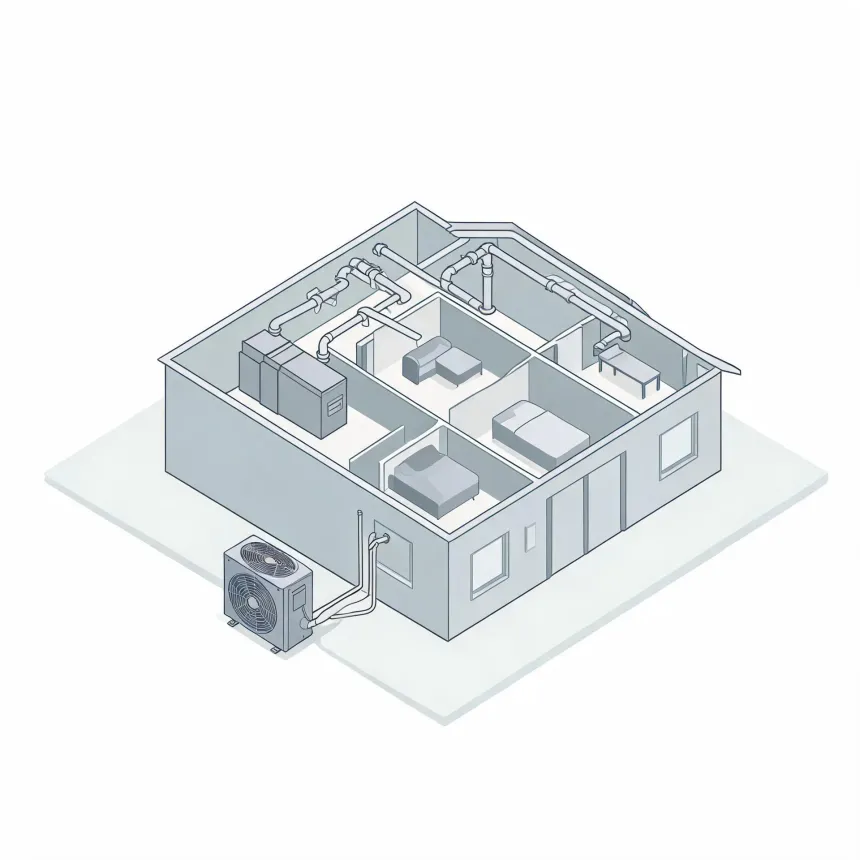
Installation day starts with the outdoor unit and the indoor coil, and usually both get swapped even if only one has failed. The old refrigerant lines get checked. If they're the wrong size or type for the new system, they get replaced rather than reused, since mismatched lines keep the heat pump from running the way it's rated to. The electrical side gets attention too. A heat pump often draws differently than whatever was there before, so the breaker and disconnect get checked against what the new unit actually needs. Once everything's connected, the system gets charged with refrigerant and run through its paces, heating and cooling both, so airflow and temperature can be checked against what the unit's supposed to do. The contractor should walk through the thermostat and any backup heat settings before leaving, since a heat pump's controls aren't always the same as what a furnace used.