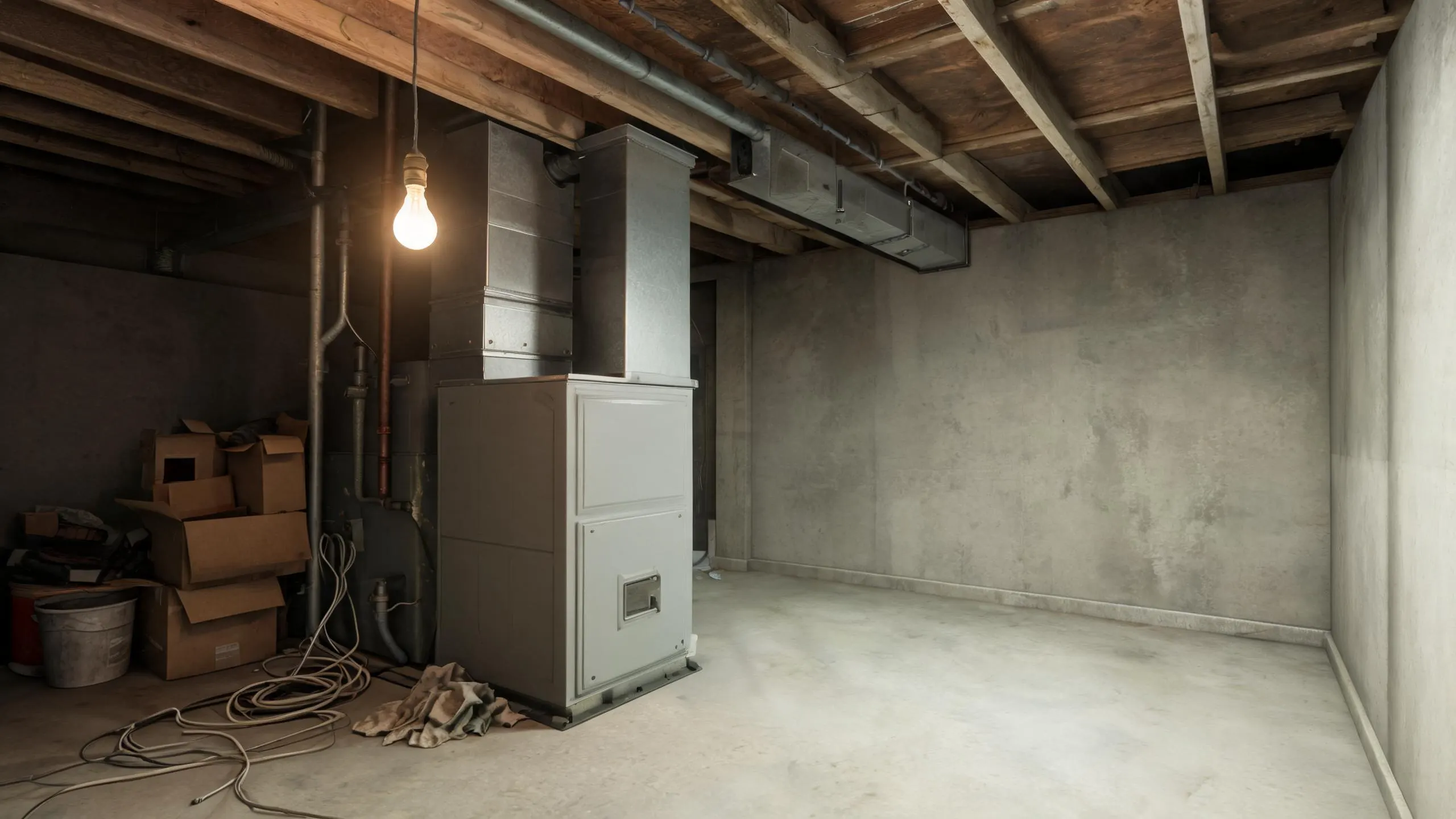




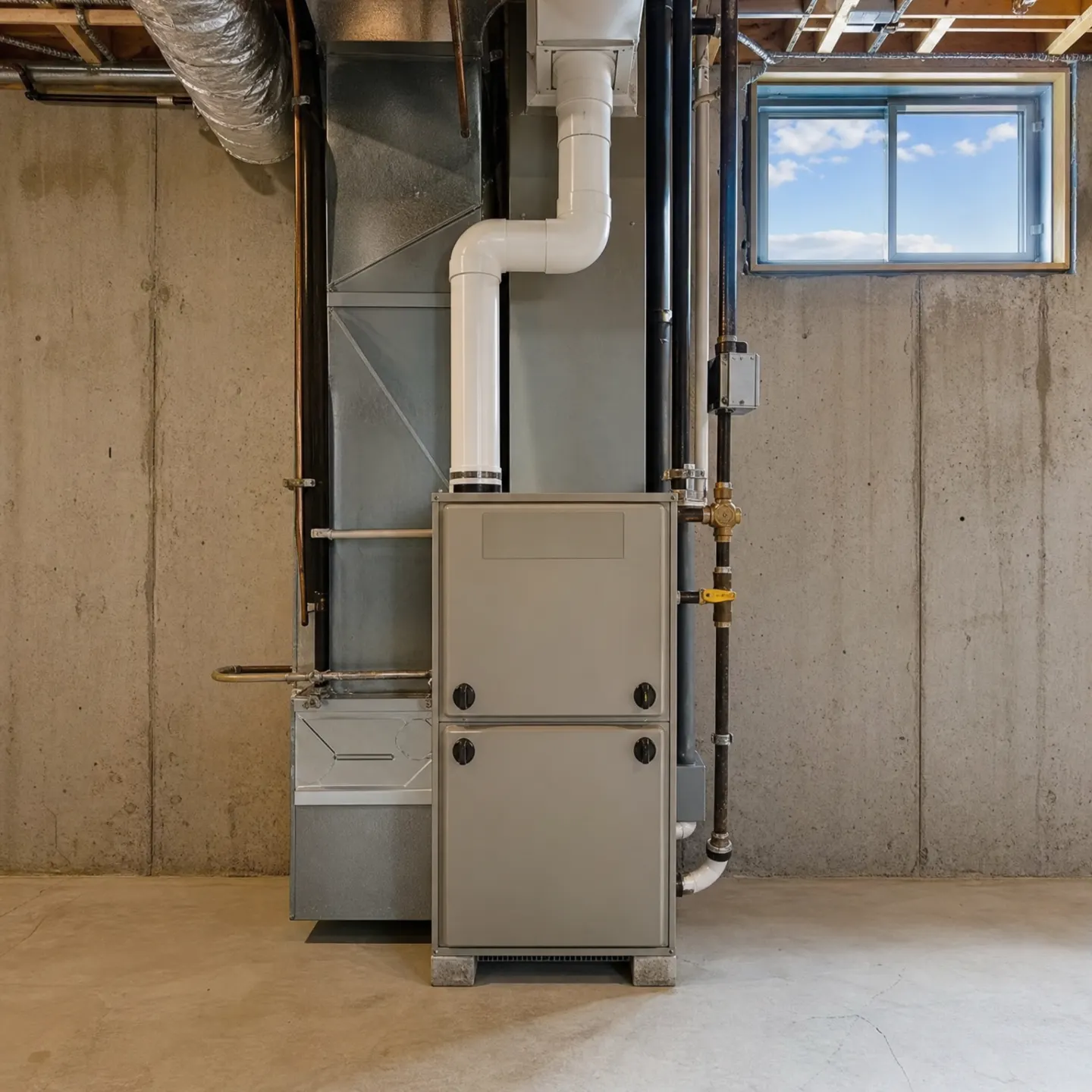
An unfinished concrete basement containing a metal HVAC air handler, exposed wooden ceiling joists with sheet-metal ducts, a hanging bare bulb, copper pipes, and stacked cardboard boxes.

Furnace Maintenance in Freeport, IL

Tell us about the job

Takes about a minute. No obligation.

Step 1 of 3: Equipment

Eight months of heat a year is a long stretch for one machine to carry. October through May, the burner and blower in your furnace are doing the one job they're built for, and that run time adds up faster here than in most places. Parts that would last longer with lighter use wear down on schedule anyway. An igniter or a flame sensor doesn't know the season is almost over. By the time you notice a problem, the part behind it has usually been wearing for months.

Furnaces in Stephenson County start their eight-month run every October.

Book the tune-up in September, before the burner and blower are working every day.

Half the homes here were built in 1960 or earlier, and the furnace has to keep up

Half the homes here were built by 1960
Heat runs October through May
Winter nights average 15°F

Two out of three homes in Stephenson County heat with gas, and that changes what a tune-up needs to cover. A gas furnace has a burner, a flue and a set of safety controls that an electric furnace doesn't carry. The burner needs to be checked for a clean, even flame. The venting needs to be checked for a clear path outside, since that's how exhaust gets out of the house. The flame sensor and limit switch need to be tested, because those are what shut the burner down if something goes wrong. A filter change doesn't touch any of that. If your furnace runs on gas, the tune-up is as much about the burner and venting as anything else.

Get it checked before the eight months start

A furnace that runs eight months straight doesn't get much downtime to show you a problem before it becomes one. Have it checked before October, while the burner and blower are still sitting idle.

Find a contractor
A man in a dark shirt, tan pants and cap walks up porch steps toward a navy blue front door, carrying a canvas tool bag filled with hand tools, beside a potted shrub in a blue planter.
A gray gas furnace with attached ductwork and piping installed in an unfinished concrete basement.

An older furnace needs the yearly check more, not less

A furnace installed when the house was built has had a long time to wear. If yours is one of them, nobody's checked the burner, the igniter or the switches since whoever built the system put it in. A yearly check is how those parts get looked at before one of them fails on a cold morning. Ask whoever does the tune-up how old the unit is if you don't already know.

A noisy burner is telling you something

A gas burner should light with a steady whoosh and burn quiet after that. A bang at startup means gas is building up before it catches, instead of lighting right away. A furnace that rattles, ticks or hums louder than it used to has a part working loose or a blower wearing on its bearings. None of these stop the furnace from running, so it's easy to let them go. They're also the easiest problems to catch in a check, before the part behind the noise fails outright.
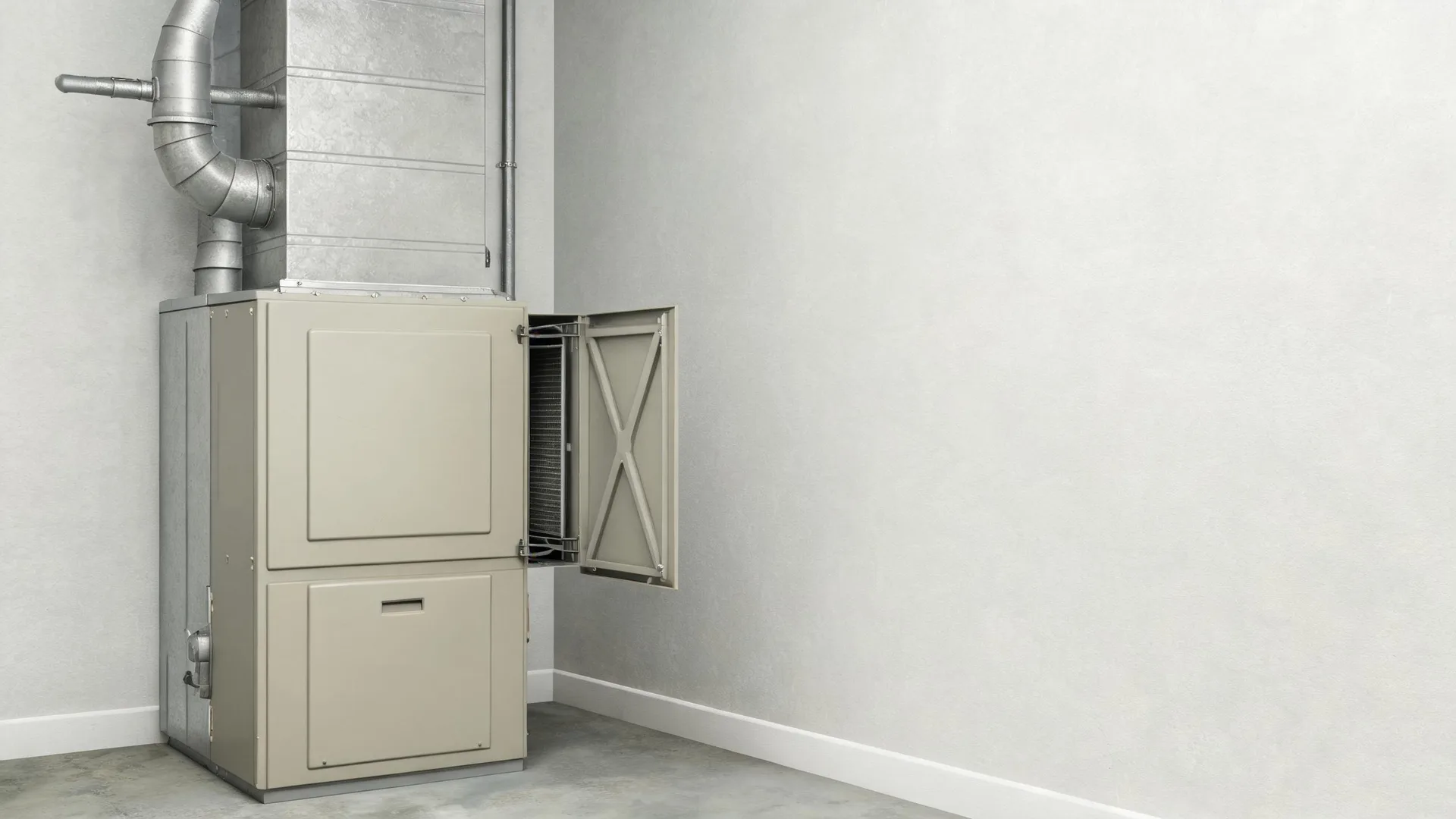
Short cycling wears out the parts faster

A furnace that kicks on, runs a few minutes, then shuts off and starts again a short while later is short cycling. It usually means the flame sensor is dirty, the filter is clogged enough to overheat the burner, or the limit switch is tripping early. Short cycling puts more wear on the igniter and blower motor than a normal run would, since both get started and stopped far more often. A check finds which of those it is before the extra strain adds up.

A furnace filter does one job: keep dust out of the blower and the coil downstream of it. When it's clogged, the blower has to pull harder to move the same air, and that strain falls on the motor. Behind the filter, on a furnace paired with central air, sits the evaporator coil, and dust that gets past a dirty or torn filter settles there instead. A coil caked with dust can't transfer heat the way it should, and it also chokes off airflow the same way a clogged filter does. Below that coil is a drain that carries off the condensation it produces during cooling season. If that drain clogs, the water has nowhere to go and backs up, sometimes into the furnace cabinet itself. None of these parts fail on their own schedule. They fail because the one before it was never checked.

A tune-up is a set list, not a glance at the thermostat. The tech pulls the burner assembly and cleans it, because a burner that lights unevenly wastes gas and runs hotter on one side than the other. The heat exchanger gets inspected for cracks, since a cracked exchanger can let exhaust mix into the air moving through the house. The igniter gets tested for a strong, steady glow, not just a glow. Belts don't come into it on most furnaces built in the last few decades, since the blower motor drives the fan directly, but the motor's bearings and amp draw still get checked. The blower wheel gets looked at for dust buildup, because a dirty wheel moves less air even at full speed.電trical connections get tightened, since a loose connection is what burns a wire or trips a limit switch for no obvious reason. None of this takes long when nothing's wrong. It takes a lot longer, and costs a lot more, when something's been wearing quietly for a season or two first.