




A row of illuminated two-story brick houses with front porches and mature trees photographed at twilight.

Heat Pump Repair in Freeport, IL

Tell us about the job

Takes about a minute. No obligation.

Step 1 of 3: Equipment

Winter here is the real test for a heat pump. Overnight lows average 15°F across December, January and February, so the system leans on backup heat strips more than it would in a milder zone. That's often where trouble shows up first, a heat pump that runs constantly without warming the house. Freeport doesn't see anything unusual in the way of storms or wind damage, nothing that would push repairs beyond the ordinary. Most calls here come down to a failing defrost control, a low refrigerant charge, or a reversing valve stuck in one position. A licensed contractor can check which one it is and fix that part, not the whole system.

8 months
October through May, your system heats
3 months
June through August, it cools
15°F
the average winter night it heats against
82°F
the average summer afternoon it cools against
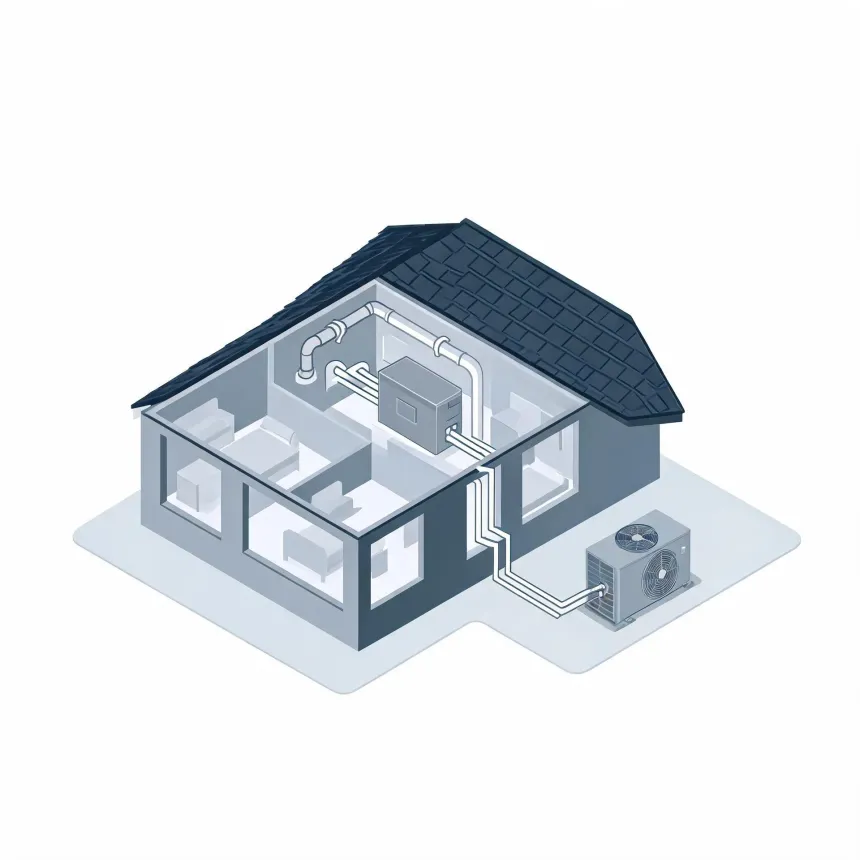
Isometric cutaway illustration of a gray house showing interior rooms, a central air handler with ducts in the attic, and refrigerant lines running to an outdoor condenser unit beside the building.
Your system heats October through May and cools June through August.

NOAA nClimDiv, 1991–2020 normals

Heat here starts in October, right after a September where the pump barely runs.

The first cold stretch is when a weak defrost control or low charge finally shows itself.

Stephenson County weather doesn't wear out a heat pump faster. A stuck part does.

124 severe weather events from 2015 to 2024
16% of homes statewide lost power a day or more in 2024
67 damaging wind events from 2015 to 2024

Electricity in Illinois ran 15.87 cents per kilowatt-hour in 2024, and a heat pump that's struggling pulls more of it every day it goes unfixed. A reversing valve stuck in one position or a defrost control that's failing doesn't just leave the house cold, it makes the system run longer to get nowhere. That shows up on the bill before it shows up as a full breakdown. The fix is usually one part, not a new system. Getting it looked at sooner costs less than paying a bad part's power draw all winter.

An older home may mean an older heat pump

Half the homes in Stephenson County were built in 1960 or earlier. A heat pump doesn't last as long as the house it's in, so if yours came with an older place, it may already be on borrowed time. That's worth knowing before you put money into a repair.

Find a contractor
A man in a cap, dark jacket and tan work pants walks up concrete steps toward a dark blue front door, carrying a canvas tool bag at his side.
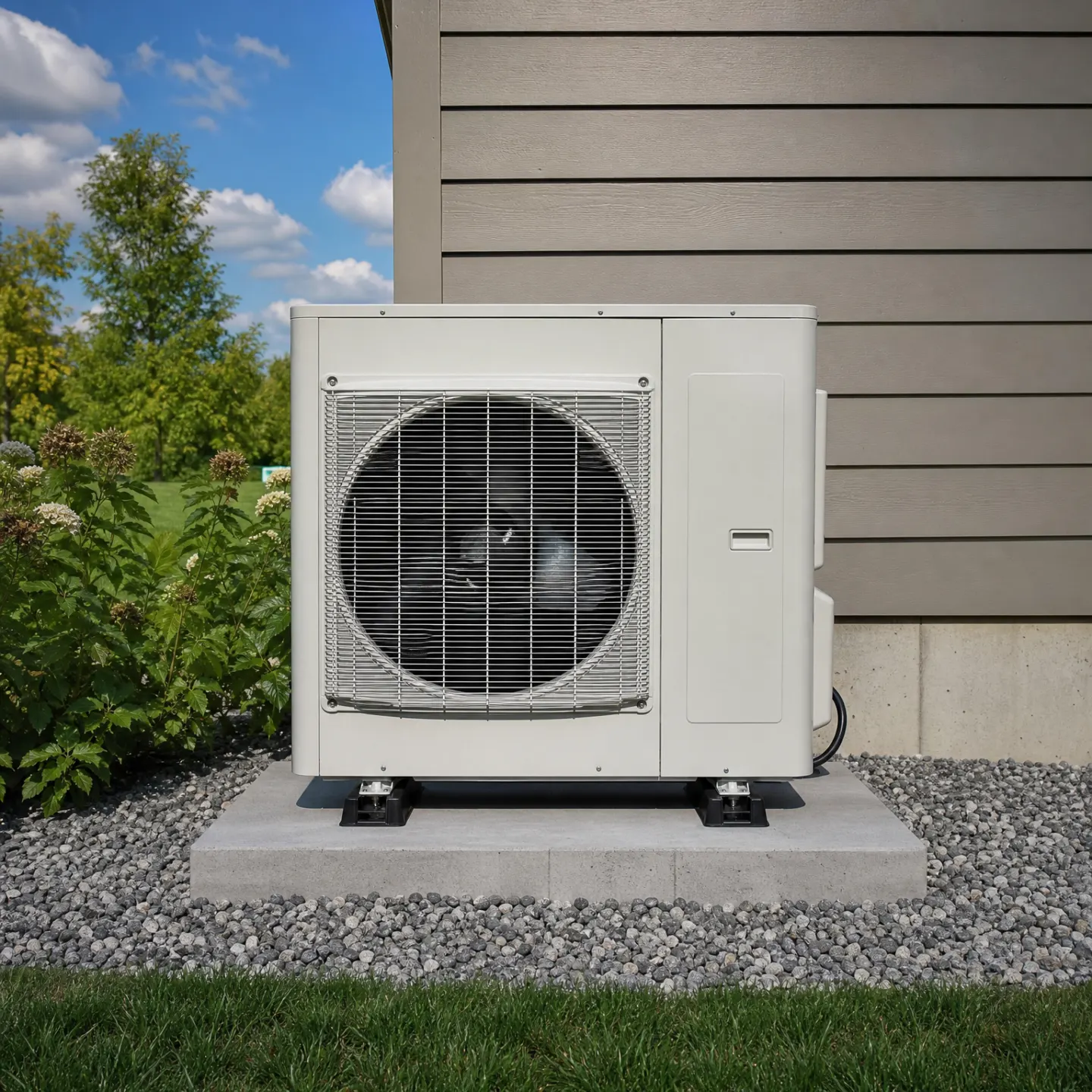
A white mini-split heat pump outdoor unit mounted on a concrete pad beside a gray-sided house, surrounded by gravel and green shrubs.

What you can rule out yourself

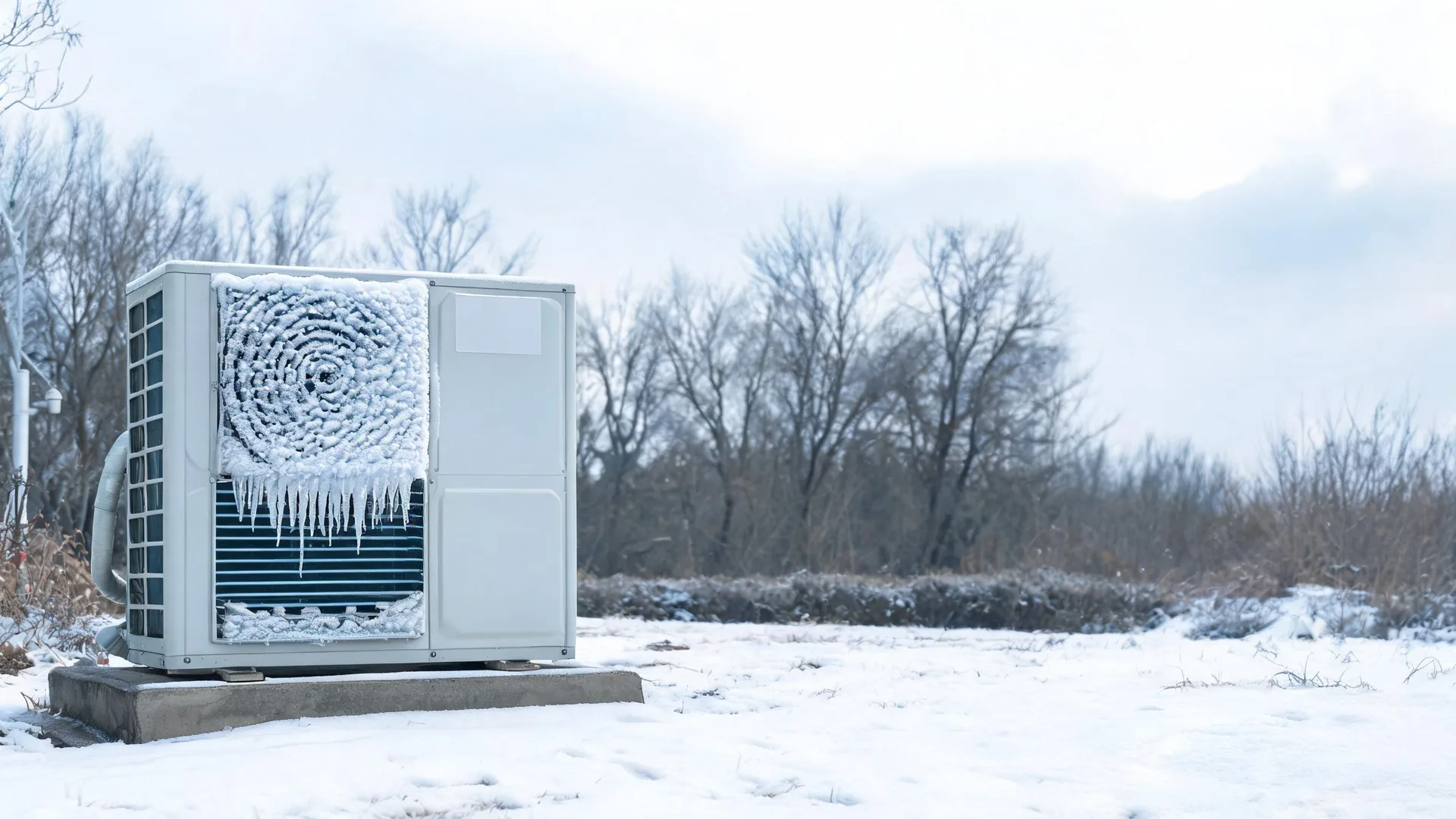
A few things are worth checking before anyone comes out. Start at the thermostat. Make sure it is set to heat and the set point is actually above room temperature, since a setting bumped by accident gets mistaken for a broken system all the time. Walk out to the outdoor unit next. If it is buried in snow or crusted over with ice, clear away what you can safely reach, since blocked airflow at the coil can look exactly like a failing part from inside the house. Find the air filter, usually at the air handler or furnace closet, and check it. A filter choked with dust cuts airflow across the coil, and a heat pump starved for air will run long and still fall short of the set point. Check the breakers too, including any shutoff switch near the outdoor unit. A tripped breaker shows up as a dead system and takes a minute to rule out. Past that, leave the cabinet closed and stay off the refrigerant lines. That part of the job needs gauges and training, not a screwdriver.

The house won't hold temperature

A heat pump in good shape keeps the house within a couple degrees of the setting. When it starts running long stretches and the house still feels off, or one room never warms up while another does, that points to a problem moving refrigerant or air, not just a thermostat issue.
Listen for what changed

A heat pump makes the same sounds every day once you're used to it. A new clicking when it switches between heating and cooling, a hum that wasn't there before, or a unit that won't switch modes at all usually means the reversing valve is sticking. That part controls which way the system runs, and when it fails, the system can get stuck heating or stuck cooling no matter what the thermostat asks for.

Most heat pump failures trace back to a handful of parts, and they tend to fail the same way every time. The reversing valve sticks when debris or wear keeps it from sliding fully into position, so the system commits to one mode and won't switch. The defrost control relies on a sensor reading coil temperature correctly, and when that sensor drifts or fails, the system either never defrosts and ices over, or defrosts so often it can't keep up with heating. Refrigerant charge doesn't get used up, so if it's low, something is leaking, usually at a fitting or a coil, and the system will keep losing ground until that leak is found and sealed. A capacitor weakens over time and eventually can't get the compressor or fan motor started, which shows up as a unit that hums but doesn't run. Contactors pit and burn from years of switching power on and off, and eventually they stop making contact at all. None of these are failures of the whole system. Each is one part doing its job for years and then wearing out the way that part wears out.

A repair makes sense when the rest of the unit is sound and only one part is doing the failing. A valve, a sensor, a capacitor, something that can be swapped out on its own. Fixing that part brings back a heat pump that runs the way it used to. Replacement starts making more sense when the same unit keeps coming back for different reasons within a short stretch. A capacitor this visit, a leak the next, a control board after that. That pattern means the parts around the failure are aging too, not just the one that quit. Age matters more than it seems like it should. A compressor nearing the end of its life makes everything downstream work harder, so a repair on an old compressor often just buys time before the next part gives out. Almost anything can be fixed. The real question is whether the unit it's attached to is worth putting that part into.