Eight months of runtime
A furnace in Bureau County runs from October through May. That's most of the year asking the same burner and blower to cycle on and off, day after day.
Takes about a minute. No obligation.
A furnace in Bureau County runs from October through May. That's most of the year asking the same burner and blower to cycle on and off, day after day.
With that much runtime ahead of it, the furnace going in this year needs to be sized for this house, not just the cheapest model on the lot. One that's undersized will run constantly and wear fast. One that's oversized short cycles and wears down just as quick.
NOAA nClimDiv, 1991–2020 normals
Half the houses in Bureau County went up in 1958 or earlier.
A furnace going into a house that old has to be sized to that house, not to a spec sheet.




Bureau County falls in climate zone 5A, a zone the 2021 energy code rates as cool with heating as the bigger load. Any furnace installed here now has to turn at least 80 percent of the gas it burns into heat. That floor rises to 95 percent for units manufactured on or after December 18, 2028, so a furnace built before that date still meets code at 80. It narrows what can legally go into this house, and it's worth asking a contractor which side of that line a given model falls on before it's installed.
Get the sizing right now and this furnace runs eight months a year without a fight. Get it wrong and that same stretch of runtime is what wears it down early. A contractor who sizes to this house, not to a price tag, is the one to pick.
Find a contractorThe old furnace's nameplate is not a measurement of this house. It's a measurement of whatever got installed last time, maybe by someone sizing for a different house entirely. Half the homes going into this job are from 1958 or earlier, and the right way to size a replacement is a load calculation on the house as it stands now, not a match to the number on the unit coming out. Ask whoever bids the job which one they're doing.
The efficiency rating says how much of the gas burned turns into heat instead of going out the flue. It says nothing about how evenly the house heats or how warm a room feels. A high-efficiency furnace and a low one can bring a house to the same temperature. The difference shows up in the gas bill, not the thermostat.
A furnace earns its rating in a lab, running on the duct static and airflow it was built for. Ductwork that's too small or a filter slot that chokes airflow pulls real-world performance below what's stamped on the unit. The label says what the furnace is capable of. What it actually delivers depends on how well it's matched to this house's ducts.
Estimates for a typical Bureau County home, from EIA household energy data, Illinois fuel prices and NOAA climate normals. Your home will differ.
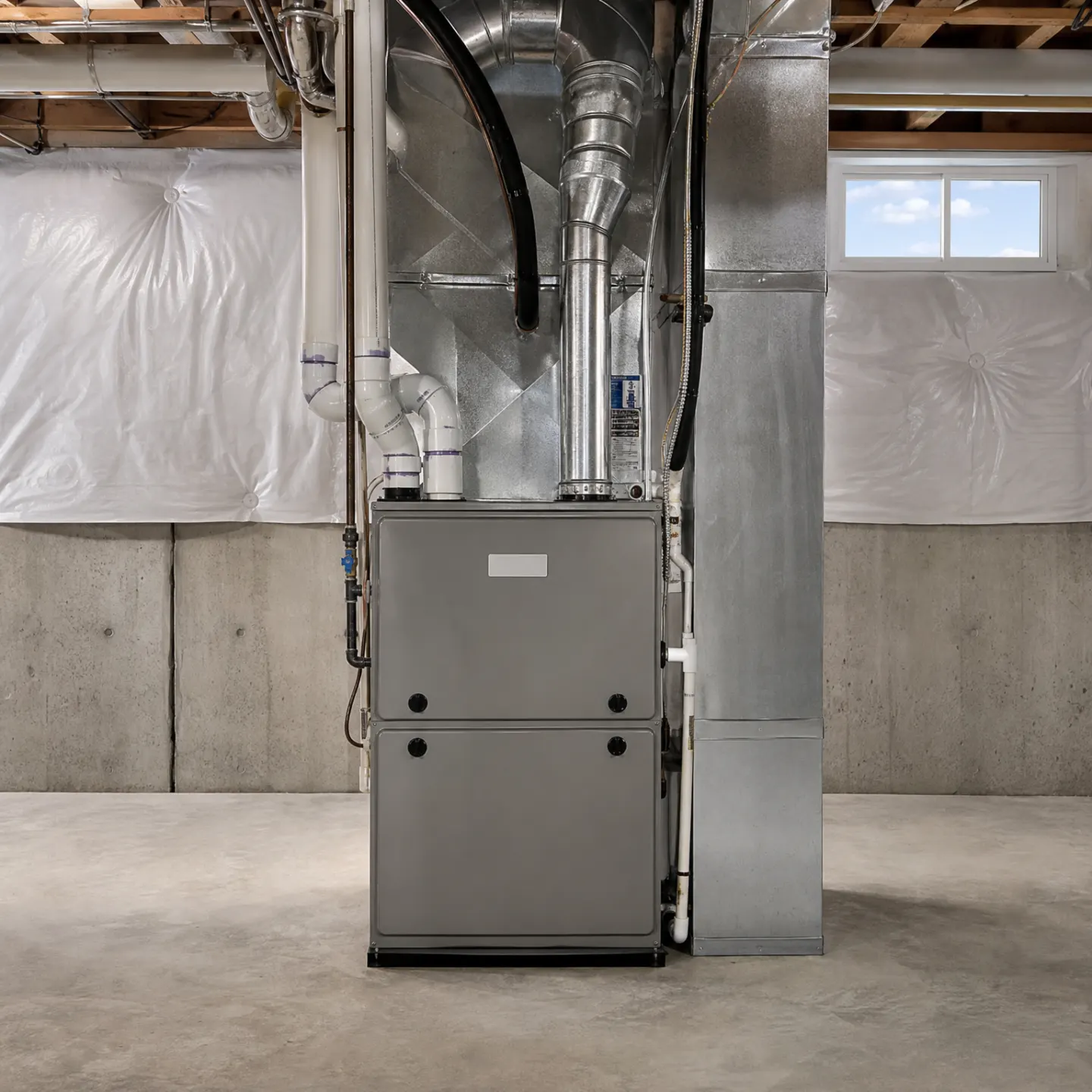
Installation usually runs a full day, sometimes longer if the ductwork needs changes. The old furnace comes out first, along with the flue pipe or vent that served it. Whoever's doing the job will check the ducts, the gas line, and the electrical connection before the new unit ever goes in, since all three have to match what the new furnace needs. Once it's set in place, they'll run the gas line, wire it in, connect the ductwork, and vent it properly, then test the ignition, airflow, and shutoff controls before calling it done. A combustion analyzer check at the end confirms the furnace is burning clean and venting the way it should. The house should have heat again before the crew leaves.