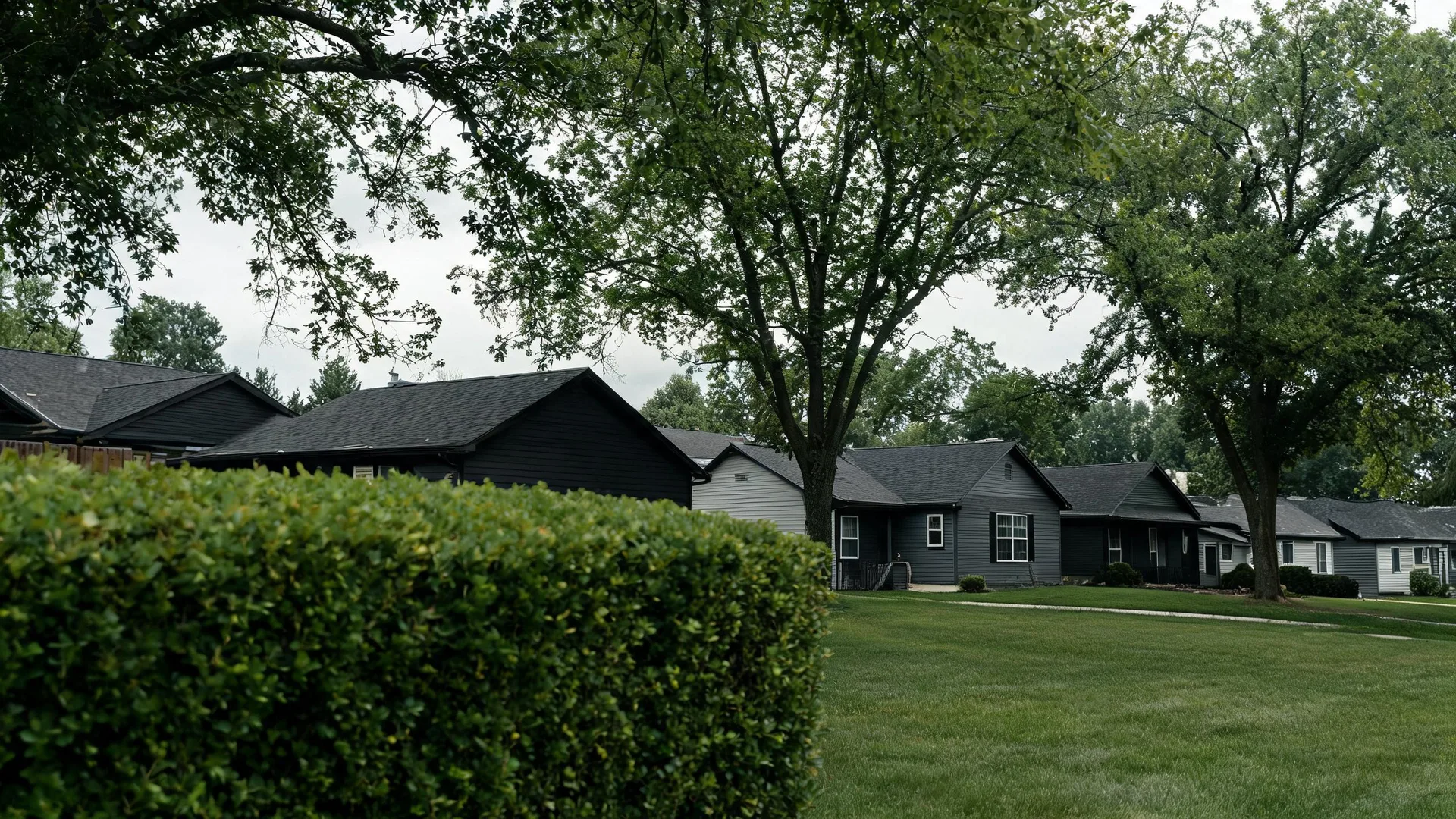





A row of single-story houses with dark siding and gray shingled roofs behind large deciduous trees, with a trimmed hedge in the left foreground and a mown lawn under an overcast sky.

Furnace Maintenance in Princeton, IL

Tell us about the job

Takes about a minute. No obligation.

Step 1 of 3: Equipment

Furnaces in Bureau County run about eight months a year, October through May. That's most of the year spent cycling the igniter, running the blower motor, firing the burners. A furnace that only has to carry a house for a few months doesn't see this kind of use. With a run that long, a worn part doesn't get much time to announce itself before the house actually needs the heat.

Half the homes in Bureau County were built in 1958 or earlier.

A furnace that old has had a lot of owners before you, and a yearly check tells you what the last one left you to deal with.

October is when it starts working. September is when it gets checked.

Heat runs October through May
Climate zone 5A
Winter nights average 18°F
Most Furnaces Here Run On GasNearly 7 in 10 homes in Bureau County heat with gas.

If your furnace has been in the house since before you owned it, nobody can tell you offhand what shape it's in. A yearly check gets someone in front of it who can. The technician can check the heat exchanger for cracks, test the igniter and flame sensor, and see whether the blower motor is drawing the way it should. None of that tells you how old the unit is on its own, but it tells you what's holding up and what isn't. That's worth knowing before the cold sets in, not after.

Get It Looked At Before It Has To Carry The House

Eight months of runtime does not leave a worn igniter or a tired blower motor much room to fail quietly. A check now finds that part before the cold does.

Find a contractor
A man in a cap, dusty dark shirt and work pants walks up stone steps toward a dark navy front door, carrying a worn canvas tool bag, with a potted shrub beside the entry.
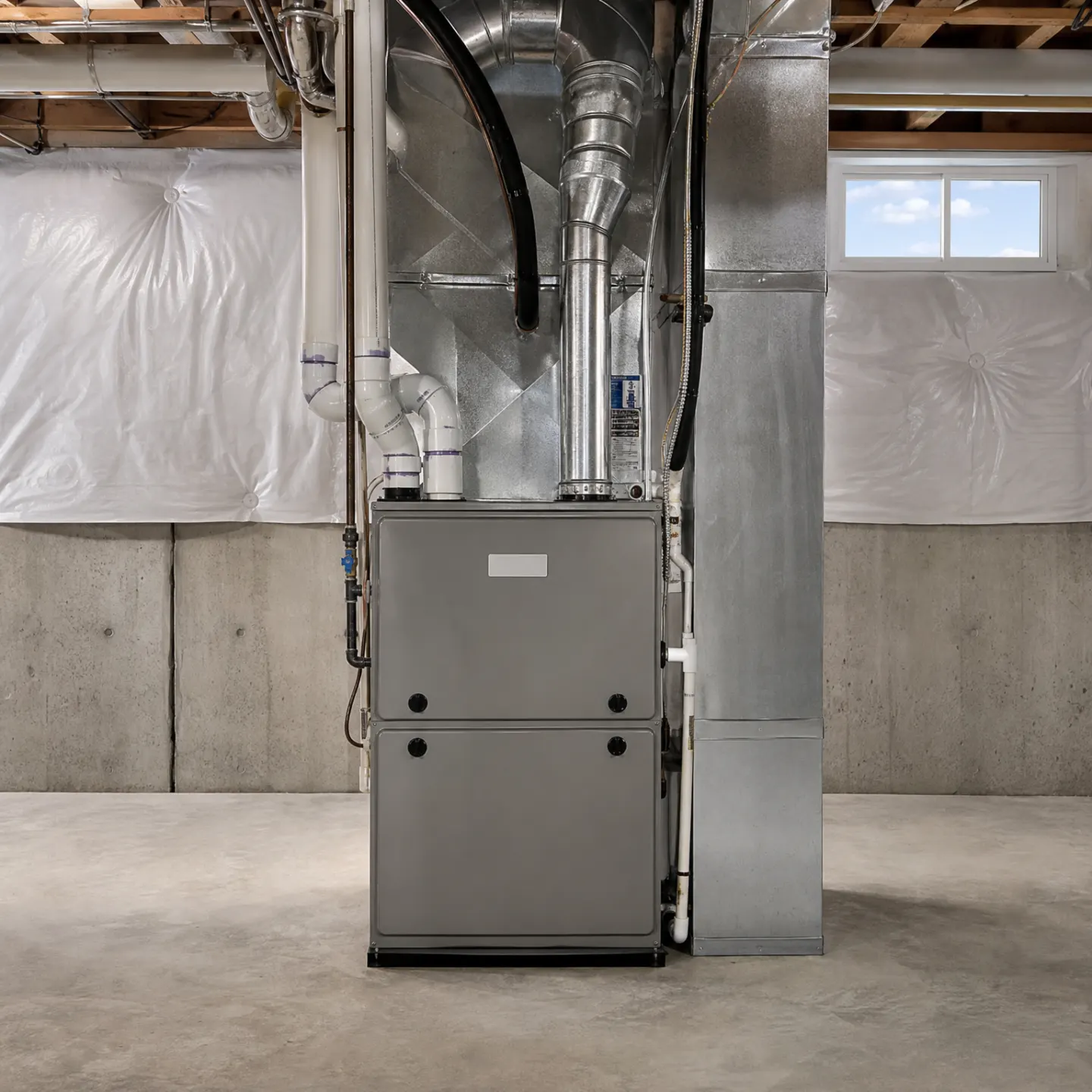
A gray residential gas furnace installed in an unfinished basement, connected to sheet-metal ductwork and PVC pipes.

A Furnace Left Alone Doesn't Fail All At Once

Dust and skipped filters are the main reason parts fail early. A dirty filter cuts airflow, and the blower motor works harder to push air through it. That motor is built to move a certain amount of air, and when it can't, it runs hotter than it should. Over time the bearings wear down faster and the motor burns out sooner than it would have otherwise. Dust also settles on the flame sensor, a small rod that tells the control board a flame is lit. A coated sensor reads that signal weakly or not at all, and the furnace shuts itself off a few seconds after starting, sometimes over and over. The igniter wears out the same way any heating element does, a little more each time it cycles, and nobody sees it coming because it either lights or it doesn't. A cracked heat exchanger is the one that matters most and shows the least. It can run for a long time with a hairline crack before anyone notices anything wrong, because the furnace still heats the house. What a yearly check catches is the small stuff before it becomes the big stuff: a sensor that needs a wipe instead of a replacement, a motor that's drawing a little more current than it should, a flame that's burning yellow instead of blue. Left alone, small problems don't stay small. They just stay quiet until the day they don't.

A Thorough Check Takes The Cabinet Apart

A real tune-up means the panels come off. The technician pulls the burners to look at them individually, checks the flame sensor and igniter out of their housings, and inspects the heat exchanger with a light and a mirror, not just a glance through an access port. The blower wheel comes out far enough to see if it's caked with dust, because a loaded wheel throws off its balance and wastes airflow no filter change will fix. Each of these takes a few minutes on its own, and skipping them is how a visit gets short.
A Quick Visit Checks What's Easy To See

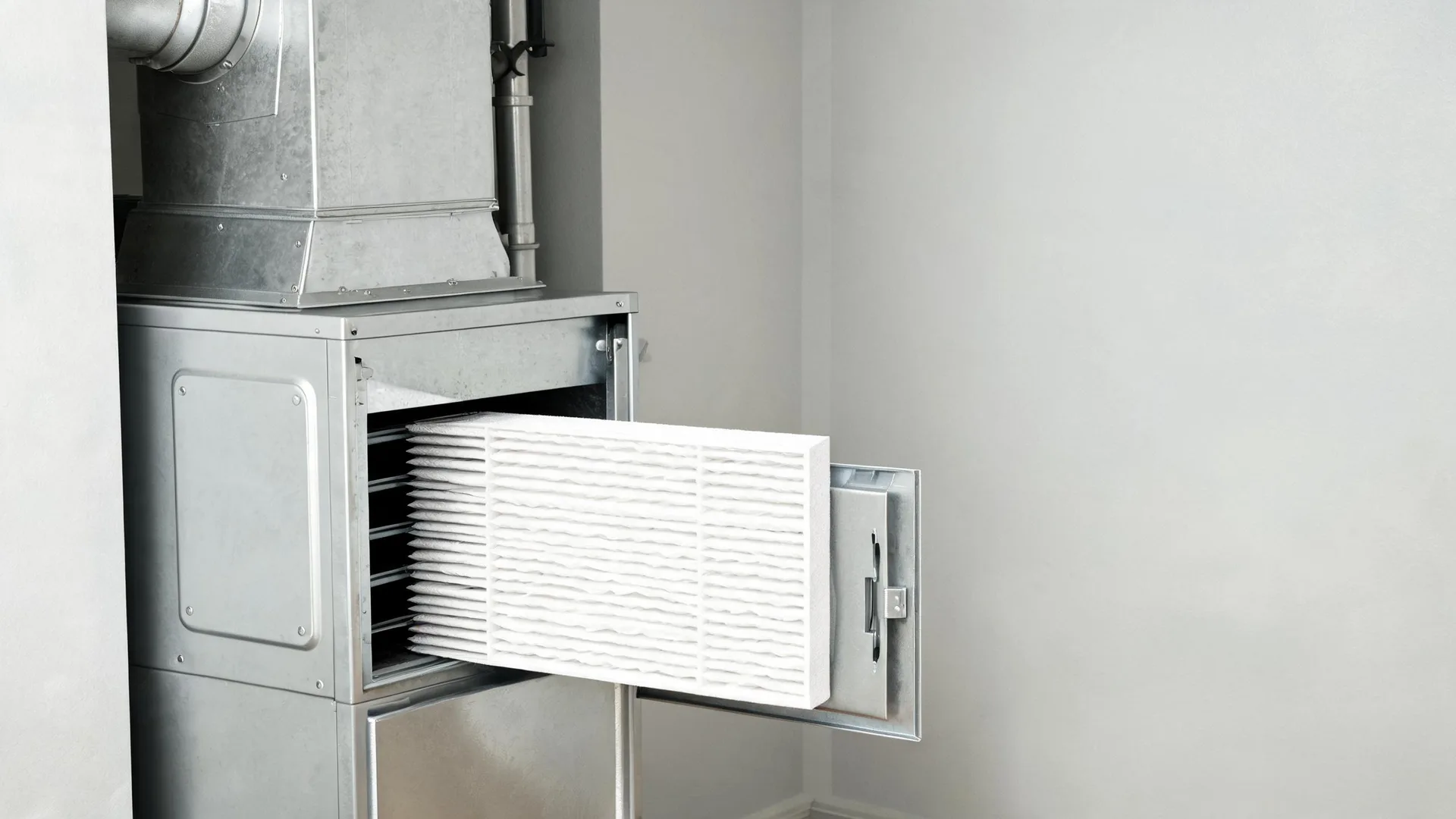
A fast tune-up checks what doesn't require taking anything apart. The tech glances at the flame through the viewport, swaps the filter, and listens for anything obviously wrong, then moves on. That catches a filter that's overdue and maybe a flame burning the wrong color, but it won't find a flame sensor coated with just enough film to cause trouble next month, or a crack starting in the heat exchanger. The visit looks the same from the doorway. What gets found is not the same at all.

A furnace usually gives some warning before it leaves you without heat. Short cycling is one, where it fires up, runs for a minute or two, and shuts off before the house gets warm. That points to a flame sensor losing its signal or a furnace overheating because airflow is blocked somewhere. A burner flame that's yellow or flickering instead of steady blue means it's not burning clean, and that's worth a look regardless of anything else going on. Rattling, squealing or a new noise when the blower kicks on usually means a motor bearing or a loose part, not something that fixes itself. A furnace that takes a few tries to light, or clicks without catching, is wearing out an igniter. None of these mean the furnace is done. They mean it's telling you something, and a check now is how you find out what.

A proper tune-up starts with the thermostat calling for heat and someone watching the whole cycle happen, not just the end of it. The technician checks the gas pressure at the manifold, because too high or too low changes how clean the burners fire. The flame sensor gets pulled and cleaned or replaced if it's worn thin. The igniter gets tested under load, not just looked at, since some fail only once they're hot. Belts don't come into it on most furnaces built in the last few decades; the blower is driven directly, so what matters there is the motor's amp draw and whether the wheel is clean enough to move air the way it was built to. The condensate line gets checked on a high-efficiency furnace, since a clogged one backs up and shuts the unit down on its own. Every safety switch gets tested on purpose, not assumed to work because the furnace ran fine last time it was needed.