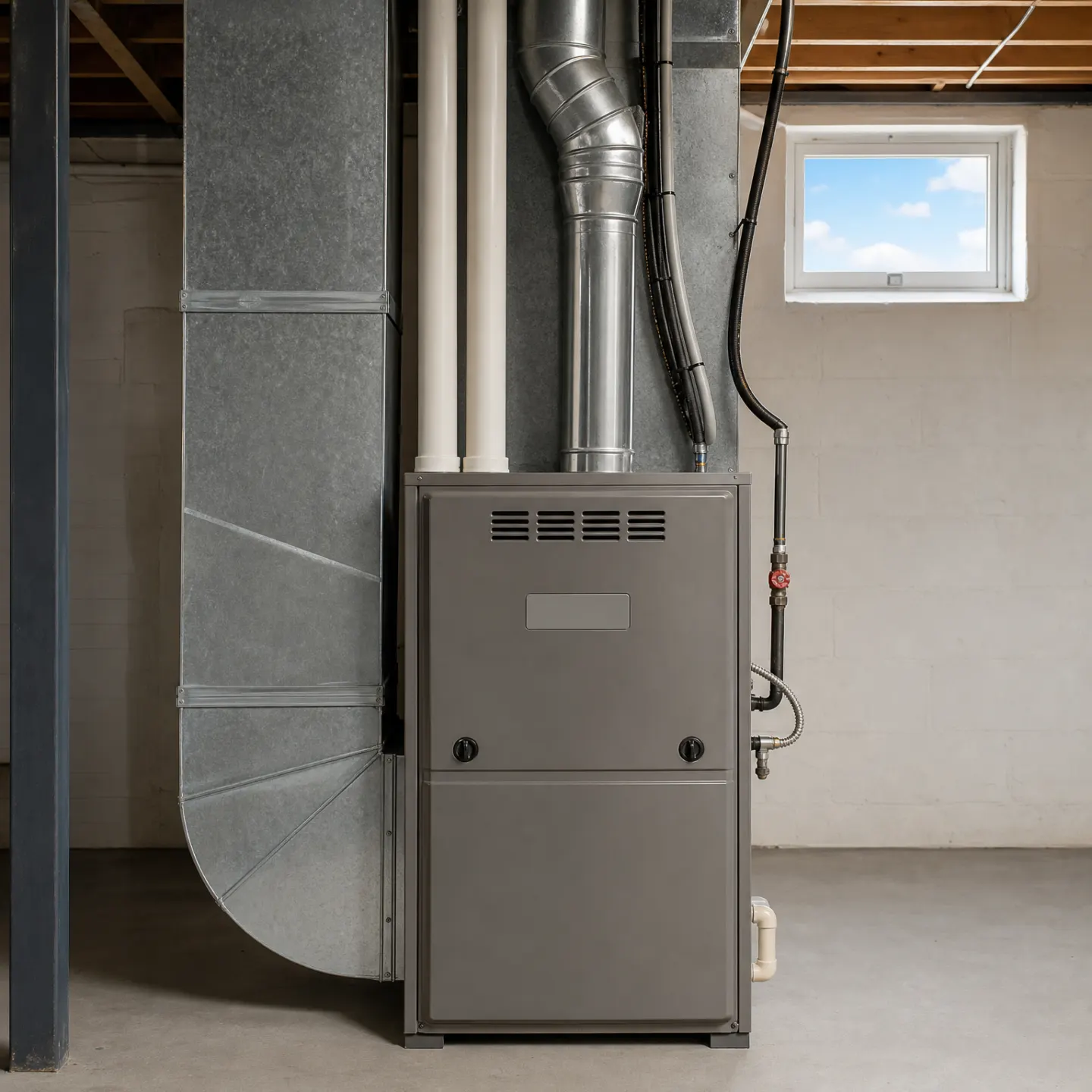
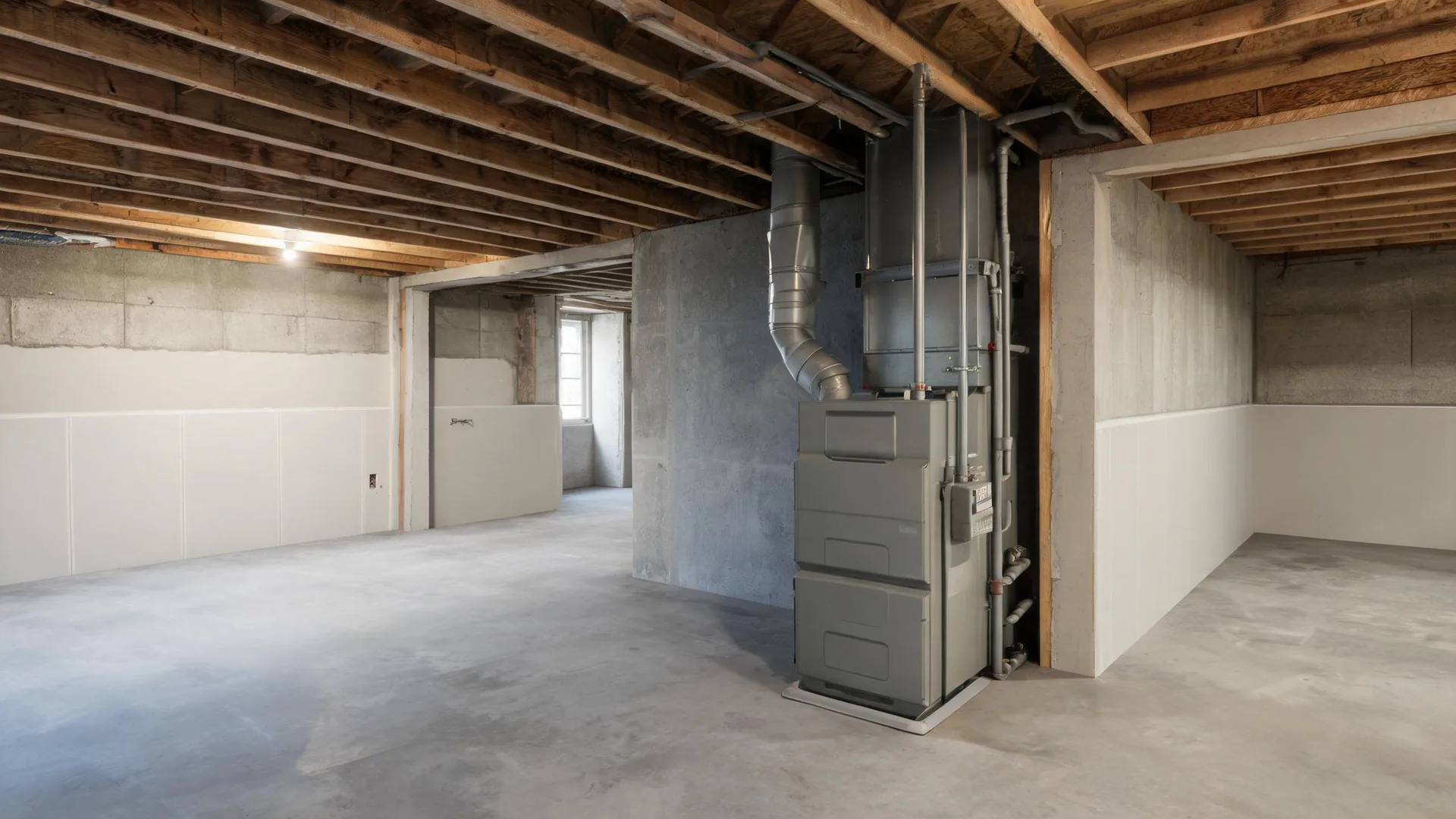
An unfinished basement containing a metal furnace with ductwork, exposed wooden joists on the ceiling, cardboard boxes, a coiled cable, and a single hanging incandescent bulb.

Furnace Installation in Ottawa, IL

Tell us about the job

Takes about a minute. No obligation.

Step 1 of 3: Equipment

Half these homes were built in 1963 or earlier

LaSalle County's housing stock is old. Half the homes here went up in 1963 or earlier, well before today's furnaces and duct systems were standard. An older home can mean ductwork or a layout that was sized for a different kind of system than what's sold now.

The new furnace has to match the house, not just the old unit

Swapping in a furnace built for a newer, tighter home doesn't work the same way in a house from a different era. Sizing the replacement right means looking at the house itself, the ducts, the venting, how the place is laid out, not just pulling the old unit's specs off a sticker.

8 months
October through May, your furnace is on duty
19°F
the average winter night it heats against
76%
of homes here heat with gas, so most furnaces here burn gas
80% AFUE
the federal minimum any new unit must meet
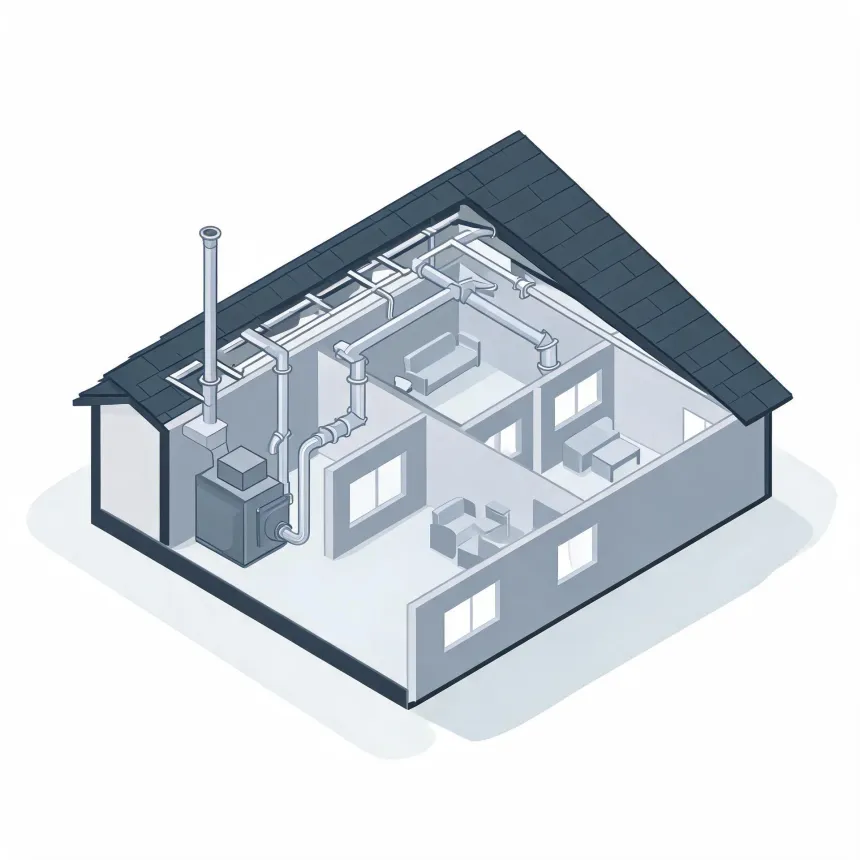
Isometric cutaway illustration of a single-story house showing interior rooms, a furnace unit with flue pipe, and branching ductwork running through the ceiling space under a dark shingled roof.
Your furnace works hardest from November through March.

NOAA nClimDiv, 1991–2020 normals

A furnace in LaSalle County runs about eight months a year, October through May.

A new furnace here earns its keep most of the year, so sizing it right matters more than it would somewhere milder.

Three out of four homes here already run on gas

76.1% of homes heat with gas
Climate zone 5A
Heat runs October through May

LaSalle County falls in climate zone 5A, a cool zone where the furnace carries more of the load than the air conditioner does. Any furnace installed here has to turn at least 80 percent of the gas it burns into heat over the winter. That is the federal minimum for units built from November 2015 on, and nothing sold new today falls below it. The number steps up to 95 percent for furnaces manufactured from December 2028 onward. A federal tax credit is available for qualifying high-efficiency equipment installed now, separate from whatever the new minimum ends up being later.

Get the sizing right the first time

Eight months of heating a year doesn't leave much margin for a furnace that's the wrong size or the wrong fit for the house. Get the sizing right at install and the furnace you put in now is the one that carries this county's winters without strain.

Find a contractor
A gray residential gas furnace installed in an unfinished basement, surrounded by ductwork, a metal flue pipe, and a gas supply line.

September Is the Last Easy Month

October is close. Homes here start running heat that month and keep it going through May, eight months out of twelve. A furnace replaced in September goes in on a mild day, with the old one still limping along as backup if something takes longer than planned. A furnace that fails in December gets replaced in a hurry, on whatever day a contractor can get out to a house with no heat and a hard freeze outside. One of those is a choice. The other isn't.

A furnace sized by square footage alone is a guess

Square footage gets you in the neighborhood, nothing more. The real number comes from a load calculation that accounts for insulation, window area, ceiling height, air leakage, and how the ductwork moves air through the house. Two houses the same size can need different size furnaces. Skip the calculation and you're sizing off a guess dressed up as a number.

Bigger isn't safer, it's worse

An oversized furnace heats the house fast, shuts off, then starts again a few minutes later. That short cycling wears the ignition system and the blower motor harder than steady runs do, and it leaves rooms far from the furnace colder than the rest of the house because the air never runs long enough to even out. A furnace sized to the house runs longer, steadier cycles and wears the way it's supposed to.

A gas furnace with sheet-metal ductwork and PVC pipes installed in an unfinished basement.

A high-efficiency gas furnace would save about $130 a year to run in LaSalle County compared with a gas furnace.

  • A high-efficiency gas furnace$580 a year
  • A gas furnace$710 a year

Estimates for a typical LaSalle County home, from EIA household energy data, Illinois fuel prices and NOAA climate normals. Your home will differ.

Installation takes most of a day, sometimes longer if the venting needs rerouting. The old furnace comes out first, along with the old vent pipe and sometimes the old ductwork connections near the unit. A tech will check the gas line and the electrical before anything new goes in, because the new furnace has to match what's feeding it, not just drop into the old footprint. Setting the new unit, connecting the ducts, running the vent and the gas line, wiring the control board and the thermostat, that's the bulk of the day. Once it's in, a tech checks the gas pressure, tests the ignition, and runs the system through a full cycle to see that it heats evenly and shuts off the way it should. The last step is usually a walkthrough of the thermostat and the filter, so the homeowner knows what to check and how often.