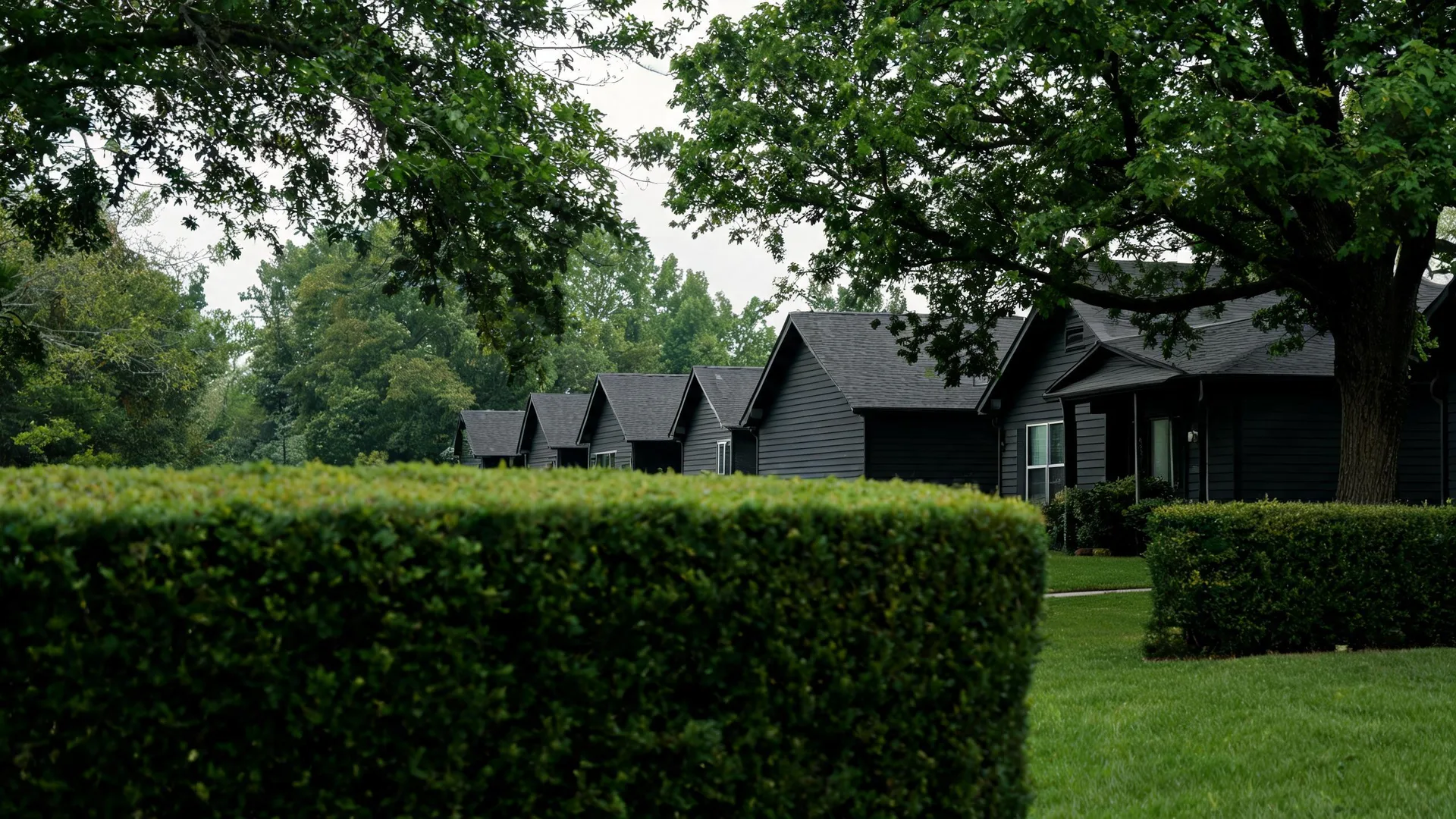





A row of dark gray gabled houses behind a trimmed hedge and mowed lawn, framed by large leafy trees under an overcast sky.

Furnace Repair in Princeton, IL

Tell us about the job

Takes about a minute. No obligation.

Step 1 of 3: Equipment

Half the homes in Bureau County were built in 1958 or earlier. If yours is one of them, the furnace itself has likely been swapped out at least once since, but that doesn't mean the current one is young. Older houses tend to have more places for heat to slip out, through the walls, the attic, around old windows, which means the furnace already runs more just to keep up. A unit working that hard for years wears differently than one in a newer, tighter home. Before you put money into a repair, it's worth finding out how many years that furnace has left in it.

8 months
October through May, your furnace is on duty
18°F
the average winter night it heats against
68%
of homes here heat with gas, so most furnaces here burn gas
17 winter storms
in ten years, the nights a failure hurts most
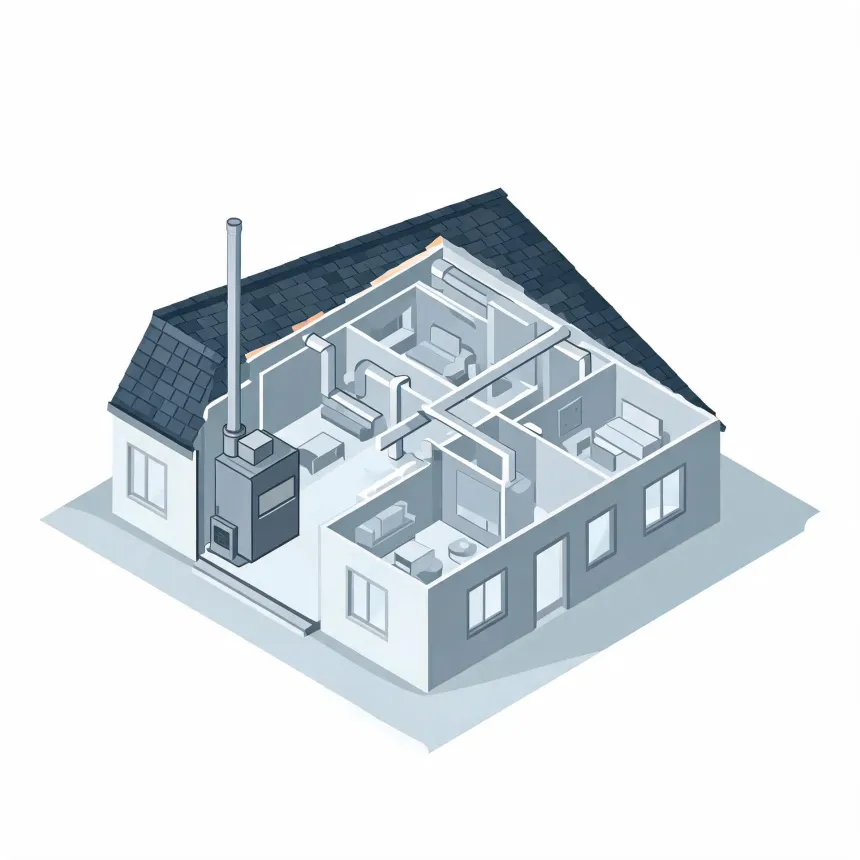
Isometric cutaway illustration of a single-story house showing interior rooms, ductwork, and a dark furnace unit with a tall flue pipe rising past the shingled roof.
Your furnace works hardest from November through March.

NOAA nClimDiv, 1991–2020 normals

A furnace that won't start can be as simple as a tripped switch or a thermostat set wrong.

Check the switch, the thermostat, and the breaker before you pay someone to find the same thing.

Eight months of heat a year wears a furnace down faster

Heat runs October through May
Winter nights average 18°F
Climate zone 5A
October Is When Weak Furnaces FailFurnace here starts up in October and runs through May.

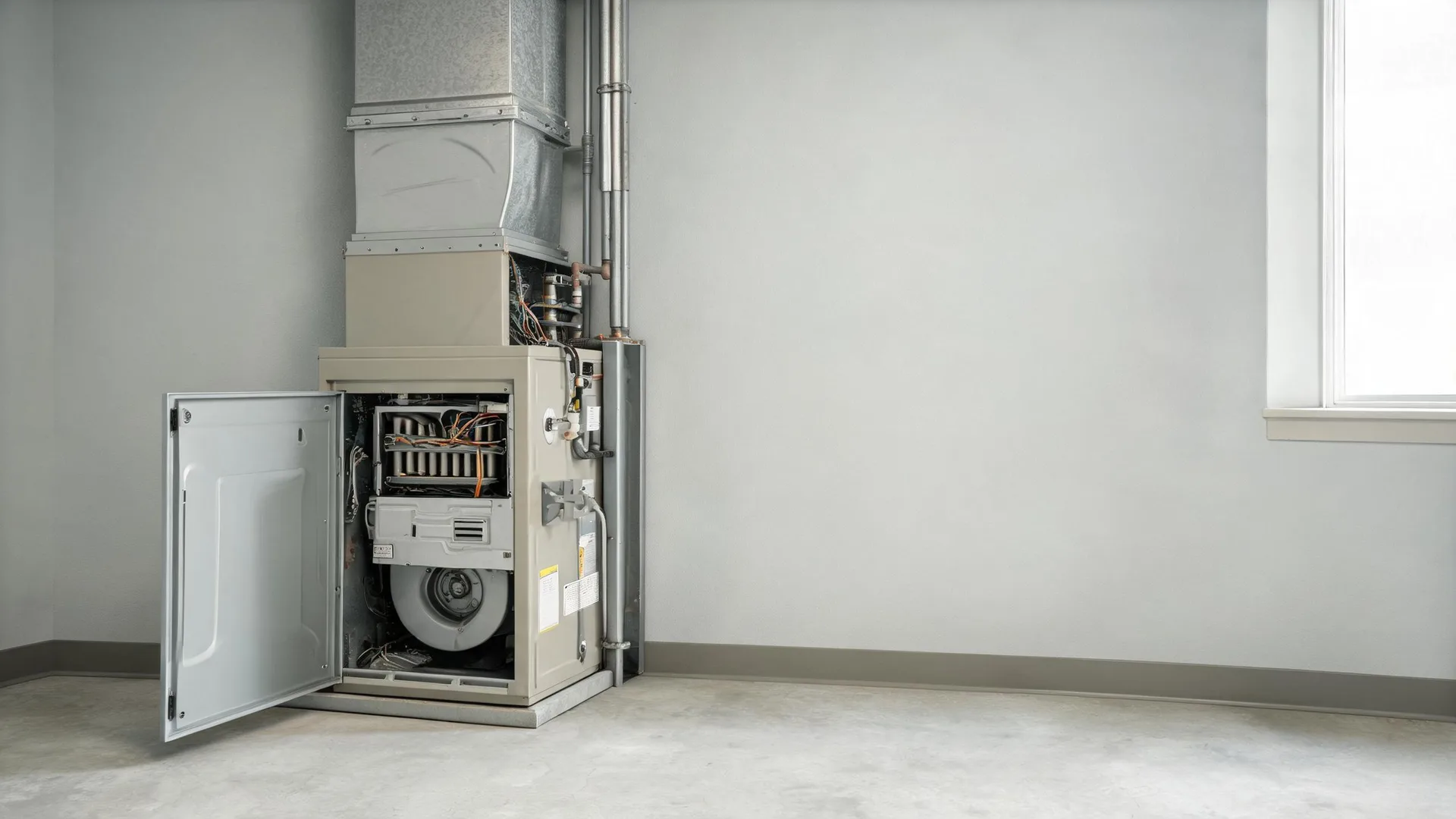
A technician starts by asking what the furnace is doing, or not doing, before touching anything. Short cycling, no heat at all, a smell on startup, a noise that only happens sometimes: each of those points somewhere different. Then comes the furnace itself, panel off, looking at the igniter, the flame sensor, the pressure switch, and the condition of the burners. On a gas furnace, part of the visit is checking the flame itself, its color and shape, since that tells a tech whether the gas and air mixing properly. The blower gets checked too, since a bad capacitor or a motor pulling too much current will shorten a furnace's life even if it still technically runs. Airflow gets a look as well, because a clogged filter or blocked vent can cause symptoms that look like a failing part but aren't. By the end, the tech should be able to say exactly what's wrong and what it takes to fix it, not just that something is.

Know the Furnace's Age Before You Pay to Fix It

A repair can still be worth doing. But before you approve one, ask the technician how many years the furnace has left. If it's original to an older house, that number matters as much as the price of the fix.

Find a contractor
A man in a navy shirt and tan trousers, seen from behind, carries a canvas tool bag up wooden porch steps toward a dark blue front door, with shrubs and a large planter nearby.
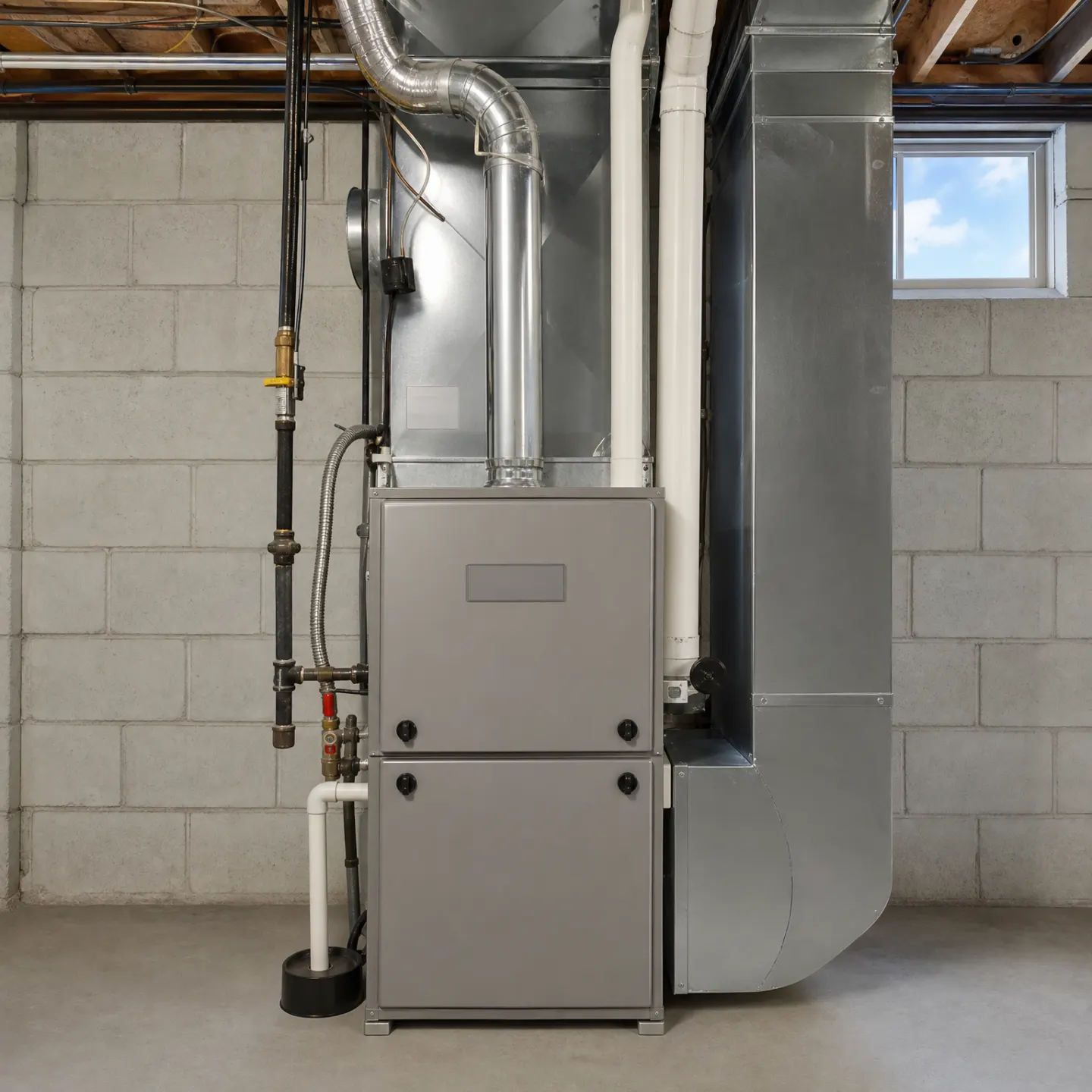
A gray high-efficiency gas furnace installed in an unfinished basement, surrounded by gas lines, a condensate drain, and sheet-metal ductwork.

Eight Months On, Not Just Today

October through May, this furnace is the thing standing between the house and the cold outside. That's eight months of cycling on and off, not just a handful of frigid nights. The part that failed today has been working the whole stretch before it gave out. While the panel's off for this repair, ask the technician what shape the rest of the furnace is in, not just the part that quit.

Heat Exchangers Don't Get Fixed

A cracked heat exchanger is the one failure that ends a furnace instead of repairing it. Years of heating and cooling make the metal expand and contract until it fatigues, and once it cracks, the part gets replaced as a whole furnace, not patched. A technician checks it early for exactly this reason, before spending time on anything smaller.

Most Calls Are Smaller Than That

Short of a cracked exchanger, the parts that usually fail are the ones that work hardest: an igniter that weakens with each cycle, a flame sensor coated with residue until it stops sensing, a blower motor bearing that wears down from running for months straight. Those get replaced on their own, and the furnace keeps going.

An unfinished concrete basement containing a gas furnace with sheet-metal ductwork, utility shelving, and exposed overhead joists.

A new furnace would cut about $150 a year off heating for a typical Bureau County home.

  • A new high-efficiency furnace$590 a year
  • An older furnace$740 a year

Estimates for a typical Bureau County home, compared with an older unit built to the previous federal minimum, from EIA household energy data, Illinois fuel prices and NOAA climate normals. Your home will differ.

Repair makes sense when one part has failed and the heat exchanger is sound.

Replacement makes sense when the heat exchanger is cracked or the furnace keeps needing parts.

A repair makes sense when the failure is a single part doing a job the rest of the furnace can still support. A new igniter or flame sensor on a furnace that otherwise runs quiet and holds steady pressure is money well spent. Replacement starts to make more sense when one repair is really the first of several, when the blower strains, the heat exchanger shows its age, and the parts failing aren't related to each other. A furnace near the end of its life tends to fail in clusters like that, one thing patched only for the next to go a few weeks later. Age matters here more than any single symptom, since a part that fails early in a furnace's life and the same part failing late in it call for different decisions. Ask what else is wearing down before deciding a repair is the end of it.