One check covers the season
Your furnace runs about seven months here, October through April. A single visit before that stretch starts is enough to catch a weak igniter or a dirty flame sensor before you need the heat.
Takes about a minute. No obligation.
Your furnace runs about seven months here, October through April. A single visit before that stretch starts is enough to catch a weak igniter or a dirty flame sensor before you need the heat.
Overnight lows average 25°F through December, January and February. That's when a furnace runs longest to hold the house steady, and when a part that's about to fail usually does.
Furnace season in Marion County starts in October.
Get it checked in September, before it has to work.




The flame sensor is the one part that fails quietly. It reads the flame to prove the gas is actually burning, and over time it picks up a film that keeps it from sensing right. The furnace still lights. It just shuts back off a few seconds later, and most people don't catch that pattern until the house has been cold for a while. A tune-up checks the sensor and cleans it before that starts happening. The same visit checks the pressure switch and the limit switch, both of which can fail so slowly that the furnace keeps running, just not the way it should. None of that shows up from the thermostat.
A quick visit gets the filter swapped and the furnace cycled once to see that it fires. A thorough one pulls the burner compartment apart. The tech wants eyes on the heat exchanger, looking for a hairline crack that lets exhaust mix with the air moving through the house. That means pulling panels, not just glancing at the outside of the cabinet. A thorough visit also checks the flame itself, the color and shape of it, because a flame that's burning wrong tells you something a clean filter never will. It includes testing the draft, making sure the exhaust is actually leaving the house instead of spilling back in. Amp draw on the blower motor gets checked too, since a motor pulling too much power is a motor on its way out. None of that happens in a visit built around the filter alone.
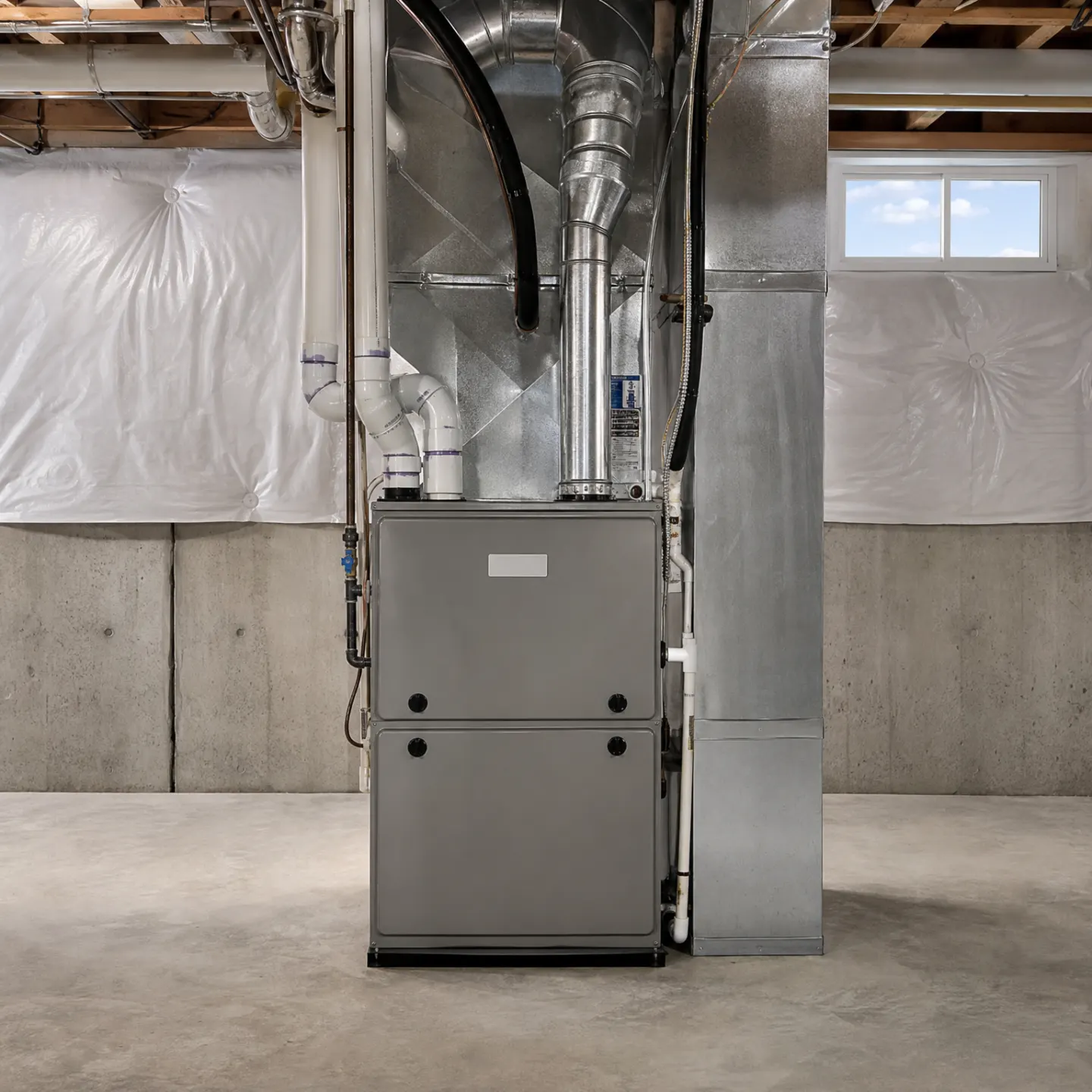
A furnace moves air, nothing else. Air comes in through the return, passes over the heat exchanger, and goes back out through the ducts. There is no water anywhere in that path, so there is no drain line to clog and no coil for mold to grow on. That side of the cabinet belongs to the air conditioner.
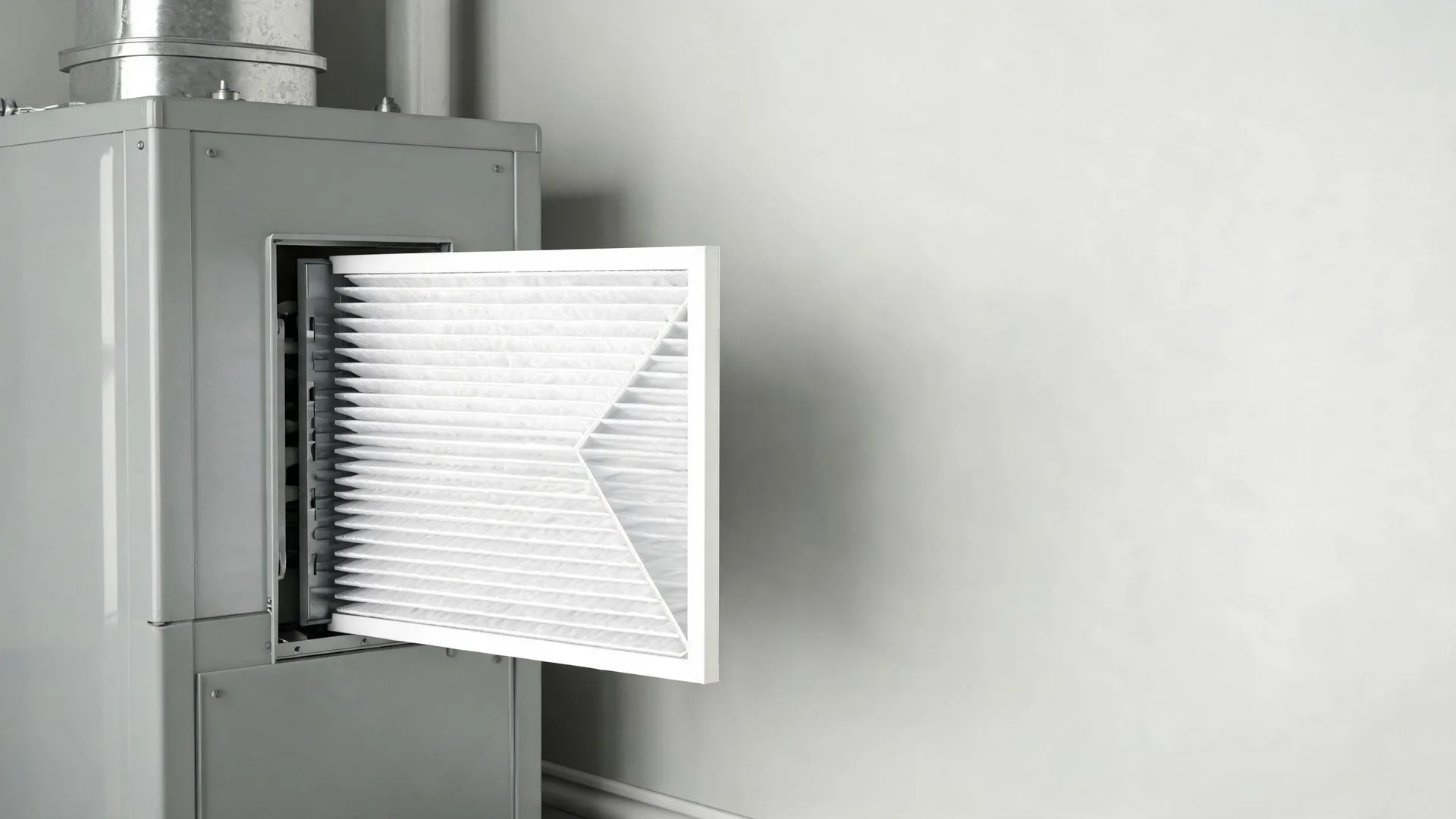
A furnace filter loaded with dust chokes the air moving across the heat exchanger. Less air crosses it, so the exchanger runs hotter than it should, and the limit switch starts cutting the burner off early to protect it. The furnace ends up running longer to make the same heat, and the exchanger wears faster than it would with clean airflow.
Between visits, the filter is the one thing worth checking yourself. Hold it up to a light. If you can't see through it, swap it. A furnace pulling air through a clogged filter runs hotter than it should and shuts off early on its limit switch. That shows up as short cycles or a house that never quite gets warm. Keep the vents and the return grille clear of furniture and rugs, since blocked airflow stresses the same parts a dirty filter does. Listen for anything new, a rattle, a screech on startup, a burner that booms instead of catching smoothly. Those are worth a call before the next scheduled visit, not after.
A tune-up is also when the igniter gets tested, not just looked at. Most furnaces now use a hot surface igniter, a small ceramic strip that glows to light the gas. It takes the same strain every single start, heating up and cooling down, and that cycle is what eventually cracks it. A tech checks it under power, watching how it glows and how fast, since a weak igniter often still lights the furnace most of the time, right up until the day it doesn't. The gas valve gets checked too, for the pressure it's delivering, because too much or too little changes how the burner flame looks and how clean it burns. Any wiring near the control board gets a look as well, since a loose connection can mimic a bad part and send someone chasing the wrong fix.