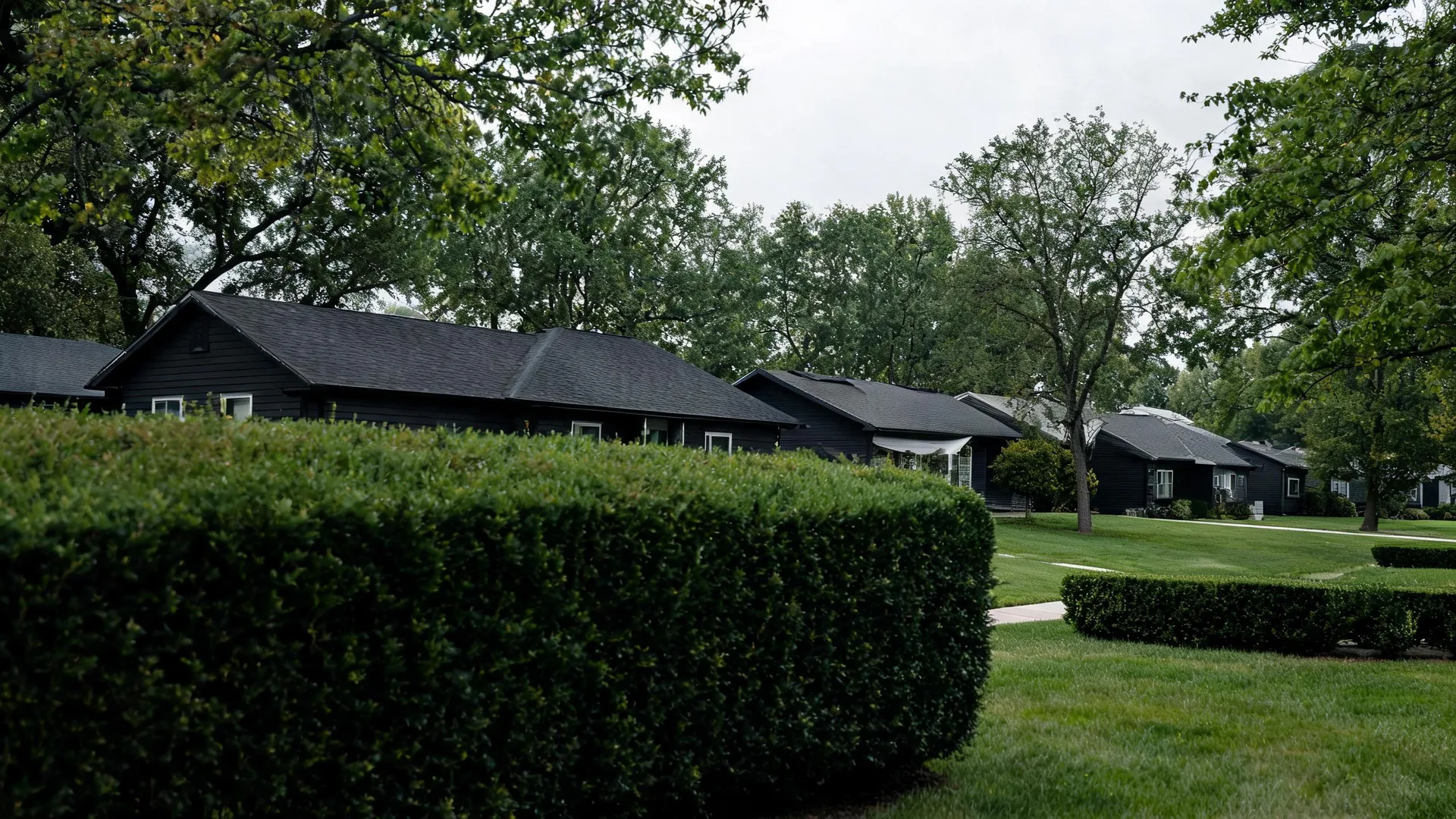




A row of dark-painted single-story houses with gray shingled roofs behind a tall trimmed hedge, with mown lawn, a walkway, and leafy trees under an overcast sky.

Heat Pump Repair in Centralia, IL

Tell us about the job

Takes about a minute. No obligation.

Step 1 of 3: Equipment

October is when heat season starts in Centralia, and the first cold snap that month is when a weak part tends to give out. A heat pump that seemed fine in September can struggle once it has to run for hours at a stretch instead of short bursts. The same thing happens in reverse each spring, right before cooling starts in May. A capacitor or contactor that was barely getting by in mild weather often can't keep up once the system is working for real. If your heat pump is acting up right as the season turns, that timing is the clue, not a coincidence.

7 months
October through April, your system heats
5 months
May through September, it cools
25°F
the average winter night it heats against
86°F
the average summer afternoon it cools against
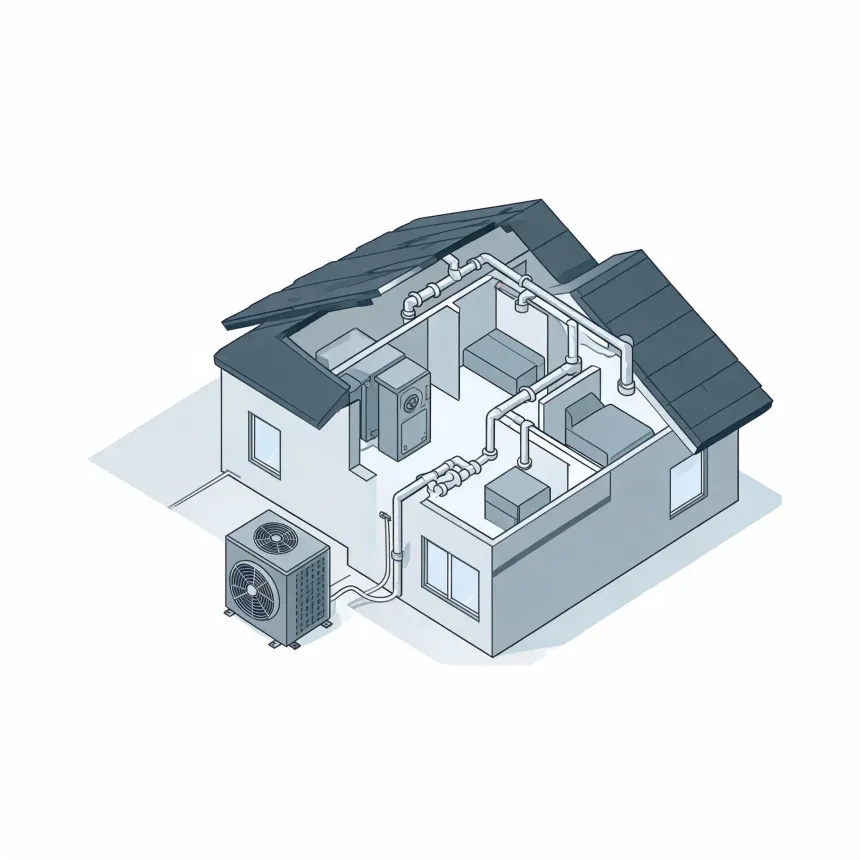
Isometric grayscale illustration of a cutaway two-story house showing interior ductwork, an indoor air handler unit, and an outdoor condenser unit on a pad beside the building.
Your system heats October through April and cools May through September.

NOAA nClimDiv, 1991–2020 normals

Marion County winters don't ask much of a heat pump, overnight lows average 25°F.

A heat pump here isn't fighting deep cold for months on end, so a breakdown is usually a worn part, not a worn-out system.

Electricity here runs 15.87 cents a kWh, so a weak part is worth fixing before it runs another winter

Power costs 15.87 cents a kWh statewide
Winter nights average 25°F
Climate zone 4A

Illinois electricity runs 15.87 cents per kilowatthour, and a heat pump that's struggling pulls more of it than one running right. A weak capacitor makes the compressor work harder to start. A low charge makes the system run longer to reach the same temperature. Either way you're paying for the extra draw every time it cycles on, not just once. A problem that costs you a little more on every bill is still worth fixing before it costs you the whole system.

Worn parts, not a worn-out system

A heat pump that isn't fighting deep cold most of the year holds up well through the parts doing the actual work. When one breaks here, it's usually a single worn part behind it, not a system on its last leg. That's a repair worth making.

Find a contractor
A man in a cap, gray long-sleeved shirt and brown work pants walks up concrete steps toward a dark blue front door, carrying a worn canvas tool bag beside a potted shrub.
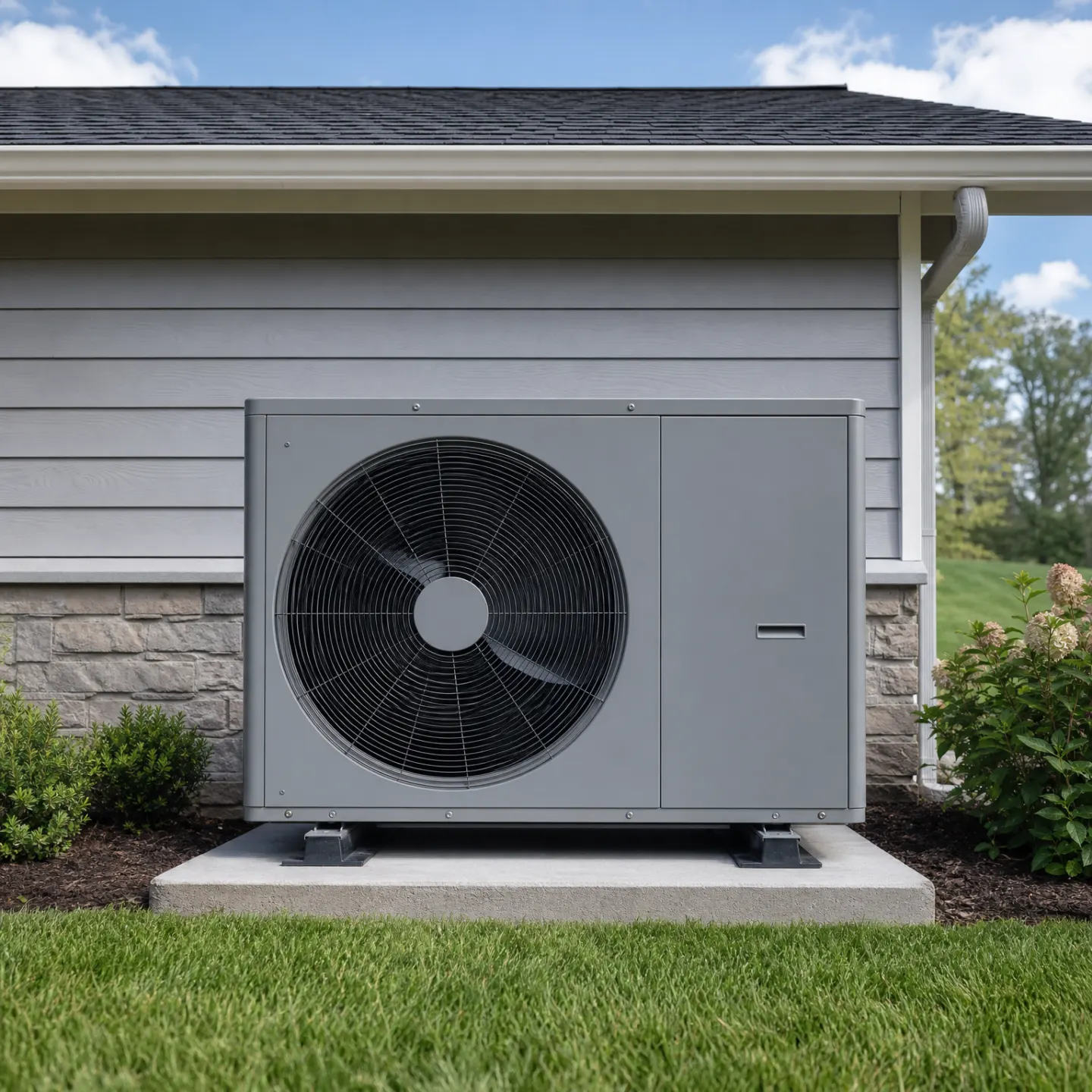
A gray outdoor HVAC unit mounted on a concrete pad beside a house with gray lap siding and a stone foundation.

Ask what the repair is really buying you

If your heat pump came with the house and the house goes back to 1973 or earlier, ask the contractor how much life is left in it before you approve a repair. A system that old may have had more than one compressor or board replaced already. A repair that makes sense on a newer unit can be money you won't get back on one that old. Worth knowing before the part gets ordered, not after.

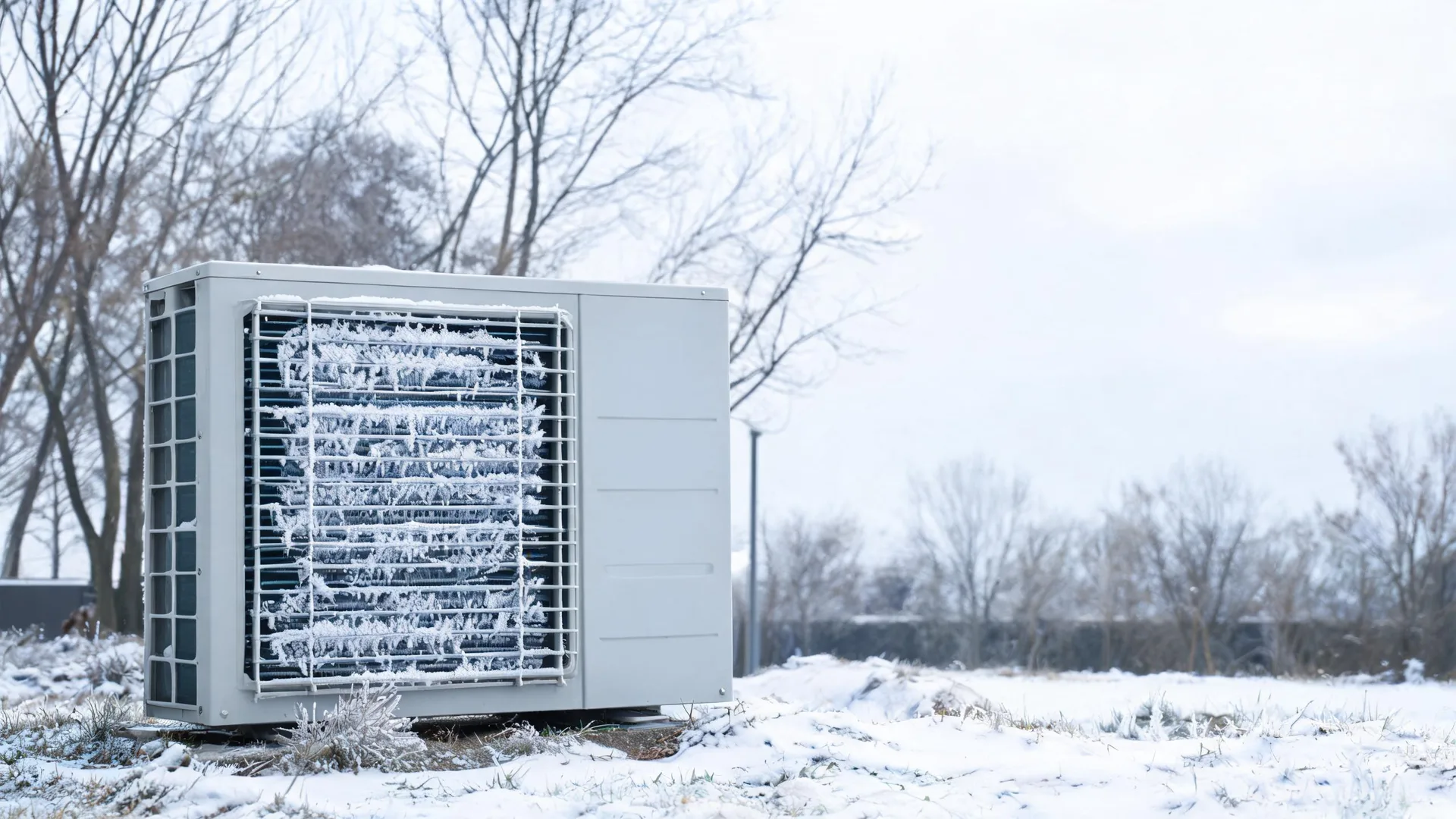
A frozen coil doesn't fix itself

If the outdoor coil is icing over, that usually means airflow is restricted or the charge is low. Letting the heat pump keep running doesn't melt the ice, it builds on it, and a coil packed in ice blocks airflow completely. Past that point the compressor is running against a system that can't move heat either direction.
A struggling compressor wears down faster

A compressor that's low on charge or starting against a bad capacitor runs hotter and works harder every cycle. That strain doesn't stay the same, it adds up. A repair that's simple today, a capacitor or a valve, can turn into a compressor replacement if the system keeps running in that state.

Most heat pump failures trace back to a handful of parts that do the hardest physical work in the system. The capacitor gives the compressor and fan motors the jolt they need to start, and it weakens gradually, not all at once, so the system runs rough for a while before it quits outright. The reversing valve is what lets a heat pump switch between heating and cooling, and when it sticks, the system gets stuck in one mode or starts blowing air that's the wrong temperature for what the thermostat is asking for. The defrost board and sensor tell the unit when to melt frost off the outdoor coil, and if that sensor fails, ice builds up unchecked until airflow stops. Contactors pit and burn from constant cycling, and once the contact surface is bad enough, the unit won't engage at all. None of these are wear in the sense of a part grinding down over years. They're parts that do a hard, specific job thousands of times, and eventually one of them doesn't do it right.

A diagnostic visit starts outside at the unit, not inside at the thermostat. A contractor checks what the system is actually doing against what it's being asked to do. That means gauges on the refrigerant lines, a meter on the capacitor, and a look at the contactor contacts before anything gets taken apart. Most of what's wrong shows up in that first round of checks. A capacitor reads weak on a meter long before it fails outright. A low charge shows up in the pressures right away. Only once those readings point somewhere does the panel come off and the real part get pulled.