Electricity here runs 17.53 cents a kilowatt-hour
Champaign County homes pay more for power than most of the country. A heat pump runs on electricity for both heating and cooling, so that rate applies every time it cycles on, all year round.
Takes about a minute. No obligation.
Champaign County homes pay more for power than most of the country. A heat pump runs on electricity for both heating and cooling, so that rate applies every time it cycles on, all year round.
At this electric rate, two heat pumps that cost the same to install can cost very different amounts to run. Checking the efficiency numbers on the units being quoted matters as much as checking the price tag.
NOAA nClimDiv, 1991–2020 normals
Champaign County had 317 severe weather events between 2015 and 2024, including 223 damaging wind events and 70 hail storms.
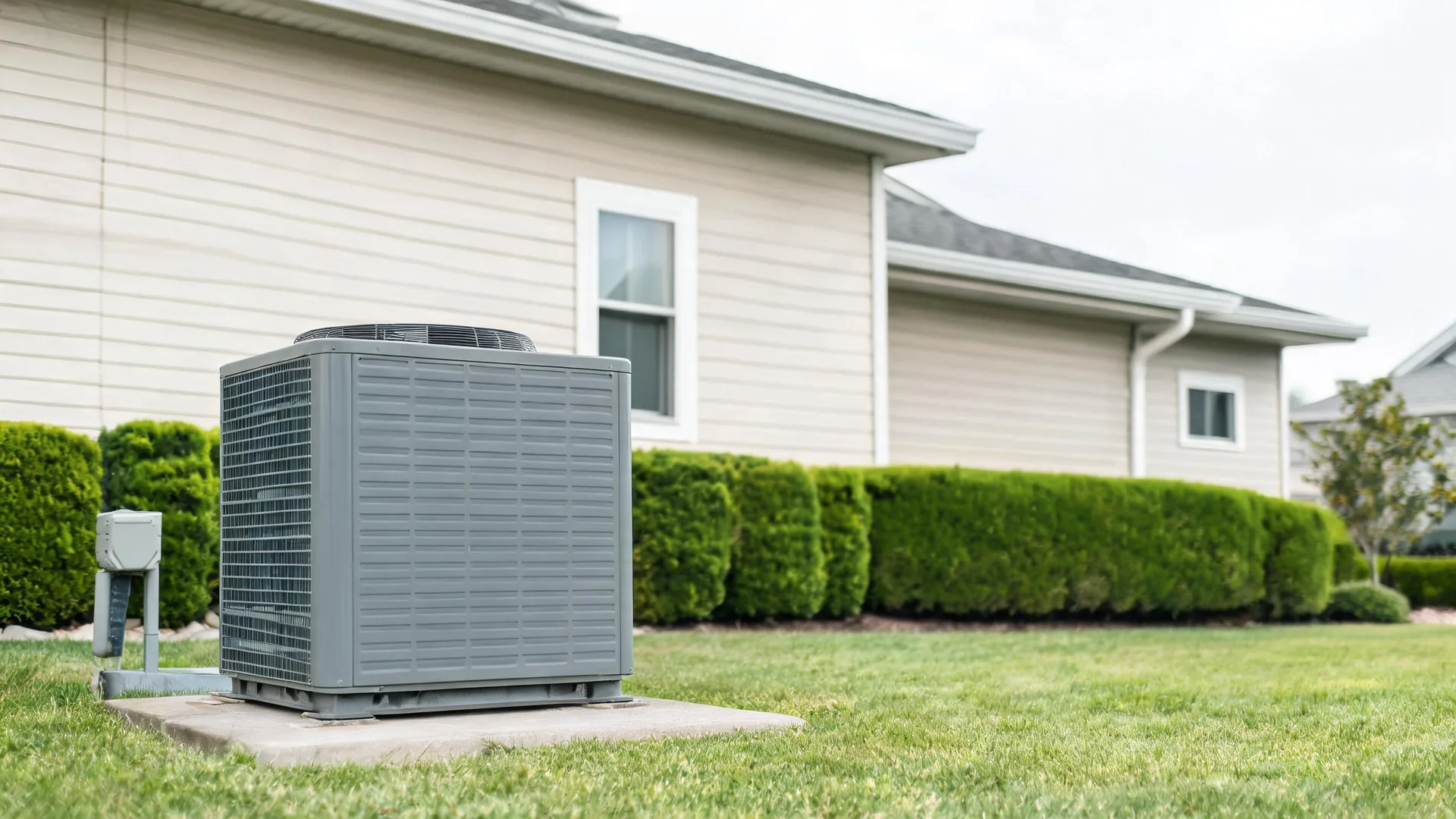
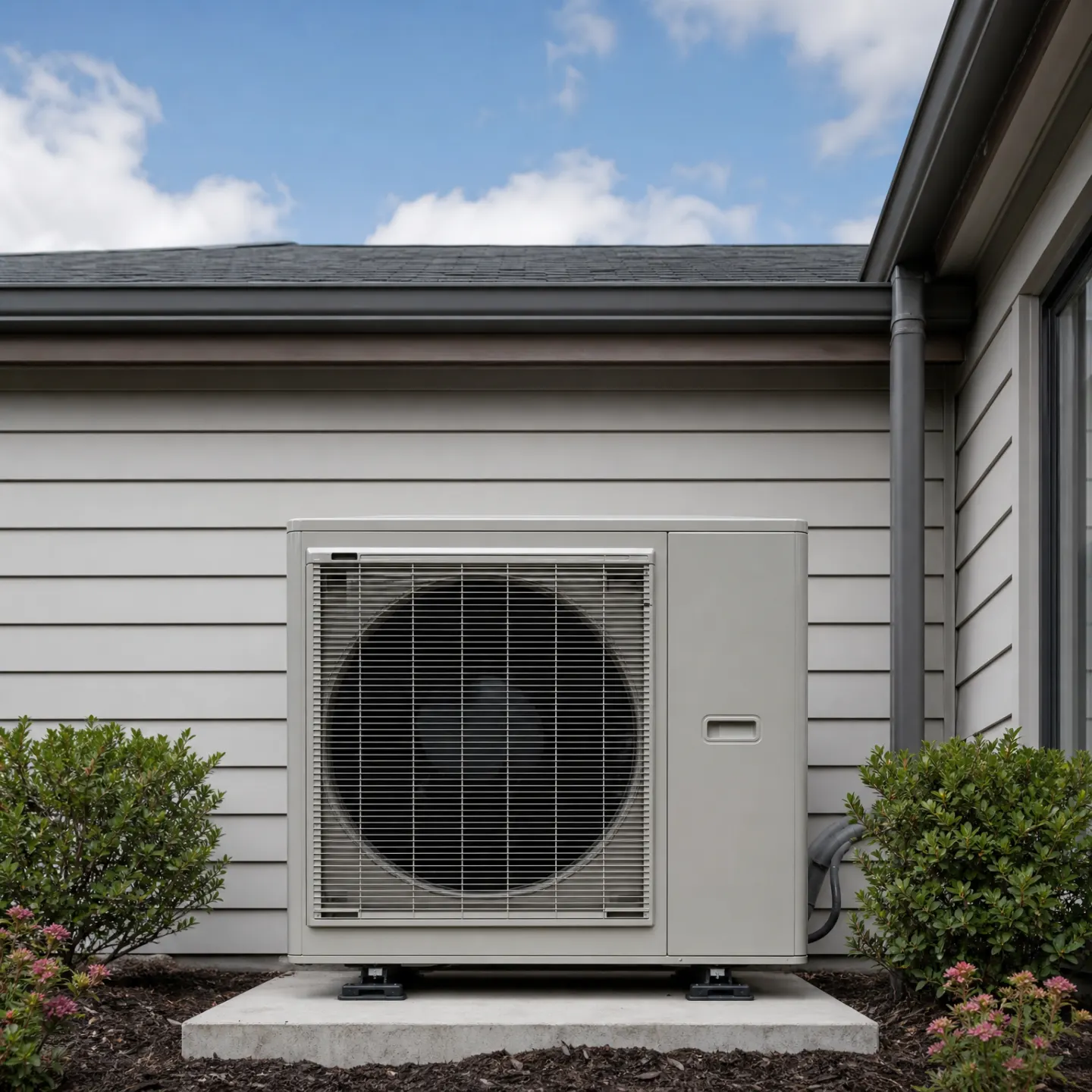
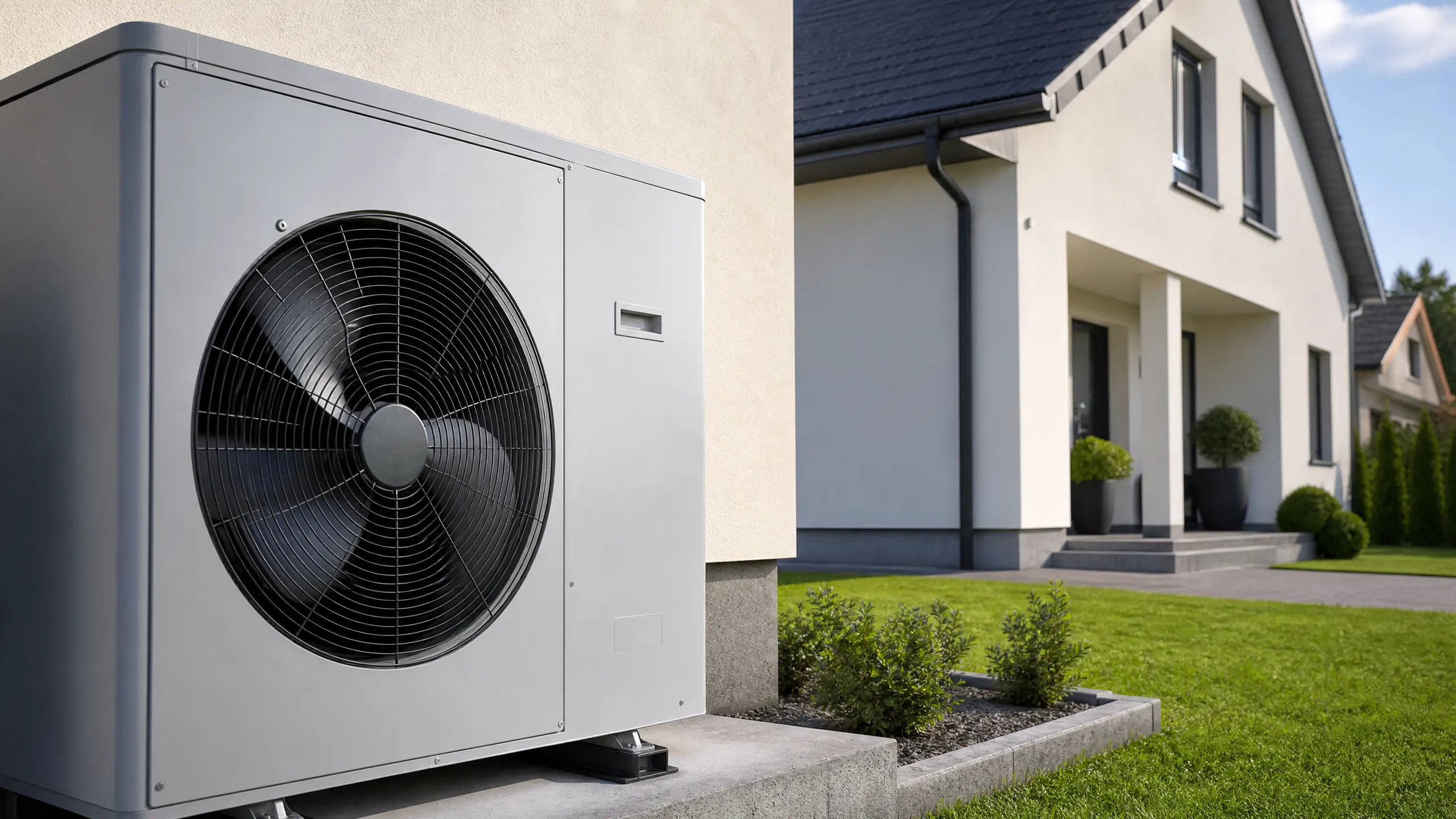
An outdoor heat pump unit sits outside year round, so where it goes and what shields it from wind and hail is part of the installation.




Champaign County falls under zone 5A in the 2021 energy code, a zone built for cold winters and sticky summers alike. Any split-system heat pump installed here, if manufactured from 2023 onward, has to meet a federal floor: at least 14.3 Btu of cooling for every watt-hour it draws over the summer, and at least 7.5 Btu of heating for every watt-hour over the winter. That floor rules out the lowest-efficiency units on the market. It doesn't set a ceiling. Units sold here can and do clear that minimum by a wide margin, and which one gets installed is still a choice worth making carefully.
Ask to see the efficiency numbers on paper before choosing between units. Power here costs more than in most places, and a heat pump runs on it all year, for heating and for cooling both. Two units at the same price can still cost different amounts to run once they're installed.
Find a contractorZone 5A means real heat load in winter and real humidity in summer, and this unit covers both. Every degree below freezing is a cycle the compressor has to work for, and every muggy afternoon is the same thing in reverse. A furnace made for one season gets an off-season. This one doesn't. It runs most months of the year, pulling heat into the house when it's cold outside and pulling it back out when it's not. That kind of duty adds up on the parts that move: the compressor, the fan motor, the valve that switches it between heating and cooling. None of that means trouble on a schedule. It means a system sized and installed right has less room for error here than it would somewhere milder.
A heat pump carries two ratings, one for cooling and one for heating, because it does both jobs with the same compressor and the same outdoor coil. A unit can lead on one number and lag on the other. Looking at only one side of that label gives half the picture of what it costs to run.
That label is tested at a specific capacity matched to a specific load. A heat pump too big for the space will short cycle, switching on and off before it settles into the steady run where it hits its rated efficiency. One too small runs longer than it should and leans on backup heat to close the gap. The number on the label only holds if the unit fits the house it's going into.
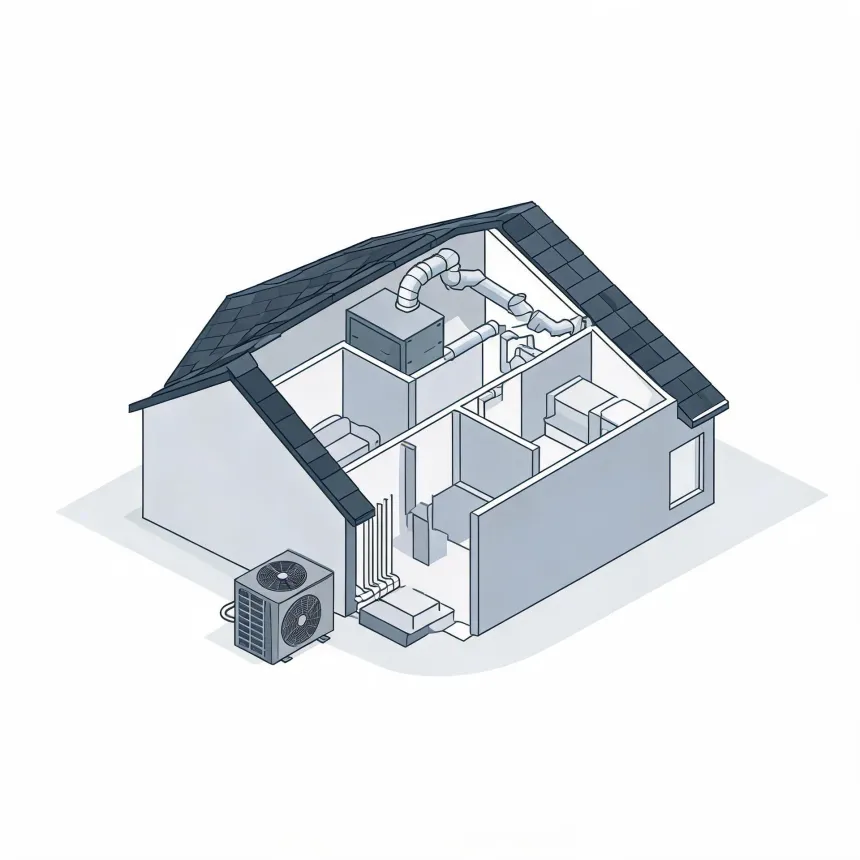
Sizing a heat pump starts with a load calculation, not a tape measure of the old equipment. A contractor works out how much heat the house loses on the coldest days and how much heat it gains on the hottest ones, using the walls, the windows, the insulation, and the duct layout as they actually are. That number, not the size of the unit being replaced, is what the new one gets matched to. Go too big and the unit satisfies the thermostat fast, shuts off, and starts again a few minutes later, never running long enough to settle into steady operation. Go too small and it runs long stretches without catching up, leaning on backup heat strips to make up the difference on the coldest nights. Either mistake shows up as higher bills and a shorter life for the compressor, even if the unit itself carries a good rating on paper.
All that running time means picking the unit is worth more care than picking it on price alone. A low bid on a heat pump that's undersized or poorly matched to the house just moves the cost to the power bill, month after month, for as long as it's installed. Ask what load calculation the quote is based on, not just what size the old system was. A contractor who skips that step is guessing at the one number the whole installation depends on.