




A quiet suburban street at twilight featuring two-story brick homes with illuminated windows and large trees lining the sidewalk.

Furnace Maintenance in Galesburg, IL

Tell us about the job

Takes about a minute. No obligation.

Step 1 of 3: Equipment

A furnace in Knox County runs about eight months a year, October through May. That's longer than what a furnace handles in most of the country. Every one of those months adds hours to the blower motor, the igniter, the heat exchanger. Parts that might coast for a few seasons elsewhere are working from the first cold snap in fall through the last cold morning in spring. That kind of use catches up with a system faster, and it shows up as the small stuff first, a weak flame, a slow start, a thermostat that seems to be guessing.

Gas heats 67.4% of homes in Knox County, more than electric and propane combined.

A tune-up on a gas furnace means checking the burner, the venting and the safety controls, not swapping a filter and calling it done.

Half these furnaces are older than the house's last roof

Half the homes here were built by 1957
Climate zone 5A
Heat runs October through May
Starts Working in OctoberHeat in Knox County runs from October through May, so the check belongs in September.

Half the houses in Knox County were built in 1957 or earlier. If yours is one of them, there's no telling from the outside whether the furnace is original or a replacement someone put in years later. A yearly check is how a contractor finds out what's actually sitting in your basement or closet, and how it's been handled since. They'll look at the heat exchanger, check how the unit vents, see whether anything about the setup doesn't match a furnace that old. On a system that's been in place a long time, that's what catches a cracked exchanger or a venting problem while it's still a repair and not an emergency.

Eight Months of Runtime Means Checking It Before October

Eight months of heat a year wears a furnace down early, and by fall the weak parts are already due. A yearly check before the cold sets in is how a contractor catches that ahead of time.

Find a contractor
A man in a cap, dark shirt and tan work pants walks up porch steps toward a navy blue front door, carrying a canvas tool bag beside a potted shrub.
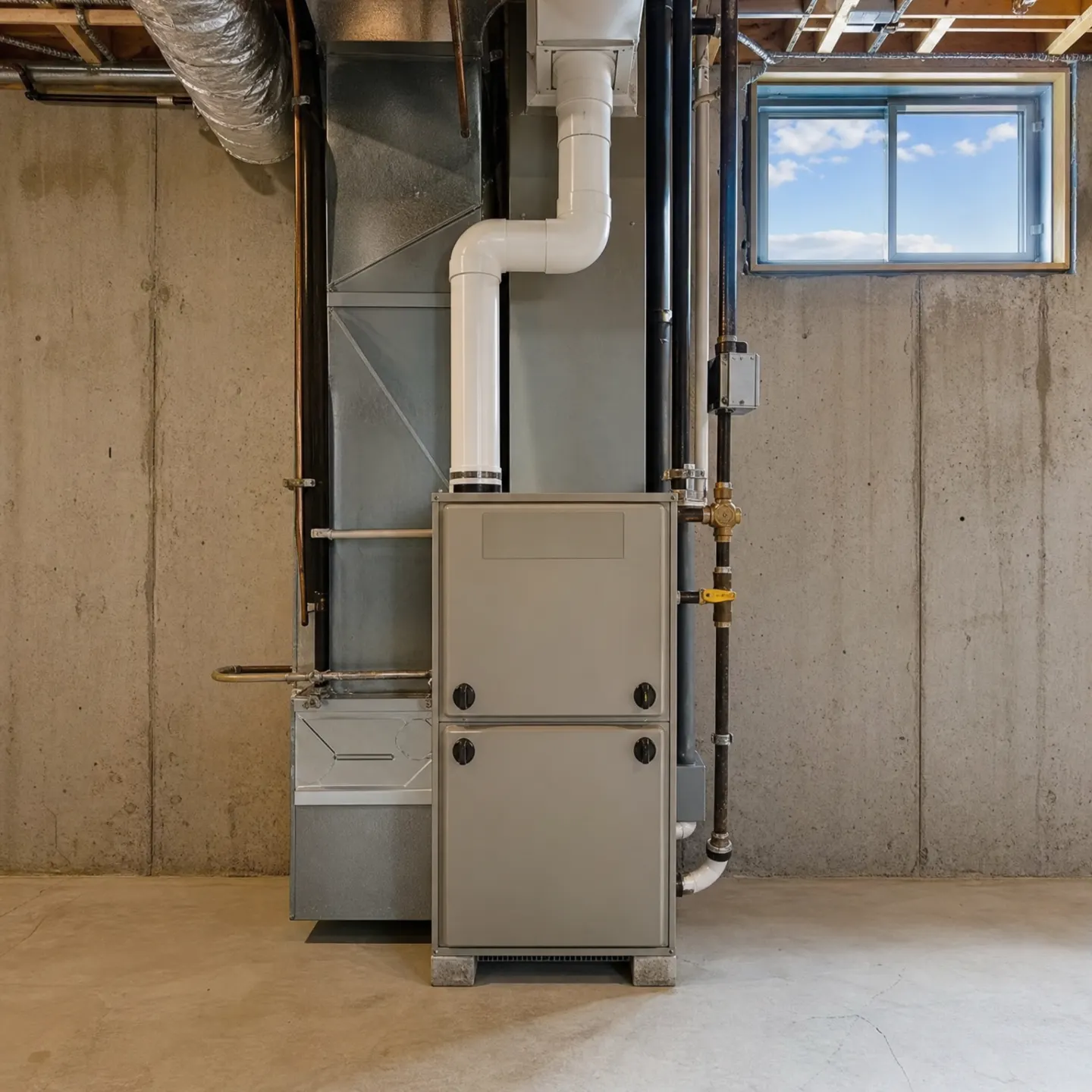
A gray gas furnace with attached ductwork and piping installed in an unfinished concrete basement.

What a Working Furnace Is Already Hiding

A flame sensor builds up a film every time it works, so slowly that nobody sees it happen. A furnace can run on a dirty sensor for a while before it starts shutting off a few seconds after ignition, and by then the homeowner thinks the unit is dying when it just needs the sensor cleaned. A tune-up catches it with the furnace still running fine. The same goes for a blower wheel caked with dust. It still spins, it still moves air, but it moves less of it, so the system runs longer to do the same job and the motor bearings wear sooner than they should. None of this shows up from the thermostat. A contractor pulls the panel, checks flame color, tests the limit switch, and finds the wear before it turns into a no-heat call.

A Dirty Filter Chokes the Heat Exchanger

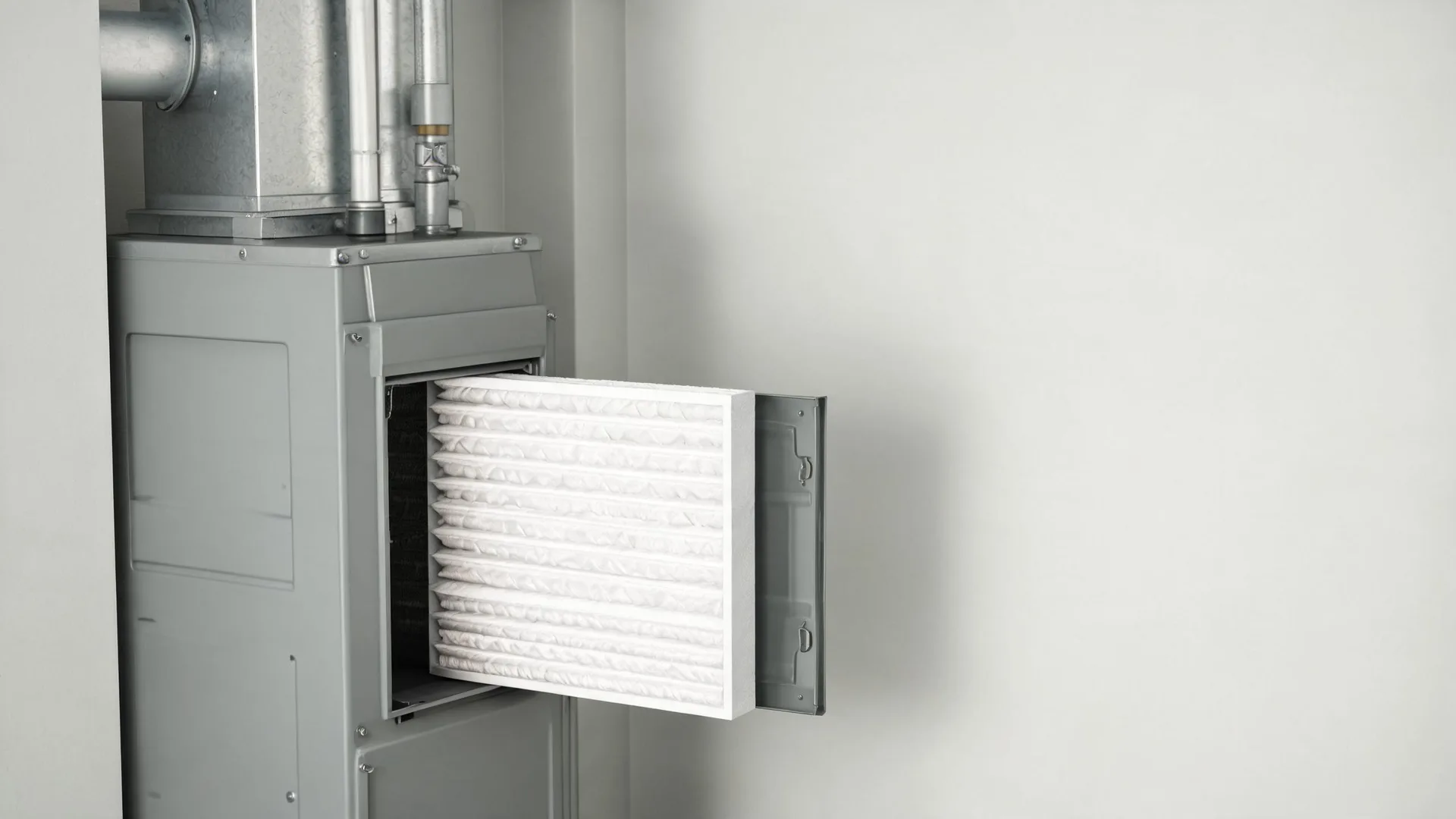
Air has to move across the heat exchanger for a furnace to work right. A clogged filter cuts that airflow down, and the exchanger runs hotter than it should because there's less air pulling the heat away. Run it like that long enough and the metal stresses in a way it wasn't built for. The filter is the cheapest part in the whole system, and it's the one most likely to cause damage to the parts that aren't cheap at all.
The Drain Line Decides Whether Water Ends Up Where It Shouldn't

A high-efficiency furnace produces condensation, and that water has to go somewhere through a drain line and sometimes a condensate pump. If that line clogs with algae or sediment, the furnace can shut itself down on a safety switch, or worse, the water backs up into the cabinet. Checking that drain and clearing it is part of keeping the furnace from flooding its own control board over something as simple as a blocked tube.

A quick tune-up means someone swaps the filter, glances at the flame through the sight glass, and writes up the invoice. A thorough one means the panels come off. The burners get pulled and cleaned, not just looked at, because a burner can carbon up in a way you can't see without taking it out. The flame sensor gets cleaned with something fine enough not to scratch it, not wiped once and called good. Someone checks amp draw on the blower motor against what the motor is rated for, because a motor pulling too many amps is wearing out even while it still runs. The gas pressure gets tested with a manometer, not guessed at by flame color alone. And someone actually checks the heat exchanger for cracks, with a light and a mirror, not a glance through the access panel from arm's length. If the visit takes less time than it takes to do all that, it didn't get done.

A proper tune-up ends with a combustion analyzer in the flue, not just a look at the flame. The tech reads carbon monoxide, oxygen and stack temperature off the exhaust, because a furnace can look fine and still be burning the mix wrong. Too much CO means incomplete combustion, and that points back to a dirty burner or a venting problem even if the flame looks steady and blue. Stack temperature that's too high usually means heat is going up the flue instead of into the house, which often traces back to a dirty heat exchanger or a draft issue. These numbers also get written down and compared to the last visit, so a slow drift in readings shows up as a trend instead of a surprise. None of it takes long, but skipping it means the only way most problems get found is when the furnace stops working or the carbon monoxide detector goes off.