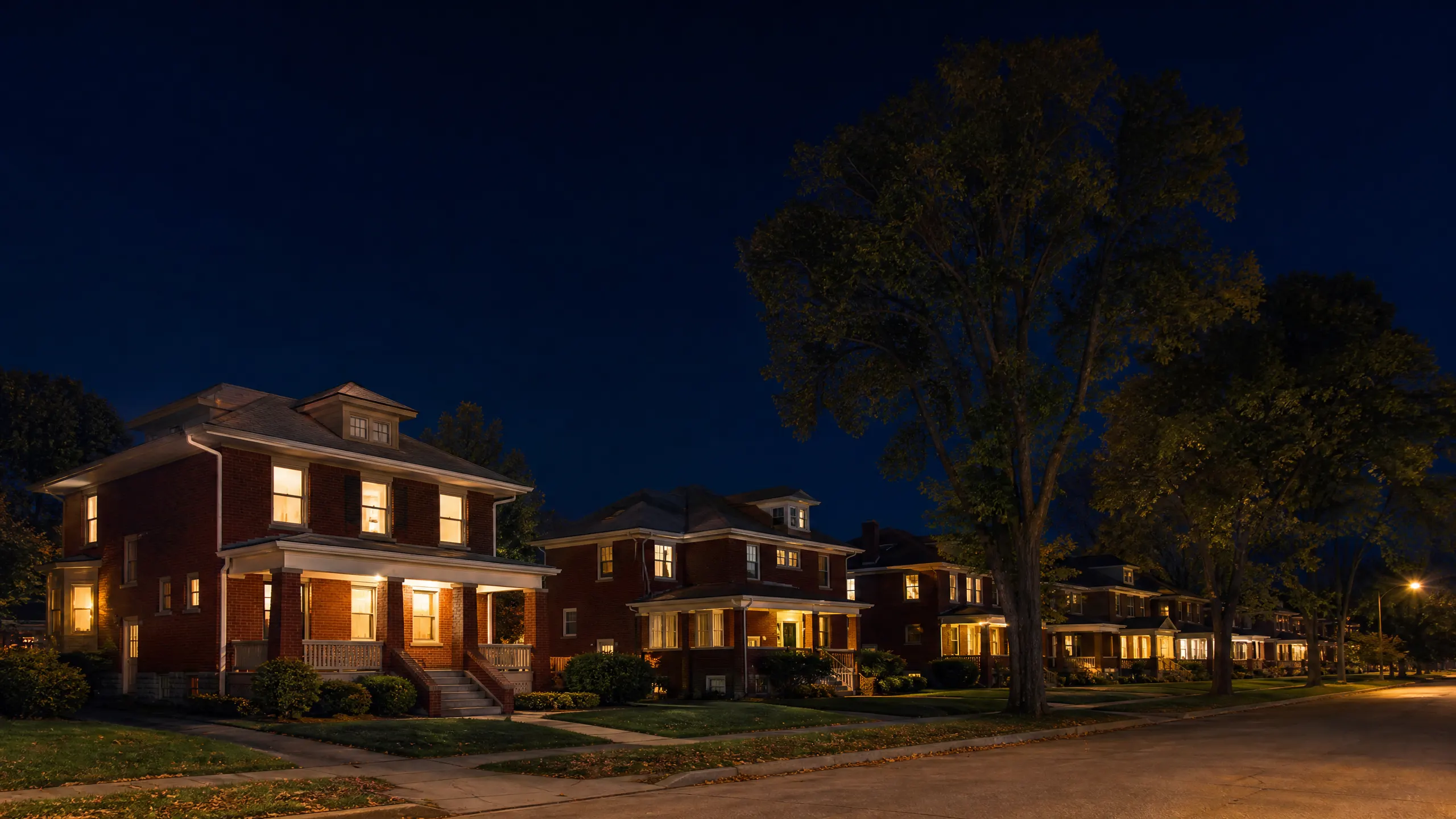



A nighttime street view of several illuminated two-story red brick homes with front porches, flanked by a large tree.

Furnace Maintenance in Kewanee, IL

Tell us about the job

Takes about a minute. No obligation.

Step 1 of 3: Equipment

A furnace in Henry County runs eight months a year, October through May. That is most of the calendar spent cycling on and off to keep a house warm. Henry County also saw 23 winter storms between 2015 and 2024, the kind of cold that keeps a furnace running for days instead of cycling normally. Long stretches like that put real wear on the igniter and the blower motor, the parts that wear with use rather than age. A furnace working this many months a year tends to show that wear sooner than one that only runs part of the year.

Furnaces in Henry County start running in October.

Book the tune-up in September, before the first cold night puts it to work.

Half these furnaces are older than the house's last roof

Half the homes here were built by 1961
Climate zone 5A
Heat runs October through May
Gas runs this countyNearly three out of four homes in Henry County heat with gas, and a tune-up here means checking the burner and venting, not just swapping a filter

If your furnace came with the house, there's a decent chance nobody living there now knows how old it actually is. A yearly check settles that. A technician can look at the burner and the heat exchanger and tell you what kind of shape they're in, before the furnace has to run for days straight in a cold snap. Older systems tend to give small signs before they fail outright, a slow start, a louder cycle, and those are easy to miss if nobody is looking for them. A check while the furnace is running fine is a lot simpler than a repair once it's not.

Have it checked before winter asks more of it

A furnace that runs eight months a year does most of its wearing before most people notice. Get the igniter and blower checked now, while the furnace is still running fine, instead of during the first long cold stretch of the season.

Find a contractor
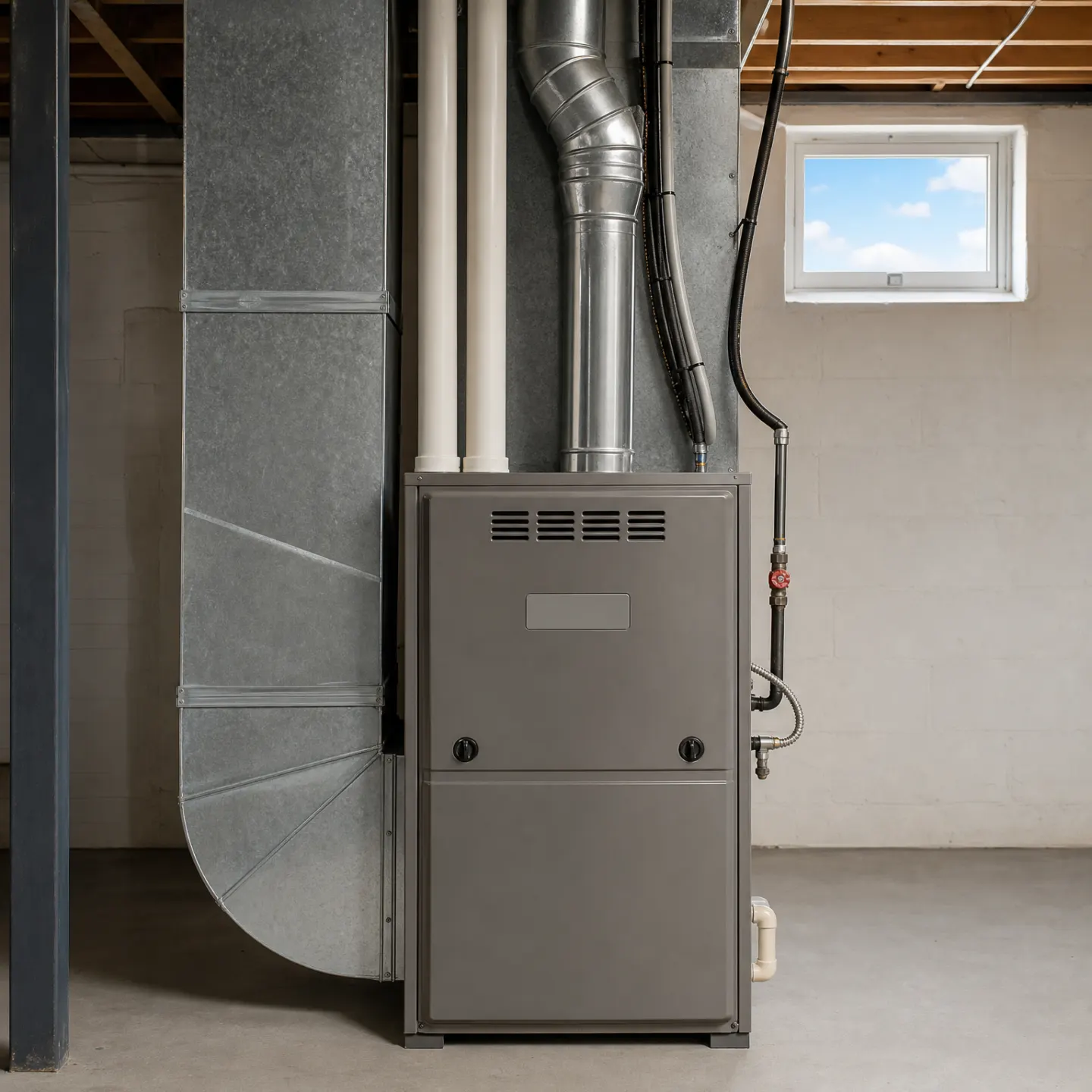
A gray residential gas furnace installed in an unfinished basement, surrounded by ductwork, a metal flue pipe, and a gas supply line.

What a Running Furnace Won't Tell You

Most of what wears out in a furnace wears from the inside, where nobody's looking. A cracked heat exchanger doesn't announce itself. A flame sensor coated with a thin layer of oxidation still lets the furnace run, just worse, pulling more gas to do the same job. The igniter can be a season away from failing and look no different to the eye than one that's brand new. A technician checks the flame itself, whether it burns steady and blue or wavers and yellows at the tip, because that tells him things about the burner and the gas mixture no homeowner would think to look at. He'll pull the blower wheel and check it for dust packed into the blades, enough to throw it off balance and strain the motor bearings over time. He'll check the pressure switch, the limit switch, the connections at the control board, the kind of wiring that works fine for years right up until it doesn't. None of this shows up by watching the furnace run. It shows up when someone takes it apart and looks.

Change the filter

A dirty filter chokes the airflow a furnace needs to run safely and efficiently. Check it every month it's running, and swap it when it's visibly gray or you can't see light through it. This is the one job that's really on the homeowner, and it's the one most skipped.
Leave the rest alone

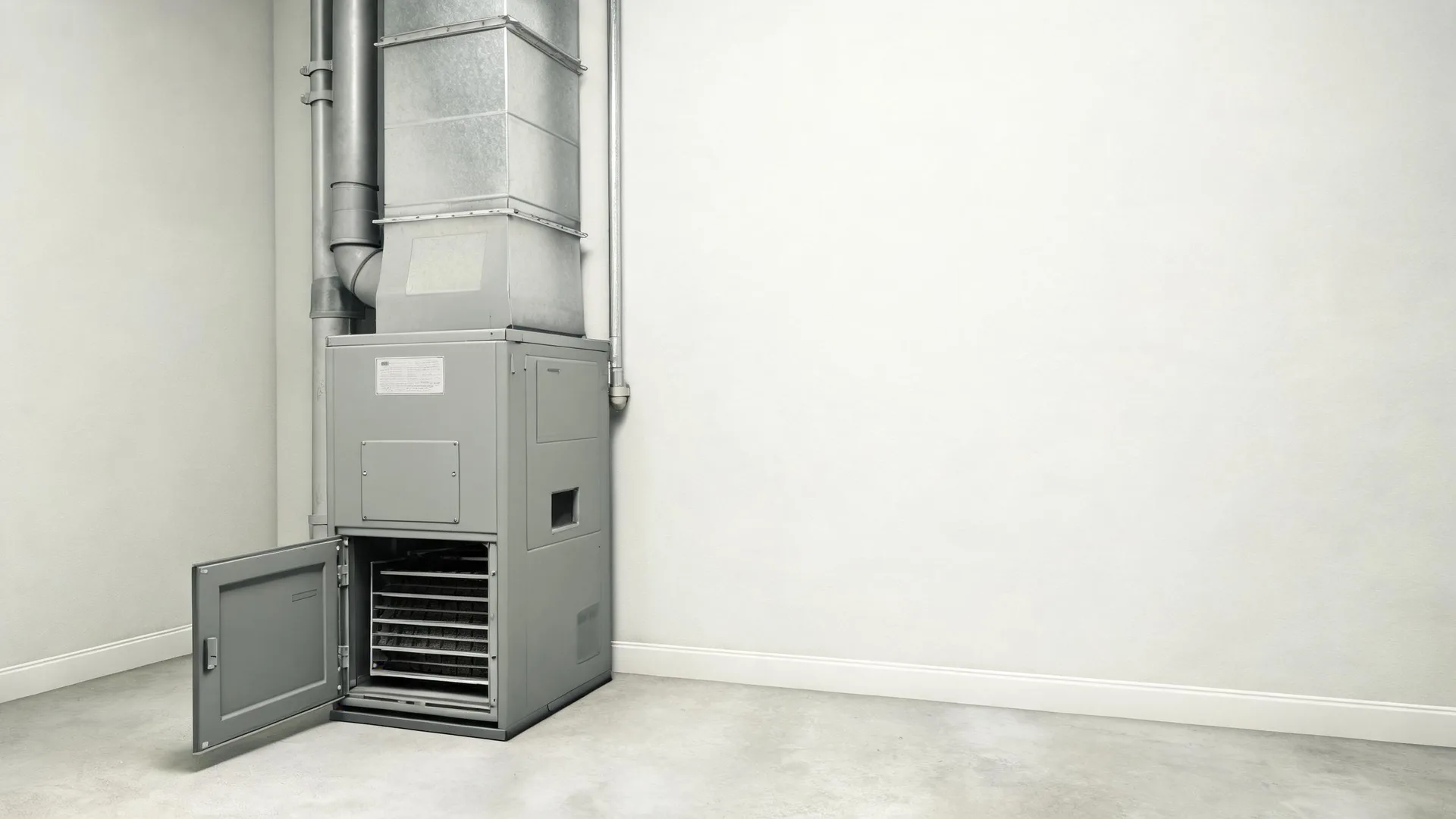
The burner, the heat exchanger, the flame sensor, the control board, these need a trained eye and the furnace apart to check properly. Keep the area around the furnace clear of boxes and laundry piles so it can draw air the way it's built to. Past that, watching and listening is the job. A new noise, a burning smell, a flame that looks off, those are reasons to call, not fix.

Some signs are worth paying attention to even though they don't tell you much on their own. A burner that takes two or three tries to catch, where it used to light on the first one, is worth mentioning to a technician. A musty or burning smell when the furnace kicks on is worth a call. A yellow, flickering flame instead of a steady blue one means the gas isn't burning clean, and that's not something to wait on. But a furnace can run quiet and normal right up until the heat exchanger cracks or the igniter gives out, so the absence of any of these signs doesn't mean much either. That's the reason for a check on a schedule, not just a reaction to a sound or a smell.

A tune-up starts with the burner off the furnace entirely, not just a glance while it runs. A technician pulls the burner assembly and cleans it, because a burner caked with dust or rust burns uneven and wastes gas doing it. The heat exchanger gets inspected for cracks or corrosion, since that's the part separating the combustion gas from the air moving through the house. He'll test the gas pressure at the manifold and adjust it if it's drifted off spec, because too much or too little changes how clean the flame burns. The flame sensor gets cleaned or swapped, the igniter gets tested under load rather than just looked at, and every electrical connection at the control board gets checked for a loose wire or a bit of corrosion. Last, he checks the venting, making sure the flue is drawing properly and nothing is blocking it, because a furnace that can't vent right is a furnace that isn't safe to run.