



A dark two-story house with a covered front porch and shrubs, framed by large leafy trees, photographed from ground level across a mown green lawn with blurred grass in the foreground.

Heat Pump Repair in Galesburg, IL

Tell us about the job

Takes about a minute. No obligation.

Step 1 of 3: Equipment

Your heat pump switches over to heat in October and runs through May, so September is when a weak part tends to get found out. A capacitor or contactor that limped through summer cooling often gives out the first cold morning it has to work the other direction. If yours has been short-cycling or blowing cooler air than it should, don't wait for the first hard freeze to call someone. The system isn't asking much in early fall, so a fault found now is easier to fix than one that waits until the coldest months.

8 months
October through May, your system heats
3 months
June through August, it cools
18°F
the average winter night it heats against
83°F
the average summer afternoon it cools against
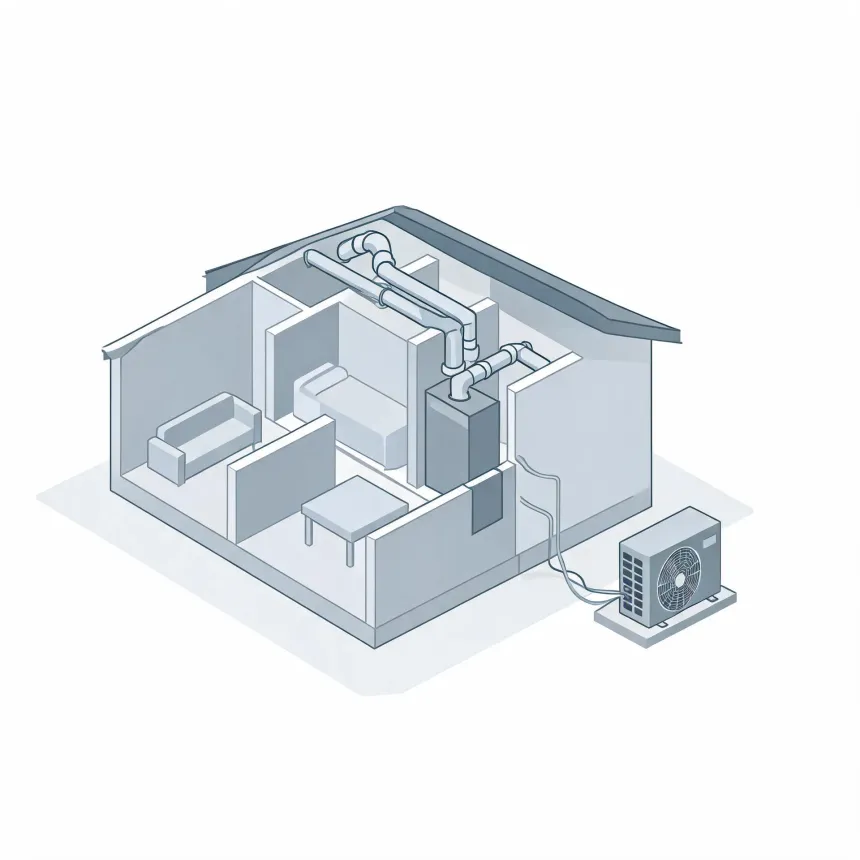
Isometric line illustration of a cutaway house showing interior rooms with furniture, ceiling ductwork connected to an indoor air handler, and a line running outside to an outdoor condenser unit.
Your system heats October through May and cools June through August.

NOAA nClimDiv, 1991–2020 normals

A tech checks refrigerant charge, the reversing valve and both coils before touching anything else.

A reversing valve stuck mid-switch can look exactly like a low charge, so skipping that check means paying for a part that was never the problem.

Half the homes in Knox County were built by 1957, old enough that the heat pump isn't the original

Half the homes here were built by 1957
74 damaging wind events from 2015 to 2024
40 hail events from 2015 to 2024

Knox County sees its share of wind and hail, and winter storms show up most years. None of that is what wears out a heat pump. These systems fail the same way everywhere. A capacitor weakens. A contactor pits. A sensor drifts out of calibration. 134 severe weather events over the past decade sounds like a lot, but most of them pass without touching the unit outside. If yours is acting up, look at the part first, not the weather. A tech who checks the common failure points before anything else usually finds the answer fast, because the answer is rarely unusual.

A heat pump running wrong costs you every month it stays that way

Electricity in Illinois ran 15.87 cents per kilowatthour in 2024, and a heat pump struggling to switch over doesn't use less of it. It uses more, working harder to do what a good contactor or a full charge would do easily. That cost shows up on every bill until the part gets replaced.

Find a contractor
A man in a gray t-shirt and tan work pants, seen from behind, carries a canvas tool bag up wooden porch steps toward a dark blue front door beside a potted shrub.
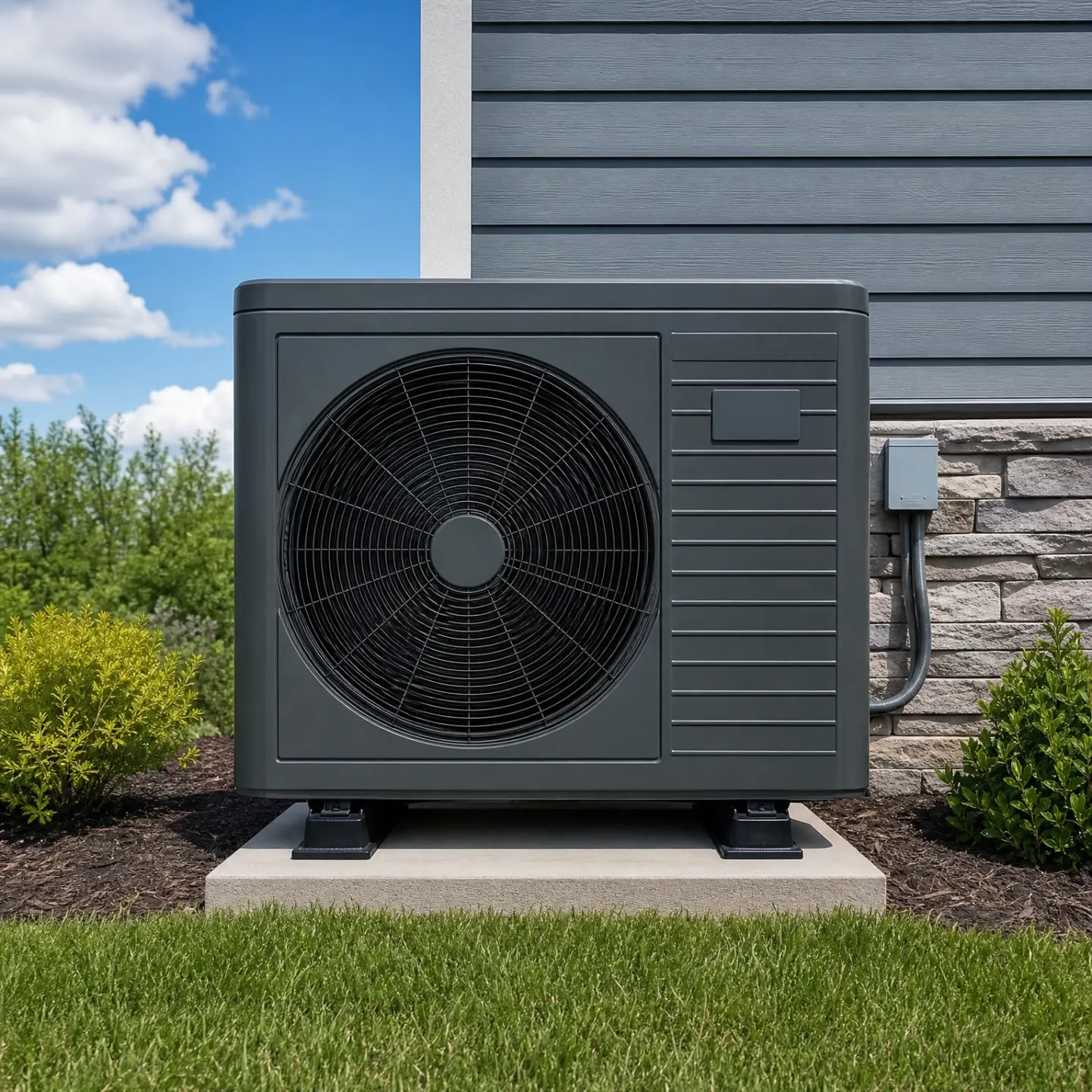
A dark gray heat pump unit mounted on a concrete pad next to a house with gray siding and a stone veneer wall.

It never really stops working, so the small parts wear first

A heat pump doesn't get a season off the way a furnace does. It cools all summer, switches over, and keeps running straight into the cold months without a long rest in between. That run time wears on the same handful of parts. Bearings in a fan motor dry out and start sounding rough. A capacitor loses its ability to hold a charge. Contactor points that have opened and closed over and over start to pit, and eventually one sticks open when it should close or closed when it should open. None of this means the unit is near the end. It means the parts that start and stop the system are the ones worth checking first, because they're the ones doing the most work every day it runs.

The reversing valve is the part unique to a heat pump

Everything else in the system, the compressor, the coils, the fan motors, also shows up in a plain air conditioner. The reversing valve is what lets this machine run backward and pull heat from outside air. Its coil can burn out. The valve itself can stick between positions. Either way the system stops switching modes cleanly.
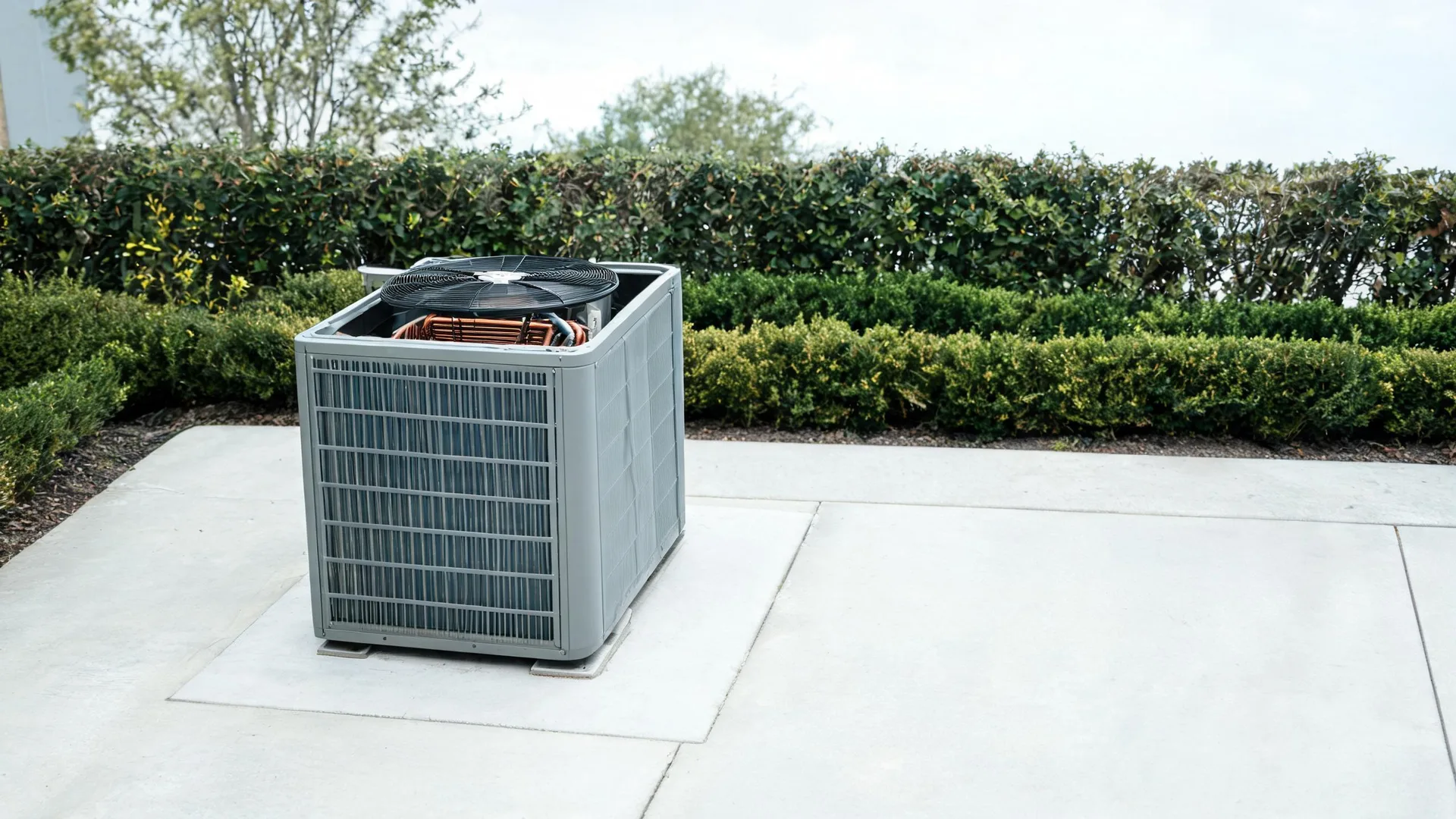
Most failures are electrical, not refrigerant

A capacitor loses its charge over time and stops giving the compressor or fan motor the jolt it needs to start. A contactor's points pit and burn from the arcing of normal switching until it stops closing reliably. Both are small parts. Both cause symptoms that feel bigger than they are, like a unit that hums but won't start, or one that cycles on and off on its own.

Before you call, go outside and look at the outdoor unit. If the fan isn't spinning but you hear a hum, that's often a capacitor, not a dead system. Check your thermostat is actually set to heat and the setpoint is above room temperature, since a setting bumped by accident gets mistaken for a breakdown every year. Look at the air coming from your vents with your hand. Cool but not cold air during a defrost cycle is normal for a heat pump and lasts a few minutes, so don't judge it too fast. If you see ice built up on the outdoor coil that isn't melting off on its own, or if the breaker has tripped more than once, stop testing and get a tech out rather than resetting it again.

Age is usually the real question behind repair or replace, and the compressor is what answers it. If the compressor is still good, almost everything else is worth fixing. Capacitors, contactors, fan motors, even the reversing valve, all get swapped out on their own without touching the rest of the system. If the compressor is failing, that changes. It sits at the center of the refrigerant circuit, sealed and not meant to be opened, so a bad one usually means a new outdoor unit rather than a repaired one. A tech can tell you which kind of problem you have by checking what's actually failed before you decide anything.