

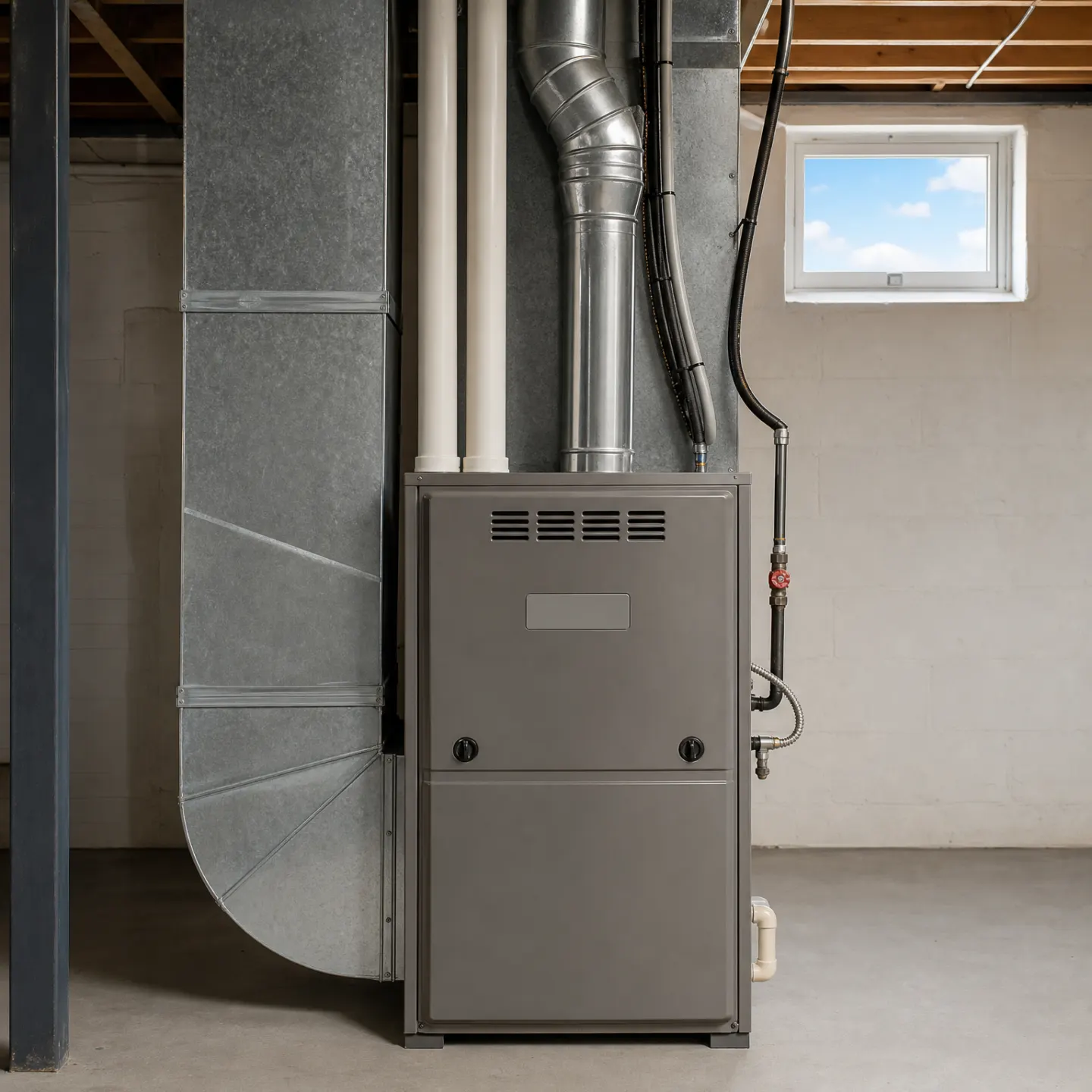
An unfinished basement containing a gray HVAC furnace with ductwork, exposed wooden joists, a concrete floor, and miscellaneous clutter in one corner.

Furnace Repair in Galesburg, IL

Tell us about the job

Takes about a minute. No obligation.

Step 1 of 3: Equipment

Half the homes in Knox County were built in 1957 or earlier. If yours is one of them, the furnace may not be original, but whatever is down there has likely been replaced at least once already and could be getting close to that point again. Older homes also tend to have been through more than one heating system in their lifetime, so a furnace acting up now may be the second or third to serve that house. Before you put money into a repair, it's worth asking the contractor how much life is actually left in the unit. A cracked heat exchanger or a failing blower motor on a furnace that's already old enough to vote is a different decision than the same repair on a furnace installed five years ago.

8 months
October through May, your furnace is on duty
18°F
the average winter night it heats against
67%
of homes here heat with gas, so most furnaces here burn gas
15 winter storms
in ten years, the nights a failure hurts most
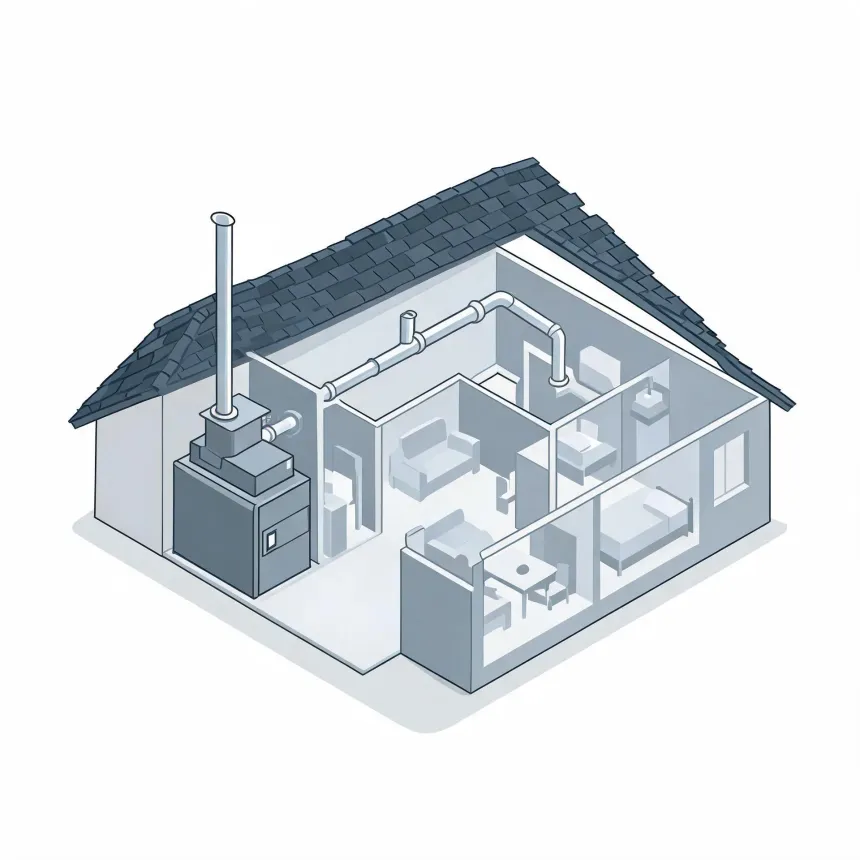
Isometric cutaway illustration of a single-story house showing interior rooms with furniture, ceiling ductwork, and a large furnace unit with a tall flue pipe in a corner room.
Your furnace works hardest from November through March.

NOAA nClimDiv, 1991–2020 normals

A furnace that won't light at all is a different problem than one that lights and then shuts off.

Check the thermostat setting and the furnace switch before you assume the worst.

Eight months of heat a year wears a furnace down faster

Heat runs October through May
Winter nights average 18°F
Climate zone 5A

October is when these furnaces come back on after sitting idle since spring. Whatever was already weak, a cracked heat exchanger, a tired igniter, a blower motor that struggled last winter, doesn't announce itself while the furnace sits quiet all summer. It just waits. The first real cold snap puts a full load on that weak point right away. If your furnace sputtered or short-cycled near the end of last winter, that same problem is likely still there. Getting it checked in September, before the heat needs to run, means finding out on your schedule instead of during an overnight low near 18 degrees.

Ask what the repair buys you before you pay for it

A contractor can tell you how much life is left in the furnace while they're there for the repair. That answer is worth having before the money's spent, not after.

Find a contractor
A gray residential gas furnace installed in an unfinished basement, surrounded by ductwork, a metal flue pipe, and a gas supply line.

What the furnace is already telling you

A furnace that's struggling usually tells you before it quits outright. The burner flame should be steady and blue. If it's flickering, yellow, or uneven, that's worth a call. Short cycling, where the furnace fires up, runs a few minutes, then shuts off before the house warms up, points to a clogged filter, a cracked heat exchanger, or a blower motor that isn't moving enough air. Listen for the sounds it makes too: a bang when it fires up usually means delayed ignition, and a screech from the blower compartment usually means a motor bearing is going. Some rooms running cold while others stay warm can mean a duct problem or a failing blower rather than anything wrong with the thermostat. If you smell anything unusual when the furnace runs, especially something like formaldehyde or a scorched metal smell, shut it off and get it looked at before running it again. A furnace that runs constantly without ever satisfying the thermostat is losing the fight, whether that's a failing igniter, a dirty flame sensor, or a blower that can't keep up anymore.

Most failures start small and get ignored

A furnace rarely quits without warning. The flame sensor collects a film of oxidation and stops telling the control board the burner is lit, so the furnace shuts itself off as a safety measure. A dirty filter chokes airflow until the blower motor works harder than it was built for, or the heat exchanger overheats and cracks from the strain. An igniter weakens with age and either glows too dim to light the gas or fails outright. None of these happen overnight. They build over months of normal running.
Some of these you can catch, some you can't

A filter you can check yourself. Pull it and hold it up to a light. If you can't see through it, it's choking the system. A cracked heat exchanger or a failing inducer motor you won't spot on your own, those need a contractor with the right tools to find. The point of a yearly checkup is catching the second kind of problem while it's still a repair, before it turns into a furnace that won't run at all.

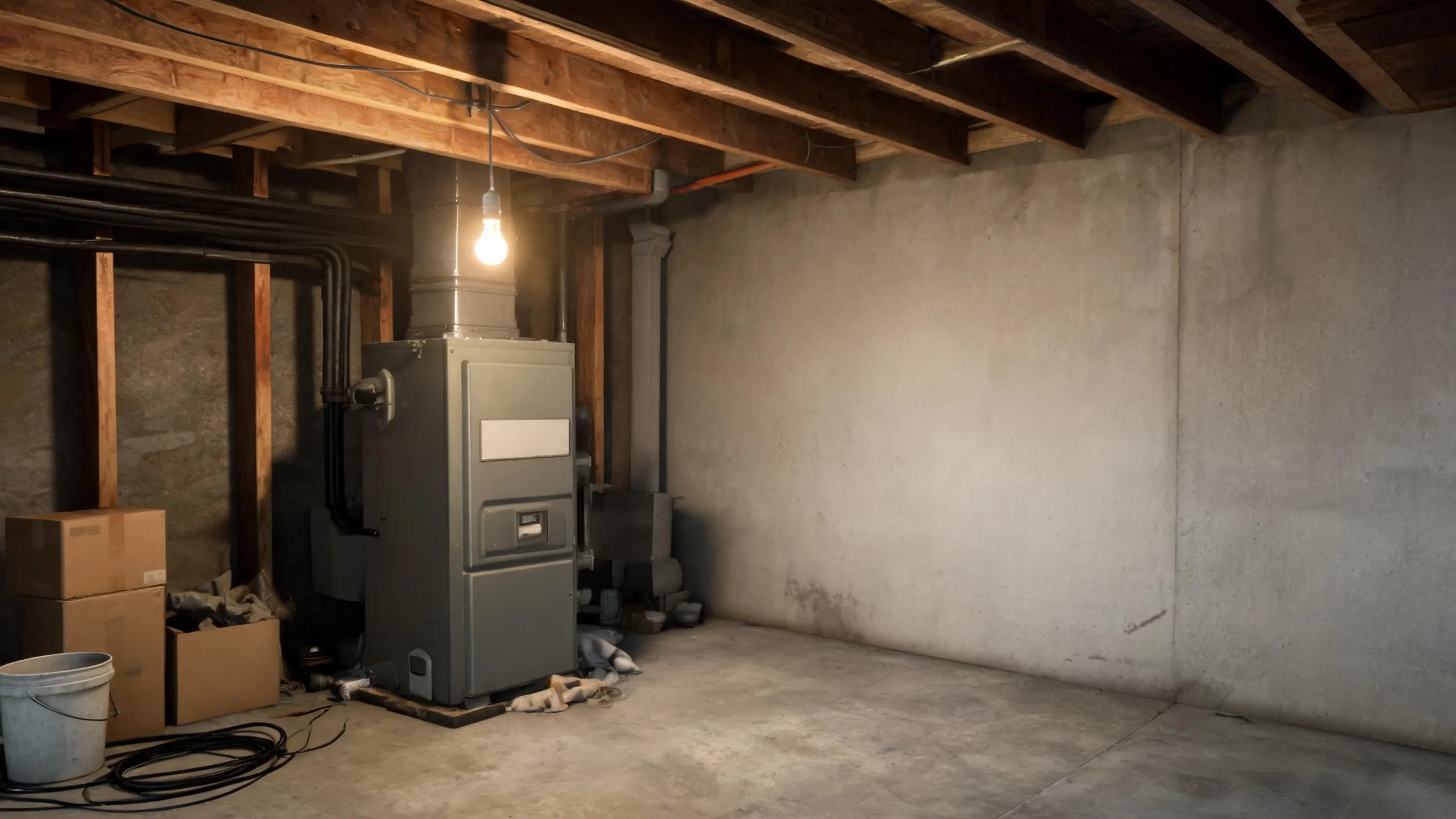
An unfinished basement interior showing a gray furnace unit beneath a bare incandescent bulb, surrounded by exposed joists, concrete walls, cardboard boxes, and utility pipes.

A new furnace would cut about $140 a year off heating for a typical Knox County home.

  • A new high-efficiency furnace$580 a year
  • An older furnace$720 a year

Estimates for a typical Knox County home, compared with an older unit built to the previous federal minimum, from EIA household energy data, Illinois fuel prices and NOAA climate normals. Your home will differ.

Repair makes sense when one part has failed and the heat exchanger is sound.

Replacement makes sense when the heat exchanger is cracked or the furnace keeps needing parts.

A diagnostic visit starts with the thermostat and works back from there, not the other way around. The contractor checks the flame first, watching whether it's steady and lighting on the first try or struggling to catch. From there they pull the filter, check airflow at the registers, and test the flame sensor and igniter with a meter rather than guessing by eye. They'll open the blower compartment and listen for bearing noise, then check the heat exchanger for cracks or signs of scorching, since that's not something to judge by sound alone. Pressure switches, the inducer motor, and the control board get tested in sequence, because a furnace that won't start can fail at any one of those points and look the same from the thermostat's side of things. The visit ends with a straight answer: what's wrong, what it takes to fix it, and whether that repair is worth making given the furnace's age and condition.