A row of dark-sided cottages with brown shingled roofs behind a trimmed hedge, beside a mown lawn and large leafy trees under an overcast sky.

Furnace Maintenance in Peoria, IL

Tell us about the job

Takes about a minute. No obligation.

Step 1 of 3: Equipment

A dirty filter overworks everything else

When the filter clogs, the blower has to pull harder to move air through it. That strain shows up elsewhere. The heat exchanger can run hotter than it should, and the blower motor wears faster than it would otherwise. A filter is the cheapest part in the system and the easiest one to neglect.


The drain line matters even in winter

A high-efficiency furnace produces condensation that has to leave through a drain line. That line can clog with algae or sludge the same way a sink trap does. If it backs up, the furnace will shut itself down rather than let water go where it shouldn't. Checking that line during a tune-up catches the problem before it stops the furnace from running at all.

A furnace that short cycles is wearing out its ignition system faster than it should.

Catching that pattern during a check means a new igniter goes in on a technician's schedule, not on the coldest night of the year.

Most of Peoria heats with gas, which means a burner and venting to keep safe

68.1% of homes heat with gas
Heat runs October through May
Winter nights average 20°F
Peoria heats hard starting in OctoberHeat runs here from October through May. Book the check in September, before it starts.

Half the homes in Peoria County were built in 1966 or earlier. A furnace that old has usually been swapped out at least once, but the ductwork and venting behind it often date back to the house itself. A yearly check gives a technician a chance to look at the connections between old and new, not just the furnace cabinet. Corrosion at a joint or a cracked section of vent pipe won't announce itself the way a loud blower will. Catching it during a scheduled visit means it gets fixed on a mild afternoon instead of found some other way.

Get the burner and venting checked

Gas and oil systems need the burner, venting and safety controls checked, not just a new filter.

Find a contractor
A man in a cap, gray jacket and tan cargo pants, seen from behind, carries a worn canvas duffel bag up steps toward a dark navy front door, with a potted shrub beside the entry.
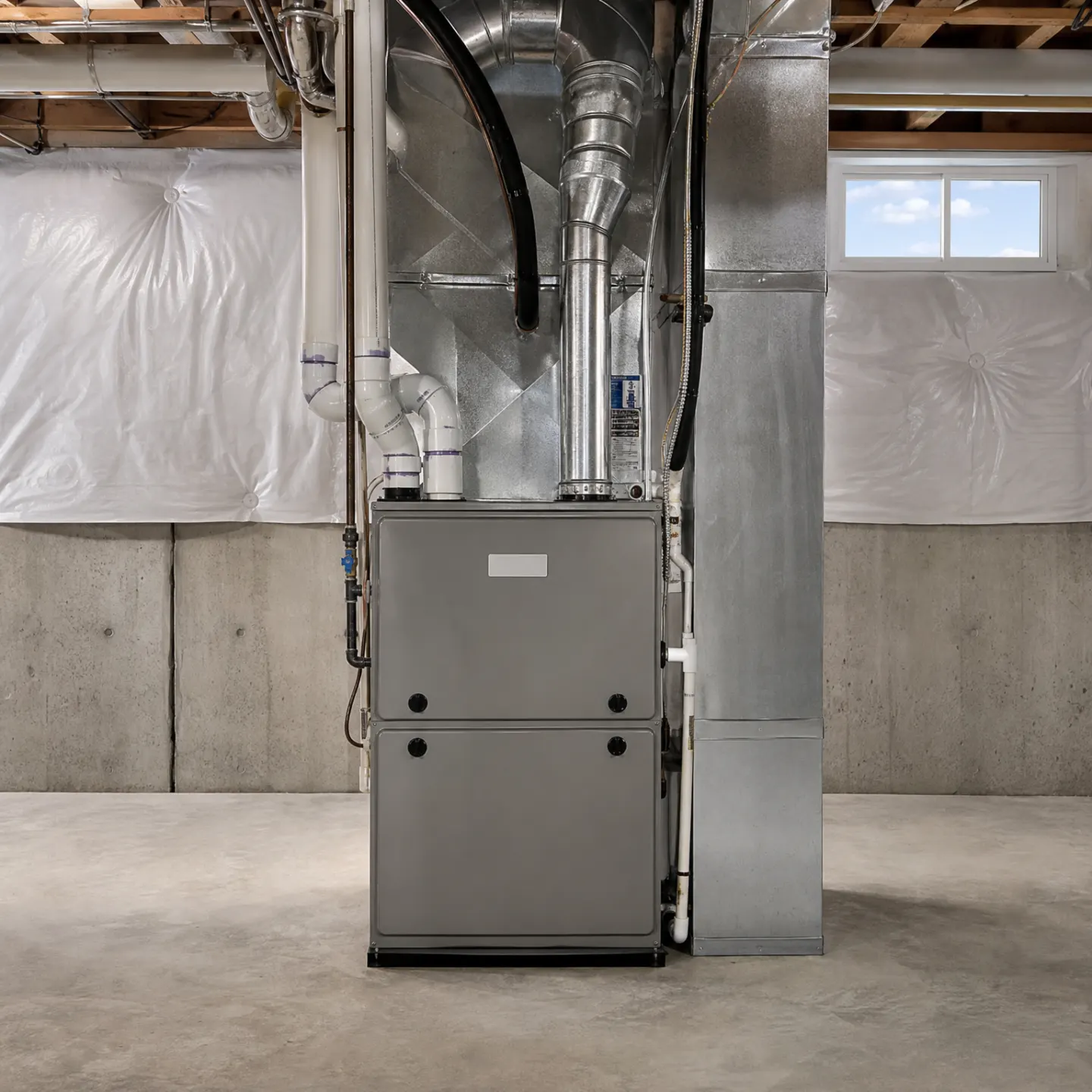
A gray residential gas furnace installed in an unfinished basement, connected to sheet-metal ductwork and PVC pipes.

What a running furnace won't show you

A flame should burn steady and blue. Over a season it can start to yellow or flicker as dust and lint settle on the burner, and that's not something you'll notice without pulling the panel off. The same goes for the flame sensor, a small rod that tells the furnace a flame is actually lit. A thin coating builds up on it over time, and once it's coated enough, the furnace will shut down a few seconds after startup, as if it can't tell whether it's burning or not. Neither problem makes noise. Neither shows up as a cold room until it's already happened. A tune-up catches both while they're still just buildup, not failure.

Changing the filter is the one job that's yours

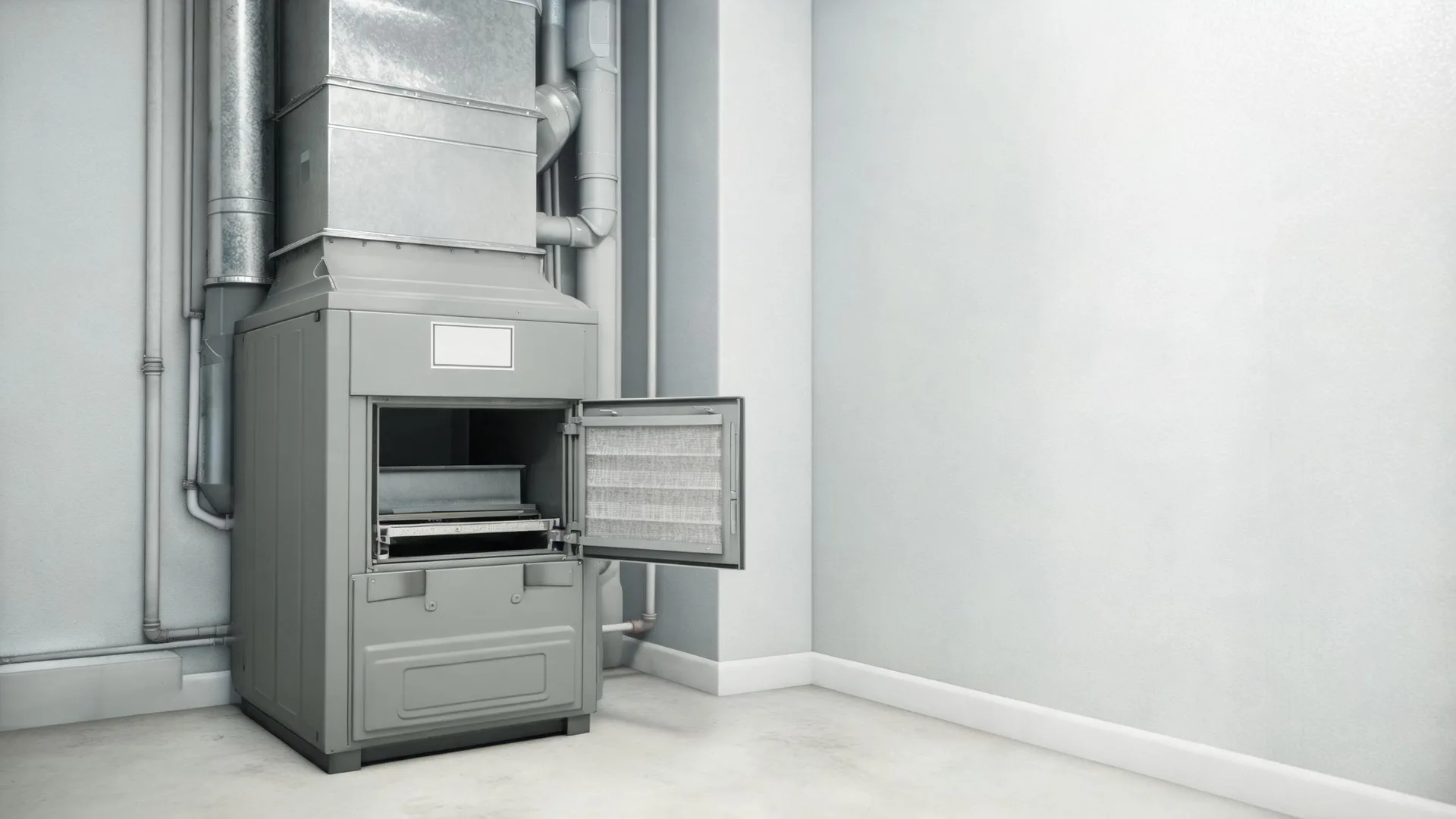
Check the filter monthly, and hold it up to a light if you can't tell by looking. Swap it when you can't see through it. A clean filter is the simplest thing a homeowner can do for a furnace between visits.

The cabinet should stay closed the rest of the time

The burner, the flame sensor, the pressure switch and the wiring behind the panel aren't meant for a homeowner to handle. Taking covers off or poking at connections risks knocking loose something that was working fine. A gas furnace isn't a place to guess.

Skip a few years of maintenance and nothing happens right away, which is part of the problem. Dust keeps building on the burner. The flame sensor keeps coating over. The blower motor keeps straining against a dirty filter nobody swapped. None of that shows up as a cold room yet, so there's no reason to call anyone. Then one cold morning the furnace won't fire, or it fires and shuts off a few seconds later, and now it's an emergency instead of a line item on a technician's checklist. The furnace didn't break that morning. It had been wearing toward that point for a long time, and nobody was looking.

A real tune-up starts with pulling the furnace apart enough to see it, not just running it and listening. The burner assembly comes out for a cleaning, since dust and lint settle there whether anyone notices or not. The flame sensor gets cleaned or swapped if it's coated. A technician checks gas pressure against the furnace's rating, because too high or too low both cause problems down the line. The heat exchanger gets inspected for cracks, which matter more than almost anything else in the cabinet since that's what keeps exhaust out of the air you breathe. Belts aren't part of it on most furnaces built in the last few decades, since the blower motor drives the wheel directly, but the motor and its bearings still get checked for wear. The whole thing ends with a safety control test, confirming the limit switch and pressure switch will actually shut the furnace down if something goes wrong.