A row of dark-sided single-story houses behind a long trimmed hedge, with mown lawn, a paved path and large leafy trees under an overcast sky.

Furnace Maintenance in Joliet, IL

Tell us about the job

Takes about a minute. No obligation.

Step 1 of 3: Equipment

Will County sees its share of storms

Will County logged 346 severe weather events between 2015 and 2024, including 202 damaging wind events, 89 hail events, and 33 tornadoes. Any of these can hit a furnace's outdoor components or knock out the power it runs on.

A furnace needs power to run

Gas furnaces here still depend on electricity to run the blower and controls. In 2024, 16% of Illinois households went at least a full day without power. A furnace that's been checked over ahead of time is one less thing to worry about when the lights go out.

Your furnace runs about eight months a year here, October through May.

That long a stretch wears parts down faster, and a tune-up catches the weak ones before the cold does.

Most of Will County heats with gas, and gas furnaces need more than a filter change

87.9% of homes heat with gas
Climate zone 5A
Heat runs October through May
A newer furnace still needs a yearly checkHalf the homes in Will County were built in 1992 or later.

Furnaces here start running in October. September is the month to get one looked at. Once the cold sets in, the furnace is on most hours of the day, and if a part is going to fail, it tends to show up once the system is working that hard. A tune-up before October catches a cracked heat exchanger or a weak igniter while there's still time to fix it without the house going cold. Waiting until the furnace is already running every day just means finding the problem the hard way.

Get your furnace checked before the next storm

A furnace that's already been checked won't throw a surprise at you when a storm knocks the power out. Getting it looked over now is one less thing to deal with when the weather turns.

Find a contractor
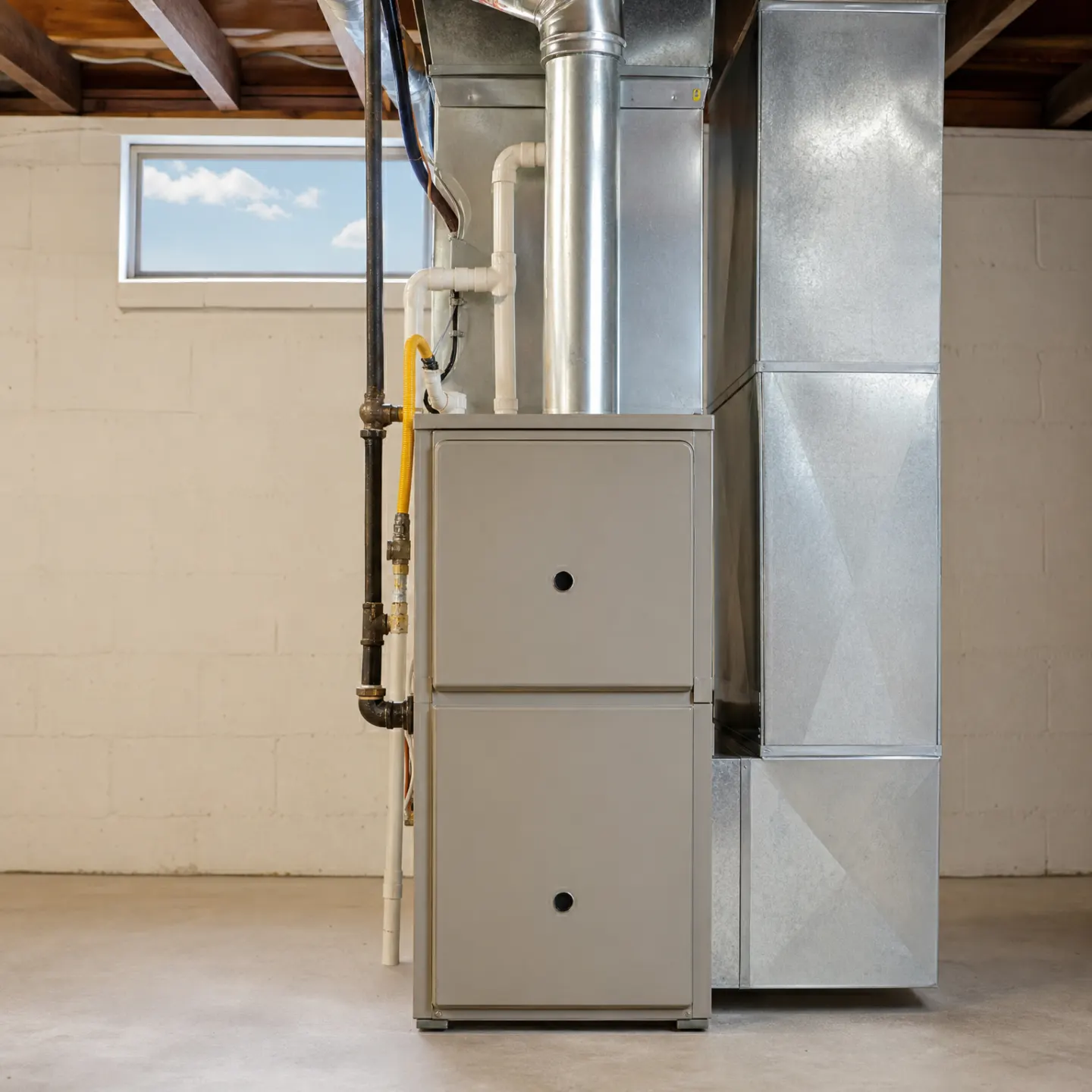
A gas furnace with attached ductwork, gas piping, and condensate lines installed in a concrete-block basement.

What a tune-up catches that your eyes can't

A furnace wears from the inside, where nothing is visible without taking it apart. The flame sensor picks up a coating that keeps it from telling the control board a flame is lit, so the furnace shuts itself off, and the only sign beforehand is a slightly weaker signal no one can see. The heat exchanger can develop a hairline crack that won't smoke or smell, but will let exhaust mix with the air the blower pushes through the house. A blower wheel collects dust on each blade until it's moving less air than it used to, and the furnace just runs longer to make up for it. Belts aren't the concern they used to be since most blower motors drive the wheel directly, but the bearings in that motor still wear, and a tune-up catches the grinding or the heat before the motor seizes. None of this shows up by looking at the furnace from across the room. It shows up when someone pulls the panel, checks the flame sensor, inspects the exchanger, and tests the motor under load.

A quick visit checks what you can see

A fast tune-up swaps the filter, glances at the flame, and calls it done. That tells you the furnace turns on. It does not tell you whether the heat exchanger has a crack starting, whether the flame sensor is reading clean, or whether the blower motor is drawing more current than it should under load.

A thorough one checks what you can't

A real tune-up pulls the panel, tests the flame sensor's signal strength, inspects the heat exchanger with a camera or mirror, and checks the blower motor's amp draw against what it should be. Those readings are the only way to catch a part that's failing before it actually fails.

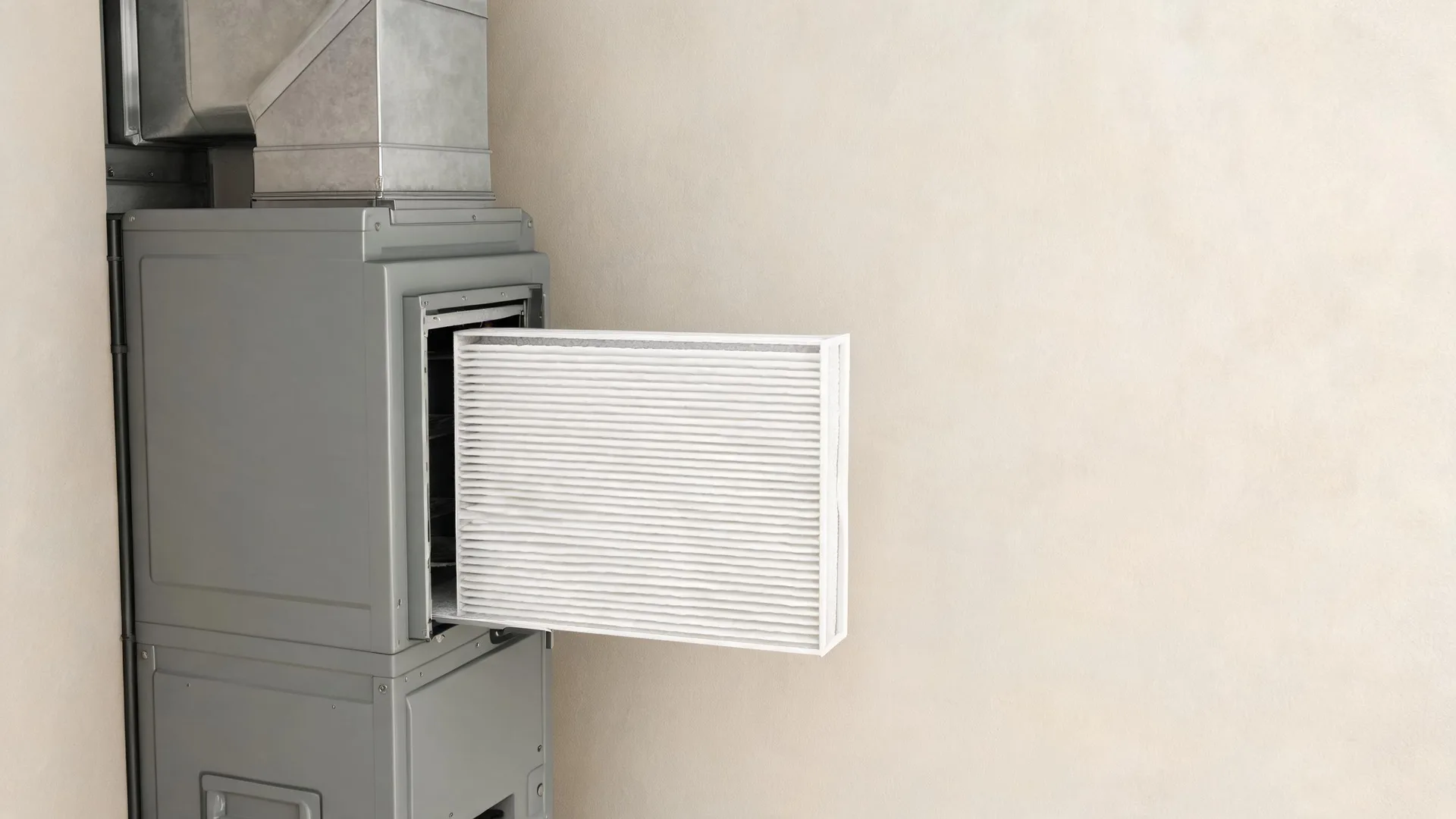
Between visits, the filter is the one thing worth checking yourself. Pull it out, hold it up to a light, and if you can't see through it, swap it. A clogged filter starves the furnace of airflow, and that makes the blower work harder and can let the heat exchanger run hotter than it should. Keep the area around the furnace clear too. Boxes or stored items too close to it block the air it needs to draw in and can be a fire risk near the burner. Listen for anything new: a rattle, a squeal, a burning smell in the first few minutes of a cycle. None of that is something to fix yourself, but it's the kind of thing worth mentioning before it turns into a no-heat call.

An eight month heating season puts more cycles on a furnace than a shorter one ever would. The igniter fires every time the thermostat calls for heat, and over October through May that adds up fast. The blower logs more hours too, which means more wear on the motor bearings over the same stretch. None of this means a furnace is about to quit. It means that if something is going to wear thin, it tends to show up here before it would somewhere with a shorter season. A tune-up is what catches that early, while there's still time to deal with it.