Eight months of work
A furnace in Grundy County runs from October through May. That is most of the year asking the igniter, the blower motor and the burners to cycle on and off, day after day.
Takes about a minute. No obligation.
A furnace in Grundy County runs from October through May. That is most of the year asking the igniter, the blower motor and the burners to cycle on and off, day after day.
A furnace running that many months a season wears down faster than one that only sees a few cold snaps. Parts that would hold up fine somewhere milder start slipping here before winter is even over.
Furnaces around Morris start running in October.
Get the tune-up done in September, before it has to work.

A quick visit and a thorough one can look the same from the kitchen. Both end with the furnace running and warm air coming out of the vents. The difference is whether anyone actually pulled the burners out or just glanced at them through the inspection port. A real tune-up means the technician shuts the gas off, takes the burner assembly apart, and cleans it, not just eyeballs the flame from across the room. It means a meter comes out to check the amp draw on the blower motor, because a motor can sound fine and still be drawing more current than it should. It means someone checks the flame sensor for the film that builds up on it rather than assuming it's fine because the furnace lit on the first try today. If the visit takes about as long as it takes to check a filter and listen to the furnace run for a minute, that's what happened. The parts that actually fail, the igniter, the sensor, the heat exchanger, don't show themselves without being checked by hand.
Eight months of heat means the wear this page talks about starts early most winters. A tune-up before October catches a worn igniter or a slipping part while it's still a quick fix, not a night with no heat.
Find a contractor
Dirt and wear don't stay still just because nobody's looking. Dust builds up on the blower wheel and the motor has to push harder to move the same air. The flame sensor collects a film from normal combustion and starts telling the control board no flame is there even when there is, so the furnace shuts itself off mid-cycle. A burner that's drifted out of adjustment burns dirty and leaves soot behind, and that soot insulates the heat exchanger so it has to work harder to pass heat through. None of this announces itself. The furnace still turns on, still blows warm air, right up until the day the sensor finally gives up or the motor seizes. A yearly check is what catches the drift before it becomes a failure, because by the time you can hear or smell that something's wrong, the part is usually already at the end of its life.
A technician pulls the burners and looks at the flame, not just whether it lights but what color it burns and whether it reaches evenly across each one. They check the flame sensor for the film that builds up on it, test the limit switch, and look over the heat exchanger for cracks you would never see without taking the furnace apart. None of that shows up on a thermostat reading.
A furnace can run for weeks with a burner out of adjustment or a connection going loose at the control board, and still heat the house well enough that nobody notices. The wear keeps going either way. Finding it during a tune-up means a part gets adjusted or replaced on a technician's schedule instead of failing on a cold morning.
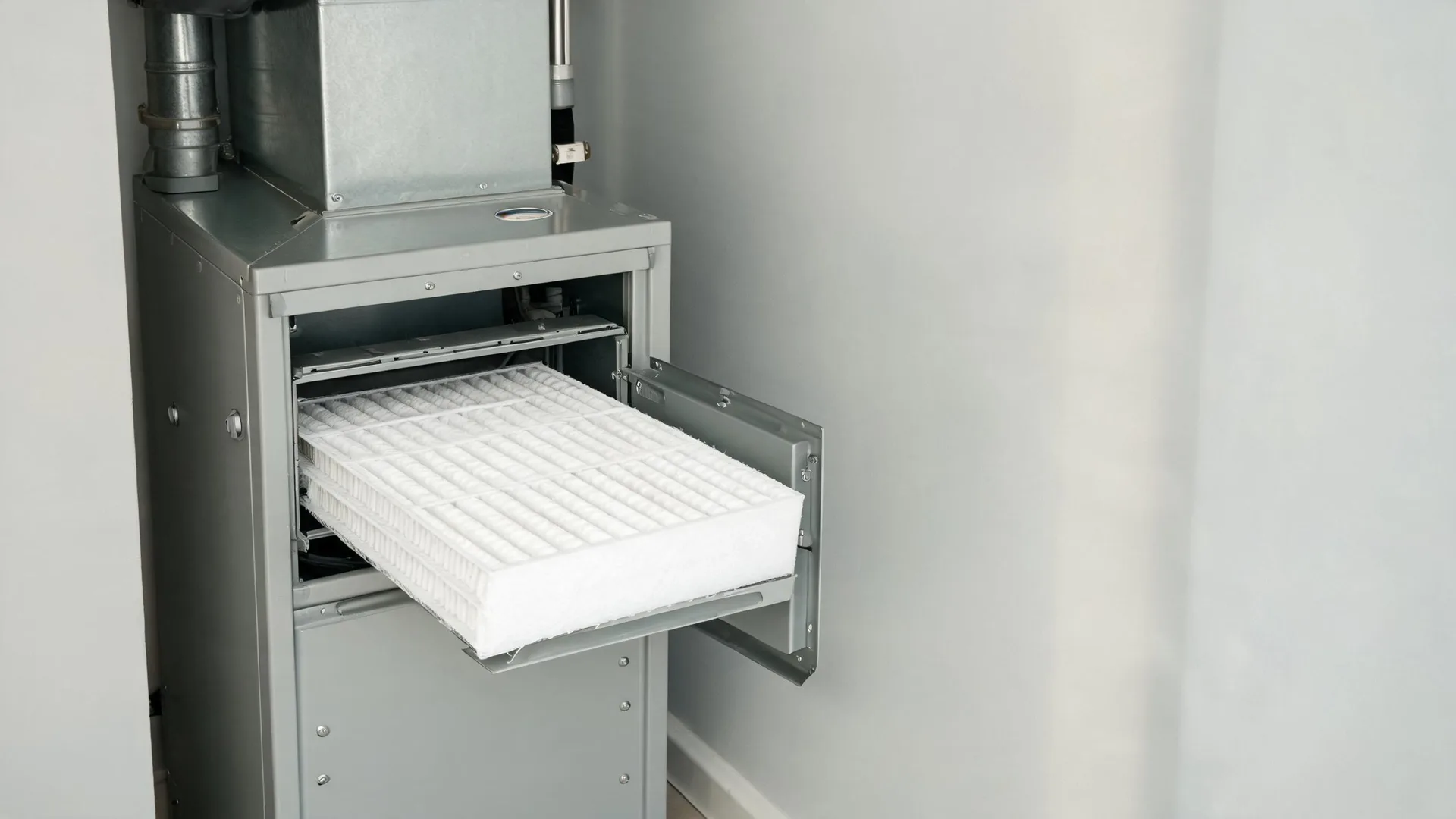
Between visits, the filter is the one thing worth checking yourself. A dirty filter chokes airflow, and the furnace runs longer to push the same heat through the house. Look at it in good light. If you can't see through it, swap it. Keep furniture and boxes away from the return vent and the supply vents too, since blocked airflow makes the blower work harder than it should. Walk past the furnace now and then and listen. A rattle, a squeal, or a burning smell that wasn't there before means something's changed, and it's worth a call rather than waiting for the next scheduled visit. Beyond that, leave the cabinet closed. The burners, the flame sensor, and the heat exchanger aren't something to check yourself, and opening things up without the training to put them back right causes more problems than it catches.
A tune-up starts with the gas valve and burner assembly, not the filter. A technician shuts the furnace down, pulls the burners, and cleans off whatever's built up since last year so the flame burns steady and even instead of lazy or uneven at one end. They check the ignition system next, whether that's a hot surface igniter or a pilot, since a weak igniter is one of the most common reasons a furnace won't start at all. The blower gets attention too: the wheel gets cleaned if it's caked with dust, and the motor bearings get checked for play before they turn into a grinding noise down the line. Someone also checks the venting, making sure exhaust gases have a clear path out of the house, because a blocked flue is a safety problem, not just a performance one. Last comes the amp draw on the motor and a check of the electrical connections, since a loose wire at the control board causes the same shutdowns people blame on bad sensors.