




Dark-sided single-story buildings with gray shingled roofs behind trimmed hedges, a mown lawn, and large leafy trees overhead.

Furnace Maintenance in Pontiac, IL

Tell us about the job

Takes about a minute. No obligation.

Step 1 of 3: Equipment

Furnaces in Livingston County run from October through May, about eight months of the year. That's most of the calendar spent cycling on and off, heating a house through nights that average 19°F in December, January and February. A furnace built for occasional use somewhere warmer would wear out fast under that schedule. Yours is doing real work most months of the year, and the igniter, the blower motor and the heat exchanger all take the wear that comes with it. Parts built to last years of normal use start showing problems sooner when the furnace runs this much.

A clean filter is the one thing a homeowner controls.

Everything after that, the igniter, the blower, the heat exchanger, is a job for someone who can open the cabinet safely.

Heat starts in October here. Have the furnace looked at in September.

Heat runs October through May
Winter nights average 19°F
Climate zone 5A
Pontiac runs older furnacesHalf the homes in Livingston County were built in 1961 or earlier.

Gas heats 68.4% of homes in Livingston County, more than electricity and propane combined. That means most furnaces here have a burner, a flue and a gas valve, not just a heating element. Maintenance on a gas furnace has to cover the burner assembly and the venting, checking that combustion gases are leaving the house the way they should, not just swapping a filter. A cracked heat exchanger or a blocked vent is a safety problem on a gas system in a way it never is on electric heat. If your home runs on propane, the same checks apply, since it's burned the same way a gas furnace burns gas.

Get ahead of eight months of runtime

Have the furnace checked before October, while it's easy to get on someone's schedule. Once the cold sets in, it runs every day until May, and a weak igniter or a cracked heat exchanger won't wait for a slow week to make itself known.

Find a contractor
A man in a cap, dark shirt and tan work pants carries a worn canvas tool bag up porch steps toward a dark blue front door, with a potted shrub beside the entry.
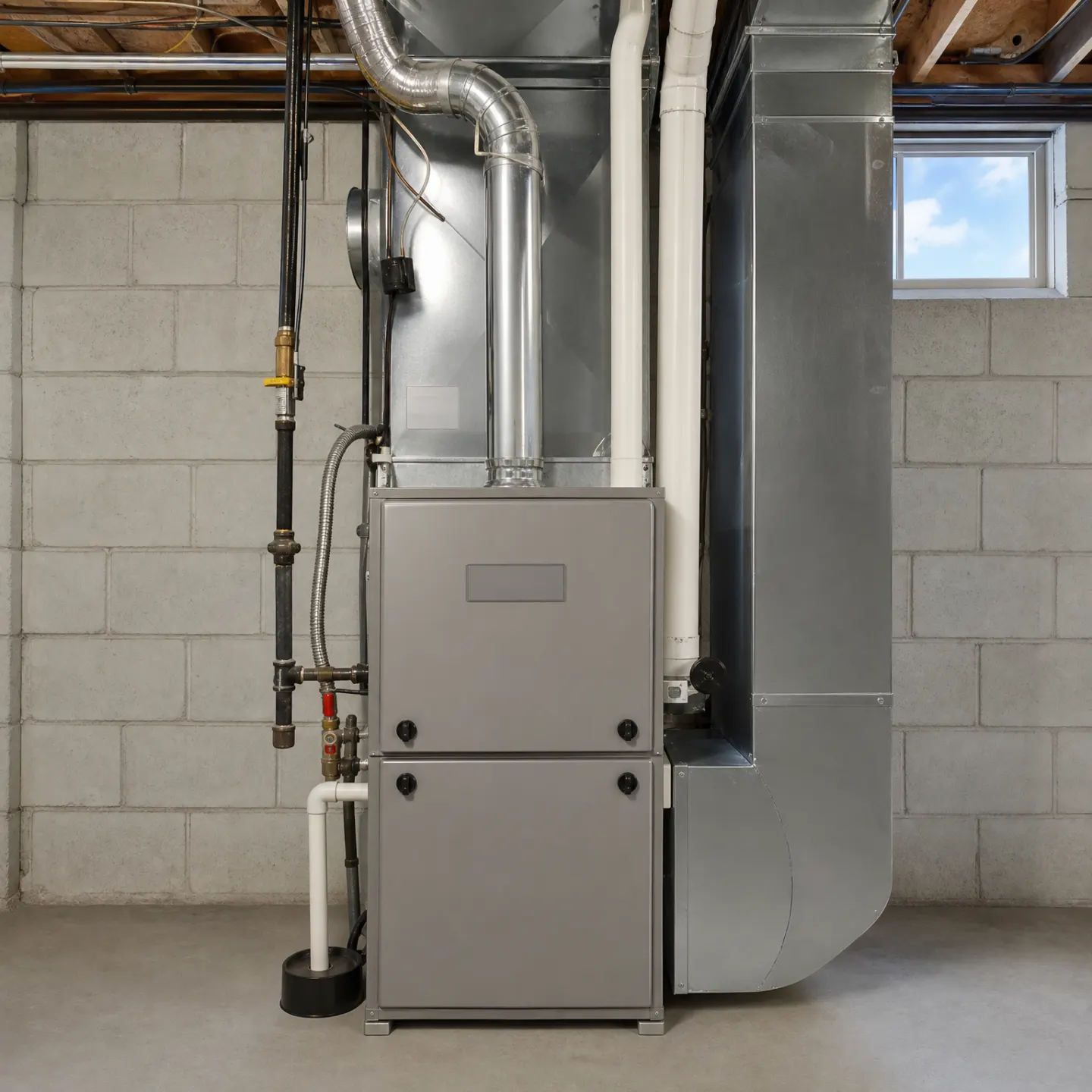
A gray high-efficiency gas furnace installed in an unfinished basement, surrounded by gas lines, a condensate drain, and sheet-metal ductwork.

What a working furnace is already hiding

A furnace never tells you about a problem until it fails to light. A tune-up catches the things that lead up to that. A flame sensor coated with a film of oxidation still works, but weaker than it should. Burner flames burning yellow at the tips instead of steady blue mean the gas and air mixing isn't right. A blower wheel caked with dust makes the motor work harder to push the same air. A heat exchanger with a hairline crack gets found by someone looking at it with a flashlight and a mirror, not by the furnace acting any different yet. None of these stop the furnace from running the day they're found. Left alone, each one is what takes it down partway through the season, usually on the coldest night, when it's working the hardest.

A dirty furnace doesn't fail right away

Dust on a blower wheel or a flame sensor coated with oxidation doesn't stop a furnace from running. It just makes the furnace work harder and burn less cleanly, month after month, with nothing to show for it until a part finally gives out.
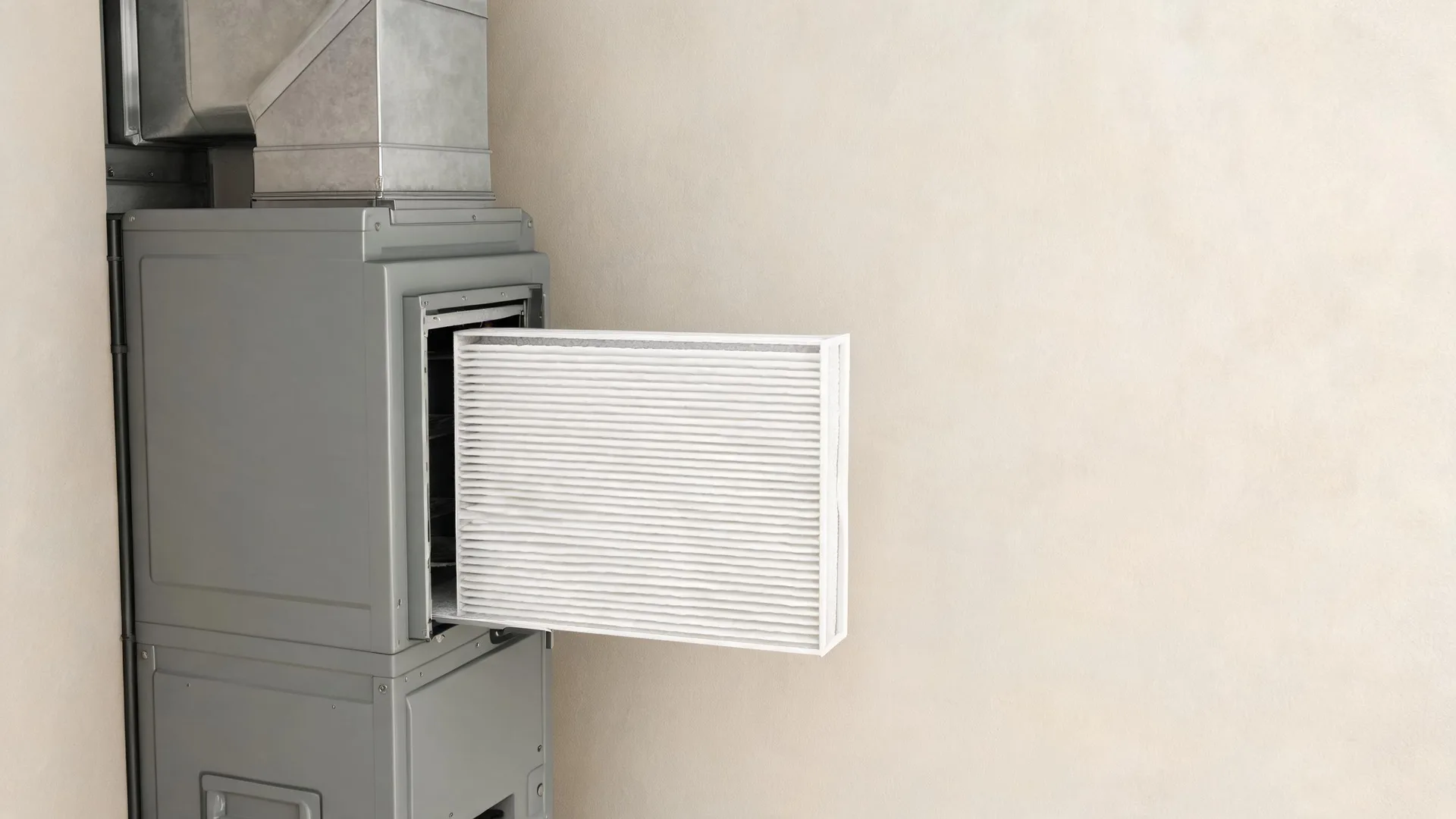
Skipped maintenance shows up as a mid-season breakdown

A furnace that never gets looked at is carrying whatever wear has built up unnoticed. When something finally gives, it's usually the part already weakest going in, and it tends to happen on the coldest night, when the furnace is running the hardest.

Ask what the technician actually does before booking, because the range is wide. A quick visit means a filter check and a glance at the flame through the sight glass. A thorough one means the burner assembly comes apart for cleaning, not just a look. The flame sensor gets pulled out and polished, since a film of oxidation builds up on it even when the furnace is running fine. The blower wheel gets inspected for caked-on dust, and the amp draw on the motor gets tested against what it should be. The heat exchanger gets checked with a camera or a mirror, because a crack in it won't show itself any other way. The gas pressure gets measured at the valve, not just assumed to be right. If the technician is in and out before any of that happens, most of the list didn't get done.

A tune-up is a specific list, not a general once-over. The technician checks the ignition system, either the hot surface igniter or the pilot assembly, since that's the part most likely to fail outright. Gas pressure at the manifold gets measured and adjusted if it's drifted off spec, because too much or too little changes how clean the burner runs. Electrical connections get checked for looseness, since a connection that's vibrated loose over a season of cycling can cause intermittent shutdowns that are hard to trace later. The condensate drain, on a furnace that has one, gets cleared, since a clogged drain trips a safety switch and stops the furnace cold. Safety controls, the limit switch and the flame rollout switch, get tested to confirm they'd actually shut the furnace down if they needed to. None of this is optional add-on work. It's what keeps a gas furnace running the way it's supposed to and shutting itself off when it isn't.