Eight months of runtime
Furnaces in Woodford County run from October through May. That's eight months asking the igniter, the blower motor and the heat exchanger to work, not just a few weeks here and there.
Takes about a minute. No obligation.
Furnaces in Woodford County run from October through May. That's eight months asking the igniter, the blower motor and the heat exchanger to work, not just a few weeks here and there.
A furnace running that many months a year shows wear sooner than one running three or four. A tune-up catches a cracked igniter or a dirty flame sensor before the cold months are over and the furnace has had to prove it.
Furnaces here start working October 1st.
Book the tune-up in September, before the cold hits and the furnace is already running.



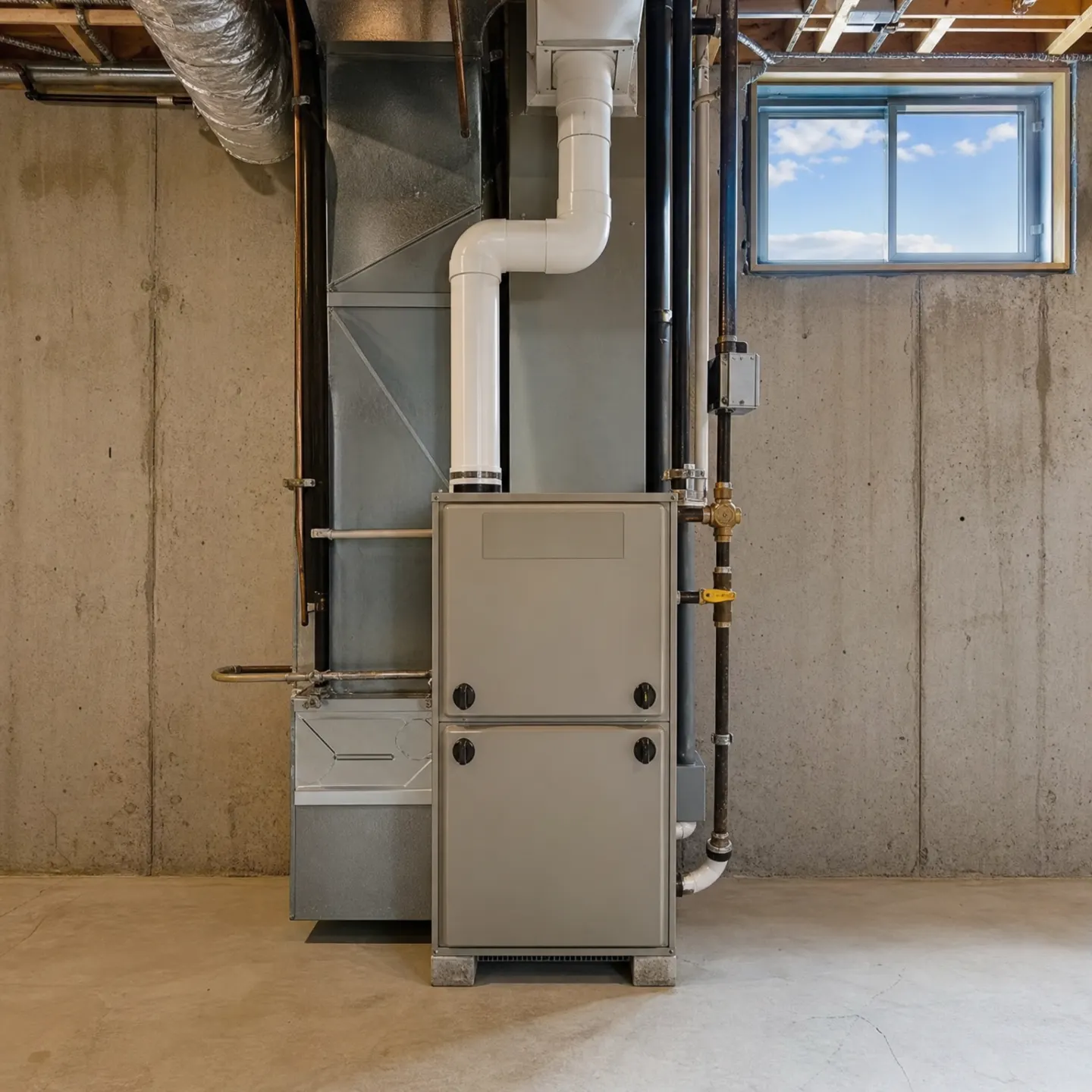
Most houses in Woodford County heat with gas, about two in three. A gas furnace has a burner, a flue, and a set of safety controls that an electric furnace doesn't have. Those parts need to be checked, not just the filter swapped out. A cracked heat exchanger or a venting problem won't show up by looking at the thermostat. It shows up when a tech opens the cabinet and tests it.
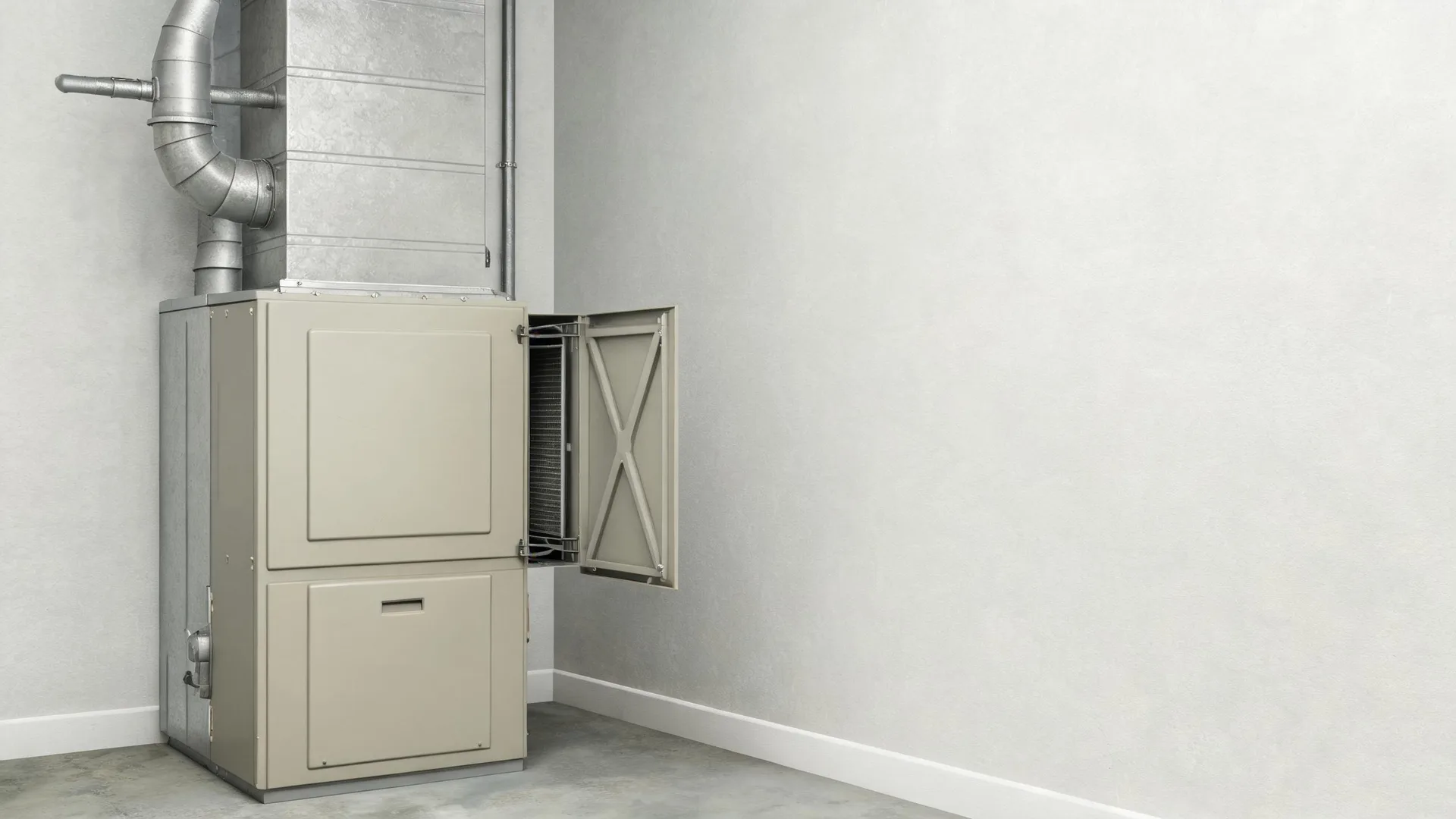
The furnace in your house is about to start another eight-month stretch. A tune-up now gets a tech into the cabinet to check the igniter, the flame sensor and the heat exchanger before any of them are asked to carry the winter.
Find a contractorIf your furnace came with a house built in 1972 or earlier, book the tune-up every year, not every few. A tech who sees the same furnace annually knows what it looked like last year, so a hairline crack in the heat exchanger or a connection going loose stands out faster. Skip a year or two and there's nothing to compare it to.
A quick visit checks the filter and the thermostat setting, then calls it done. A thorough one pulls the burner assembly, checks the flame sensor for corrosion, and tests the heat exchanger for cracks. It checks the flue for a solid connection and confirms the gas pressure is where it should be. Anyone can swap a filter. Finding a hairline crack before it becomes a safety problem takes a tech willing to get hands on the parts.
A tech can wipe down a blower wheel and call it serviced without ever checking whether the motor runs at the right speed or the capacitor is holding its charge. A thorough tune-up includes amp draw readings on the motor, a check of the igniter's resistance, and a combustion analysis that tells you the furnace is burning gas cleanly. If a tech is in and out in a few minutes, that work didn't happen.
A tune-up turns up things a homeowner has no way to check on their own. Gas pressure that's set slightly wrong won't change how the house feels, but it makes the burner run less efficiently and puts more wear on the heat exchanger over time. A flame sensor coated in a thin layer of corrosion can still let the furnace run, right up until the morning it doesn't. Amp draw on the blower motor tells a tech if the motor is straining, long before the motor gets loud enough for anyone to notice. None of this shows up by looking at the furnace or listening to it run. It shows up when a tech pulls the panel, hooks up a meter, and actually tests the parts instead of just looking at them.
A tune-up follows a set order because the furnace is a chain of parts, each one depending on the last. The technician starts with the thermostat call, then follows the signal to the control board, checking that it sends power where it should and holds the sequence of steps in the right order. From there it's the igniter, checked for resistance, then the flame sensor, cleaned or checked for a signal strong enough to keep the gas valve open. The burners get pulled and inspected for a steady, even flame rather than one that's yellow or flickering, which points to a combustion problem. The heat exchanger gets inspected for cracks, since a cracked one can let exhaust mix with the air moving through the house. Last comes the blower, checked for the right airflow and a motor running without strain. Skipping any one step doesn't just leave a gap. It means the next part gets tested without knowing if what feeds it is working right.