




Three lit brick homes on a tree-lined residential street photographed at dusk.

Heat Pump Repair in Peoria, IL

Tell us about the job

Takes about a minute. No obligation.

Step 1 of 3: Equipment

Peoria County saw 280 severe weather events between 2015 and 2024. Damaging wind came through 147 times, hail fell 106 times, and 11 tornadoes touched down in that stretch. A heat pump's outdoor unit sits outside through all of it, with coil fins and a fan exposed to whatever blows through. Hail can bend the fins and still leave the unit running, just running worse. Wind-driven debris can nick the coil or jam the fan without stopping it outright. If your unit took a hit and still kicks on, that's not proof it came through clean.

8 months
October through May, your system heats
4 months
June through September, it cools
20°F
the average winter night it heats against
84°F
the average summer afternoon it cools against
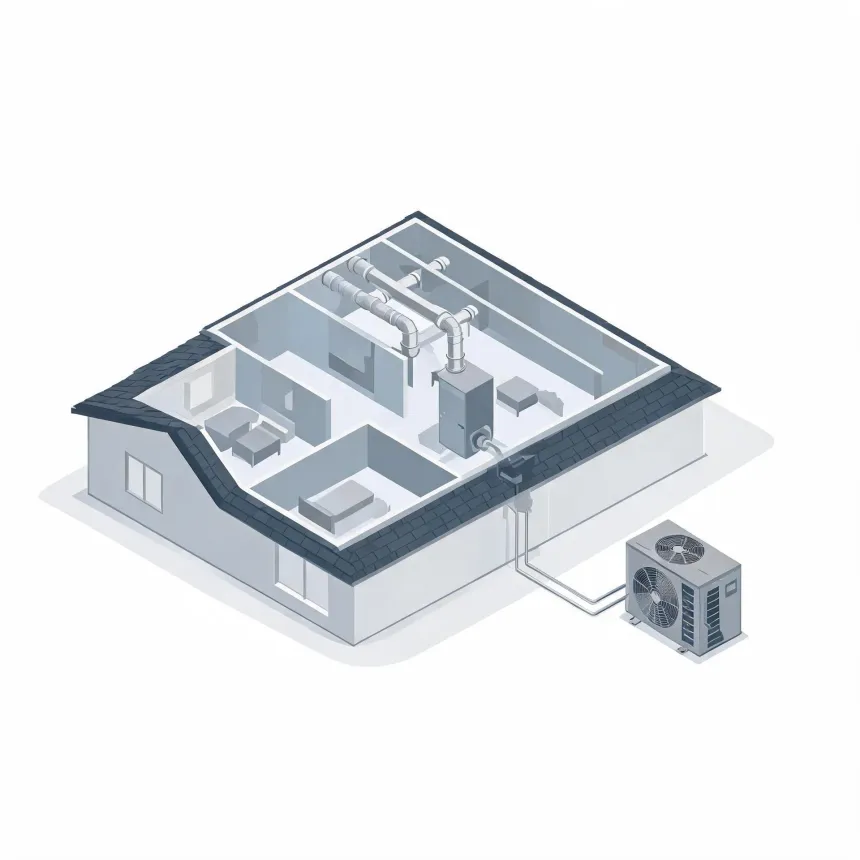
Isometric cutaway illustration of a single-story house showing interior rooms with ductwork, a furnace or air handler, and refrigerant lines running outside to a condenser unit on a pad.
Your system heats October through May and cools June through September.

NOAA nClimDiv, 1991–2020 normals

Half the homes in Peoria County were built in 1966 or earlier.

A heat pump installed when the house was new is long past the point where a repair bill makes sense.

Power here already costs more. A heat pump running poorly costs you every month it waits.

Power here costs 18.04 cents per kilowatt-hour
Climate zone 5A
Cooling runs June through September
Built for Weather Like This147 damaging wind events and 106 hail events hit Peoria County between 2015 and 2024.

Heat here runs from October through May, eight months straight, and September is when a weak part usually gets found out. A heat pump that struggled at the end of last winter doesn't fix itself sitting idle through the summer. It sits there until the first cold morning asks it to carry the full load again, and that's when a strained compressor or a low-charge system quits instead of catching up. Overnight lows here average 20°F across December, January and February, and a unit that was already working too hard in October has no slack left by then. Getting it looked at before the first cold snap costs you a visit. Waiting for it to fail costs you heat on the morning you need it most.

If It Took a Hit, Get It Looked At

A unit that took a hard hit in the last storm can still run, just not the way it used to. If yours has been through wind or hail and something feels off, cooling slower, cycling more, get the outdoor unit checked before it gives out on you.

Find a contractor
A man in a dark long-sleeve shirt and brown work pants, seen from behind, carries a worn canvas tool bag as he steps up porch stairs toward a navy blue front door of a light gray clapboard house, with a potted shrub beside the entry.
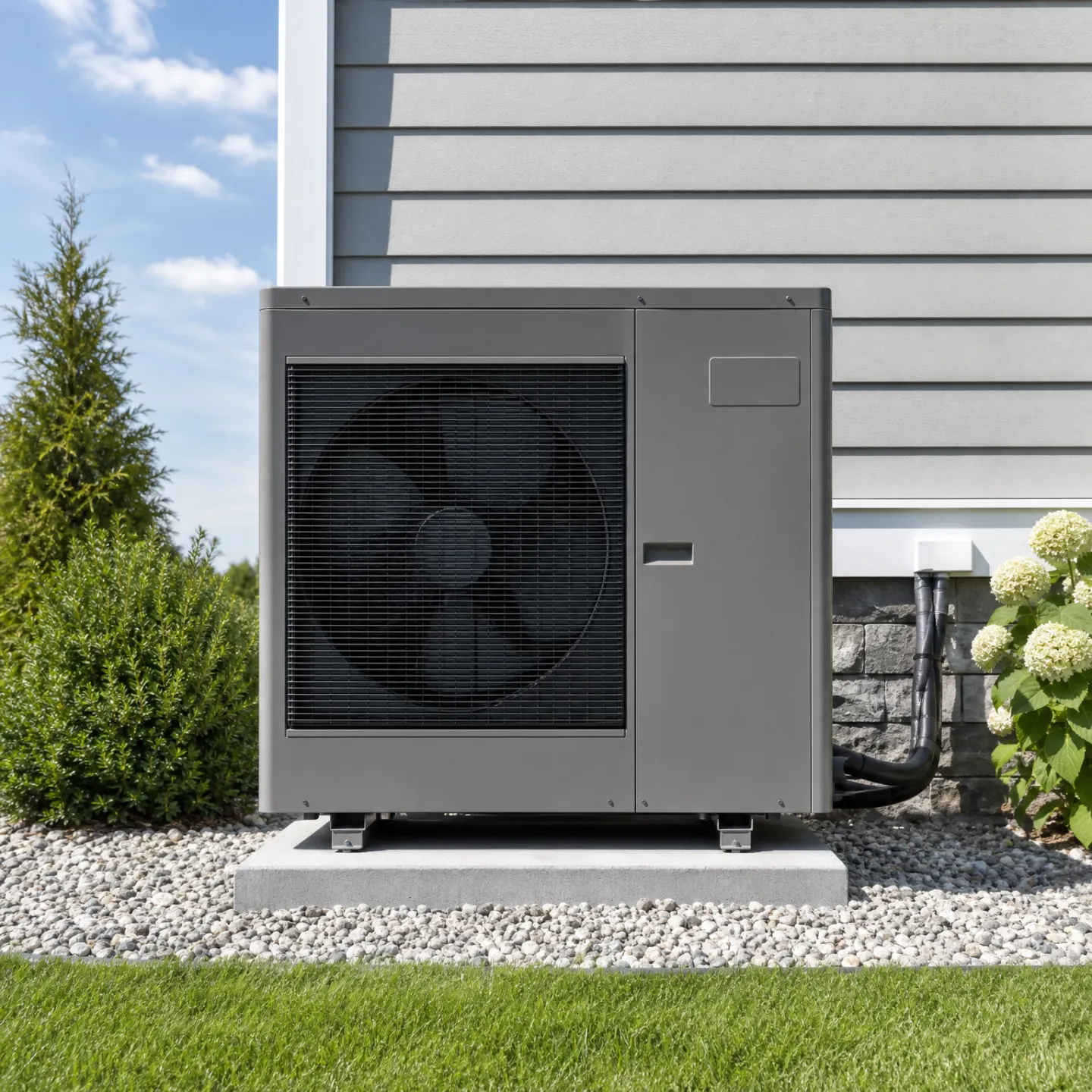
A gray air-source heat pump mounted on a concrete pad next to a house with gray vinyl siding, surrounded by gravel and flanked by green shrubs and white hydrangea flowers.

A Machine That Never Gets a Season Off

A heat pump here doesn't get a season off. It switches between cooling and heating and runs through both, and the outdoor unit sits outside the whole time, through whatever storm comes across it. A bent fin or a nicked coil from a past hit doesn't always show up right away. It can run for weeks before the unit starts cycling more or cooling slower than it used to. Hours add up fast on a machine that never really stops, and that's more wear than most parts of the country put on one. If this unit has been acting up, the cause is more likely wear catching up to it than a one-time glitch. Worth having it checked rather than guessed at.

Running Doesn't Mean Running Right

A heat pump with a failing part rarely stops cold. A compressor low on charge keeps cycling, just longer each time and with less heat or cool coming out the vents. A motor with worn bearings keeps turning until the day it seizes. The machine will keep answering the thermostat right up until the part underneath it gives out, and every hour it runs in that state is an hour that part gets closer to failing completely.
Why Waiting Costs More Than a Visit

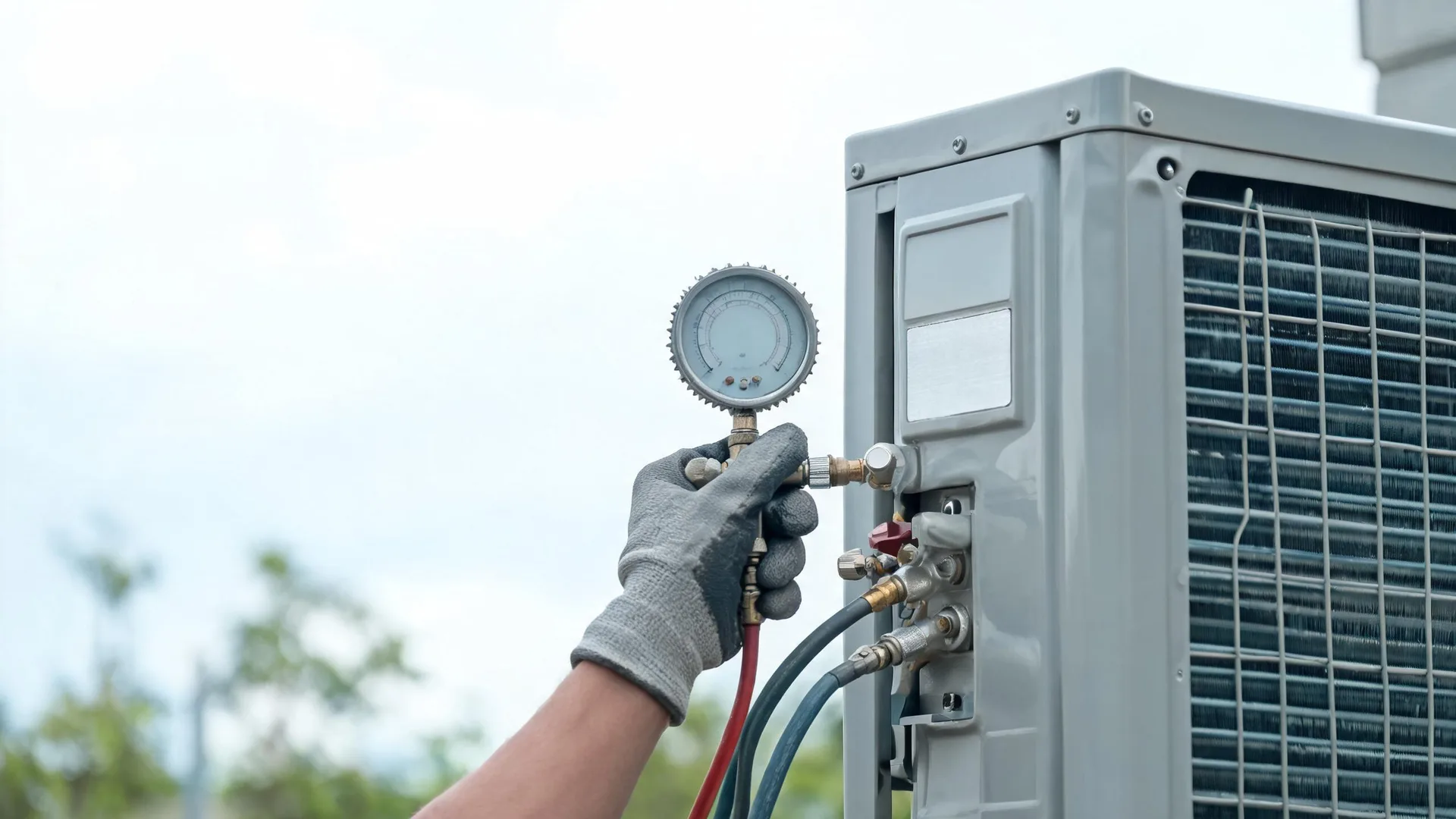
A refrigerant leak left alone lets the compressor run low on lubricant, since the oil travels through the system mixed in with the refrigerant. A failing capacitor makes the compressor or fan motor pull harder on startup, which wears the motor windings faster. Small problems like these turn into compressor replacement instead of a part swap. Catching it while the symptom is minor is almost always the cheaper repair and the shorter job.

A heat pump fails for a handful of reasons, and most of them show up in how it runs before they show up as a full stop. A dirty outdoor coil makes the system work harder to move heat, and that extra strain shortens the life of the compressor. A failing run capacitor is one of the most common culprits, since it struggles to start the compressor or fan motor, and a hard start wears parts that were fine the week before. Refrigerant leaks are another regular cause, usually at a fitting or a worn spot in the coil, and the system keeps running low on charge rather than quitting outright. Electrical connections loosen over time from the unit vibrating through its normal cycles, and a loose connection can cause intermittent operation that looks like a dozen other problems before anyone finds the real one. Reversing valves, which let the unit switch between heating and cooling, can stick or fail after enough cycles, and when that happens the unit blows the wrong temperature air entirely.

Power rates here are already high, and a heat pump losing its charge or straining to start doesn't use less power, it uses more. A compressor working against a refrigerant leak runs longer to hit the same temperature, and that extra runtime shows up on the bill before it shows up as a breakdown. The same goes for a dirty coil or a weak capacitor forcing harder starts. None of that gets cheaper by putting off the call. A repair now stops the bleeding. Waiting just means paying more each month for a machine that's already failing.