A quiet residential street at dusk lined with illuminated two-story brick houses and mature trees.

Furnace Repair in Peoria, IL

Tell us about the job

Takes about a minute. No obligation.

Step 1 of 3: Equipment

A furnace that's starting to fail usually tells you before it quits outright. Short cycling is one of the first signs. It fires up, runs a couple minutes, shuts off, then starts again before the house ever gets warm. A burner that won't light on the first try, or lights and then goes out, points to a dirty flame sensor or a failing igniter. Listen for the sounds it makes going on and off. A bang or boom at startup usually means gas is building up before it catches, and that's worth having looked at soon. Air coming out lukewarm instead of hot often traces back to a cracked heat exchanger or a blower that's running without pulling heat off the burner properly. If the furnace runs constantly and the house still won't hold its temperature, something in the system isn't keeping up anymore. That's wear, not a thermostat problem.

8 months
October through May, your furnace is on duty
20°F
the average winter night it heats against
68%
of homes here heat with gas, so most furnaces here burn gas
12 winter storms
in ten years, the nights a failure hurts most
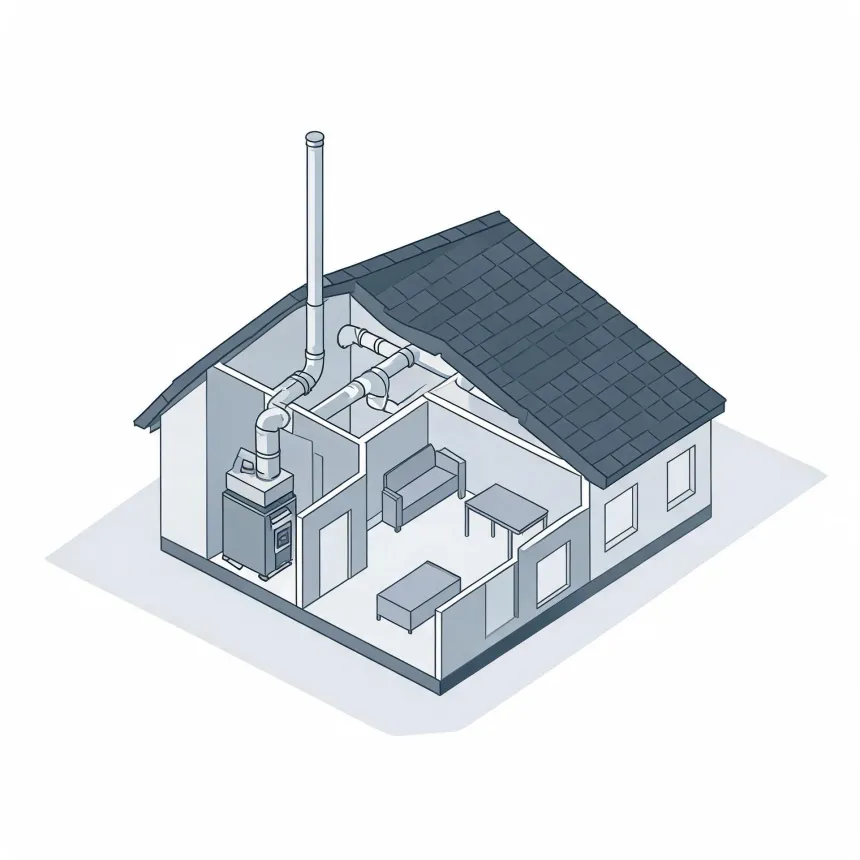
Isometric line illustration of a cutaway single-story house with a shingled roof, showing an interior furnace connected to ductwork and a tall vertical flue pipe, plus simple furniture in the adjacent room.
Your furnace works hardest from November through March.

NOAA nClimDiv, 1991–2020 normals

A clogged filter can choke a furnace enough to look like it's failing.

Check the filter before you pay someone to find the same thing.

Furnaces here start running in October, so that's when a weak part finally gets found out. A cracked heat exchanger or a tired igniter can sit fine all summer and fail the first cold night it's asked to work. Homes in Peoria County run heat for about eight months, October through May, so a part that struggles early has a long stretch ahead of it. If yours is acting up now, in these first weeks, that's not bad luck. That's the part that was already going, finally under load.

Peoria winters run your furnace hard. Find out what's actually wrong.

Eight months of heat a year, with overnight lows averaging 20°F in December and January, means your furnace doesn't get much of a break here. That kind of use wears parts down sooner than it would somewhere milder. Get the actual cause found before you pay to fix the wrong thing.

Find a contractor
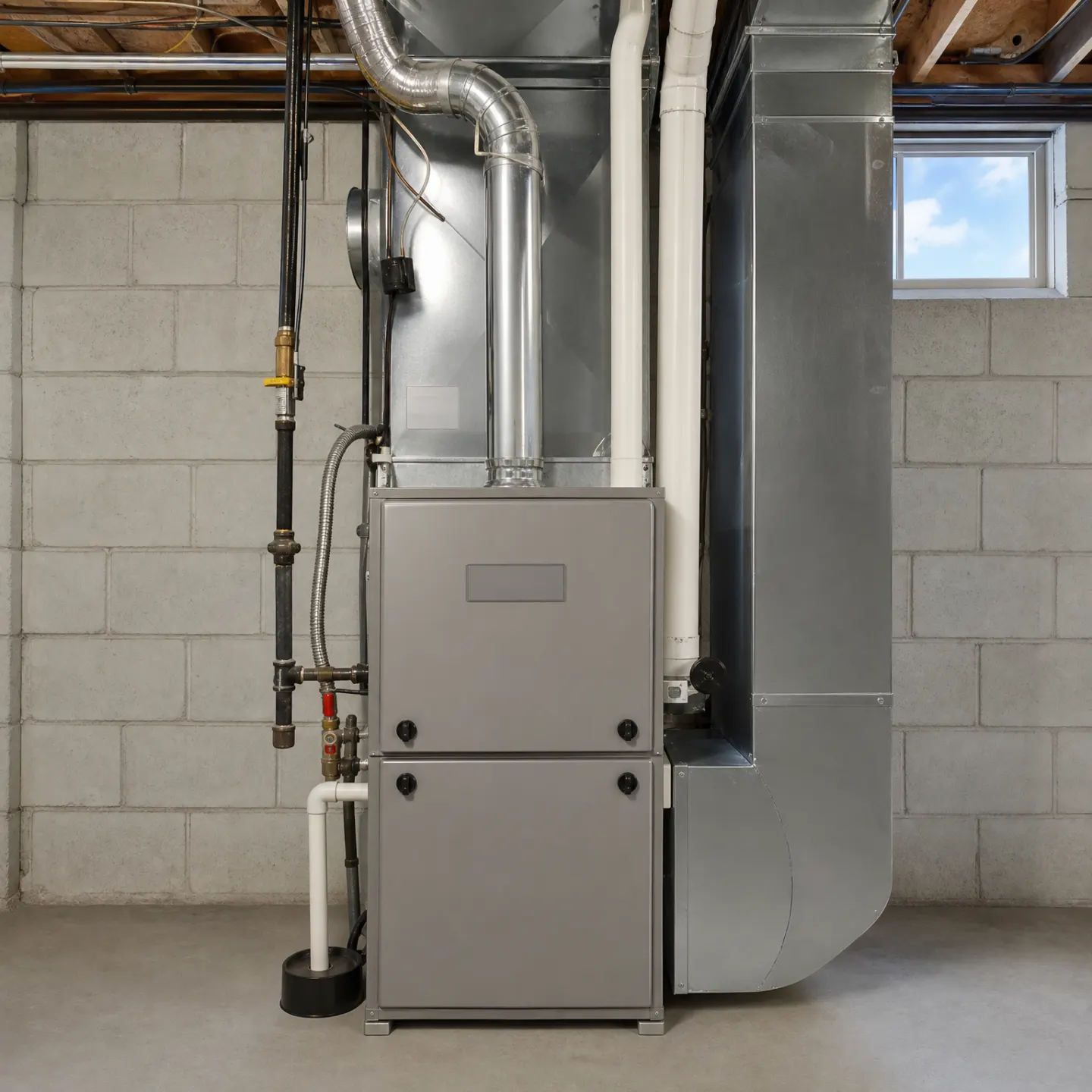
A gray high-efficiency gas furnace installed in an unfinished basement, surrounded by gas lines, a condensate drain, and sheet-metal ductwork.

The house is old. Find out how old the furnace is

Half the homes in Peoria County were built in 1966 or earlier. A furnace doesn't last that long, so whatever is heating the place now isn't the original. It has its own age, separate from the house, and that's the number that matters here. If it came in with the house and nobody's replaced it since, it may be close to done. Worth finding out how old it actually is before putting money into a repair.

Most failures start with ignition

The igniter and the flame sensor do the most work every cycle and wear out the fastest. An igniter glows hot every time the furnace starts and gets brittle over years of that heating and cooling. A flame sensor just needs a film of residue on it to stop reading a flame that's actually there, and the furnace shuts the gas back off as if it never lit.

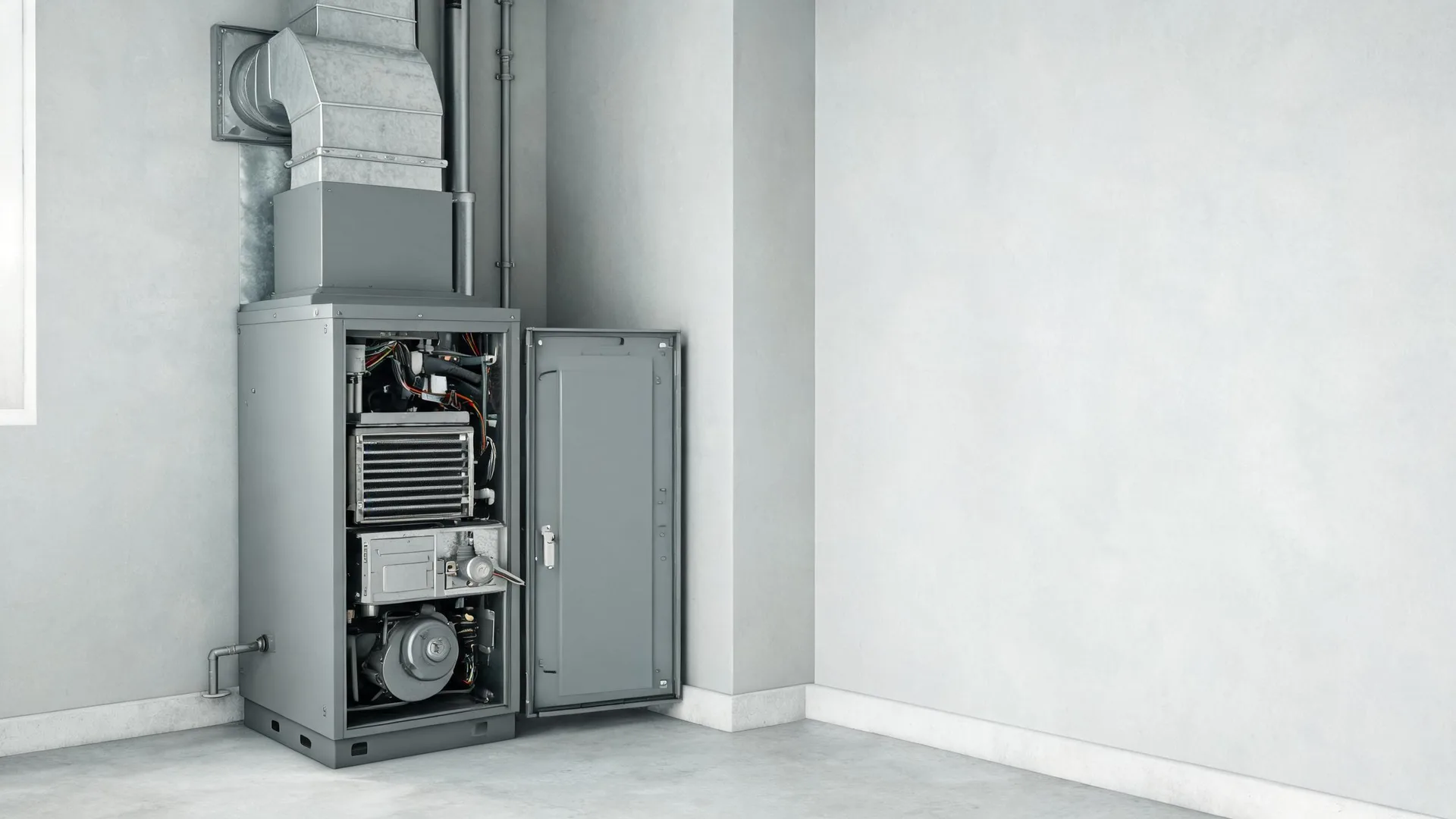
The blower motor carries the load

Bearings in the blower motor wear from running, not from age sitting idle. A motor straining to turn makes itself known first as noise, then as a furnace that runs long and still can't push enough air. Once a bearing starts going, it doesn't settle down. It gets replaced or it seizes.

An unfinished basement featuring concrete block walls, exposed floor joists, a bare concrete floor, and a forced-air furnace with a large metal exhaust duct in the corner.

A new furnace would cut about $140 a year off heating for a typical Peoria County home.

  • A new high-efficiency furnace$550 a year
  • An older furnace$690 a year

Estimates for a typical Peoria County home, compared with an older unit built to the previous federal minimum, from EIA household energy data, Illinois fuel prices and NOAA climate normals. Your home will differ.

Repair makes sense when one part has failed and the heat exchanger is sound.

Replacement makes sense when the heat exchanger is cracked or the furnace keeps needing parts.

A diagnostic visit starts before any panel comes off. A tech wants to know what the furnace is doing, so expect questions about when it started, what sounds it makes, whether it's one room or the whole house. Then the cover comes off and the burners get watched through a full cycle, since a flame that's lazy or yellow instead of steady blue tells its own story. Electrical connections get checked for anything loose or corroded, because a connection that's barely holding can cause the same symptoms as a dying part. The flame sensor often comes out for a quick clean on the spot, just to rule out the simplest cause first. Static pressure and temperature rise get measured too, since a furnace can look fine and still be struggling to move enough air. None of this takes guessing. It takes watching the thing run and ruling things out in order until what's actually wrong stops hiding.