



A quiet residential street at dusk lined with illuminated two-story brick houses and mature trees.

Furnace Maintenance in Sterling, IL

Tell us about the job

Takes about a minute. No obligation.

Step 1 of 3: Equipment

Eight months of heat a year is a long stretch for one machine to carry. October through May, the burner and blower in your furnace are doing real work, not just kicking on for a cold snap here and there. That kind of runtime adds up on the igniter, the blower motor, the parts that cycle on and off every time the thermostat calls for heat. A furnace in a place with a short, mild winter gets to rest most of the year. Yours doesn't get that break.

Furnaces in Whiteside County start their eight-month run in October.

Book the tune-up in September, before the burner has to work.

Most of Sterling heats with gas, so the burner and venting are what matter here

72.8% of homes heat with gas
Climate zone 5A
Heat runs October through May

Half the homes in Whiteside County were built in 1961 or earlier. A furnace that old has likely been swapped out at least once, but the house around it hasn't changed, the same ductwork, the same gas line, the same venting it was built with. A yearly check is how a contractor catches a cracked heat exchanger or a venting problem before it becomes dangerous, not just before it gets expensive. None of that shows up by looking at the thermostat. It shows up when someone opens the cabinet and checks.

Get ahead of the parts that wear out first

A tune-up before October catches the wear eight months of heat puts on the igniter and blower motor, while it's still a quick fix instead of a breakdown in the middle of winter.

Find a contractor
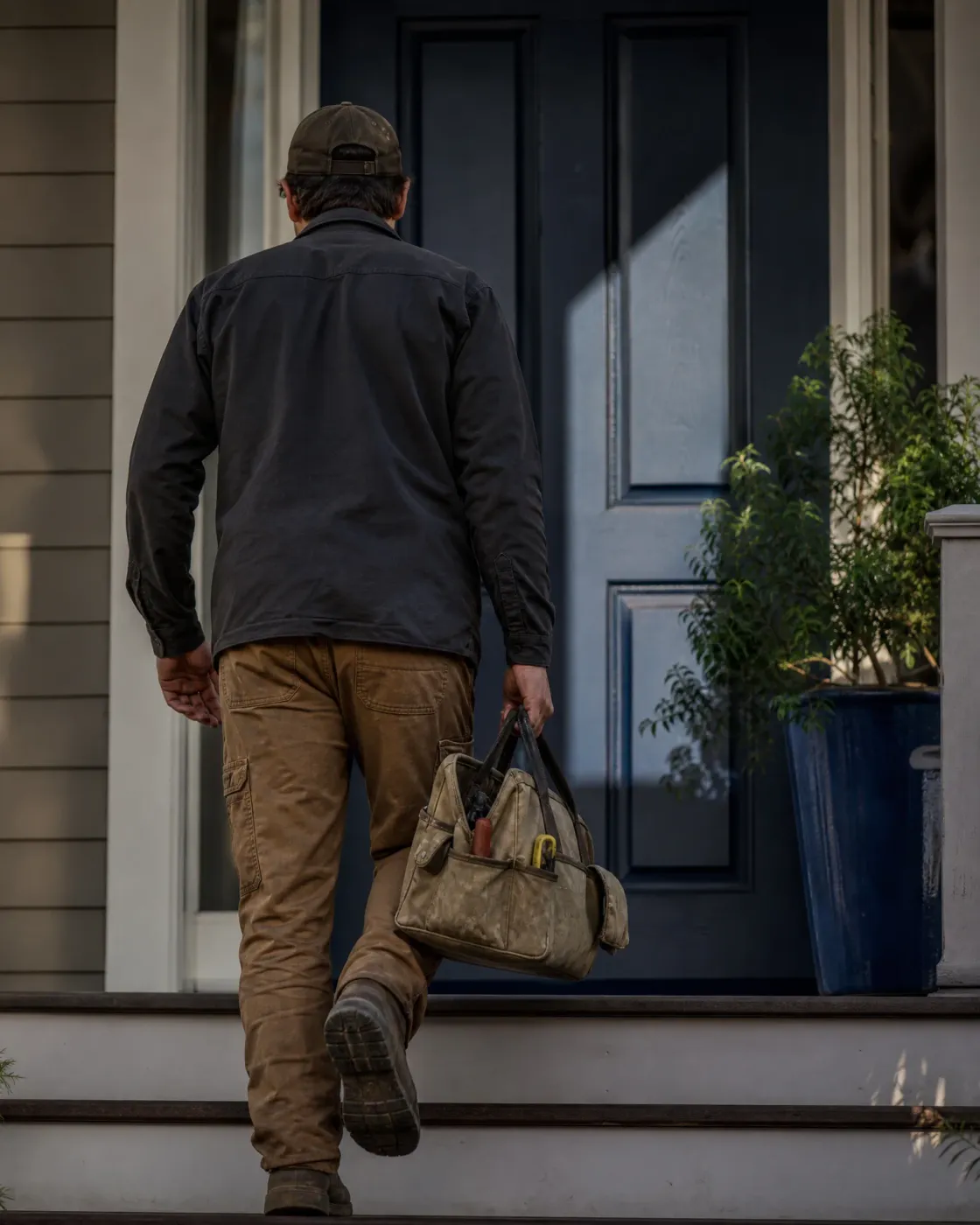
A man in a cap, dark jacket and tan work pants walks up porch steps toward a dark blue paneled door, carrying a canvas tool bag with tools in its outer pockets, beside a potted shrub.
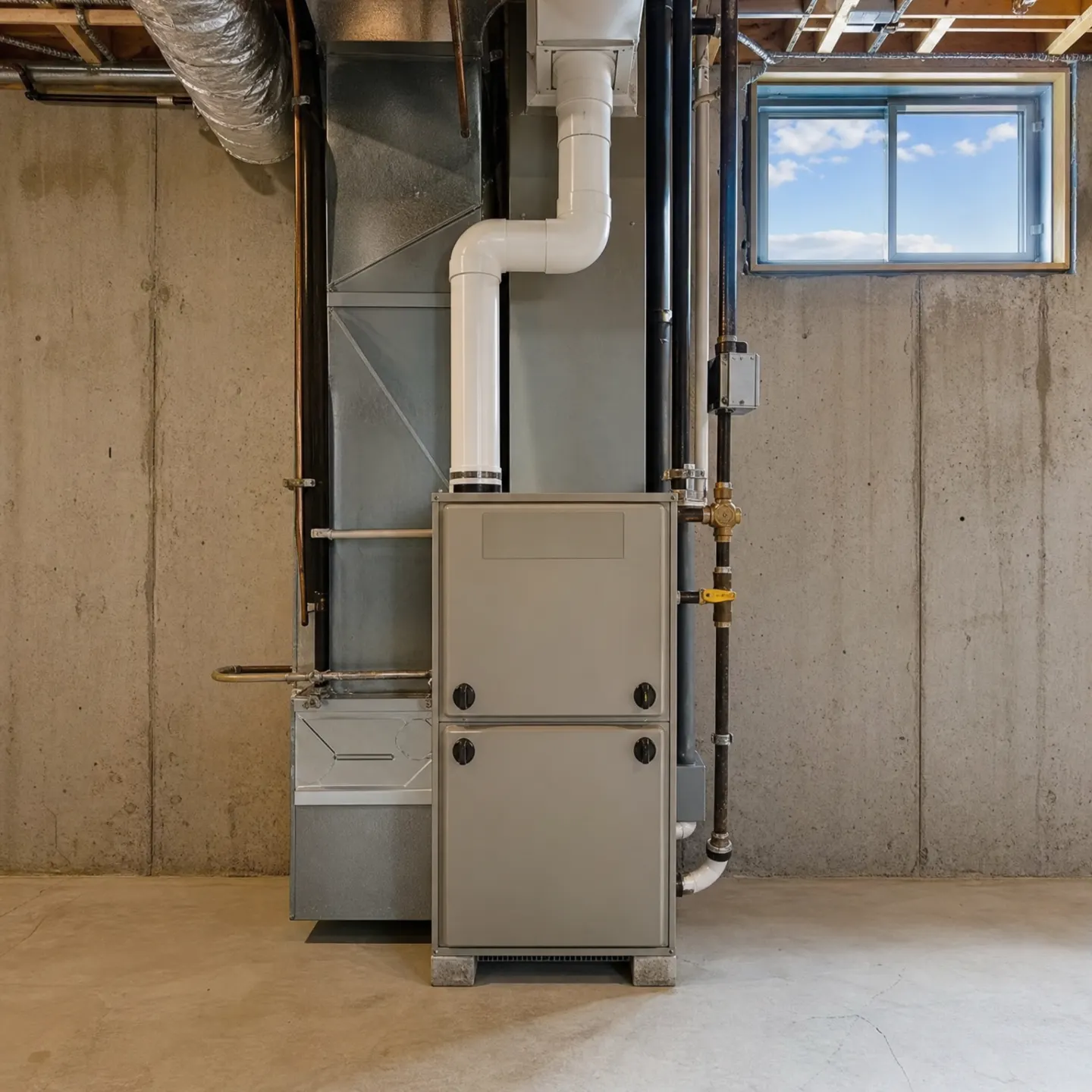
A gray gas furnace with attached ductwork and piping installed in an unfinished concrete basement.

A yearly look, so nothing gets found the hard way

A yearly check does the same job every year, no matter how old the furnace is: open the cabinet, look at what the winter did to it. On a furnace that replaced the original, or one that's been there since the house was built, that look matters more, because the ductwork and gas line around it are whatever they were built as. Catching a cracked heat exchanger or a tired igniter on a service call beats finding it on a cold morning.

The filter is doing more than it looks like

A dirty filter chokes off airflow across the heat exchanger. The blower has to push harder to move the same amount of air, and the burner can run hotter than it should. Left long enough, that heat exchanger can crack from the stress. Changing the filter on a regular schedule is the cheapest thing that protects the most expensive part of the furnace.
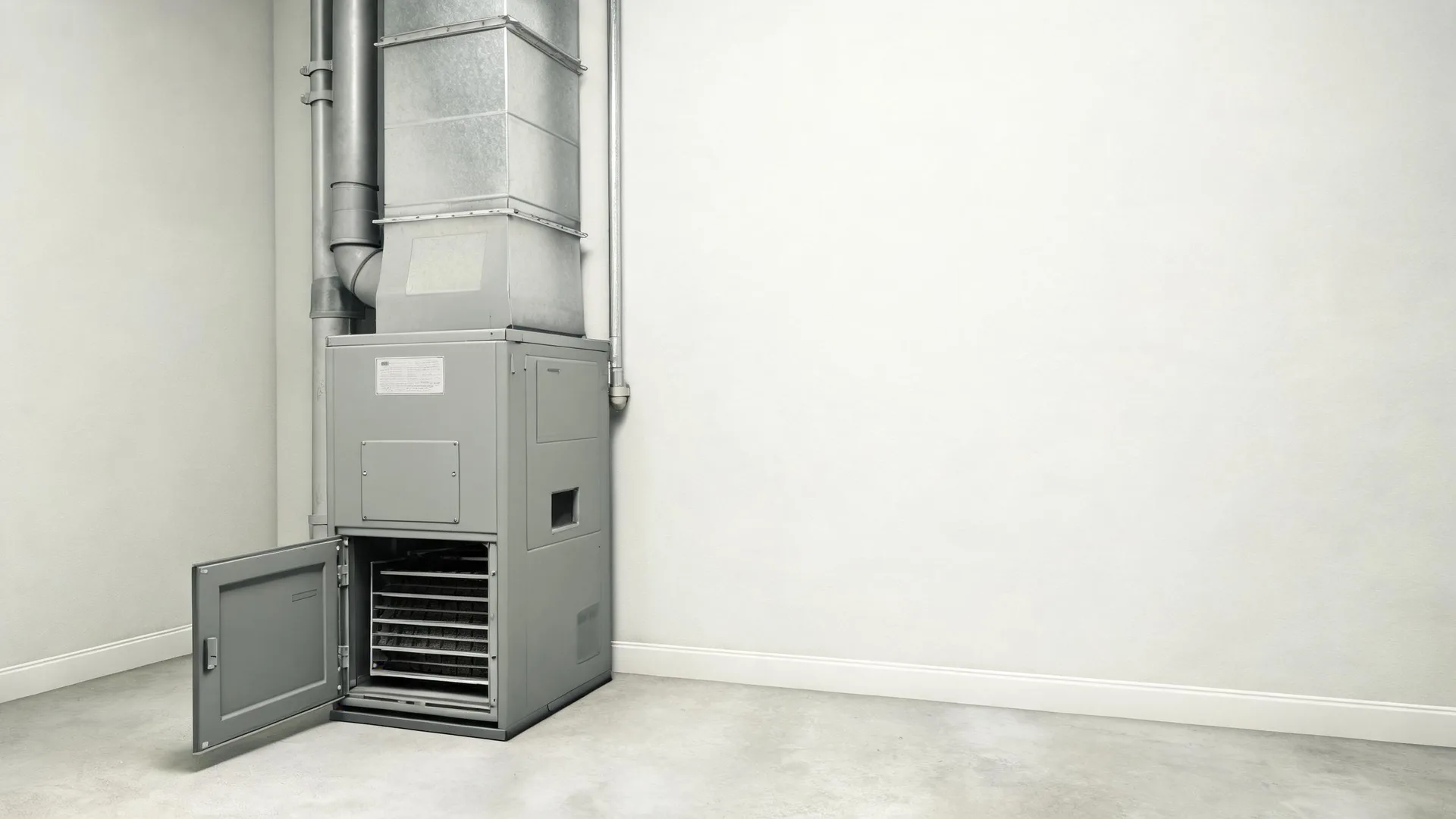
A blocked drain shuts the whole thing down

If this is a high-efficiency furnace, it produces condensate that has to drain out through a line and a trap. That line can clog with sludge or algae over time. Once it backs up, the furnace locks out on purpose rather than risk flooding the cabinet. A technician clearing that line during a tune-up is what keeps a clogged drain from turning into a no-heat call.

A furnace usually tells you before it quits. The burner flame should burn blue and steady. If it's flickering yellow or orange, the burner isn't getting clean combustion and that's worth a look. Listen for the start too. A bang or boom when the burner lights means gas is building up before it catches, instead of lighting right away. Short cycling, where the furnace kicks on and off every few minutes instead of running a full heat cycle, usually points to a clogged filter, a cracked heat exchanger, or a flame sensor that's not reading the flame right. And if some rooms run cold while others are fine, or the air coming out of the vents feels weak, that's the blower or the ductwork telling you something before the whole system fails.

A proper tune-up starts with the burner, not the filter. A technician pulls the burner assembly and cleans off the rust and scale that build up over a year of cycling, because a dirty burner doesn't light clean and doesn't heat evenly. The flame sensor gets cleaned too. That's a small rod that tells the control board a flame is actually present, and once it's coated with residue it can misread and shut the burner down mid-cycle. The igniter gets checked for cracks, since it fails a little at a time before it fails all at once. Then there's the heat exchanger, which gets inspected for cracks or corrosion because that's the part separating the combustion gases from the air moving through your house. Belts and bearings get checked on a blower that has them, and the motor gets lubricated if it takes oil. Last comes the venting, making sure the flue is clear and drafting the way it should. None of these parts fail on the same schedule, which is why skipping a year means something different depending on what was already starting to wear.