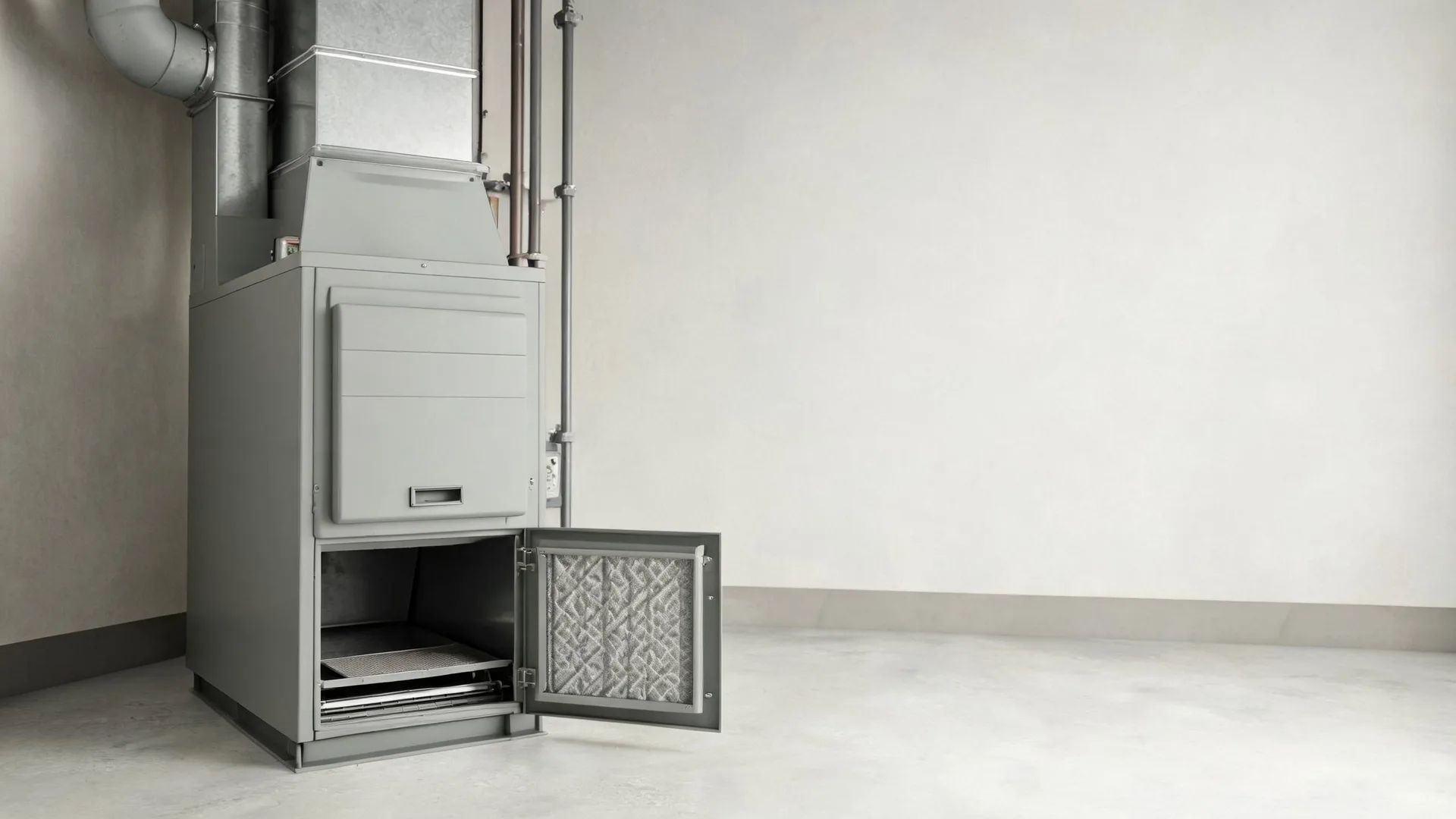
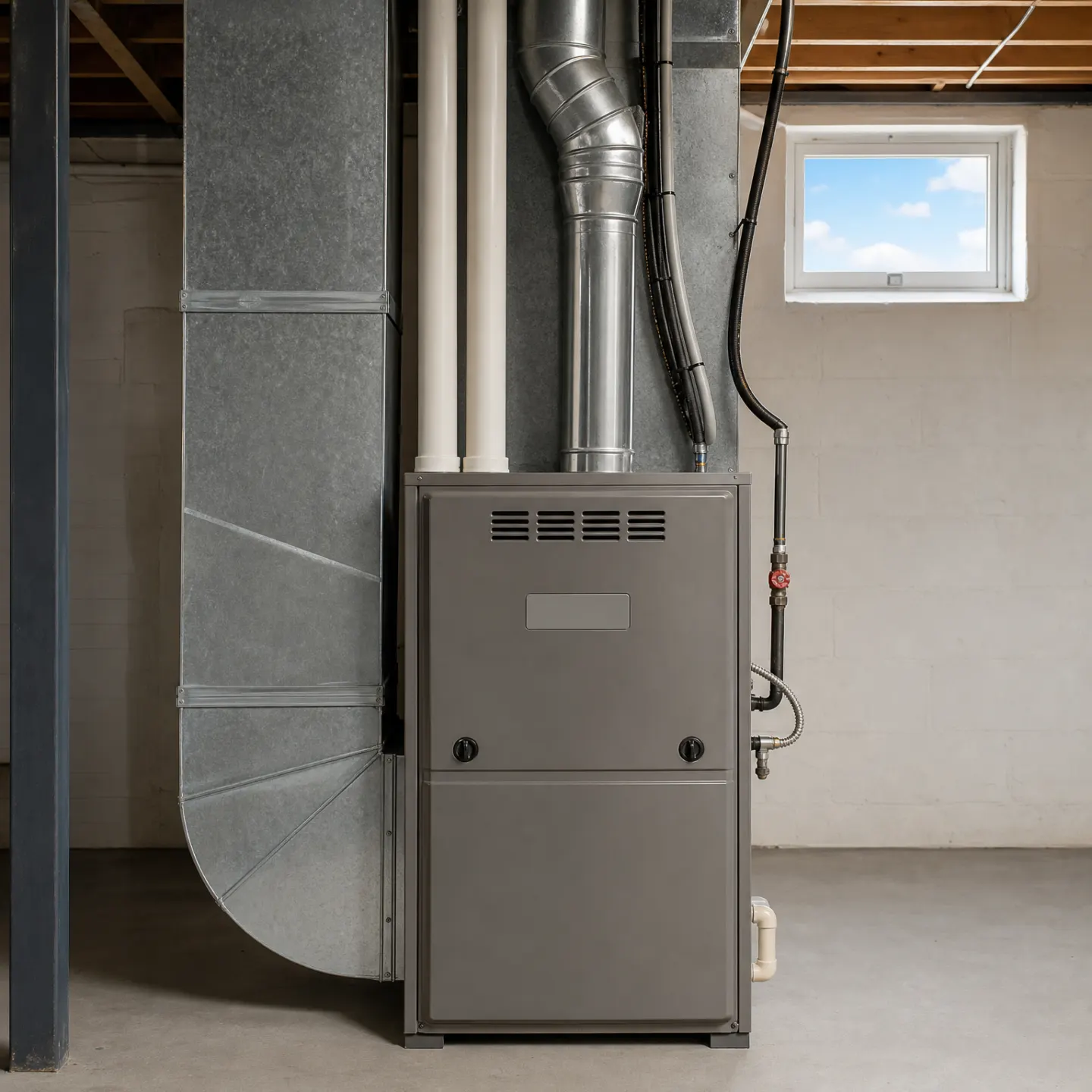
Eight months of work a year
Furnaces around Ottawa run from October through May. That is most of the year asking the igniter, the blower motor and the heat exchanger to do their job, with only a few months off.
Takes about a minute. No obligation.
Furnaces around Ottawa run from October through May. That is most of the year asking the igniter, the blower motor and the heat exchanger to do their job, with only a few months off.
A furnace running that many months a season puts more cycles on its parts than one that only kicks on now and then. Worn parts tend to show up during a cold stretch, not before it.
Furnaces around Ottawa start their season in October.
Book the tune-up in September, before the first cold night puts the furnace to work.




A furnace that came with a house built decades ago has likely been through more than one tune-up cycle, or none at all. If yours is original to a home from that era, or you just don't know its age, a yearly check is how a contractor catches a cracked heat exchanger or a worn igniter before it fails on a cold night. Newer furnaces benefit from the same visit, but older equipment has had more years to accumulate the kind of wear that doesn't announce itself until the system quits. If you don't know how old your furnace is, that alone is a reason to get it looked at.
Get the furnace checked while it's idle. A contractor can catch a worn igniter or a stressed heat exchanger now, while there's time to deal with it, instead of during the first hard freeze when the furnace can least afford to quit.
Find a contractor
A furnace that never gets opened up still runs, right up until the day it doesn't. Dust builds on the blower wheel and the motor has to push harder to move the same air. The flame sensor picks up a film and starts telling the control board no flame is there, even when there is, so the furnace shuts itself off mid-cycle. Burners that never get cleaned burn dirty, and a dirty flame can crack a heat exchanger that a straight flame would have left alone. None of this is sudden. It's the kind of wear that hides behind a furnace that still turns on and still blows warm air, until the morning it doesn't.
A furnace can look fine and still have a cracked heat exchanger, a pressure switch hose going soft, or a flame sensor coated with a film too thin to see. A contractor checks flame color and shape, tests the pressure switch, and measures the temperature rise across the exchanger. Those readings catch problems a homeowner has no way to find just by watching the burners light.
The blower wheel collects dust on blades a homeowner never sees without pulling the panel. A clogged wheel makes the motor work harder and can shorten its life. Gas pressure gets checked at the valve, not guessed at from how warm the air feels. Each of these is a five-minute check for someone already inside the cabinet, and nearly impossible otherwise.
A furnace doesn't have a drain or a coil doing daily work the way a cooling system does, but the filter still decides how hard everything else has to work. Pull a dirty filter and you'll see why the blower motor strains to move air through it. That restriction pulls return air harder than the design calls for, and it can pull flame away from the burner where it shouldn't be. A furnace that shares a cabinet with an AC coil has another thing to watch, since a coil caked in dust blocks airflow the same way a clogged filter does, and the blower can't tell the difference between the two. Either one makes the system run longer to hit the same temperature, and longer runtimes wear out igniters and motors sooner than they should.
A tune-up starts with the burners pulled and cleaned, since a burner caked with lint or dust burns unevenly and that uneven flame is what stresses a heat exchanger over time. The igniter gets tested under load, not just looked at, because an igniter can glow and still fail to hold a flame long enough to satisfy the control board. The flame sensor gets cleaned or replaced if it's pitted. A contractor checks the inducer motor for noise and wobble, since a bearing going bad there often sounds like nothing until it seizes. Gas pressure gets set at the valve to the furnace's actual specification, not left at whatever it happened to drift to. Last comes the safety checks: the pressure switch, the limit switch, and a check of the flue for a clean draft, because a furnace that burns gas has to vent what it burns, and that part of the job matters as much as making heat in the first place.