




A illuminated two-story red brick house on a quiet residential street at dusk, flanked by mature trees under a deep blue evening sky.

Heat Pump Repair in West Frankfort, IL

Tell us about the job

Takes about a minute. No obligation.

Step 1 of 3: Equipment

West Frankfort sits in a zone that asks a heat pump to work in both directions, heating through the winter and cooling through the summer. That's normal for this kind of system. It's built to run both ways. Wind and hail show up in this county too, but that's a roofing and siding problem, not something that reaches the parts inside your heat pump's cabinet. So when one stops heating or cooling right, the cause is usually the ordinary one. A failing capacitor. A low refrigerant charge. A reversing valve stuck in one position. A contractor who works on heat pumps regularly can usually narrow it down fast.

7 months
October through April, your system heats
5 months
May through September, it cools
27°F
the average winter night it heats against
87°F
the average summer afternoon it cools against
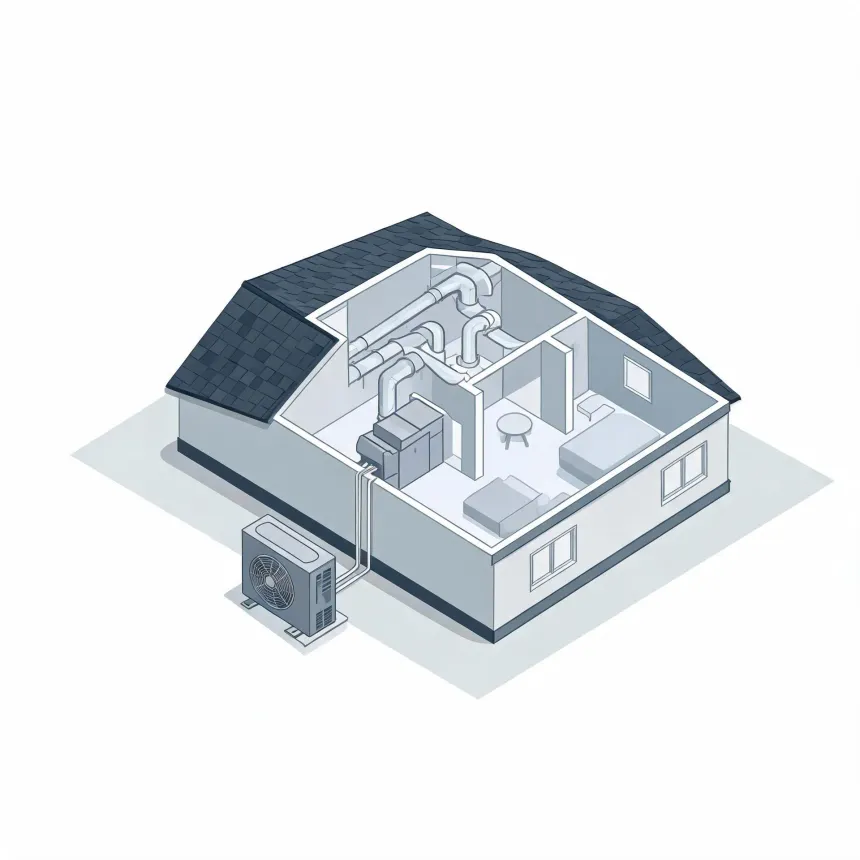
Isometric cutaway illustration of a single-story house showing interior rooms with furniture, an attic duct system connected to an indoor air handler, and an outdoor condenser unit linked by lines along the exterior wall.
Your system heats October through April and cools May through September.

NOAA nClimDiv, 1991–2020 normals

Heat pumps here start their heating stretch in October and run until the weather turns in May.

The first cold snap after September is when a weak part finally gets tested, so that's when trouble tends to show up.

Half the homes in Franklin County were built by 1963, old enough to have outlived at least one heat pump already

Half the homes here were built by 1963
80 damaging wind events from 2015 to 2024
24 hail events from 2015 to 2024
Every degree costs more hereIllinois electricity ran 15.87 cents per kilowatt-hour in 2024, and a heat pump running wrong burns through it fast.

If your heat pump has been in that house since before you owned it, ask the contractor straight out how much life is left in it before they start chasing down the failed part. A repair that makes sense on a five-year-old unit may not make sense on one that's already outlasted its years. Sometimes the fix is small and the unit's fine otherwise, worth doing. Sometimes the part that failed is just the first of several, and that's worth knowing before you pay for it. Either way, the answer should come before the repair, not after.

A heat pump running wrong keeps costing you until it's fixed

A heat pump that's low on charge or stuck in one mode still runs, just harder, and at 15.87 cents per kilowatt-hour that shows up on the bill fast. Get the actual cause found before another month of it goes by.

Find a contractor
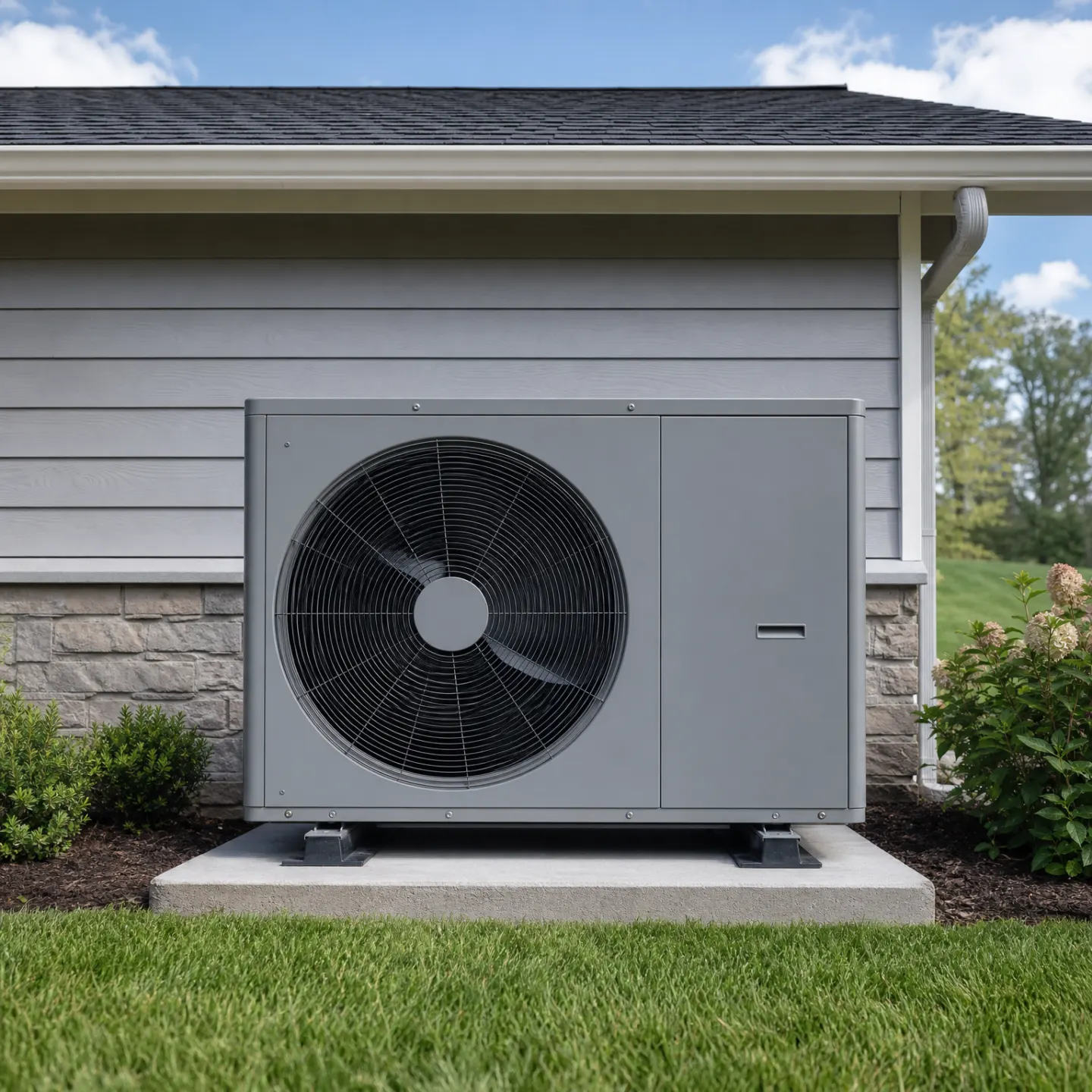
A gray outdoor HVAC unit mounted on a concrete pad beside a house with gray lap siding and a stone foundation.

What actually happens when someone comes to look at it

A diagnostic starts with the thermostat, not the cabinet outside. The tech checks what the system is being asked to do and what it's actually doing, heating, cooling, or just running the fan without either. From there it's gauges on the refrigerant lines to see if the charge is right, a meter on the capacitor and contactor to see if they're holding up, and a check of the reversing valve to see if it's actually switching when it's told to. Outside, the coil gets a look for dirt or bent fins blocking airflow, and the defrost cycle gets checked, since a heat pump that can't clear frost off the coil in winter will struggle to heat at all. Most of this gets answered without much trouble. What takes longer is a slow leak or an intermittent short, something that only shows up under certain conditions. A straight answer on what failed and why is what you're paying for, whether the fix is quick or takes a while.

What you'll actually notice first

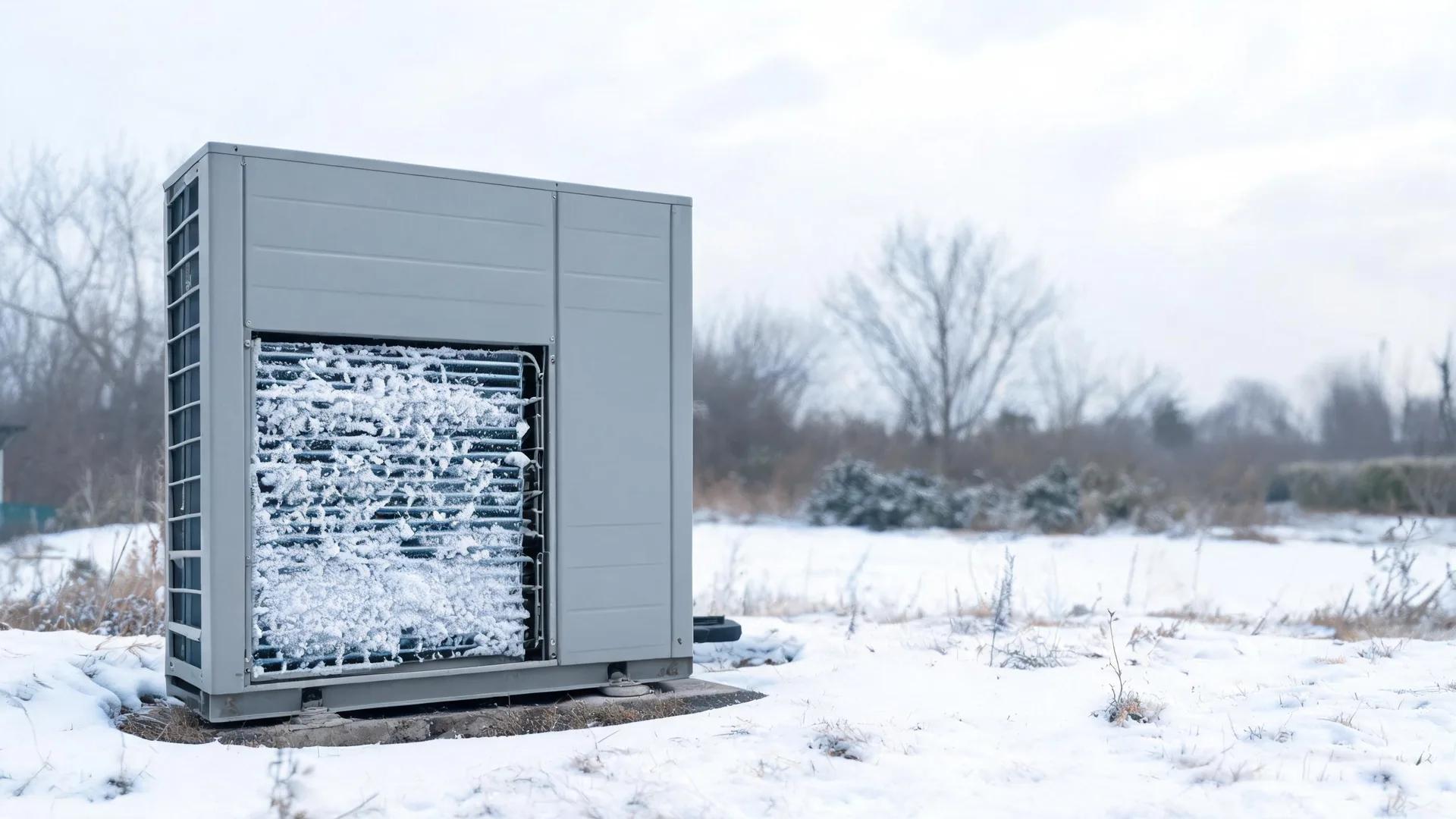
Usually it's air coming out of the vents that isn't warm enough, or the system running long stretches without catching up to the thermostat. Sometimes it's a hissing or clicking from the outdoor unit, or ice building up on the outdoor coil and not melting off between cycles. Any of these means something inside isn't doing its job, even if the system still turns on and the fan still runs.
Why waiting makes it worse

A heat pump with a failing part doesn't usually quit outright. It keeps running in a way that asks more of itself to do less, the compressor working harder to move the same heat. Left alone, a low charge or a stuck reversing valve puts strain on the compressor itself, and that's the part you don't want to lose.

Before calling anyone, check the thermostat first. Make sure it's set to heat or cool as needed and the setting is actually past room temperature, not sitting right at it. Go to the outdoor unit and look for anything blocking it, leaves, a snow drift, debris pulled against the coil, since airflow in and out of that unit matters as much as anything happening inside. Check the air filter inside the house. A filter clogged with dust chokes the whole system and can look like a much bigger problem than it is. Look at the outdoor coil for a heavy coat of ice that isn't cycling off on its own. A little frost in winter is normal. A thick layer that stays is not. Check your breaker panel too. A tripped breaker will shut the whole unit down and look exactly like a failed part. None of this fixes a bad capacitor or a stuck reversing valve, but it rules out the simple stuff before anyone charges you to find it.

A heat pump has fewer parts than a furnace and air conditioner combined, since it's doing both jobs with the same equipment. That's usually good news for repair. The compressor is the part that matters most, and if it's still sound, most other failures, a capacitor, a contactor, a stuck reversing valve, are straightforward fixes that bring the system back to normal. What changes the math is the compressor itself or a refrigerant leak that's eaten through a coil. Those sit at the edge of what's worth fixing on an older unit, because you're paying to repair one part of a system where the rest is the same age and wearing the same way. A tech who's honest with you will say which kind of problem this is before any parts get ordered.