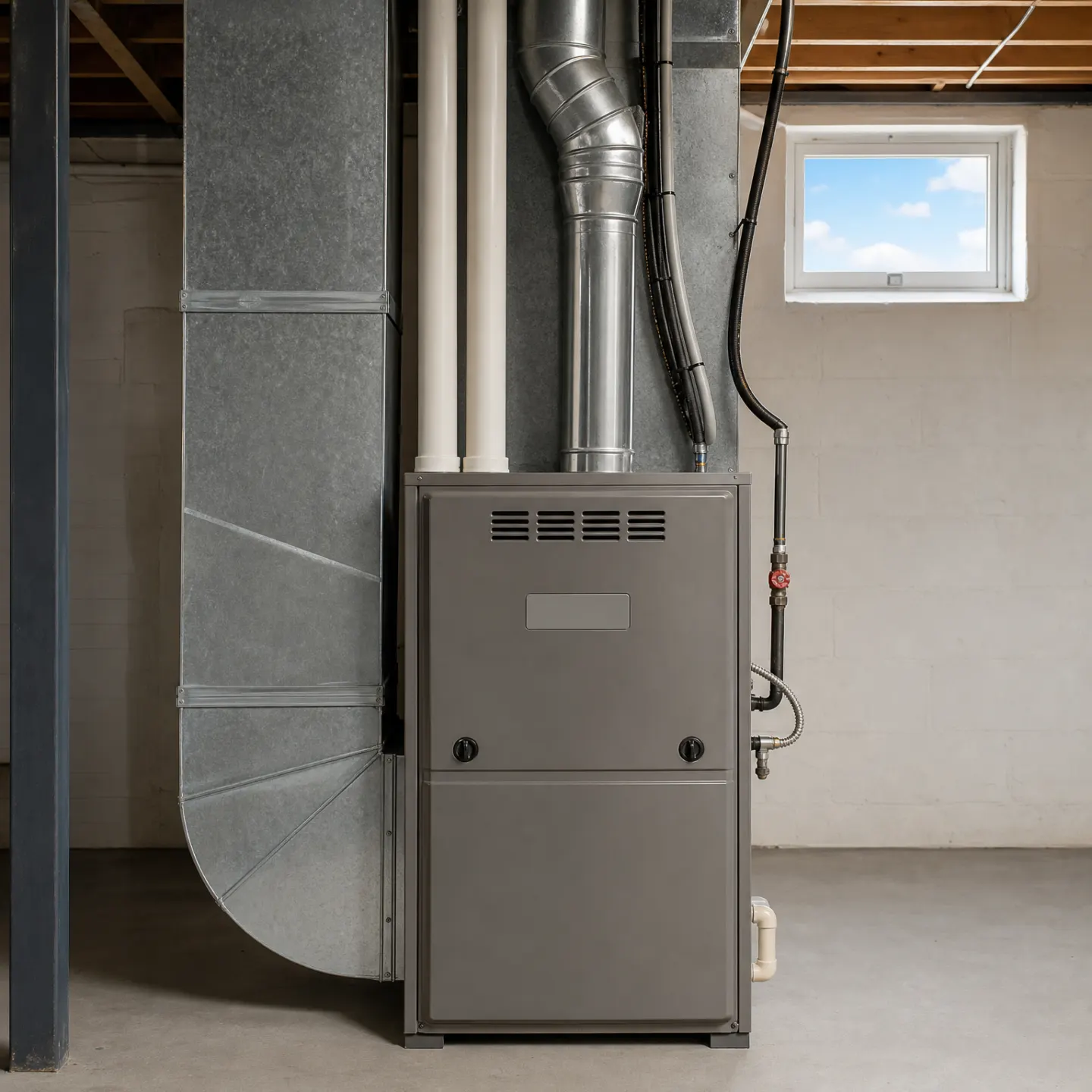
A lit brick residential street at dusk showing a row of two-story homes with covered porches and mature trees.

Furnace Repair in Rochelle, IL

Tell us about the job

Takes about a minute. No obligation.

Step 1 of 3: Equipment

Half these furnaces sit in older homes

Half the houses in Ogle County were built in 1972 or earlier. A furnace that came with a house that age has likely been replaced once already, maybe twice, and whatever is in there now has its own clock running.
What that means for a repair call

An older house doesn't tell a technician how old the furnace itself is. But if yours has never been swapped out, a repair bill is worth weighing against how much life the unit has left, not just against getting the heat back on today.

8 months
October through May, your furnace is on duty
16°F
the average winter night it heats against
67%
of homes here heat with gas, so most furnaces here burn gas
15 winter storms
in ten years, the nights a failure hurts most
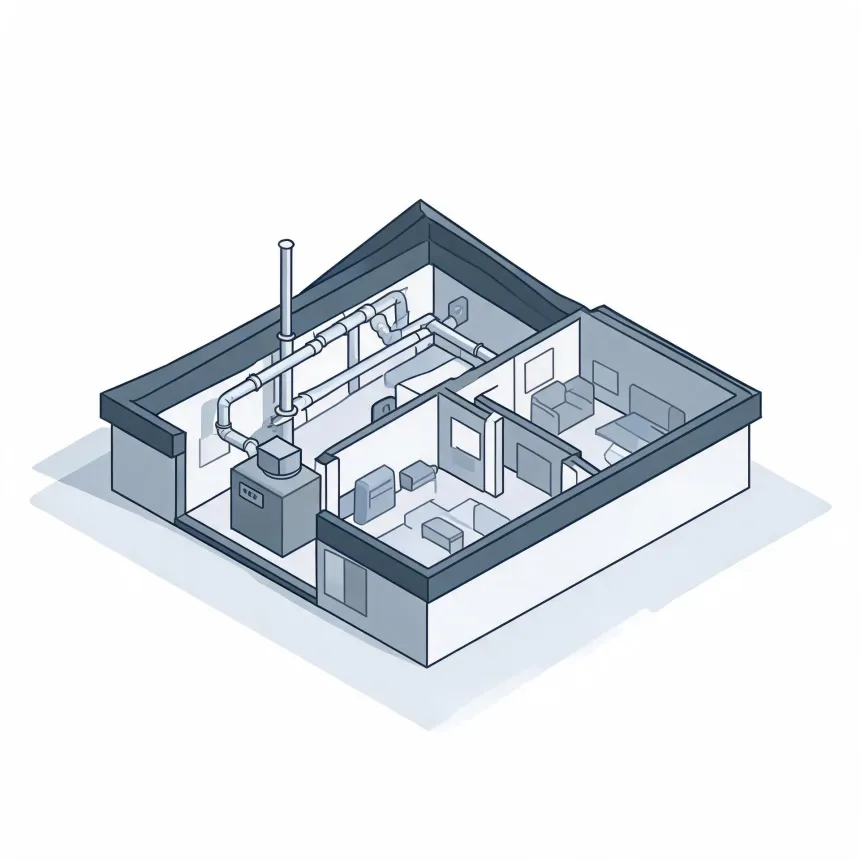
Isometric line illustration of a cutaway building interior showing a furnace unit with a flue pipe and ductwork running along the ceiling, plus adjacent rooms with simplified furniture.
Your furnace works hardest from November through March.

NOAA nClimDiv, 1991–2020 normals

A furnace that short cycles, turning on and off before the house warms up, is usually struggling with airflow or a failing sensor.

Ignore it long enough and the parts working hardest to compensate, the igniter or the blower motor, are the ones that fail next.

Eight months of heating a year wears a furnace down early

Heat runs October through May
Winter nights average 16°F
Climate zone 5A

September is worth a look if the furnace struggled last winter, because heat goes on in October and runs through May here. That first cold stretch puts load on a system that's been sitting idle since spring, and a weak part usually shows itself in the first weeks, not in the middle of January. Wait too long and you're calling for a repair once overnight lows are already settling near 16°F, with a house that needs the heat back on right away. A furnace with eight months of work ahead of it doesn't get a chance to recover from a problem left alone. Getting it checked before October gives a technician room to actually fix something, instead of patching it enough to get through the night.

Know what you're repairing before you pay for it

If this furnace came with the house, ask the technician how much life is left in it before you approve the repair. On a unit that's already been replaced once, a bill is just a bill. On the original furnace in an older house, it might be the last one worth paying.

Find a contractor
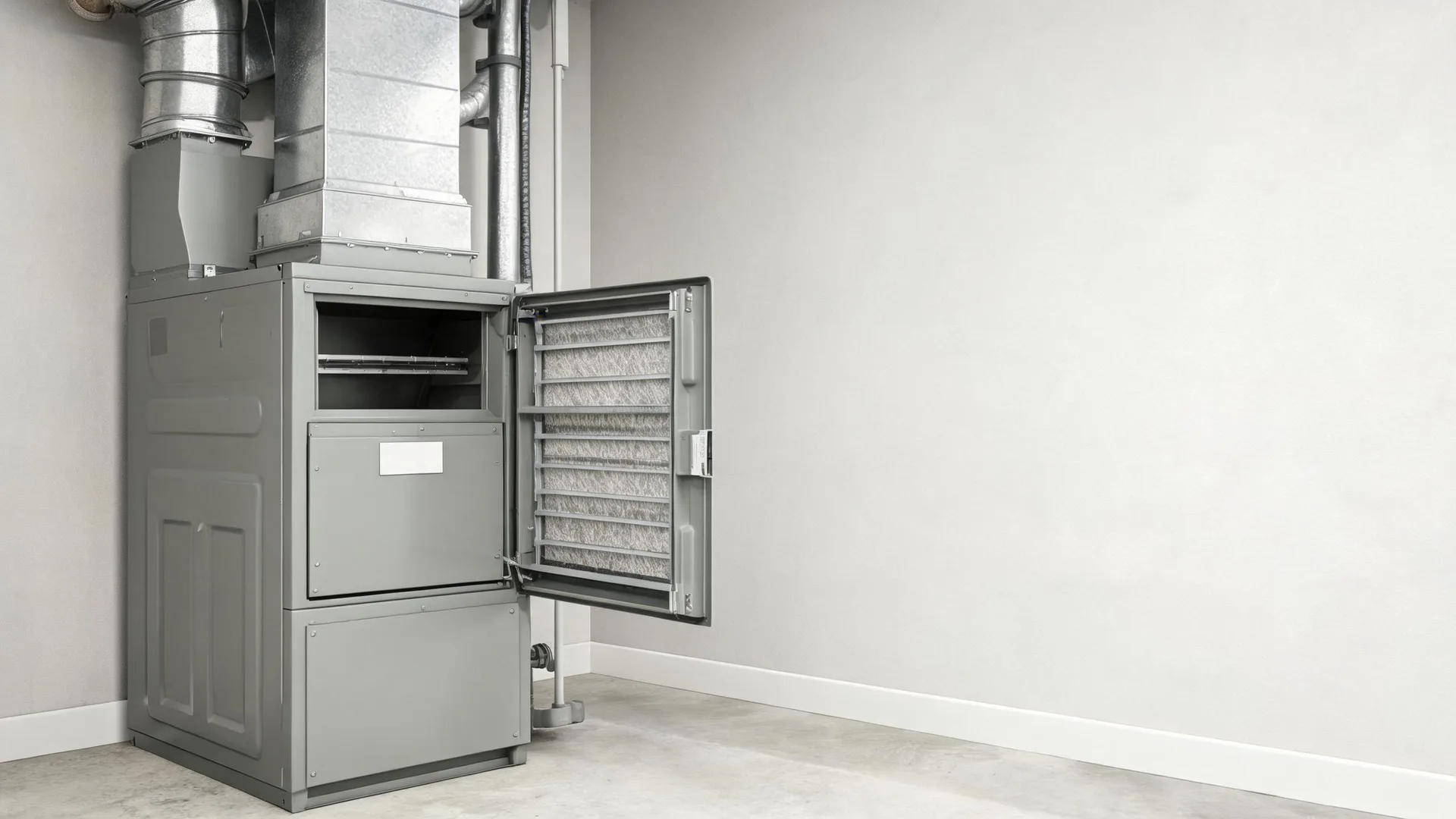
A gray residential gas furnace installed in an unfinished basement, surrounded by ductwork, a metal flue pipe, and a gas supply line.

Eight months of work a year. Fix it so the repair lasts that long.

Eight months of heat a year doesn't leave this furnace much time to rest before it starts again. A part that's already wearing out won't get a quiet stretch to sit unnoticed. When something's going wrong, have a technician find the actual cause instead of patching around it, so the fix holds for the months still ahead.

What actually wears out

The igniter is the part most likely to quit. It's a thin strip that heats up to light the gas, and that heating and cooling cycle eventually cracks it. The flame sensor is a close second, coated over time with a film that keeps it from telling the control board a flame is lit, so the furnace shuts itself down as a safety measure. Blower motor bearings wear from simple use. None of these fail because of one bad night of cold. They fail from the number of times they've cycled on and off.

What those failures look like to you

A furnace that won't light, tries and gives up, or blows cold air before shutting off is usually one of those parts, not the whole unit. A dirty flame sensor can often be cleaned rather than replaced, which is a cheap fix if it's caught early. An igniter that's already cracked has to be swapped, not cleaned. A failing blower motor usually gives some warning first, a grinding or squealing sound before it quits outright. The pattern matters: a furnace that's never had trouble and suddenly won't start is a different call than one that's been short cycling for weeks and finally stopped.

An unfinished basement containing a metal furnace with ductwork, exposed wooden joists on the ceiling, cardboard boxes, a coiled cable, and a single hanging incandescent bulb.

A new furnace would cut about $150 a year off heating for a typical Ogle County home.

  • A new high-efficiency furnace$620 a year
  • An older furnace$770 a year

Estimates for a typical Ogle County home, compared with an older unit built to the previous federal minimum, from EIA household energy data, Illinois fuel prices and NOAA climate normals. Your home will differ.

Repair makes sense when one part has failed and the heat exchanger is sound.

Replacement makes sense when the heat exchanger is cracked or the furnace keeps needing parts.

A repair decision really comes down to what's failing and how many times it's likely to fail again. A cracked igniter or a bad flame sensor is a clean call: replace the part, and the furnace is back to normal. Those are wear items, not signs of anything bigger. It's a different story when the heat exchanger is cracked or the blower motor has already been rebuilt once, because at that point you're paying to keep an aging system limping along rather than fixing a single part. A technician who's actually inspected the unit can tell you which situation you're in. Repairing the same part twice in a couple of years is usually the clearest sign that the next call should be about replacement, not repair.