Eight months of work a year
A furnace in Henry County runs from October through May. That's most of the year the burner and blower are cycling, not just a few cold snaps. Parts that wear do it on a long schedule here, not a short one.
Takes about a minute. No obligation.
A furnace in Henry County runs from October through May. That's most of the year the burner and blower are cycling, not just a few cold snaps. Parts that wear do it on a long schedule here, not a short one.
When something goes wrong, those long hours are usually part of why. Henry County saw 23 winter storms between 2015 and 2024, and the furnace has to keep up through every one. Get the actual cause found before anything gets fixed, so the repair holds.
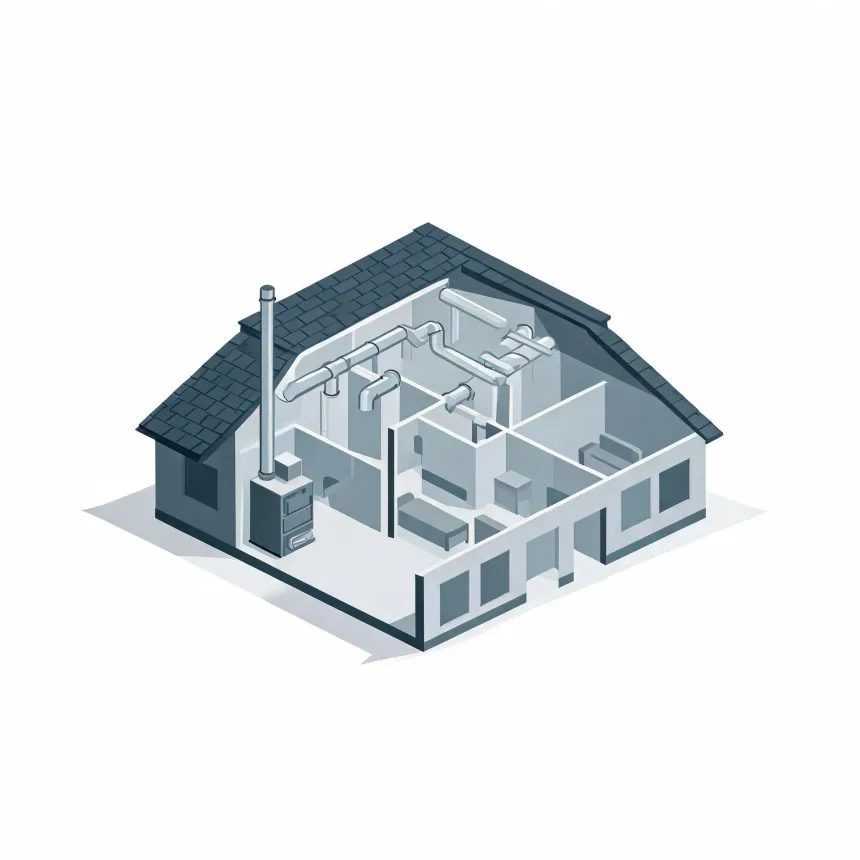
NOAA nClimDiv, 1991–2020 normals
A furnace that short cycles, turning on and off every few minutes instead of running a full cycle, is usually dealing with a dirty flame sensor or a clogged filter choking airflow.
Short cycling wears the ignition system down fast, so the fix now is cheaper than the failure it's heading toward.




Before calling anyone, check the thermostat. Make sure it's set to heat and the setting is above room temperature, and change the batteries if it uses them. Go to the furnace and look at the filter. If you can't see light through it, it's choking the airflow, and swapping it can fix a surprising number of complaints on its own. Check that the switch on the furnace itself, and the one that looks like a light switch near it, are both on. If it's a gas furnace, look through the viewing window for a steady blue flame. Yellow or flickering flame means stop and call, don't try to fix that part yourself. Last, check that supply vents around the house are open and not blocked by furniture or rugs, since closed vents make the whole system work against itself.
A furnace installed when one of these older houses was built is already well past the point where repair bills start adding up. If yours is original to the house, ask whoever comes out how much life is left in it before you put money into this repair.
Find a contractorEight months of heating a year adds up to a lot of cycles on the burner and blower, and that's the first thing worth ruling out when something goes wrong. A part that fails after running this long usually failed from running this long, not from a defect. Have the actual cause checked before paying for a fix, so money doesn't go toward a repair that doesn't hold.
Once a heat exchanger cracks, the metal keeps flexing with every heat cycle, and the crack opens wider each time. Running the furnace on a cracked exchanger risks pushing exhaust gas into the air supply instead of venting it outside. A furnace doing this needs to be shut down, not nursed along until the part is replaced.
A blower motor forcing air past a clogged filter or blocked vents draws more current than it should every time it runs. That extra strain heats the motor windings past what they're built for, and heat damage to a motor doesn't reverse itself. Shutting the furnace off until the airflow problem is fixed costs less than replacing a burned-out motor.
Estimates for a typical Henry County home, compared with an older unit built to the previous federal minimum, from EIA household energy data, Illinois fuel prices and NOAA climate normals. Your home will differ.
Repair makes sense when one part has failed and the heat exchanger is sound.
Replacement makes sense when the heat exchanger is cracked or the furnace keeps needing parts.
Every repair call on a furnace comes down to the same question: is this part worn out on its own, or is it a sign the whole unit is near the end. A new igniter or a new blower capacitor is a fair repair almost anywhere, since those parts fail on their own schedule and swapping one buys years back. The math changes once the heat exchanger is the problem, or once the furnace has needed a few different repairs over a few different winters. A unit that keeps coming back for new reasons is telling you the whole system is wearing down at once, not that it had bad luck with one part. At that point a technician can tell you whether the next repair is worth it, or whether it's money going into a furnace on its way out regardless.