A nighttime view of a tree-lined residential street with illuminated two-story brick houses and street lamps.

Furnace Repair in Pekin, IL

Tell us about the job

Takes about a minute. No obligation.

Step 1 of 3: Equipment

Tazewell County sees real storms

Tazewell County recorded 261 severe weather events between 2015 and 2024, including 154 cases of damaging wind and 82 hail events. Fifteen tornadoes touched down in that same stretch. That's a lot of chances for an outdoor unit to take a hit.
Furnaces need power to run

A gas furnace still needs electricity to fire the igniter and run the blower. In 2024, 16% of Illinois households lost power for 24 hours or more. A furnace that won't start during a long outage is a bigger problem than it sounds, especially once the house gets cold.

8 months
October through May, your furnace is on duty
20°F
the average winter night it heats against
73%
of homes here heat with gas, so most furnaces here burn gas
10 winter storms
in ten years, the nights a failure hurts most
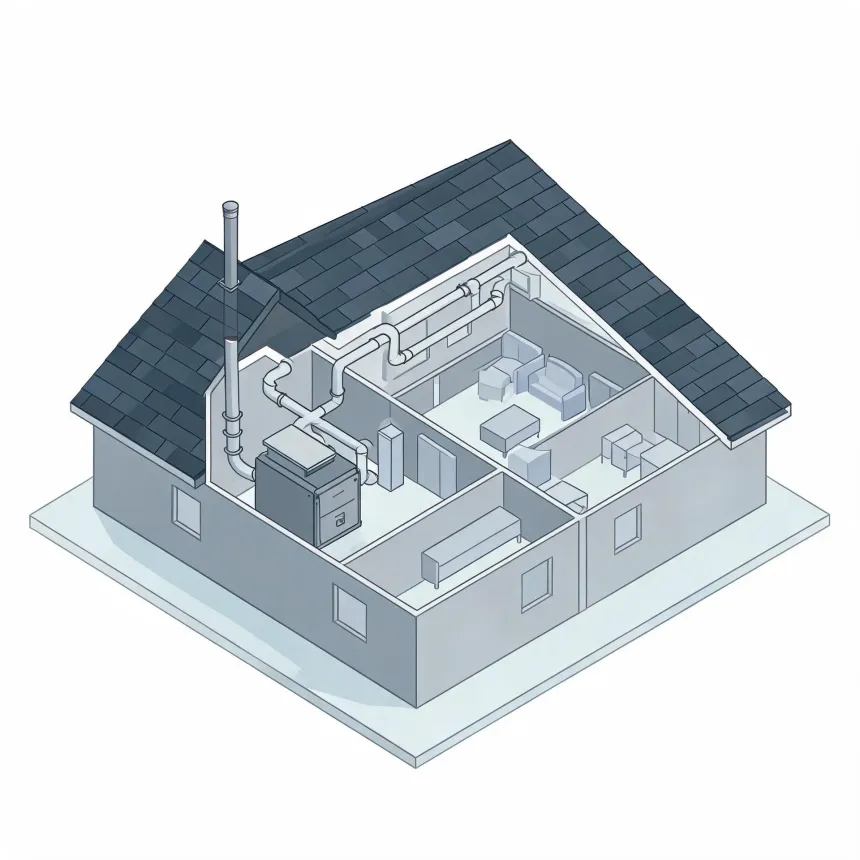
Isometric cutaway illustration of a single-story house with a dark shingled roof, showing interior rooms with furniture, ductwork, a flue pipe, and a furnace unit.
Your furnace works hardest from November through March.

NOAA nClimDiv, 1991–2020 normals

Half the homes in Tazewell County were built in 1969 or earlier.

A furnace in a house that old is more likely to be on its last years, and a failing part can mean the whole system is near the end.

Eight months of heat starting in October, in a county that loses power for days

Heat runs October through May
Climate zone 5A
Winter nights average 20°F

If the furnace came with the house, ask the contractor straight out how many years it has left before spending money on this repair. A tech can check the heat exchanger and the age of the main parts and give you a real answer, not a guess. That matters more here than in a newer house down the road. If the unit is old enough that the next breakdown might be the last one, a cheap fix now can turn into a full replacement in a year anyway. Better to hear that upfront than after the part is already in.

If this furnace took a hit, get it looked at before the cold sets in

Hail and wind this county sees most years can knock something loose outside without stopping the furnace outright. If yours came through a storm this year, have a tech check it even if it's still firing. That way you know where it stands before the next cold snap or the next outage, not after.

Find a contractor
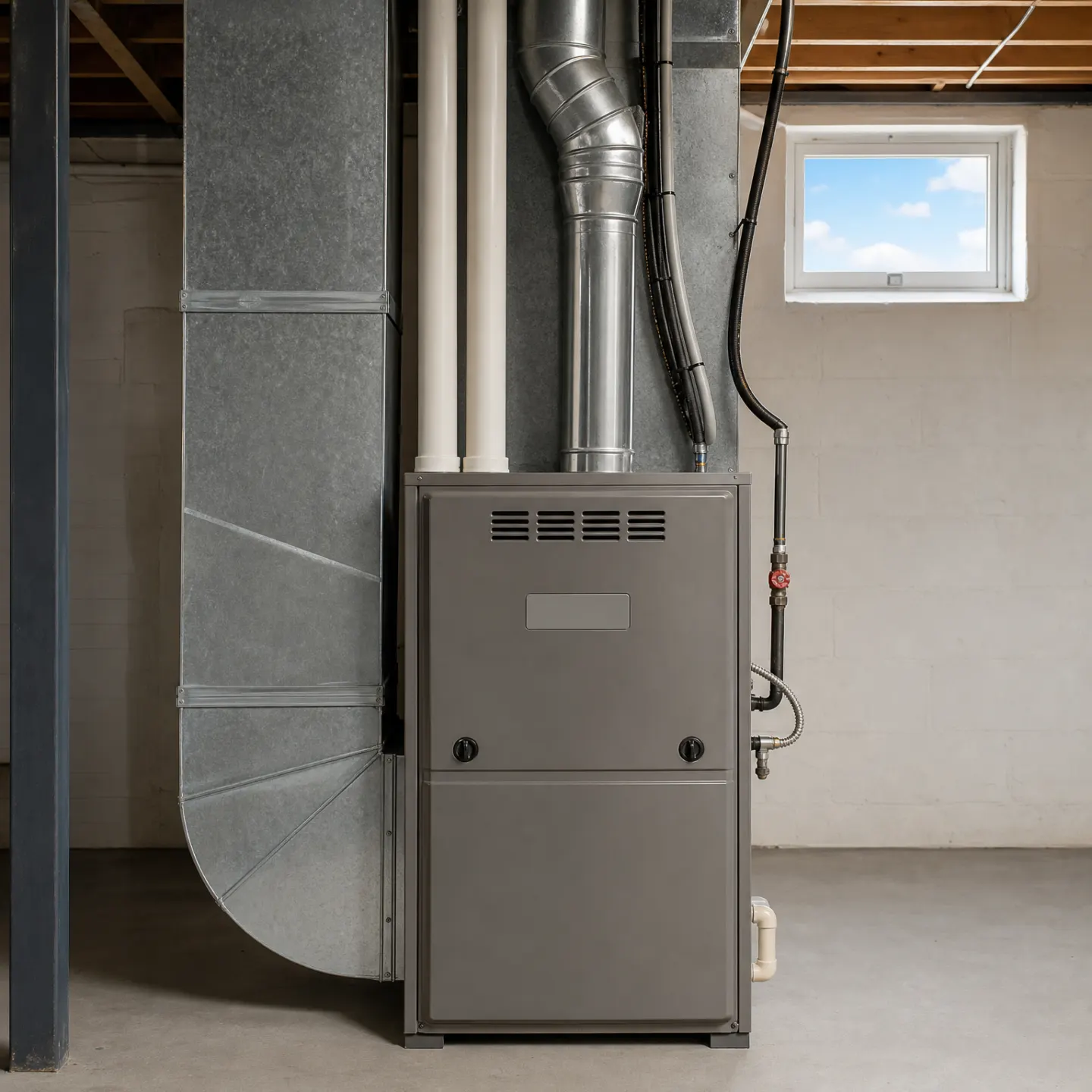
A gray residential gas furnace installed in an unfinished basement, surrounded by ductwork, a metal flue pipe, and a gas supply line.

The longer it runs rough, the more it costs the parts around it

A furnace that's struggling doesn't fail all at once. A cracked heat exchanger gets worse every hour it keeps firing, because the metal keeps flexing with the same heat cycle that cracked it in the first place. A dirty flame sensor lets the burner light and drop out, light and drop out, and each failed attempt puts more strain on the igniter behind it. A clogged filter starves the blower for air, so the heat exchanger runs hotter than it should every single cycle. None of this shows up as the furnace quitting. It shows up as short cycling, a burner that sounds different, or a flame that looks yellow instead of blue. The part that's struggling keeps struggling under load, and load is exactly what a running furnace gives it.

Most furnace failures start with the igniter or flame sensor

The igniter has to heat up and cool down every time the furnace cycles on, and that repeated stress is what eventually breaks it. The flame sensor sits in the burner flame itself, and soot buildup on it is enough to make the furnace shut down mid cycle, thinking there's no flame when there is. Both are small parts, and both are common reasons a furnace won't stay lit.

The blower motor and the heat exchanger wear out from the other direction

A blower motor runs for hours at a stretch, and the bearings inside it give out over years of that duty, which shows up as a grinding or squealing sound before it quits. The heat exchanger cracks from metal fatigue, the same way a paperclip snaps after enough bending, and once it cracks it needs replacing rather than patching. Both failures build slowly, so catching them early usually means a repair instead of a bigger job.

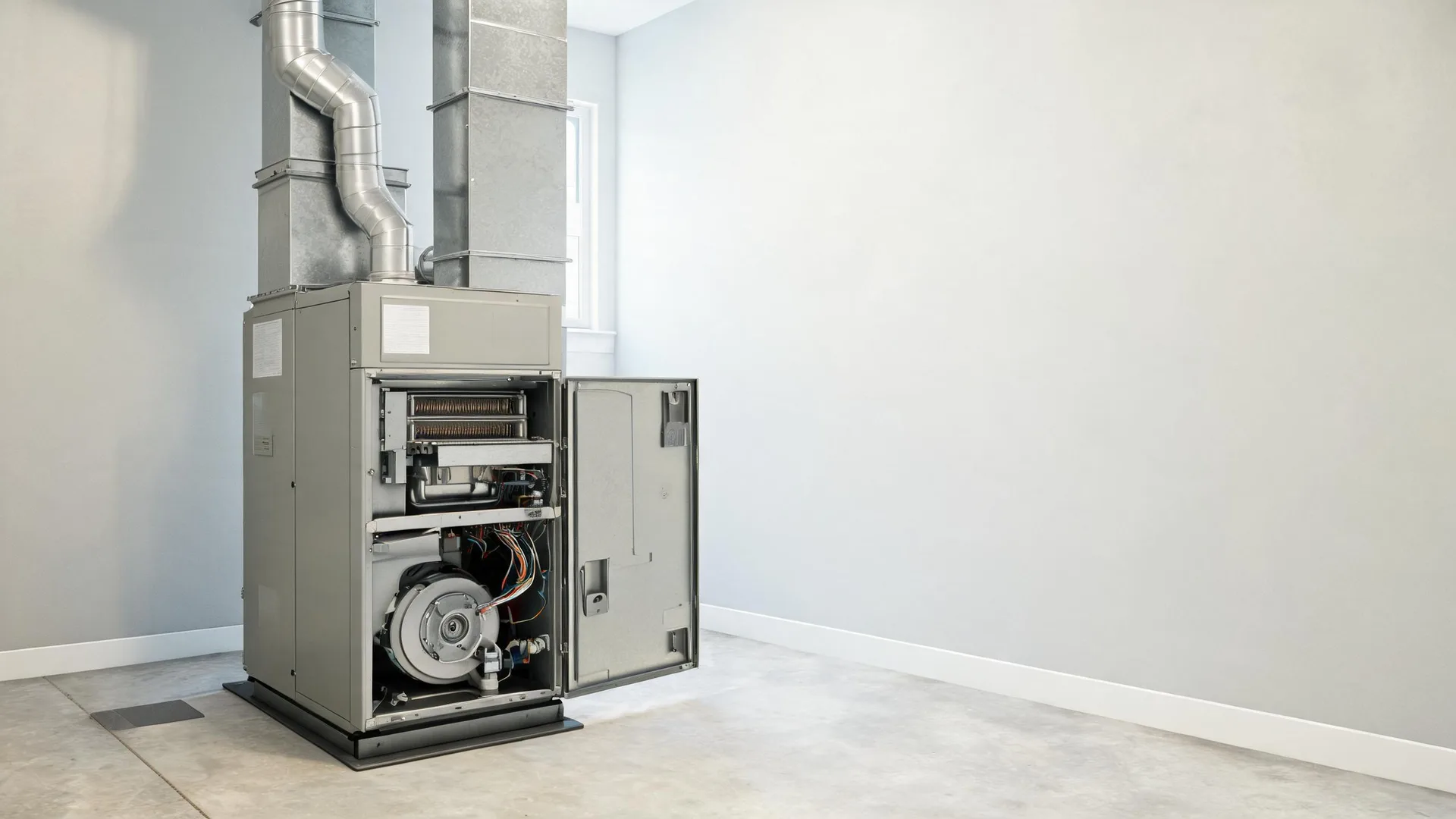
A gray forced-air furnace with sheet-metal ductwork stands in an unfinished basement with exposed wooden joists, concrete walls, and a hanging incandescent bulb.

A new furnace would cut about $130 a year off heating for a typical Tazewell County home.

  • A new high-efficiency furnace$540 a year
  • An older furnace$670 a year

Estimates for a typical Tazewell County home, compared with an older unit built to the previous federal minimum, from EIA household energy data, Illinois fuel prices and NOAA climate normals. Your home will differ.

Repair makes sense when one part has failed and the heat exchanger is sound.

Replacement makes sense when the heat exchanger is cracked or the furnace keeps needing parts.

A repair is worth it when the part that failed does one job and the rest of the furnace is sound. An igniter or a flame sensor falls in that bucket almost every time. Replacement starts to make sense when the part that failed is the furnace itself, meaning the heat exchanger, or when the same furnace keeps bringing a tech back for a different reason every few months. A furnace that's been maintained holds up better over the years than one that hasn't, but wear still catches up with every furnace eventually, and a string of small failures close together is usually that catching up. Ask what broke and why, not just what it costs to fix. If the answer is one worn part doing its job for years, fix it. If the answer is that the system's been straining for a while and this is just the part that gave out first, that's a different conversation, and an older furnace is exactly where it tends to come up.